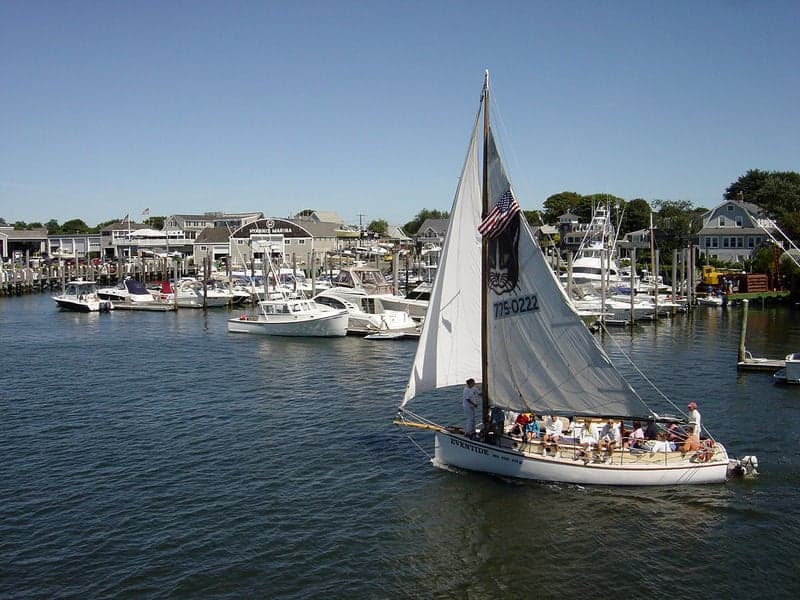
Photo: Wikipedia
Quality of Life in Barnstable County
A livable area that tracks near national norms for affordability, walkability, and neighborhood health.
What does Quality of Life tell us?
Quality of Life measures an area by evaluating factors like cost of living, nearby amenities, country club access, airport proximity, socioeconomic signals and neighborhood character. For large states, this is a general average — quality of life can vary dramatically between metro areas, suburbs, and rural communities within the same state.
What does this tell us?
Quality of Life measures an area by evaluating factors like cost of living, nearby amenities, country club access, airport proximity, socioeconomic signals and neighborhood character. For large states, this is a general average — quality of life can vary dramatically between metro areas, suburbs, and rural communities within the same state.
Cost of Living
64% above national average
57%
The Real Cost of Living in Barnstable County for 2026
| Tier | Individual | Family (4) |
|---|---|---|
| Survival | $25k | $48k |
| Comfortable | $112k | $164k |
| Luxury | $171k+ | $264k+ |
| Elite (Top 5%) | $217k+ | $337k+ |
Quality-of-Life Analysis
Barnstable County, coterminous with Cape Cod, offers a quality-of-life spectrum that ranges from dense, year-round commercial hubs to sparsely populated coastal villages and protected conservation lands. The county’s character shifts dramatically between its 15 towns, drawing retirees seeking quiet seaside living, second-home owners from Boston and New York, and a workforce concentrated in hospitality, healthcare, and marine trades. With a cost-of-living index of 164 (64% above the U.S. average), the trade-off between amenity density and tranquility is a central factor in choosing where to live on the Cape.
Largest town(s) & population centers
Barnstable (the county seat, comprising the villages of Hyannis, Centerville, Osterville, and others) is the county’s largest municipality by population and the primary commercial and transportation hub. Hyannis is the Cape’s de facto downtown, with the Hyannis Transportation Center (ferries to Nantucket and Martha’s Vineyard, plus CapeFLYER rail service to Boston), Cape Cod Hospital, and the region’s densest concentration of retail and dining along Main Street and Route 132. Daily life here is walkable in the village core but car-dependent for most errands; the year-round population supports robust public schools and a winter calendar of community events. Falmouth, the second-largest town, centers on its historic village green and the Woods Hole scientific community, home to the Woods Hole Oceanographic Institution and Marine Biological Laboratory. Its commuter profile includes a significant number of residents who take the Steamship Authority ferry to jobs on Martha’s Vineyard. Both towns offer the widest range of rental options, with median rent across the county at $1,596, though units in Hyannis and Falmouth village command premiums for proximity to water and transit.
Smaller towns & rural pockets
East of the canal, Truro and Wellfleet on the Outer Cape are among the county’s least densely settled towns, with large swaths of Cape Cod National Seashore limiting development. Truro’s year-round population hovers around 2,000, and its commercial district is limited to a handful of markets and galleries; residents rely on Provincetown or Orleans for most services. Brewster and Orleans on the Lower Cape offer a middle ground — Brewster is notably rural, with over 800 acres of conservation land and no stoplights on its main road, while Orleans functions as a small commercial center with a supermarket, hardware store, and urgent care. On the Upper Cape, Sandwich retains a village feel around its historic boardwalk and Heritage Museums & Gardens, but its western edge abuts the Otis Air National Guard Base, introducing aviation noise and a military-affiliated population. Eastham, at the gateway to the National Seashore, has a year-round population under 5,000 and a seasonal economy that peaks sharply in July and August. These smaller towns share a common trait: limited rental inventory and a housing stock dominated by single-family homes, with the county’s median home value at $575,900 pushing many year-round workers into commuting from more affordable inland towns like Wareham (Plymouth County) or into shared housing arrangements.
Cost & lifestyle range
The cost spread across Barnstable County is narrower than in many metro areas, but real differences exist. Provincetown sits at the high end, with a median home value exceeding $800,000 and a seasonal rental market that can triple winter rates; its lifestyle is dense, walkable, and LGBTQ+-centered, with a nightlife and arts scene unmatched elsewhere on the Cape. At the lower end, Bourne and Sandwich (the two towns on the mainland side of the canal) offer median home values closer to $450,000–$500,000 and more land per unit, but with longer average commutes — the county-wide average commute is 25.4 minutes, but Bourne residents commuting to Boston or Providence often face 45–60 minutes each way. Yarmouth, centrally located, provides a mid-range option with a mix of motels-turned-efficiency-apartments and older ranch homes, appealing to service workers and young families. Property taxes vary by town but generally fall between 0.8% and 1.2% of assessed value, with no county-level sales tax beyond the state’s 6.25%. Amenity access follows density: Hyannis and Falmouth have hospitals, supermarkets, and big-box retail; Outer Cape towns lack grocery stores in Truro and require a 15–20 minute drive to the nearest pharmacy.
Who thrives here depends on tolerance for seasonality and distance from services. Retirees and remote workers with stable incomes are best positioned to absorb the high cost of living and enjoy the Cape’s natural assets year-round. Families and essential workers often find the most sustainable quality of life in the Upper Cape towns (Bourne, Sandwich, Falmouth) where schools are well-rated and commutes to off-Cape employment are feasible. Those seeking the quietest, most rural experience will find it in the Outer Cape’s National Seashore towns, but should be prepared for limited winter services and a housing market that strongly favors buyers over renters.

Crime in Barnstable County
Generally safer than 67% of comparable U.S. locations.
Violent CrimeViolent Crime Analysis
Property CrimeProperty Crime Analysis
Crime Analysis
Barnstable County, which encompasses all of Cape Cod, reports a violent crime rate of 289.3 per 100,000 residents and a property crime rate of 1,008.1 per 100,000, placing it in a middle tier for safety within Massachusetts. While these figures are lower than many urban areas nationwide, the county's seasonal population surge and the progressive criminal justice policies common across Massachusetts create specific safety dynamics that residents and newcomers should understand. The Cape's reliance on tourism means that crime patterns shift dramatically between summer and winter, with certain towns shouldering a disproportionate share of incidents.
Crime in context
Barnstable County's violent crime rate of 289.3 per 100,000 sits below the national average of roughly 380 per 100,000 but above the Massachusetts state average of approximately 260 per 100,000. Property crime at 1,008.1 per 100,000 is significantly lower than the national figure of around 1,950 per 100,000, though it tracks closely with the rest of Massachusetts. These comparisons, however, mask important local variation. The Cape's largest town, Barnstable (which includes Hyannis), generates a disproportionate share of both violent and property crime reports, while smaller communities like Brewster, Orleans, and Wellfleet consistently record far fewer incidents. The statewide trend toward progressive prosecution — Massachusetts has some of the most lenient sentencing guidelines in the country and district attorneys who frequently prioritize diversion programs over incarceration — means that repeat property offenders and those arrested for drug-related crimes often cycle back onto the streets quickly, a pattern visible in Hyannis and Falmouth during peak tourist months.
What residents experience
For year-round residents, the most tangible safety concern is property crime, particularly during the off-season when many summer homes sit vacant. Burglaries and larcenies spike between October and April in towns with high concentrations of seasonal properties, including Chatham, Dennis, and Truro. Drug-related offenses, especially opioid possession and distribution, are a persistent issue across the county, with the Cape Cod Drug Task Force making regular arrests in Yarmouth, Sandwich, and Mashpee. Violent crime is less common in daily life but concentrates in specific areas: Hyannis's Main Street corridor and the areas around the Barnstable County Courthouse see the highest rates of assault and disorderly conduct, often tied to late-night bar activity and transient populations. The progressive policies of Cape and Islands District Attorney Robert Galibois, who has emphasized restorative justice and reduced prosecution of low-level drug offenses, have drawn criticism from residents who feel that lenient approaches embolden repeat offenders, particularly in communities like Provincetown and Hyannis where visible street-level drug activity persists.
Neighborhood-level variation
Safety varies dramatically across Barnstable County's 15 towns. The Upper Cape communities of Bourne, Sandwich, and Falmouth generally report lower violent crime rates than the Mid-Cape and Lower Cape, though Falmouth's downtown and beach areas see elevated property crime during summer. Hyannis, the county's commercial and transportation hub, is the clear hotspot for both violent and property crime, with the Hyannis Village area and the neighborhoods around the Cape Cod Mall requiring the most vigilance. By contrast, the Outer Cape towns of Wellfleet, Truro, and Provincetown have very low violent crime rates but face unique challenges with seasonal crowds and alcohol-related incidents in Provincetown's busy commercial district. The most consistently safe areas are the inland, residential towns of Brewster, Orleans, and Eastham, where crime rates hover near the lowest in the county and community policing is highly responsive. Prospective residents should research specific town police department reports rather than relying on countywide averages, as the difference between a quiet Brewster neighborhood and a busy Hyannis block can be as stark as any urban-suburban comparison in the state.
* Values derived from national, state, county, city and local statistics and may differ in a specific area. Last updated: 2026-08-08T18:50:57.000Z
Narrative content on this page is AI-generated and may contain mistakes. Verify any details that matter before acting on them.
ReloMaps may earn a commission from affiliate links at no extra cost to you.

