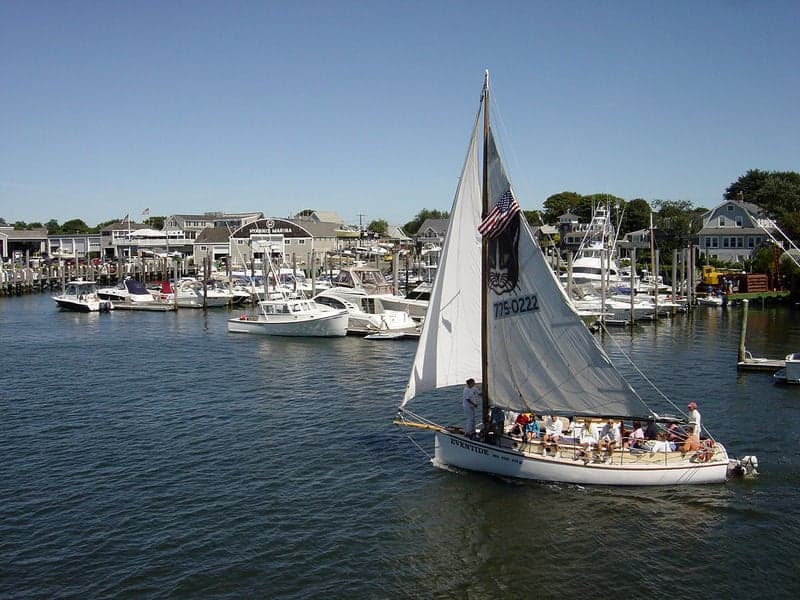
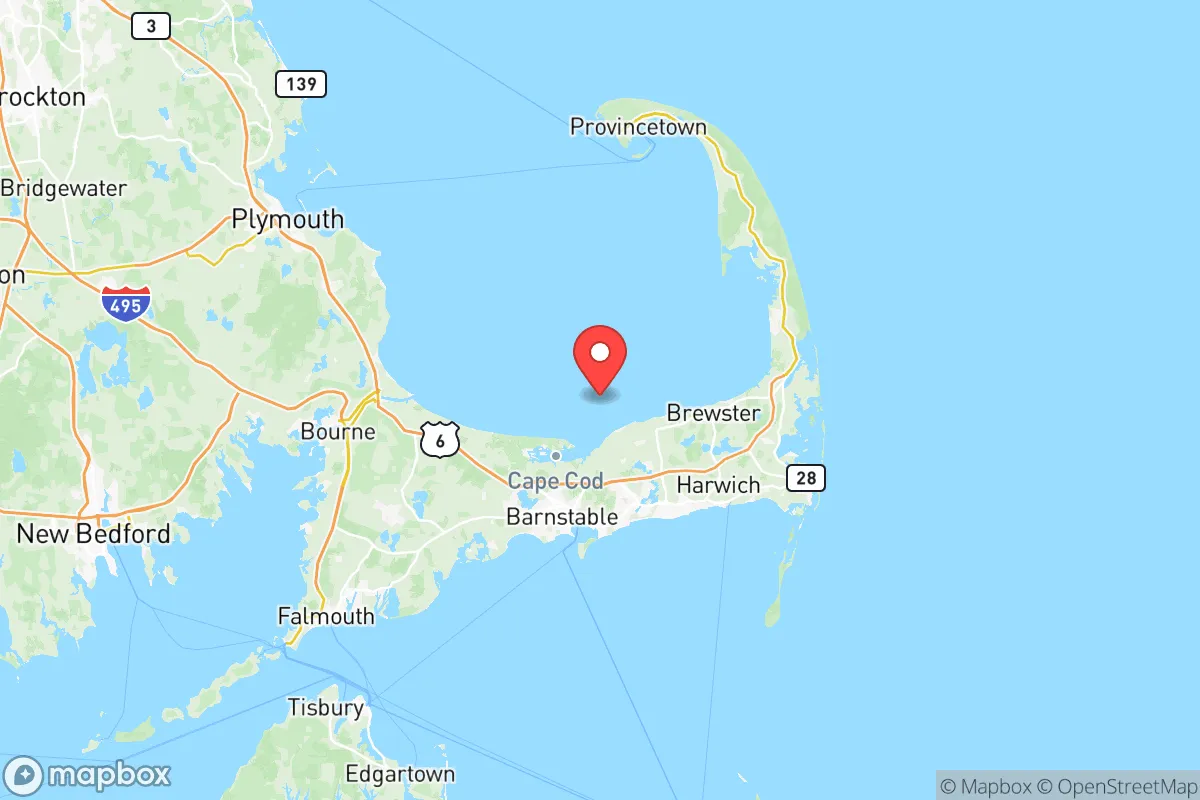
Photo: Wikipedia
Demographics of Barnstable County
Affluence Level in Barnstable County
An upper-middle-class area. Household wealth, education levels, and homeownership run ahead of national benchmarks.
People of Barnstable County
The people of Barnstable County, Massachusetts — better known as Cape Cod — are today a predominantly white, older, and highly educated population of roughly 230,000, shaped by centuries of maritime industry, seasonal tourism, and a steady influx of retirees from the Boston metro area. With a foreign-born share of just 4.2% and a population that is 85.9% white, the county remains one of the least ethnically diverse in Massachusetts, though its 3.6% Hispanic and 2.7% Black populations are slowly growing. The region's distinctive identity is rooted in a blend of historic Yankee seafaring culture, a strong seasonal economy, and a deep attachment to environmental preservation, making it a place where newcomers often arrive for a slower pace of life rather than economic opportunity.
Settlement & growth (pre-1960)
The human history of Barnstable County begins with the Wampanoag people, who inhabited the Cape for thousands of years before European contact, living in villages such as those at present-day Mashpee and Yarmouth. The Wampanoag were the first Native Americans encountered by the Pilgrims, and their relationship with the English settlers was marked by early cooperation followed by devastating land loss and disease. The first permanent English settlement on the Cape was established in 1637 at Sandwich, followed by Barnstable (1639), Yarmouth (1639), and Eastham (1644), as Puritan families from the Plymouth Colony fanned out across the peninsula to farm, fish, and trade.
Throughout the 18th and early 19th centuries, the Cape's population grew slowly, anchored by subsistence farming, fishing, and the rise of whaling and shipping industries in ports like Provincetown, Chatham, and Wellfleet. The region's Yankee Protestant character was deeply entrenched, with little immigration from non-English groups. The mid-19th century brought a modest influx of Irish immigrants, who arrived during the Great Famine (1845–1852) and found work in the fishing fleets and on the railroads that began connecting Cape towns to Boston. Many Irish families settled in Hyannis and Falmouth, where they formed the foundation of the region's Catholic community.
By the late 1800s, the Cape's maritime economy was in decline, and the population actually shrank as young people left for industrial jobs in Boston and beyond. The arrival of the railroad in the 1870s and 1880s began to transform the region into a summer destination for wealthy Bostonians, who built vacation homes in places like Woods Hole, Osterville, and Harwich Port. This seasonal tourism economy would become the dominant economic force for the next century, but it did not drive large-scale permanent immigration. The population remained overwhelmingly white and native-born, with small Portuguese and Cape Verdean fishing communities in Provincetown and Truro adding the only notable ethnic diversity before 1960.
Modern era (post-1965)
The post-1965 era in Barnstable County has been defined less by international immigration and more by domestic migration, particularly the arrival of retirees and second-home buyers from the Boston and New York metropolitan areas. The completion of the Bourne and Sagamore Bridges in the 1930s had already made the Cape more accessible, but it was the construction of the Mid-Cape Highway (Route 6) in the 1950s and the rise of air conditioning that truly opened the region to year-round suburbanization. Towns like Sandwich, Mashpee, and Barnstable saw significant residential development from the 1970s onward, as families and empty-nesters sought a coastal lifestyle within commuting distance of Boston.
Immigration to the Cape has remained modest compared to the rest of Massachusetts. The largest foreign-born group today is from Portugal and the Azores, a continuation of the fishing-industry migration that began in the late 19th century, with concentrations in Provincetown and Falmouth. The Hispanic population, now 3.6% of the total, has grown primarily through domestic migration from other parts of the Northeast and from Central America, with many working in the landscaping, hospitality, and construction sectors that support the tourism economy. These families are most visible in Hyannis, the county's commercial hub, and in the lower-income neighborhoods of Falmouth and Dennis.
The Black population, at 2.7%, is small but historically significant, with roots in the African American communities that have long summered in Oak Bluffs on Martha's Vineyard (though that is Dukes County) and in the year-round presence of families in Hyannis and Mashpee. The East and Southeast Asian population (1.1%) and Indian subcontinent population (0.5%) are both very small, concentrated among professionals working in healthcare and education in Barnstable and Falmouth. The county's 47.4% college-educated rate is well above the national average, reflecting the high proportion of affluent retirees and remote workers who have moved to the Cape in recent decades.
The future
Barnstable County's population is projected to remain stable or decline slightly over the next decade, as the region's high housing costs and limited year-round job opportunities constrain in-migration. The county's median age, already among the highest in Massachusetts, will continue to rise as the baby boomer generation ages in place and younger adults leave for more affordable areas. The population is becoming slightly more diverse, with the Hispanic and Asian shares expected to grow gradually, but the county will remain overwhelmingly white and native-born for the foreseeable future.
The most significant demographic trend is the increasing concentration of year-round residents in the mid-Cape towns of Barnstable, Yarmouth, and Dennis, while the outer Cape (Provincetown, Truro, Wellfleet) becomes increasingly seasonal and second-home oriented. The growth of remote work since 2020 has brought a new wave of younger professionals to towns like Falmouth and Sandwich, but this has also intensified the housing crisis, pushing out working-class families and accelerating the region's economic stratification. The Wampanoag Tribe of Gay Head (Aquinnah) and the Mashpee Wampanoag Tribe continue to assert their sovereignty and cultural presence, but their populations remain small.
For someone moving to Barnstable County now, the region offers a stable, safe, and environmentally conscious community with excellent schools and a strong sense of place, but it is not a place of rapid demographic change or economic dynamism. The Cape is becoming more exclusive, more seasonal, and more dependent on tourism and healthcare as its economic anchors, while its year-round population grows older and more affluent. Newcomers who can afford the high cost of housing and who value natural beauty, quiet communities, and a slower pace of life will find the Cape welcoming, but those seeking ethnic diversity, urban amenities, or a growing job market may find it limiting.

* Values derived from national, state, county, city and local statistics and may differ in a specific area. Last updated: 2026-08-08T18:50:57.000Z
Narrative content on this page is AI-generated and may contain mistakes. Verify any details that matter before acting on them.
ReloMaps may earn a commission from affiliate links at no extra cost to you.

