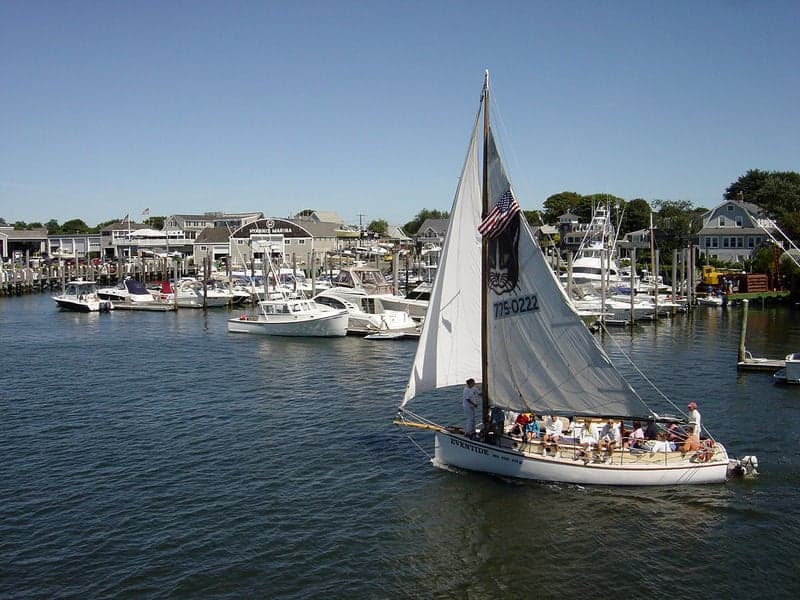
Photo: Wikipedia
Personal Sovereignty in Barnstable County
Viable for self-reliance. Generally workable, though some barriers may limit total independence.
What does Personal Sovereignty tell us?
Personal Sovereignty measures your capacity for self-reliance and independence with minimal government friction. Higher scores mean fewer barriers between you and the way you want to live... but it assumes you have the space you need and good neighbors.
What does this tell us?
Personal Sovereignty measures your capacity for self-reliance and independence with minimal government friction. Higher scores mean fewer barriers between you and the way you want to live... but it assumes you have the space you need and good neighbors.
State Policy
Energy independence: Importer (5% of energy produced in-state)
Personal Liberty
Homesteading

Personal Liberty Analysis
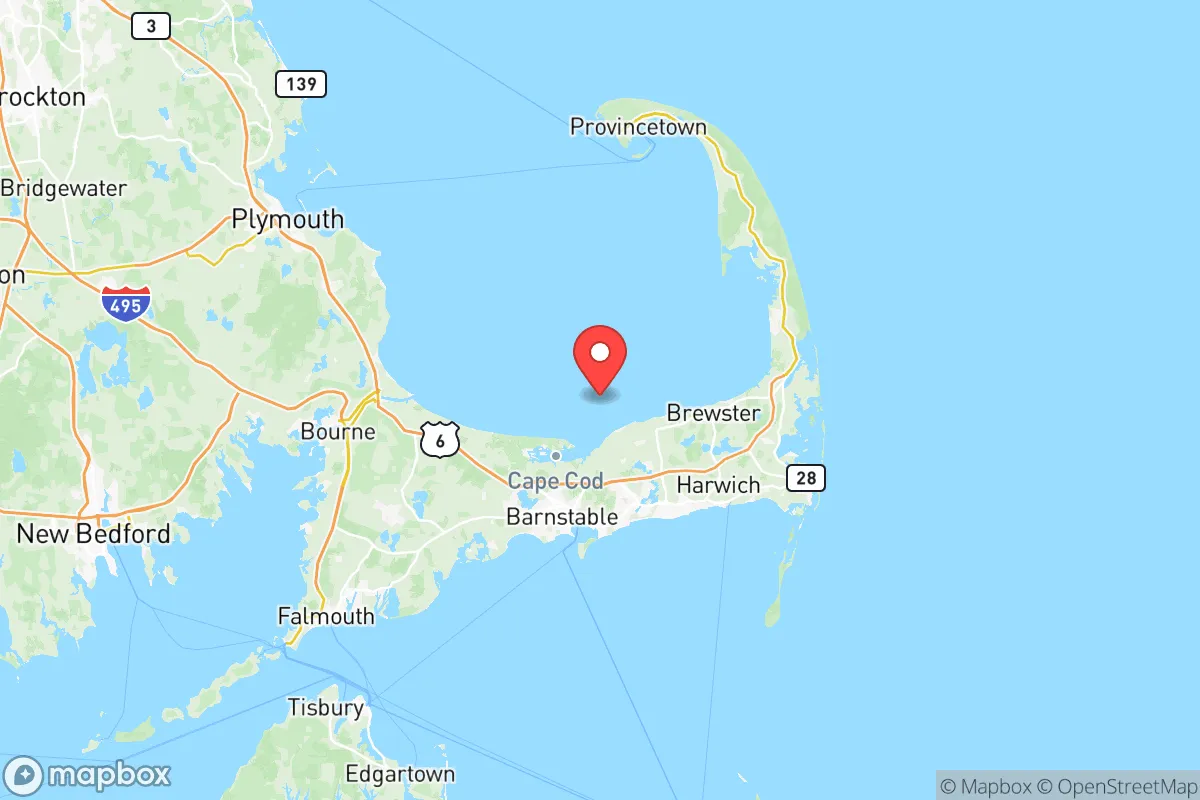
Barnstable County, encompassing Cape Cod, presents a nuanced personal sovereignty environment that balances Massachusetts state-level mandates with localized town governance, creating a patchwork of autonomy that varies significantly from one community to the next. While the state imposes some of the nation's most restrictive gun laws and highest tax burdens, the Cape's distinct geography and culture foster a degree of self-reliance in daily life that differs markedly from the Boston metro area. For individuals and families prioritizing personal freedom, understanding the interplay between state authority and local character in towns like Sandwich, Barnstable, and Provincetown is essential before relocating.
Tax burden and regulatory posture across Cape Cod towns
Massachusetts carries a reputation for high taxation, and Barnstable County reflects this with a combined state and local tax burden that consistently ranks among the top ten nationally. The state imposes a flat 5.0% income tax on all earned income, with no local income tax option, and a 6.25% sales tax that applies broadly. Property taxes in Barnstable County average roughly 1.1% of assessed home value, but this varies by town: Sandwich and Yarmouth levy rates near 1.3%, while Provincetown and Truro hover closer to 0.8% due to higher property valuations. The regulatory posture is decidedly heavy-touch at the state level, with extensive environmental regulations under the Massachusetts Environmental Policy Act (MEPA) and the Cape Cod Commission overseeing regional development. This commission reviews projects exceeding certain thresholds, adding layers of permitting that can frustrate homeowners seeking to build or renovate. Towns like Falmouth and Dennis have additional local wetland bylaws that further restrict property modifications, while Bourne and Mashpee, with larger land areas and less dense development, offer comparatively lighter regulatory friction for small-scale projects.
Self-defense rights and gun law specifics in Massachusetts
Massachusetts enforces some of the strictest firearm regulations in the United States, which directly impacts personal sovereignty for self-defense-minded residents. The state requires a License to Carry (LTC) for both open and concealed carry, issued by local police chiefs with discretionary authority. Barnstable County's licensing climate varies by town: Sandwich and Barnstable are generally considered more permissive, with chiefs routinely issuing unrestricted LTCs to qualified applicants, while Provincetown and Wellfleet have historically been more restrictive, sometimes imposing sporting-purpose restrictions. The state bans "assault weapons" by feature-based criteria, limits magazine capacity to ten rounds, and requires a firearms safety course for licensure. Stand-your-ground laws do not exist; Massachusetts imposes a duty to retreat in public spaces before using deadly force. Home defense is legally protected under the Castle Doctrine, but the burden of proof remains on the defender. For those prioritizing self-defense, choosing a town like Sandwich or Barnstable over Provincetown can meaningfully affect the ease of obtaining an unrestricted carry permit.
Self-reliance and homesteading viability: lot sizes, zoning, and off-grid feasibility
Homesteading and off-grid living face significant headwinds across Barnstable County due to state building codes, environmental regulations, and local zoning. Minimum lot sizes vary dramatically: Truro and Wellfleet require two-acre minimums in many districts, while Yarmouth and Dennis often allow half-acre lots. However, even on larger parcels, off-grid systems face regulatory hurdles. Massachusetts requires grid connection for new construction in most towns, and solar-plus-battery systems must comply with strict fire safety codes. Rainwater collection is legal but limited to non-potable uses, and composting toilets require local board of health approval, which is inconsistently granted. Bourne and Mashpee, with more rural character and fewer wetland constraints, offer the best prospects for self-reliant living, though even there, full off-grid independence is impractical without significant legal workarounds. Livestock keeping is generally permitted on parcels over one acre, but town bylaws vary: Sandwich allows up to four hens without a permit, while Provincetown restricts all livestock in residential zones. For serious homesteaders, the Cape's regulatory environment is better suited to small-scale gardening and hobby livestock than to full self-sufficiency.
Personal liberties: parental rights, medical autonomy, speech, and property
Massachusetts law generally supports parental rights in education, with a statutory right to opt children out of specific curriculum materials and a transparent records access law. However, the state mandates comprehensive sex education in public schools, and parents cannot opt out of entire subjects—only specific materials. Medical autonomy is constrained by state vaccine mandates for school attendance, with only narrow medical exemptions available; philosophical exemptions were eliminated in 2021. Barnstable County's school districts vary in their responsiveness to parental concerns, with Sandwich and Bourne often cited as more accommodating to conservative families, while Provincetown and Truro lean heavily progressive. Free speech protections follow First Amendment standards, but Massachusetts has a robust anti-SLAPP law that can deter certain property-related speech. Property rights are significantly curtailed by the Wetlands Protection Act and local conservation commissions, which can restrict development even on private land. Homeowners in Falmouth and Dennis frequently encounter permitting delays for routine projects like deck additions or driveway expansions due to wetland buffer zones, while Mashpee and Bourne offer comparatively straightforward approval processes for similar work.
Overall, Barnstable County offers a mixed personal sovereignty environment that requires strategic town selection. The state's high tax burden and restrictive gun laws are non-negotiable, but within the county, Sandwich, Bourne, and Barnstable provide the most favorable conditions for self-defense rights, parental autonomy, and property flexibility. Provincetown, Truro, and Wellfleet lean heavily toward progressive governance with tighter regulations on firearms and land use. For those comparing the Cape to other regions, the regulatory density here is substantially higher than in New Hampshire or Maine, but lower than in neighboring Suffolk County (Boston). The trade-off is access to a unique coastal environment and community character that many find worth the constraints on personal sovereignty.

* Values derived from national, state, county, city and local statistics and may differ in a specific area. Last updated: 2026-08-08T18:50:57.000Z
Narrative content on this page is AI-generated and may contain mistakes. Verify any details that matter before acting on them.
ReloMaps may earn a commission from affiliate links at no extra cost to you.

