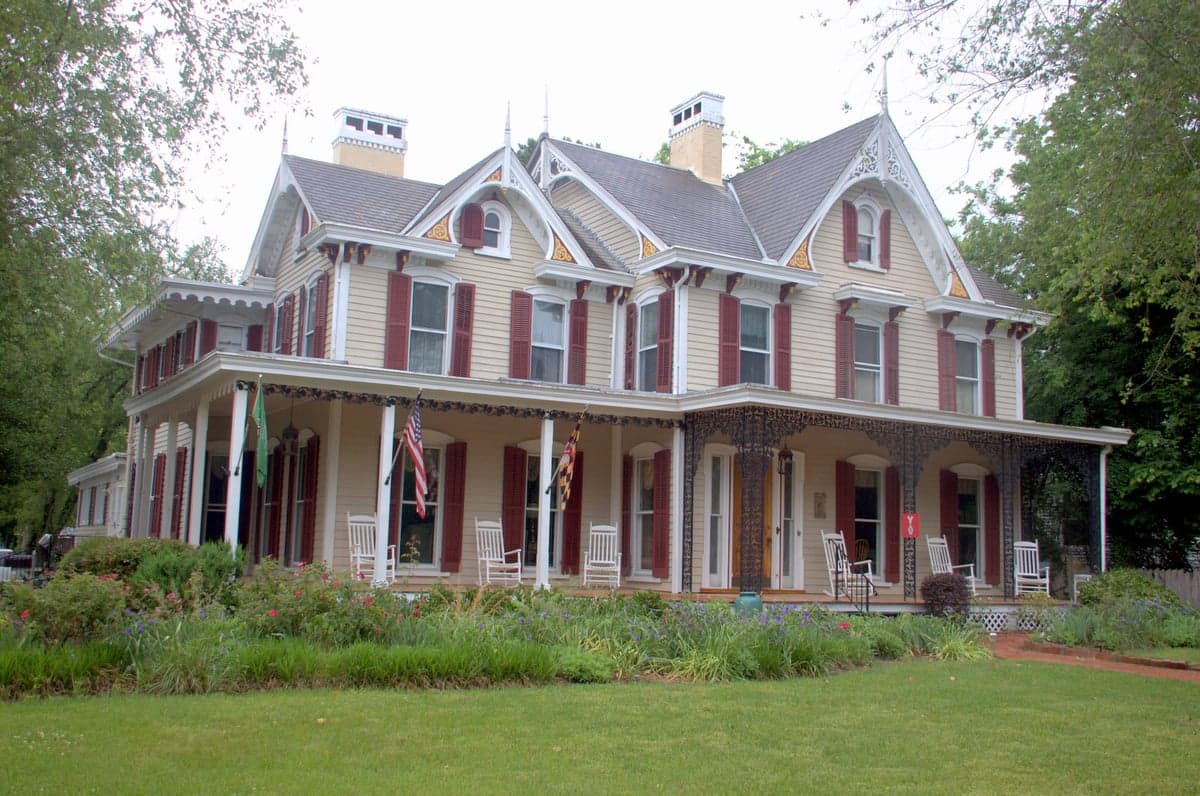
Photo: Wikipedia
Political ClimatePolitical Climate in Worcester County
Showing district-level results — no local-only data available.
Local Political AnalysisPolitical Analysis of Worcester County
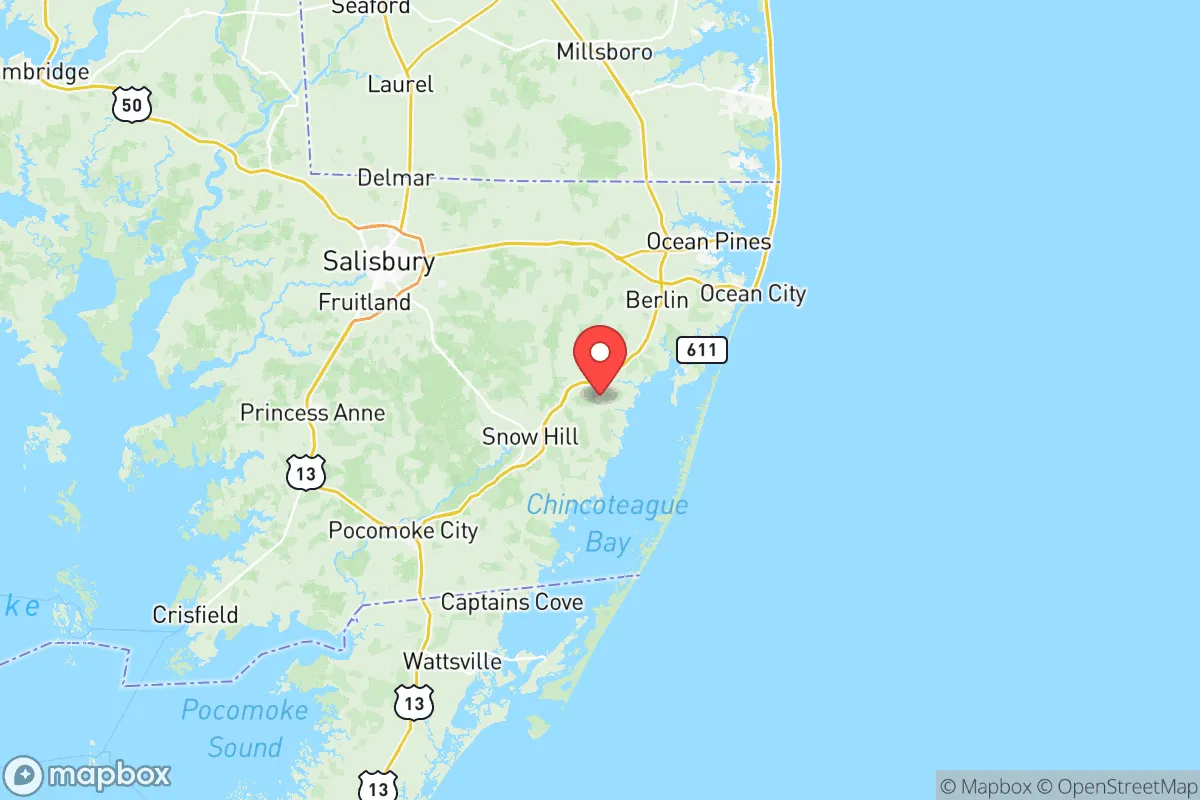
Worcester County, Maryland, is a reliably Republican stronghold in a deeply blue state, carrying a Cook Partisan Voting Index of R+8. This stands in stark contrast to Maryland's statewide PVI of D+17, making the county one of the most conservative pockets on the Eastern Shore. The political reality here isn't static, though; the county's lean is a mix of deep-rooted GOP loyalty in rural areas and a slow, noticeable shift in the coastal tourist towns, creating a more nuanced political landscape than the simple R+8 label suggests.
How it compares
The gap between Worcester County and the rest of Maryland is vast. While the state as a whole has trended bluer over the last decade—driven by the D.C. suburbs and Baltimore City—Worcester has held firm. In the 2024 presidential election, the county voted for Donald Trump by a margin of roughly 58% to 40%, a stark contrast to the statewide result where Kamala Harris won by over 20 points. This isn't a new phenomenon; it's a long-standing cultural and economic divide. The county's politics are more aligned with the rest of the rural Eastern Shore and the Deep South than with Annapolis or Montgomery County. The real story is the internal variation. Ocean City, the county's economic engine, is a fascinating bellwether. While its year-round residents lean conservative, the summer influx of tourists and seasonal workers from blue states creates a more moderate, sometimes even slightly liberal, atmosphere in the resort's core. In contrast, towns like Berlin and Snow Hill are more consistently red, with local elections often decided in Republican primaries. The swing precincts aren't in the rural farmlands; they're in the coastal communities where second-home owners and retirees from the Mid-Atlantic have settled, slowly nudging some precincts toward purple.
What this means for residents
For a conservative resident, Worcester County feels like a refuge. Local government, from the county commissioners to the school board, is overwhelmingly Republican. Tax policy is generally business-friendly, and there's a strong cultural emphasis on property rights, hunting, and a slower pace of life. You'll find that the local GOP is well-organized and that conservative social values are the default in most public discourse. For a liberal resident, the experience is different. You'll likely find your political tribe in Ocean City or among the growing number of remote workers in Berlin, but you'll be in the minority. State-level policies—like gun laws, environmental regulations on the Bay, and minimum wage increases—are often viewed with suspicion locally, creating a persistent tension between what Annapolis mandates and what the county wants. This dynamic means that liberal residents often feel they have to be more vocal and organized to have their voices heard on local issues, particularly around development and environmental protection.
The cultural and policy distinctions are sharp. Worcester County is one of the few places in Maryland where you'll see "Don't Tread on Me" flags flying next to "Keep Maryland Open" signs. The local economy is heavily dependent on tourism and agriculture, which shapes the political priorities: keeping taxes low to attract businesses, maintaining a conservative fiscal approach, and pushing back against state-level environmental regulations that could impact farming or development. The county's Board of Education has been a flashpoint in recent years, with debates over curriculum and library books mirroring national culture wars. For anyone moving here, the key takeaway is that Worcester County offers a distinctly conservative lifestyle within a blue state, creating a constant, low-grade political friction that defines daily life for both sides. It's a place where you can have a deep conversation about local crabbing regulations one minute and a heated debate about national politics the next, and that's just how folks like it.

State Political ClimatePolitical Climate in Maryland
State Political AnalysisPolitical Environment in the State
Maryland is one of the most reliably Democratic states in the country, with a Cook Partisan Voting Index of D+17, meaning it votes about 17 points more Democratic than the national average in presidential elections. The state hasn't voted for a Republican presidential candidate since George H.W. Bush in 1988, and Democrats hold supermajorities in both chambers of the General Assembly. Over the past 10-20 years, the state has shifted further left as the Washington, D.C. suburbs have grown and diversified, while the rural western and eastern parts of the state have become more solidly Republican. For a conservative-leaning relocator, the reality is that you'll be living in a blue state with blue policies, but the degree of that blue varies dramatically depending on where you land.
Urban vs. rural divide
The political map of Maryland is a classic story of a deep blue core surrounded by redder rural areas. The Democratic stronghold is the Washington, D.C. suburbs — Montgomery County and Prince George's County — which together cast about a third of the state's votes and routinely deliver 75-85% Democratic margins. Baltimore City is even more lopsided, often hitting 90% Democratic. The other major population center, Anne Arundel County (home to Annapolis), has been trending blue but remains more competitive, with Democrats winning it narrowly in recent cycles. On the flip side, the rural areas are deeply Republican. Garrett County in the far west, Cecil County on the Eastern Shore, and Carroll County northwest of Baltimore all vote Republican by 20-30 points or more. Frederick County is a bellwether — it was reliably red for decades but has been trending purple as D.C. commuters move in, and it voted for Joe Biden in 2020. The Eastern Shore counties like Queen Anne's and Talbot are also red but with a more moderate, country-club Republican flavor. The practical takeaway: if you want a conservative environment, you're looking at the western mountains, the Eastern Shore, or the northern exurbs like Hampstead or Manchester in Carroll County.
Policy environment
Maryland's policy environment is consistently progressive, and the tax burden is among the highest in the nation. The state has a progressive income tax with rates from 2% to 5.75%, and counties add their own piggyback tax, so combined rates can exceed 8% in places like Montgomery County. Property taxes are also above average, and the state has an estate tax that kicks in at $5 million. On the regulatory side, Maryland has strict environmental laws, a high minimum wage ($15 an hour as of 2024, indexed to inflation), and strong labor union protections. Education spending per pupil is among the top five in the country, driven by the Blueprint for Maryland's Future law, which pours billions into K-12 schools. Healthcare is heavily regulated, and the state runs its own health insurance exchange under the Affordable Care Act. Election laws are among the most accessible in the country — no-excuse mail-in voting, same-day registration, and early voting are all standard. For a conservative resident, the policy environment means higher taxes and more government involvement in daily life, but also well-funded schools and infrastructure in the areas that vote for it.
Recent policy direction
Maryland's recent legislative sessions have pushed the state further left on a range of issues that matter to relocators weighing personal liberties. On gun and self-defense law, Maryland has some of the strictest regulations in the country. The Firearm Safety Act of 2013 banned assault weapons and limited magazine capacity to 10 rounds, and in 2023 the state passed a law requiring a permit to purchase any firearm, effectively ending the "good and substantial reason" standard for carry permits after the Bruen decision. The state also has a red flag law and requires gun owners to report lost or stolen firearms within 72 hours. On parental and education rights, the Blueprint for Maryland's Future law expanded early childhood education and increased teacher pay, but also centralized curriculum decisions at the state level. Local school boards in conservative counties like Carroll and Garrett have pushed back on LGBTQ+ inclusive curriculum and critical race theory, but state law generally preempts local control. On speech and privacy, Maryland passed the Online Data Privacy Act in 2024, giving residents more control over how companies use their personal data, but also expanded hate crime statutes to cover political affiliation and gender identity. On medical and bodily autonomy, Maryland has codified abortion rights into state law, passed shield laws protecting providers who treat out-of-state patients, and legalized recreational marijuana (effective July 2023). On property rights, the state has strong eminent domain protections but also imposes some of the strictest land use and environmental regulations in the mid-Atlantic, particularly in the Chesapeake Bay watershed. On taxation and voting, the trend is toward higher taxes and easier access to the ballot. The 2023 legislative session saw a tax increase on high earners (income over $500,000) and a new digital advertising tax that has been challenged in court. Voting laws have been consistently expanded, with automatic voter registration at the DMV and pre-registration for 16-year-olds.
Civil unrest & political movements
Maryland has a history of visible political activism, particularly in Baltimore and the D.C. suburbs. The 2015 Baltimore protests following the death of Freddie Gray were a major flashpoint, leading to a state of emergency and National Guard deployment. Since then, the city has seen ongoing activism around police reform, with the Maryland General Assembly passing the Police Accountability Act of 2021, which repealed the Law Enforcement Officers' Bill of Rights and created a statewide use-of-force standard. On the right, there are active conservative groups in the rural counties, particularly around Second Amendment advocacy and school board elections. The "Parents' Rights" movement has been strong in Carroll and Frederick counties, with organized efforts to influence curriculum and library content. Immigration politics are less visible than in border states, but Maryland has sanctuary policies — state law prohibits state and local law enforcement from cooperating with federal immigration enforcement in most circumstances, and the TRUST Act (passed in 2023) further restricted ICE detainers. Election integrity has been a flashpoint in conservative counties, with some local election boards in Garrett and Cecil counties facing lawsuits over ballot drop box restrictions. The overall picture is that political activism is present but generally not disruptive to daily life, unless you're in Baltimore during a protest or in a rural county during a heated school board meeting.
Projection
Over the next 5-10 years, Maryland is likely to become even more Democratic as the D.C. suburbs continue to grow and diversify. The 2020 Census showed that Montgomery and Prince George's counties added population while most rural counties stagnated or declined. The Blueprint for Maryland's Future will continue to drive up education spending and taxes, and the state's environmental regulations will likely tighten further as the Chesapeake Bay cleanup goals become more ambitious. For a conservative relocator, the realistic expectation is that the state's political trajectory will not reverse. However, the rural and exurban counties will remain Republican strongholds, and the state's political culture is more pragmatic than ideological in many ways — Maryland has a long tradition of moderate Republican governors (Larry Hogan served two terms from 2015 to 2023) who were able to work with the Democratic legislature on budget and infrastructure issues. The key question is whether the state's high cost of living and tax burden will eventually slow in-migration, which could moderate the political shift. But for now, the trend is clear: Maryland is getting bluer, and the areas that are growing are the ones driving that change.
For a new resident, the bottom line is that Maryland offers a high quality of life with excellent schools, infrastructure, and access to nature and the Chesapeake Bay, but it comes with a high tax bill and a policy environment that leans progressive. If you're conservative, you'll find like-minded communities in the rural counties and exurbs, but you'll be living under state laws that may not align with your values on guns, taxes, and education. If you're liberal, you'll find the state's policies largely match your preferences, especially in the D.C. suburbs. The practical advice: choose your county carefully, because the difference between living in Montgomery County and Garrett County is like living in two different states.
* Values derived from national, state, county, city and local statistics and may differ in a specific area. Last updated: 2026-06-18T03:37:10.000Z
Narrative content on this page is AI-generated and may contain mistakes. Verify any details that matter before acting on them.
ReloMaps may earn a commission from affiliate links at no extra cost to you.

