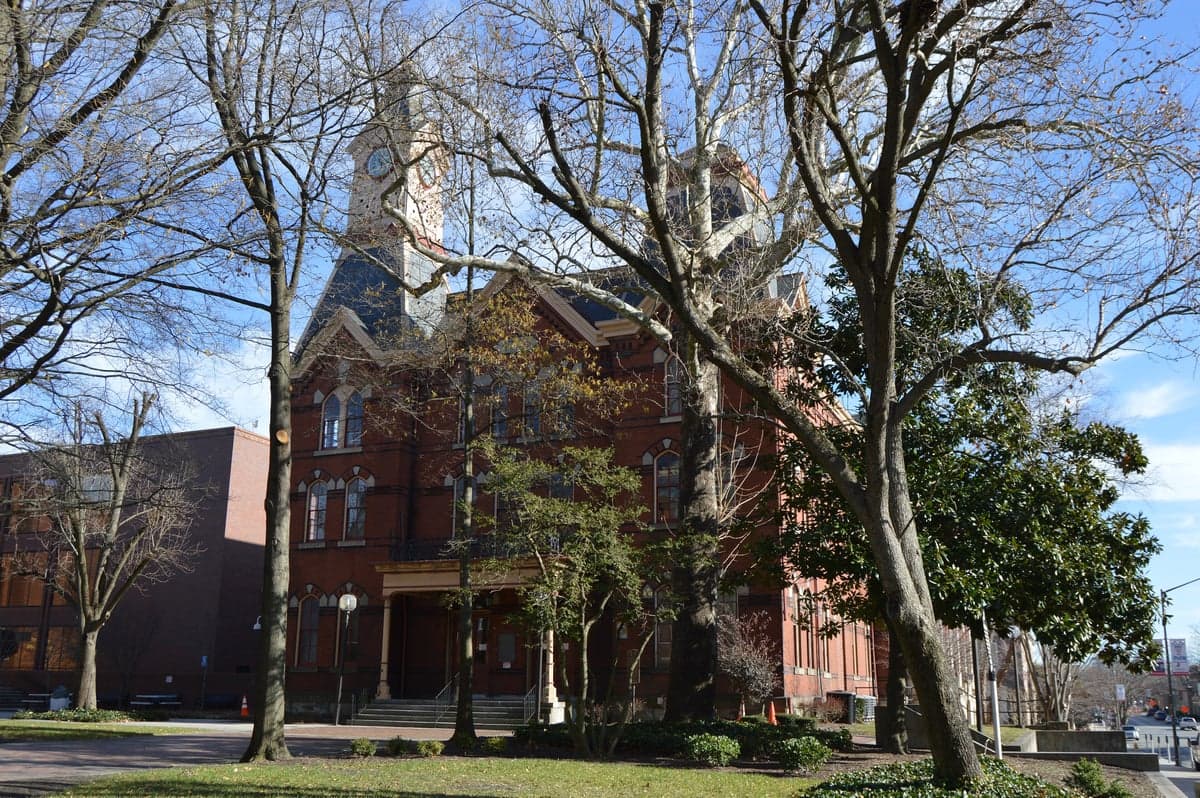
Photo: Wikipedia
Political ClimatePolitical Climate in Wicomico County
Showing state-level results — no local-only data available.
Local Political AnalysisPolitical Analysis of Wicomico County
Wicomico County has long been a reliably conservative stronghold in a state that’s increasingly drifting left, but the political winds are shifting here faster than many of us old-timers expected. In the 2024 presidential election, Donald Trump carried the county with roughly 57% of the vote, a solid margin that still felt a bit narrower than the blowouts we saw a decade ago. The county’s Cook PVI sits somewhere around R+12, a stark contrast to Maryland’s statewide D+17 rating, which is driven almost entirely by the D.C. suburbs and Baltimore City. That gap tells you everything about the cultural and political divide between our corner of the Eastern Shore and the rest of the state.
How it compares
When you stack Wicomico County against Maryland as a whole, the difference is night and day. The state legislature in Annapolis has been under Democratic supermajority control for years, pushing through policies like the Firearm Safety Act of 2013 and the recent 2023 gun licensing law that many of us see as an infringement on the Second Amendment. Meanwhile, Wicomico’s delegation to the General Assembly is split, with a few conservative voices like Senator Mary Beth Carozza (R-38) fighting to hold the line on taxes and property rights. The county itself is a patchwork: Salisbury, home to Salisbury University and a growing population of younger renters, leans blue in local races, with precincts around the university campus voting Democratic by 10-15 points in recent cycles. But head north to Fruitland or west to Delmar, and you’ll find precincts that break 65% Republican, driven by families and retirees who value low taxes and local control. The swing precincts are in the rural areas around Parsonsburg and Mardela Springs, where independent voters decide elections based on who promises to leave them alone the most.
What this means for residents
For those of us who’ve lived here a while, the growing progressive influence from Annapolis feels like a slow creep into our daily lives. Property taxes in Wicomico County remain relatively low compared to Montgomery or Howard counties, but state mandates on education spending and environmental regulations are pushing costs up. The county council, currently with a 5-2 Republican majority, has pushed back on state overreach, like the 2024 law requiring all new residential construction to meet net-zero energy standards, which many builders here say will jack up home prices by $20,000 or more. On the ground, this means residents have to stay vigilant—attending county meetings, voting in every primary, and supporting local candidates who prioritize personal freedoms over top-down mandates. The cultural vibe is still distinctly Eastern Shore: folks wave from their trucks, and the Salisbury Farmers Market is packed on Saturday mornings with people who just want to live their lives without a bunch of government interference.
Looking ahead, the trajectory is concerning if you value individual liberty. The influx of remote workers from D.C. and Baltimore, drawn by lower home prices, is slowly shifting the county’s demographics. Towns like Delmar and Hebron are seeing new subdivisions that bring voters who are used to more government services and less skepticism of state power. If this trend continues, Wicomico could start to look more like Anne Arundel County within a decade—still conservative relative to Maryland, but with a growing progressive minority that could flip the county council by 2030. For now, though, the county remains a place where a man can still put a Trump sign in his yard without worrying about his neighbors, and where the biggest political fights are about keeping the state’s hands off our local schools and our gun rights. It’s not what it was 20 years ago, but it’s still worth fighting for.

State Political ClimatePolitical Climate in Maryland
State Political AnalysisPolitical Environment in the State
Maryland is a deep blue state with a Cook PVI of D+17, meaning it votes about 17 points more Democratic than the national average in presidential elections. The dominant coalition is built on the massive, heavily Democratic populations of the Washington, D.C. suburbs (Montgomery and Prince George’s counties) and the Baltimore metro area, which together account for roughly half the state’s vote. Over the last 10-20 years, the state has shifted steadily leftward, driven by explosive growth in the D.C. exurbs and an influx of federal workers, while the once-competitive rural and Eastern Shore regions have become reliably Republican but are losing population share. If you’re considering a move here, understand that the state government in Annapolis is firmly controlled by progressives, and the political culture reflects that — but there are pockets of resistance, especially in the western mountains and the Chesapeake Bay’s eastern shore.
Urban vs. rural divide
The political map of Maryland is a tale of two worlds. The urban core — Baltimore City and the inner D.C. suburbs of Silver Spring, Bethesda, and College Park — vote 80-90% Democratic, powered by federal employees, academics, and a large minority population. The outer D.C. exurbs like Frederick and Columbia are more purple but trending blue as commuters push outward. Meanwhile, rural Maryland is a different country. Garrett County in the far west, along with Allegany County (Cumberland) and the Eastern Shore counties like Queen Anne’s and Worcester (Ocean City), vote 60-70% Republican. The divide is stark: you can drive 45 minutes from downtown Baltimore to Harford County and go from a city that hasn’t elected a Republican mayor since the 1960s to a county that voted +20 for Trump in 2024. The state’s gerrymandered congressional map — widely criticized as one of the worst in the nation — ensures that even these red areas have little say in state policy, as the Democratic supermajority in Annapolis draws districts to dilute rural votes.
Policy environment
Maryland’s policy environment is aggressively progressive. The state has a graduated income tax with a top rate of 5.75%, plus county-level income taxes that push the combined rate over 8% in places like Baltimore City and Montgomery County. Property taxes are high, and the state recently enacted a digital advertising tax (the first in the nation) that targets big tech but ultimately hits consumers. On education, the Blueprint for Maryland’s Future law pours billions into public schools but has been criticized for expanding bureaucracy without measurable gains in test scores. Healthcare is heavily regulated, with a state-run insurance exchange and strict certificate-of-need laws that limit competition for hospitals. Election laws are among the most liberal in the country: no-excuse mail-in voting, same-day registration, and automatic voter registration are all in place. The state also has a sanctuary policy that limits cooperation between local law enforcement and federal immigration authorities, which has been a flashpoint in more conservative counties like Harford and Carroll. For a conservative-leaning resident, the policy environment feels like a constant uphill battle — the state government is not shy about using its power to tax, regulate, and mandate.
Trajectory & freedom
Maryland is becoming less free by nearly any measure of personal liberty. The most glaring example is gun rights: in 2023, the legislature passed the Gun Safety Act, which banned the open carry of handguns in most public places, required a 10-day waiting period for all firearm purchases, and expanded the list of “sensitive places” where carry is prohibited. This law was upheld by the 4th Circuit Court of Appeals, despite the Supreme Court’s Bruen decision. On parental rights, the state passed the Trans Health Equity Act in 2023, which allows minors to access gender transition procedures without parental consent in certain circumstances — a major concern for many families. Medical autonomy took a hit with the state’s strict COVID-19 mandates, which were among the longest-lasting in the nation. Property rights are under pressure from the Maryland Department of the Environment, which has aggressively expanded wetland and stormwater regulations, making it harder to develop or even improve private land. On the positive side, the state did pass a modest tax cut for retirees in 2024, but it was paired with a new tax on capital gains. The trajectory is clear: Annapolis sees no problem using state power to restrict individual choices, from what you can carry to how you raise your kids.
Civil unrest & political movements
Maryland has a history of political activism that leans heavily left. The 2015 Baltimore riots following the death of Freddie Gray were a national flashpoint, and the city remains a hub for Black Lives Matter and progressive organizing. In the D.C. suburbs, groups like Indivisible and Moms Demand Action are highly active, regularly lobbying for stricter gun laws and more progressive policies. On the right, the Maryland Republican Party is weak but has pockets of energy in the rural counties. The Garrett County Republican Club and the Eastern Shore Freedom Coalition hold regular rallies and have pushed for “Second Amendment sanctuary” resolutions, which over 20 counties have passed — though they are largely symbolic. Immigration politics are a constant source of tension: the state’s sanctuary policies have led to clashes between the governor’s office and local sheriffs, particularly in Frederick County, where the sheriff has publicly refused to comply with some state directives. Election integrity remains a hot topic, with many conservatives pointing to the state’s widespread mail-in voting system as ripe for fraud, though no major scandals have been proven. A new resident would notice the political divide most acutely in the suburbs: a Columbia homeowner’s association meeting might debate a diversity, equity, and inclusion (DEI) initiative, while a Hagerstown town hall might focus on property taxes and school choice.
Projection
Over the next 5-10 years, Maryland will likely become more blue. The D.C. suburbs continue to grow, with Montgomery County adding tens of thousands of new residents each year, many of them young professionals who lean left. The rural counties are aging and losing population, which means their political influence will shrink further. The state’s Democratic supermajority is unlikely to be broken, as gerrymandering and demographic trends favor the party in power. Expect more progressive legislation: a potential state-level wealth tax is already being discussed, and a public option for health insurance is on the table. The gun laws will likely get even stricter, and parental rights battles will intensify. The only wild card is the federal government: if the D.C. area sees a major downsizing of federal employment, the economic base of the blue counties could weaken, but that’s a long shot. For someone moving in now, the realistic expectation is that the state will continue to drift left, with Annapolis becoming more assertive in regulating daily life.
Bottom line for a new resident: If you value low taxes, gun rights, parental control over your children’s education and healthcare, and a government that stays out of your business, Maryland is a tough place to live. The rural counties offer a more conservative lifestyle, but you’ll still be subject to state laws that you likely oppose. The best bet is to look at Carroll County or Harford County, where local governments push back against Annapolis, but even there, you’ll pay high taxes and deal with progressive state mandates. If you’re a single professional or a parent who can afford the cost of living and is willing to fight for your freedoms at the local level, Maryland has beautiful landscapes and strong schools — but be prepared for a constant political headwind.
* Values derived from national, state, county, city and local statistics and may differ in a specific area. Last updated: 2026-05-08T21:35:29.000Z
Narrative content on this page is AI-generated and may contain mistakes. Verify any details that matter before acting on them.
ReloMaps may earn a commission from affiliate links at no extra cost to you.

