
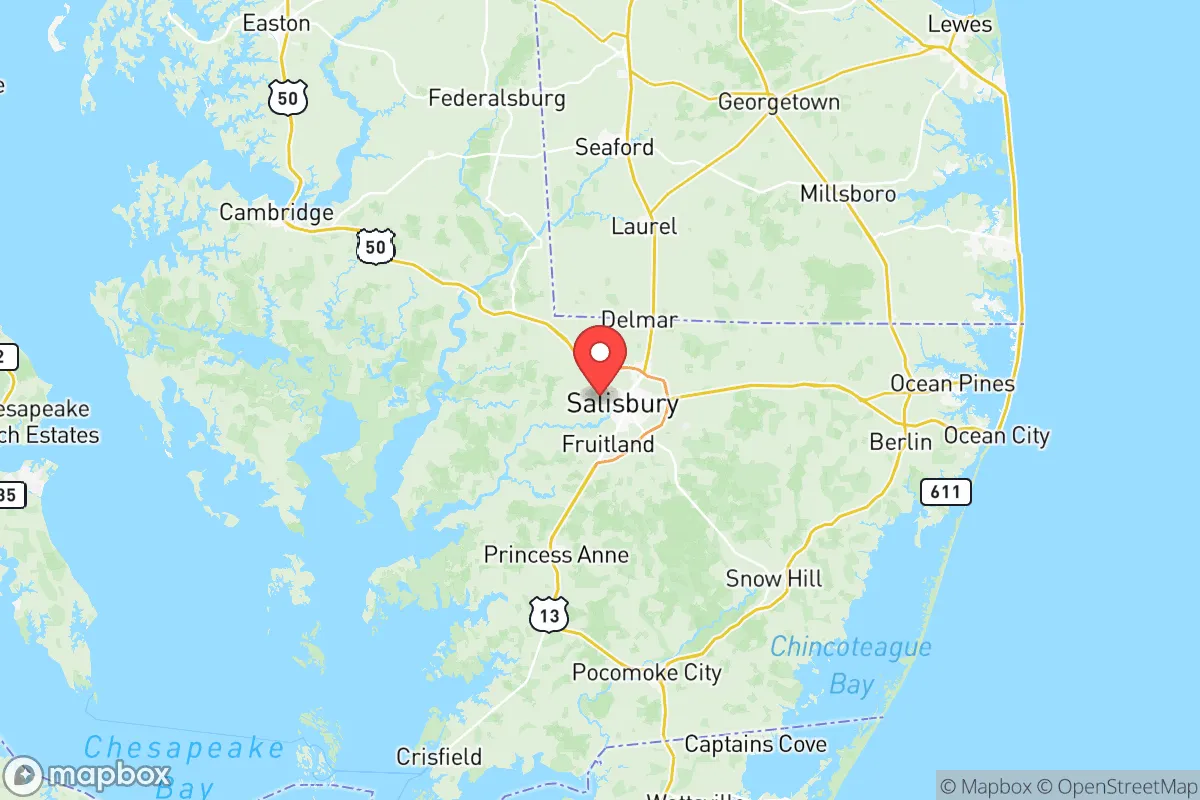
Photo: Wikipedia
Strategic Assessment of Wicomico County
Meaningful friction. Expect exposure to either population pressure, blast zones, or natural disaster risk. Consider buying a retreat property.
What does the Strategic Assessment tell us?
Our Strategic Assessment grades tactical survivability of an area. Major population centers, military targets, fallout zones, natural disasters, and border exposure all drive risk — lower exposure means a more defensible position in a crisis.
This is heavily inspired by Joel Skousen's Strategic Relocation book. Highly recommended you checkout the book ($)What does this tell us?
Our Strategic Assessment grades tactical survivability of an area. Major population centers, military targets, fallout zones, natural disasters, and border exposure all drive risk — lower exposure means a more defensible position in a crisis.
This is heavily inspired by Joel Skousen's Strategic Relocation book. Highly recommended you checkout the book ($)Strategic Pillars

Key Distances
Strategic Assessment Analysis
Wicomico County, Maryland, offers a surprisingly resilient position for those looking to put distance between themselves and the major urban corridors of the Northeast, while still maintaining access to critical infrastructure. Sitting on the Delmarva Peninsula, this area is effectively an island by geography—bounded by the Chesapeake Bay to the west and the Atlantic Ocean to the east—which naturally filters out a lot of the chaos that comes with living near D.C., Baltimore, or Philadelphia. For a conservative-leaning relocator thinking in terms of strategic depth, the county’s location provides a buffer zone that’s hard to beat, with Salisbury as the central hub and smaller towns like Fruitland, Delmar, and Pittsville offering quieter, more defensible options.
Geographic position and natural advantages for strategic relocation
The first thing to understand about Wicomico County is that it sits at a geographic chokepoint. The Delmarva Peninsula is only about 30 miles wide at its narrowest, meaning any large-scale movement of people or goods in or out of the area is funneled through a handful of bridges and tunnels. The Chesapeake Bay Bridge to the west and the Delaware Memorial Bridge to the north are the primary arteries, and both are single points of failure that could be controlled or compromised in a crisis. This isolation is a double-edged sword: it keeps out the worst of the urban spillover, but it also means you need to be self-sufficient. The county’s proximity to the Atlantic Ocean and the Chesapeake Bay provides abundant fishing and crabbing opportunities, with the Nanticoke River and Wicomico River cutting through the landscape, offering both water access and natural barriers. The terrain is flat and agricultural, which is excellent for small-scale farming and livestock, but offers little in the way of natural cover or defensible high ground. The climate is moderate, with hot, humid summers and mild winters, which means growing seasons are long enough to sustain a garden year-round with some planning.
Risks, exposures, and proximity to fallout-relevant landmarks
This is where the analysis gets serious. Wicomico County’s biggest strategic weakness is its proximity to several high-value targets that could become fallout zones in a major conflict or terrorist event. Salisbury itself is home to Salisbury University and a regional medical center, which are likely to be overwhelmed in a crisis, but the real concern is what lies within a 100-mile radius. To the north, you have the Salem and Hope Creek nuclear power plants in New Jersey, roughly 80 miles away, which are aging facilities that could become targets or suffer catastrophic failures. To the south, the Norfolk Naval Station and the Port of Virginia are about 120 miles away, both of which are prime targets for any adversary looking to cripple U.S. military logistics. Closer to home, the Choptank River and the Chesapeake Bay Bridge are potential chokepoints that could be targeted to isolate the peninsula. The county itself has no major industrial targets—no refineries, no military bases, no large-scale chemical plants—which is a net positive. However, the Wallops Island Flight Facility on the Eastern Shore of Virginia, about 50 miles south, is a NASA and military launch site that could draw attention. The risk of natural disasters is moderate: hurricanes and nor’easters are the primary threats, with storm surge being a real concern for low-lying areas near the rivers and bay. Flooding is a recurring issue in Salisbury’s downtown and along the Wicomico River, so any property purchase should be evaluated for flood zone status.
Practical resilience for a relocator: food, water, energy, and defensibility
For the prepper-minded relocator, Wicomico County offers a mixed bag. On the positive side, the agricultural base is strong. The county is part of Maryland’s poultry and grain belt, with chicken farms, corn, and soybean operations dominating the landscape. This means local food production is already in place, and with a little effort, you can tap into direct-from-farm purchasing or even barter networks. The Nanticoke River and the Wicomico River provide ample freshwater sources, but you’ll need to treat it—well water is common in rural areas, but municipal water in Salisbury comes from the groundwater aquifer, which is generally reliable but could be compromised in a prolonged power outage. Energy infrastructure is a concern. The grid on the Delmarva Peninsula is served by Delmarva Power, and it’s not particularly robust. Power outages are common during storms, and the lack of redundancy in transmission lines means restoration can take days. Solar panels with battery backup are a smart investment here, as the area gets plenty of sun, and the flat terrain makes installation straightforward. Defensibility is the weak point. The terrain is flat and open, with few natural chokepoints or elevated positions. Your best bet is to choose a property with some tree cover and distance from main roads. Pittsville and Delmar offer more rural, low-density options that are easier to secure than the suburbs of Salisbury. The county’s population is around 100,000, with Salisbury accounting for about 30,000 of that, so you’re not dealing with a dense urban environment, but you’re also not in the middle of nowhere. The local law enforcement presence is adequate but not overwhelming, and in a crisis, you’ll likely be relying on yourself and your neighbors. The political climate in Wicomico County leans conservative, especially in the rural areas, which aligns with the audience here. The county voted for Trump in 2020 and 2024, and the local culture is more self-reliant and gun-friendly than the rest of Maryland. That said, you’re still in a blue state, and state-level policies on taxes, gun control, and emergency management could become adversarial if things go sideways.
The overall strategic picture for Wicomico County is one of calculated trade-offs. You get a geographic buffer that keeps you away from the worst of the urban collapse scenarios, with access to water, food, and a like-minded community. But you also face real risks from nearby infrastructure targets, a flat and exposed terrain, and a grid that won’t hold up under pressure. This is not a bug-out location for a full societal collapse—it’s a place to ride out regional disruptions, civil unrest, or economic instability, provided you’ve done your homework on property selection and self-sufficiency. If you’re looking for a place that balances isolation with access to resources, and you’re willing to invest in solar, water filtration, and a good security plan, Wicomico County is a solid option. Just don’t expect to disappear completely—the bridges and tunnels are your lifeline and your vulnerability, and you need to plan accordingly.

* Values derived from national, state, county, city and local statistics and may differ in a specific area. Last updated: 2026-05-08T21:35:29.000Z
Narrative content on this page is AI-generated and may contain mistakes. Verify any details that matter before acting on them.
ReloMaps may earn a commission from affiliate links at no extra cost to you.

