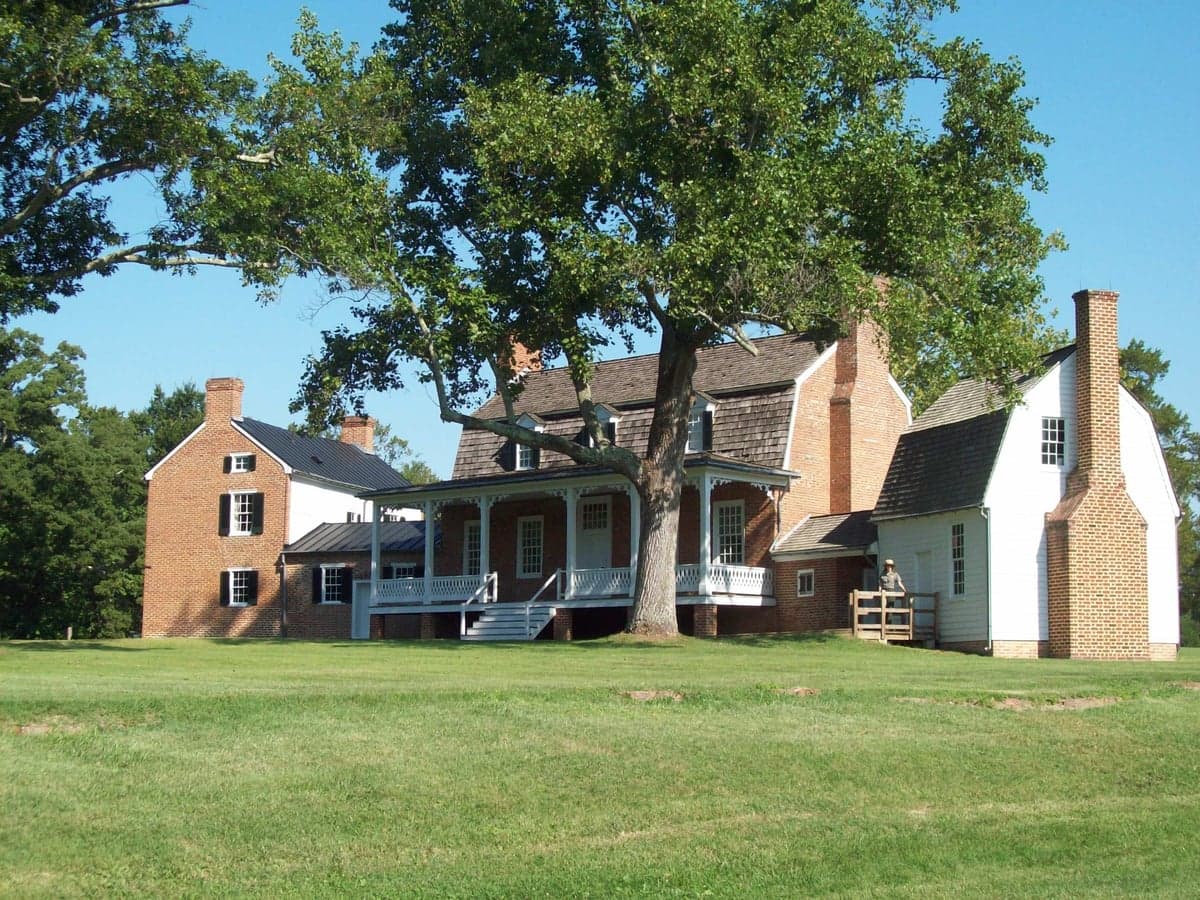
Photo: Wikipedia
Personal Sovereignty in Charles County
Viable for self-reliance. Generally workable, though some barriers may limit total independence.
What does Personal Sovereignty tell us?
Personal Sovereignty measures your capacity for self-reliance and independence with minimal government friction. Higher scores mean fewer barriers between you and the way you want to live... but it assumes you have the space you need and good neighbors.
What does this tell us?
Personal Sovereignty measures your capacity for self-reliance and independence with minimal government friction. Higher scores mean fewer barriers between you and the way you want to live... but it assumes you have the space you need and good neighbors.
State Policy
Energy independence: Importer (8% of energy produced in-state)
Personal Liberty
Homesteading

Personal Liberty Analysis
Charles County, Maryland, presents a nuanced personal sovereignty environment where state-level mandates frequently override local autonomy, creating a landscape that requires strategic navigation for those prioritizing independence. As part of the Washington DC metro area, Charles County sits at a crossroads of suburban growth and rural heritage, with its regulatory posture heavily influenced by Maryland’s progressive state government. This analysis examines how the county's specific tax burden, gun laws, homesteading viability, and personal liberties stack up for freedom-oriented individuals and families comparing it to other regions.
Tax burden and regulatory posture compared to surrounding counties
Charles County’s tax environment is relatively moderate by Maryland standards but heavy compared to much of the South or Midwest. The county’s income tax rate sits at 3.03% on top of Maryland’s state income tax, which ranges from 2% to 5.75%. Property taxes are a mixed bag: the county levy is $1.148 per $100 of assessed value, which is below the state average but can be significant on higher-valued homes in communities like La Plata and Waldorf. Business regulation follows state mandates, including a high corporate income tax (8.25%) and a complex permitting process in the more built-up areas. However, the county’s western and southern rural pockets—particularly around Bryans Road and Bel Alton—face fewer local zoning hurdles for smaller enterprises compared to the denser Waldorf corridor. The state’s strict vehicle emissions testing and energy code requirements apply uniformly, adding a layer of regulatory compliance that some relocating from Texas or Florida may find restrictive. For residents who prioritize low direct taxation and minimal bureaucratic overhead, the county is a mediocre fit by national standards, though it remains among the more business-friendly of Maryland’s suburban DC counties.
Self-defense rights and Maryland gun law specifics in Charles County
Maryland’s gun laws are among the strictest in the nation, and Charles County residents must navigate this state-level framework diligently. The state requires a Handerwear Permit (HGP) for concealed carry, which now operates under a "shall-issue" standard after the Bruen decision, but still mandates an 8-hour training course, fingerprinting, and a thorough background check. Additionally, Maryland bans so-called "assault weapons" (as defined by a features test) and limits magazine capacity to 10 rounds. In Charles County, the local Sheriff’s Office processes permits with moderate efficiency, but applicants should expect a 60-90 day wait. The county itself has a mixed gun culture—range facilities like the Myersville Gun Club offer places to practice, and many residents in rural areas like Ironsides and Newburg own firearms for sport and hunting. However, open carry is functionally impossible in most public spaces due to local ordinances and business policies. For self-defense-focused individuals, the trade-off is clear: you can legally carry with a permit, but your options for firearm types and magazine capacity are constrained. Those accustomed to the permissive laws of states like Missouri or Arizona will find the environment restrictive.
Homesteading and off-grid viability: lot sizes, zoning, and self-reliance
For those seeking self-reliance through gardening, small-scale livestock, or off-grid systems, Charles County offers a mixed but viable opportunity, especially in its Agricultural Preservation District. Minimum lot sizes for rural residential use are typically 2 to 5 acres in areas zoned as "Rural Agricultural," with the county actively supporting farmland preservation through tax credits. In communities like Faulkner and Pomfret, residents can legally keep chickens, goats, and even horses without special permits, as long as they meet setback requirements. However, off-grid living faces substantial hurdles: Maryland requires a connection to the electric grid for new construction, and solar installations must comply with state net metering rules that limit battery autonomy. Rainwater collection is permitted for non-potable uses like irrigation, but a permit is required for cisterns over 5,000 gallons. Septic systems are standard in rural zones but must meet strict Maryland Department of the Environment standards for nitrogen removal, a cost that can run $10,000–$20,000 for installation. In the more suburban corners of Waldorf and St. Charles, homeowners associations often ban visible gardens, clothing lines, and satellite dishes, severely curtailing self-reliance practices. For the serious homesteader, the triangle between La Plata, Newburg, and Bryans Road offers the most permissive zoning and the largest affordable parcels, often available for $15,000–$25,000 per acre as of 2025.
Personal liberties: parental rights, medical autonomy, speech, and property rights
Charles County’s personal liberties landscape is shaped by Maryland’s progressive tilt, particularly in medical autonomy and education. Parental rights in public schools are limited compared to states with "parents’ bill of rights" laws: the school board in Charles County (elected, but nonpartisan in practice) retains broad authority over curriculum and student services, with parents having the ability to opt children out of specific lessons but no formal veto over instructional materials. The county’s land use authority is typical for Maryland: the Planning Commission and Board of Commissioners control zoning changes, and property owners must navigate public hearings for variances. Property rights are further constrained by the state’s critical area laws that restrict development near the Potomac River and its tributaries, affecting many waterfront parcels in Pomfret and Bel Alton. Medical autonomy is heavily regulated at the state level: Maryland has no certificate of need for hospitals, but it mandates vaccine schedules for school attendance and tightly controls cannabis via state-licensed dispensaries. Speech protections are robust under the First Amendment, though the county enforces noise ordinances and sign-size limits that can affect political yard signs. The overall picture is one of moderate individual liberty with state-imposed guardrails, where residents have meaningful personal freedoms in daily life but face real limits on medical choice, property use, and educational control.
In sum, Charles County offers a regulated but functional autonomy environment for residents who understand and accept Maryland’s state-level constraints. It is far more freedom-oriented than neighboring Prince George’s County (higher taxes, denser regulation) but significantly less so than rural counties in West Virginia or south-central Pennsylvania. For the self-reliant individual or family, the optimal strategy is to locate in the county’s western or southern agricultural zones, where zoning is looser and community norms favor independence. However, for those whose personal sovereignty priorities include unrestricted gun rights, low business regulation, or minimal government oversight in education and healthcare, Charles County will feel comparatively heavy-handed—a trade-off of access to DC job markets and lower crime rates for a measured reduction in personal autonomy.

* Values derived from national, state, county, city and local statistics and may differ in a specific area. Last updated: 2026-06-24T18:30:44.000Z
Narrative content on this page is AI-generated and may contain mistakes. Verify any details that matter before acting on them.
ReloMaps may earn a commission from affiliate links at no extra cost to you.

