Photo: Wikipedia
Demographics of Charles County
Affluence Level in Charles County
A middle-class area roughly in line with national averages across income, home values, education, and employment.
People of Charles County
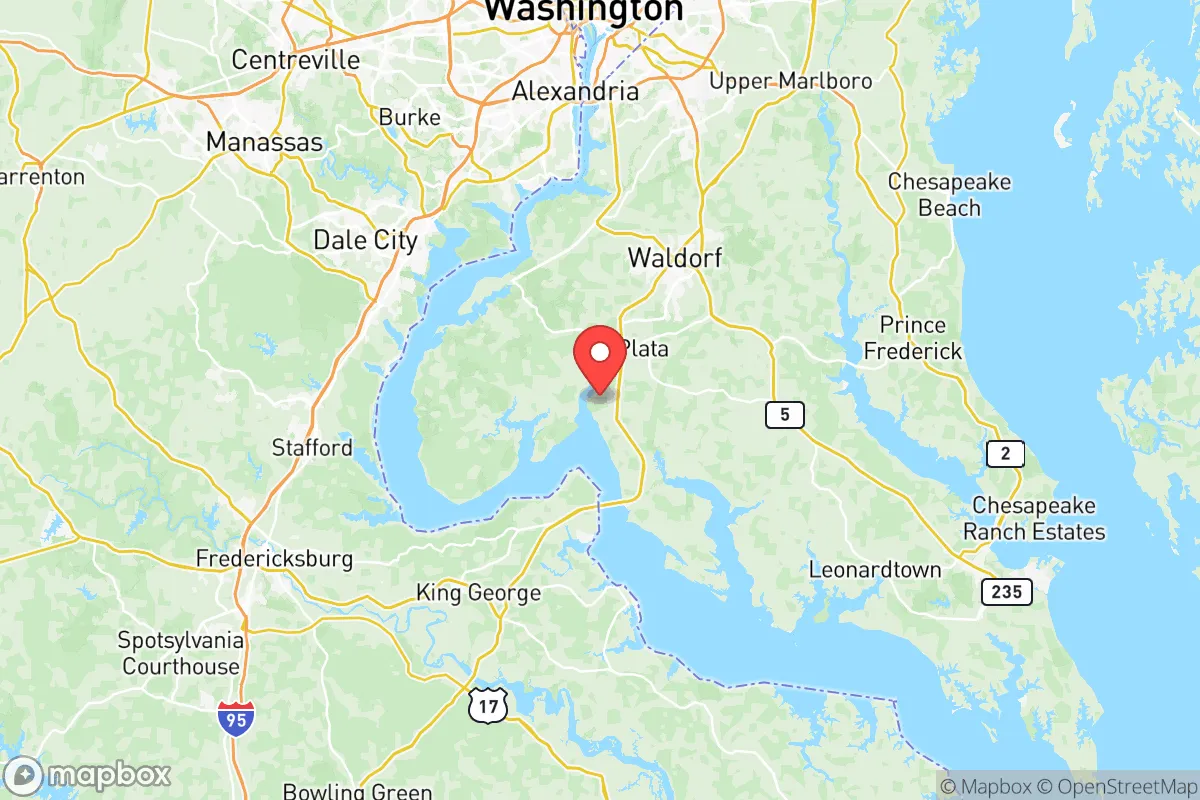
The people of Charles County, Maryland today form a predominantly Black-majority population (48.5%) with a significant White minority (33.5%) and growing Hispanic (7.5%) and Asian (2.2%) communities, concentrated in a suburban landscape stretching from the Potomac River to the Patuxent. With 168,710 residents and a foreign-born share of just 3.4%, the county remains one of the least internationally diverse in the Washington, D.C. metro area, yet its internal character is shaped by deep-rooted African American heritage, steady domestic migration from the D.C. suburbs, and a distinctly Southern Maryland identity that sets it apart from the faster-growing counties north of the Potomac.
Settlement & growth (pre-1960)
Long before European arrival, the area now called Charles County was home to the Piscataway people, an Algonquian-speaking nation whose villages lined the Potomac and Port Tobacco rivers. The Piscataway maintained a complex chiefdom with its capital at present-day Accokeek, and their population may have numbered several thousand before contact. English colonists from Maryland's first settlements at St. Mary's City began pushing into the region in the 1640s, establishing tobacco plantations along navigable waterways. The county was formally created in 1658, named after Charles Calvert, the third Lord Baltimore.
The early English settlers were primarily gentry and indentured servants from the southern and western counties of England, drawn by the promise of land grants under the proprietary system. They established the county's first permanent settlements at Port Tobacco (the original county seat) and Benedict, both river ports that shipped tobacco to London and Bristol. By the early 1700s, a small but significant number of Scots-Irish and German farmers had filtered into the interior, settling around La Plata and Bryantown, though they remained a minority in a county dominated by English-descended planters and their enslaved workforce.
Enslaved Africans arrived with the earliest English settlers, and by 1790, Black residents—overwhelmingly enslaved—made up roughly 45% of Charles County's population. Tobacco cultivation, which exhausted the soil and required constant new land, kept the enslaved population large and concentrated on plantations along the Potomac. After the Civil War, many freedmen remained in the county as sharecroppers and tenant farmers, establishing independent communities such as Pomonkey and Marbury. The Great Migration (1910–1970) saw a steady outflow of Black residents to Washington, D.C., Baltimore, and northern industrial cities, reducing the county's Black share from a post-Reconstruction peak of roughly 60% to about 35% by 1960.
White settlement in the late 19th and early 20th centuries was dominated by native-born Marylanders of English and Scots-Irish descent, with little new immigration from Europe. The county's economy remained agricultural—tobacco, corn, and livestock—until the mid-20th century, with small towns like Indian Head (site of a naval powder factory established in 1890) and Waldorf (a rural crossroads) serving as local trade centers. The population grew slowly, from about 20,000 in 1900 to just 32,000 in 1960, as the county remained isolated from the Washington, D.C. boom by the Potomac River and poor roads.
Modern era (post-1965)
The 1965 Hart-Cellar Act had a muted effect on Charles County compared to the rest of the D.C. metro area. The foreign-born share today stands at just 3.4%, far below the national average of 13.7% and the Maryland average of 15.5%. The small immigrant population is primarily Hispanic (7.5% of total residents), with many arriving from Central America—particularly El Salvador and Guatemala—since the 1990s. These newer residents have concentrated in Waldorf and La Plata, where service-sector jobs in construction, landscaping, and retail provide entry points. East/Southeast Asian residents (2.2%) are a smaller presence, with families from Vietnam and the Philippines settling in the same suburban corridors, often drawn by the county's lower housing costs compared to Montgomery or Prince George's counties. Indian-subcontinent residents (1.0%) are a still-smaller group, largely professionals employed in the D.C. federal workforce who commute from developments near the White Plains area.
The far more consequential demographic shift since 1965 has been domestic: the suburbanization of the Washington, D.C. region. The completion of the Capital Beltway (I-495) in 1964 and the extension of US 301 and MD 5 made Charles County accessible to commuters. From 1960 to 2020, the county's population quadrupled from 32,000 to over 168,000, with the vast majority of growth occurring in the northern half of the county. Waldorf transformed from a village of 500 people in 1960 to a sprawling suburban hub of roughly 80,000 today, absorbing middle-class families—both Black and White—fleeing higher housing costs and crime in Prince George's County and Southeast Washington, D.C. This domestic migration has reshaped the county's racial composition: the Black share rose from 35% in 1960 to 48.5% today, as African American families moved south along the I-95/US 301 corridor, while many White families moved farther south to St. Mary's County or out of state.
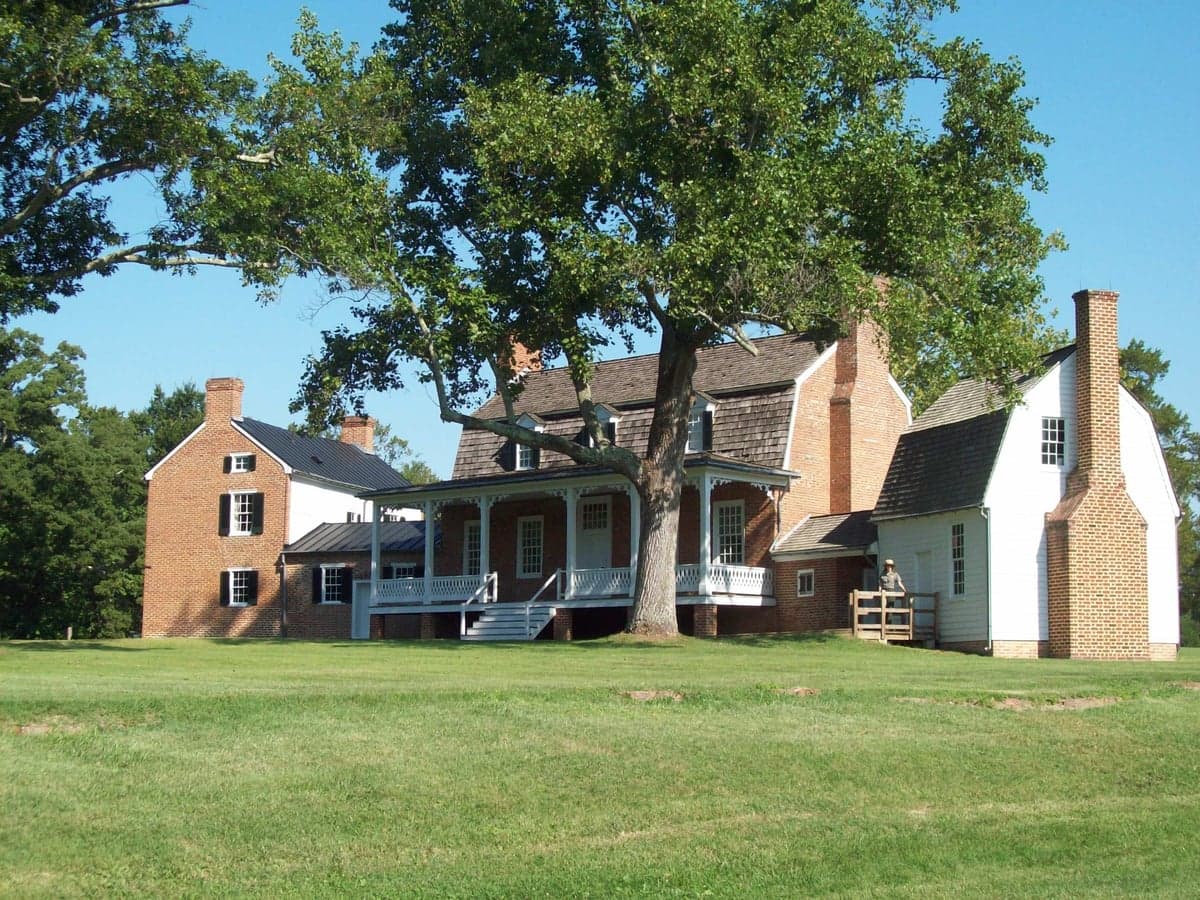
The county's cultural identity has shifted accordingly. Once a rural, tobacco-dependent area with a small-town Southern character, Charles County is now a predominantly suburban, majority-Black county with a strong middle-class ethos. The old plantation-era landmarks—Port Tobacco's historic district, the Dr. Samuel Mudd House near Bryantown—remain as tourist draws, but daily life revolves around the strip malls, subdivisions, and commuter lots of Waldorf and La Plata. The county's politics have moved leftward: Barack Obama won Charles County with 60% in 2012, and Joe Biden took 64% in 2020, reflecting the growing influence of Black suburban voters and the decline of the old rural White electorate.
The future
Charles County is projected to continue growing, though at a slower pace than the 1970–2000 boom. The Maryland Department of Planning estimates the county will reach roughly 200,000 residents by 2040, with most new development concentrated in the Waldorf and White Plains areas along the US 301 corridor. The racial composition is likely to become more diverse, but primarily through domestic migration rather than international immigration. The Hispanic share is expected to rise from 7.5% to perhaps 12–15% by 2040, driven by natural increase and continued migration from Central America. The Black share may stabilize or increase slightly as African American families continue to move south from Prince George's County, where housing prices have risen sharply. The White share, now 33.5%, is likely to decline further as older rural White residents age out and younger White families choose more distant exurbs or other states.
The county's cultural identity is evolving from its Southern Maryland roots toward a more generic suburban character, shaped by the same big-box retail, chain restaurants, and commuter culture found across the D.C. exurbs. The old tobacco economy is a memory—the last tobacco auction in the county was held in 2000—and the rural landscape is steadily giving way to subdivisions and town centers. Newer communities like the St. Charles planned community in Waldorf, which began development in the 1970s, now anchor a population that is younger, more diverse, and more transient than the county's historic residents.
For someone moving to Charles County now, the bottom line is this: you are joining a majority-Black, suburban, middle-class county that is still affordable by D.C. standards but increasingly connected to the region's economic and cultural mainstream. The county offers good schools, low crime relative to Prince George's County, and easy access to the nation's capital, but it lacks the ethnic diversity and urban amenities of closer-in suburbs. The people here are predominantly native-born Marylanders—Black and White—who value space, safety, and community, and who have shaped a place that feels more like the South than the Northeast, even as it becomes more like every other American suburb.

* Values derived from national, state, county, city and local statistics and may differ in a specific area. Last updated: 2026-06-24T18:30:44.000Z
Narrative content on this page is AI-generated and may contain mistakes. Verify any details that matter before acting on them.
ReloMaps may earn a commission from affiliate links at no extra cost to you.

