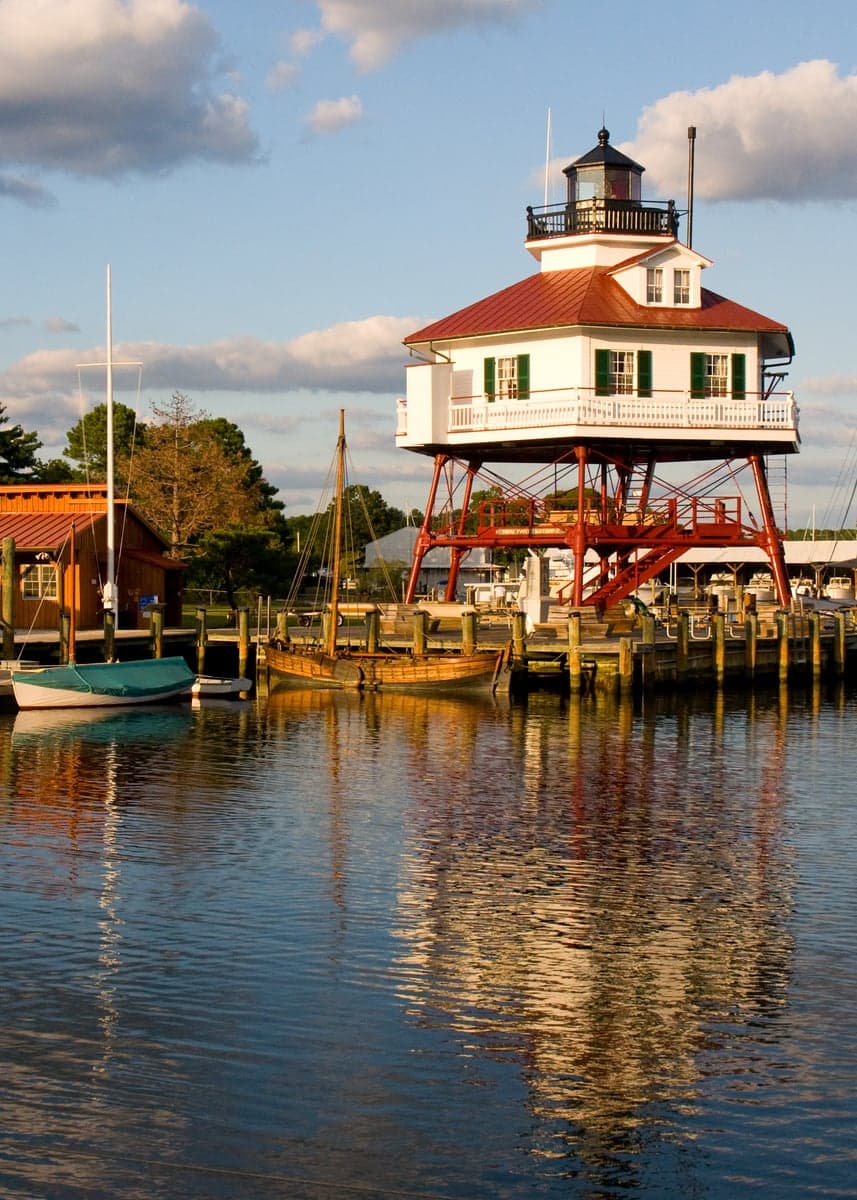
Photo: Wikipedia
Political ClimatePolitical Climate in Calvert County
Showing district-level results — no local-only data available.
Local Political AnalysisPolitical Analysis of Calvert County
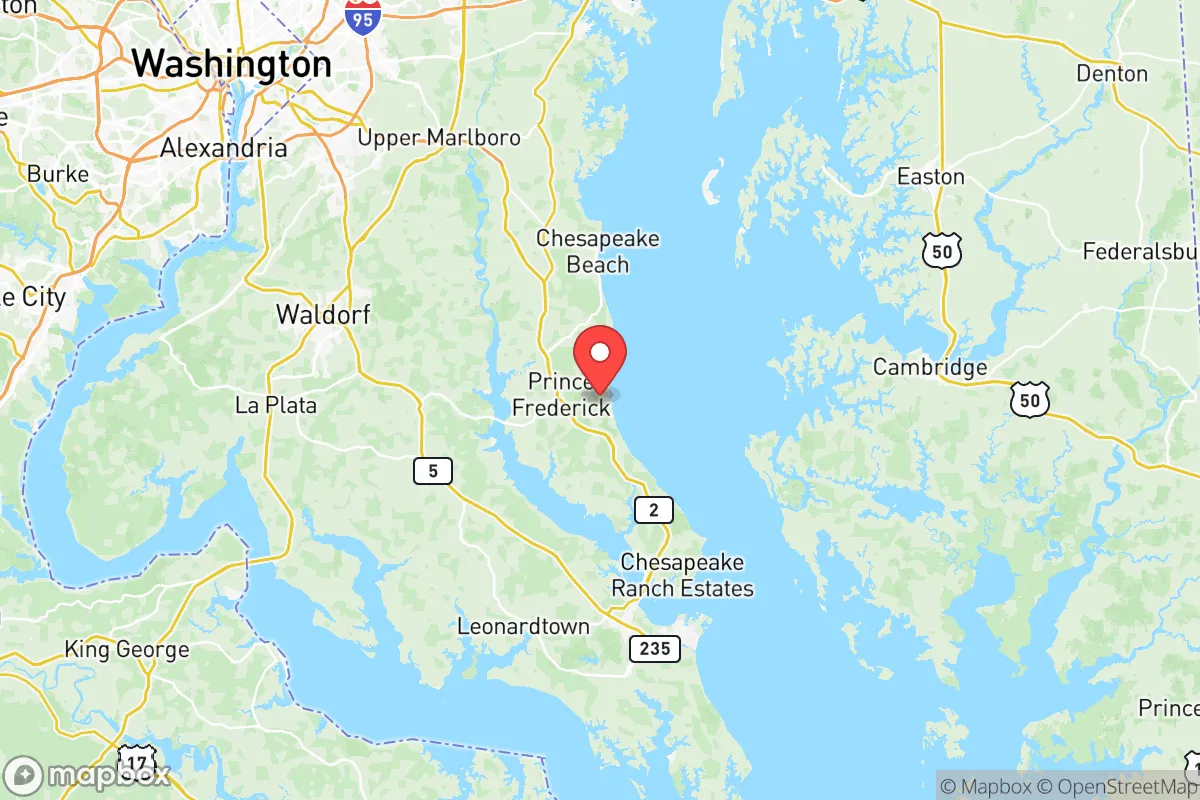
Calvert County, Maryland, carries a Cook Partisan Voting Index of D+17, making it a solidly Democratic jurisdiction that mirrors the statewide Maryland average of D+17. However, that single number masks a more nuanced reality: the county has been trending blue over the past decade, but the shift is uneven across its towns and villages. In the 2024 presidential election, the county voted for Kamala Harris by a margin similar to the statewide result, but precinct-level data reveals a clear split between the more rural, conservative northern end and the denser, liberal southern communities near the Patuxent River.
How it compares
At first glance, Calvert County’s D+17 rating puts it in the same partisan bucket as Maryland as a whole. But the comparison is deceptive. While the state’s blue lean is driven by the massive Democratic margins in Prince George’s and Montgomery counties, Calvert’s D+17 is a more recent and fragile development. As recently as 2016, the county was a swing jurisdiction, voting for Hillary Clinton by only 5 points. The shift accelerated after 2020, driven by an influx of professionals and families from the Washington, D.C., suburbs seeking more space. Towns like Chesapeake Beach and North Beach now vote reliably Democratic, with precincts there delivering 60-65% for Harris in 2024. In contrast, Huntingtown and St. Leonard remain more competitive, often splitting within 5 points. The rural precincts around Port Republic and Drum Point still lean Republican, but their share of the county’s total vote has shrunk as new housing developments go up along Route 4.
What this means for residents
For conservative residents, the blue trend means they are increasingly outnumbered at the ballot box, but not silenced. Local school board races and county commissioner elections remain competitive, with Republicans often winning seats in districts that include Huntingtown and St. Leonard. The county government has maintained a moderate, business-friendly posture, avoiding the sharp partisan fights seen in neighboring Anne Arundel or Prince George’s. For liberal residents, the shift has brought more progressive policies on environmental protection—especially around the Chesapeake Bay shoreline—and increased funding for public transit and affordable housing initiatives in the southern towns. However, the county’s zoning laws remain relatively restrictive, and efforts to expand density near the Solomons Island area have faced pushback from both longtime residents and newer arrivals who value the rural character.
Culturally, Calvert County still feels distinct from the hyper-urbanized parts of Maryland. You won’t find the same intensity of political activism as in Baltimore or Silver Spring. Instead, the politics here are shaped by practical concerns: the health of the Patuxent River Naval Air Station’s economy, traffic on Route 2/4, and the balance between development and farmland preservation. The county’s Democratic lean is real and growing, but it’s a quiet, suburban-style blue—not the loud, activist kind. For both conservatives and liberals, the takeaway is that Calvert County offers a relatively civil political environment where local issues often trump national party labels, even as the national trend pulls the county further left.

State Political ClimatePolitical Climate in Maryland
State Political AnalysisPolitical Environment in the State
Maryland is a deeply blue state with a Cook Partisan Voting Index of D+17, meaning it is about 17 points more Democratic than the national average in presidential elections. The state hasn't voted for a Republican presidential candidate since George H.W. Bush in 1988, and Democrats hold a supermajority in both chambers of the General Assembly. However, this solidly blue label masks a sharp internal divide: the state's political gravity is overwhelmingly driven by the densely populated, highly educated, and diverse Washington, D.C. suburbs, while the rest of the state—particularly the Eastern Shore and Western Maryland—votes reliably Republican. Over the last 10-20 years, the D.C. suburbs have only grown bluer and more populous, cementing the state's leftward trajectory even as rural areas have become more conservative.
Urban vs. rural divide
The political map of Maryland is a tale of two distinct regions. The Democratic stronghold is anchored by the "D.C. suburbs" of Montgomery County and Prince George's County, which together cast roughly a third of the state's votes and deliver margins of 70-80% for Democrats. Baltimore City and its inner-ring suburbs like Baltimore County also vote heavily blue, though Baltimore County has shown slight rightward drift in recent cycles. The Republican base is concentrated in the rural and exurban areas: Western Maryland (Garrett, Allegany, and Washington counties) votes 60-70% Republican, as does the Eastern Shore (counties like Queen Anne's, Talbot, and Wicomico). A key swing area is Anne Arundel County (home to Annapolis), which has trended blue over the past decade as D.C. commuters push in, but still has competitive local races. Frederick County, once a Republican stronghold, has flipped to lean Democratic as it becomes an exurb of both D.C. and Baltimore. The result is a state where the rural-urban cultural divide is stark: a resident of Cumberland (Western Maryland) and a resident of Silver Spring (Montgomery County) live in almost entirely different political worlds.
Policy environment
Maryland’s policy environment is consistently progressive, with high taxes and a robust regulatory framework. The state has a progressive income tax with rates up to 5.75%, plus a local "piggyback" tax that can push the top combined rate over 8%. Property taxes are moderate, but sales tax is 6% and applies to most services. The regulatory posture is business-friendly in some sectors (biotech, cybersecurity) but heavily restrictive on housing and land use, contributing to the state’s high cost of living. Education policy is a top priority: Maryland spends over $17,000 per student annually, and the Blueprint for Maryland’s Future law (2021) is a massive, multi-billion-dollar education reform package that expands pre-K, raises teacher salaries, and increases funding for low-income schools. Healthcare is heavily regulated, with a state-run insurance exchange and strong Medicaid expansion. Election laws are among the most accessible in the nation: no-excuse mail-in voting, same-day registration, and early voting are all standard. For a conservative relocator, the policy environment means high taxes and a government that actively intervenes in housing, education, and healthcare markets.
Recent policy direction
Maryland’s recent legislative direction has been aggressively progressive, particularly on social and civil liberties issues. On gun and self-defense law, the state passed the Gun Safety Act of 2023, which bans the open carry of firearms in most public places and requires a "good and substantial reason" for a concealed carry permit—a direct response to the Bruen Supreme Court decision. Parental and education rights have been a flashpoint: the state passed a law requiring all public schools to adopt a "comprehensive" sex education curriculum that includes LGBTQ+ topics, and it prohibits schools from notifying parents if a child changes their gender identity or pronouns without the child's consent. On speech and privacy, Maryland passed the Online Data Privacy Act (2024), one of the nation's strongest consumer privacy laws, but also expanded surveillance powers for law enforcement, including warrantless access to cell-site simulator data. Medical and bodily autonomy is fully protected: abortion is legal up to viability with no mandatory waiting period, and the state has a shield law protecting providers who serve out-of-state patients. Property rights are constrained by strict zoning and rent control in Montgomery County and Baltimore City. Taxation has seen no major cuts; instead, the state has raised the estate tax threshold but kept the inheritance tax. Voting and ballot access has been expanded: automatic voter registration, same-day registration, and no-excuse mail-in voting are all law. For a conservative, the direction is clearly toward more government regulation of firearms, more state control over education content, and more protections for abortion and LGBTQ+ rights.
Civil unrest & political movements
Maryland has a history of organized political activism on both sides. The 2020 George Floyd protests in Baltimore and the D.C. suburbs were large and occasionally violent, with property damage in Baltimore's Inner Harbor area. Since then, left-leaning activism has focused on police reform (the Maryland Police Accountability Act of 2021) and environmental justice (the Climate Solutions Now Act). On the right, the "We the People" movement and local Republican clubs are active in rural counties, particularly around Hagerstown and Easton, where they organize against school curriculum changes and gun control. Immigration politics are a major fault line: Maryland is a "sanctuary state" under the Maryland Values Act (2019), which limits local law enforcement cooperation with federal immigration authorities. This has led to flashpoints in counties like Frederick and Harford, where local sheriffs have publicly resisted. Election integrity controversies have been muted compared to other states, though some rural counties (like Garrett) passed symbolic resolutions questioning the 2020 results. A new resident would notice the political divide most acutely in the contrast between the D.C. suburbs, where "Defund the Police" signs were common in 2020, and Western Maryland, where "Don't Tread on Me" flags fly from pickup trucks.
Projection
Over the next 5-10 years, Maryland will likely become even more Democratic. The D.C. suburbs continue to grow faster than the rest of the state, driven by federal employment and tech jobs, and these new residents are overwhelmingly liberal. The rural counties are aging and losing population, which will reduce their electoral weight. The state's Democratic supermajority is unlikely to be threatened, meaning the policy direction—higher taxes, more regulation, progressive social policies—will continue. However, there is a wildcard: the state's high cost of living and tax burden are driving some middle-class families to neighboring states like Pennsylvania, Delaware, and West Virginia. If that out-migration accelerates, it could slow the leftward trend. For a conservative moving in now, expect to live in a state where your vote for president or Senate will be irrelevant, but where local elections in your county (if you choose a rural or exurban area) can still be competitive. The state will remain a national leader on progressive policy, particularly on abortion access, gun control, and education reform.
Bottom line for a new resident: If you are a conservative, you will be a political minority in Maryland, but you can find like-minded communities in Western Maryland, the Eastern Shore, or parts of Harford and Carroll counties. You will pay high taxes and live under laws you likely disagree with on guns, education, and immigration. If you are a liberal, you will find a state that aligns closely with your values, with strong protections for abortion, LGBTQ+ rights, and voting access, but you will also face a high cost of living and a housing market that is increasingly unaffordable. The practical takeaway: choose your county carefully, as the political experience of living in Montgomery County versus Garrett County is night and day, even though they share the same state government.
* Values derived from national, state, county, city and local statistics and may differ in a specific area. Last updated: 2026-06-12T16:56:14.000Z
Narrative content on this page is AI-generated and may contain mistakes. Verify any details that matter before acting on them.
ReloMaps may earn a commission from affiliate links at no extra cost to you.

