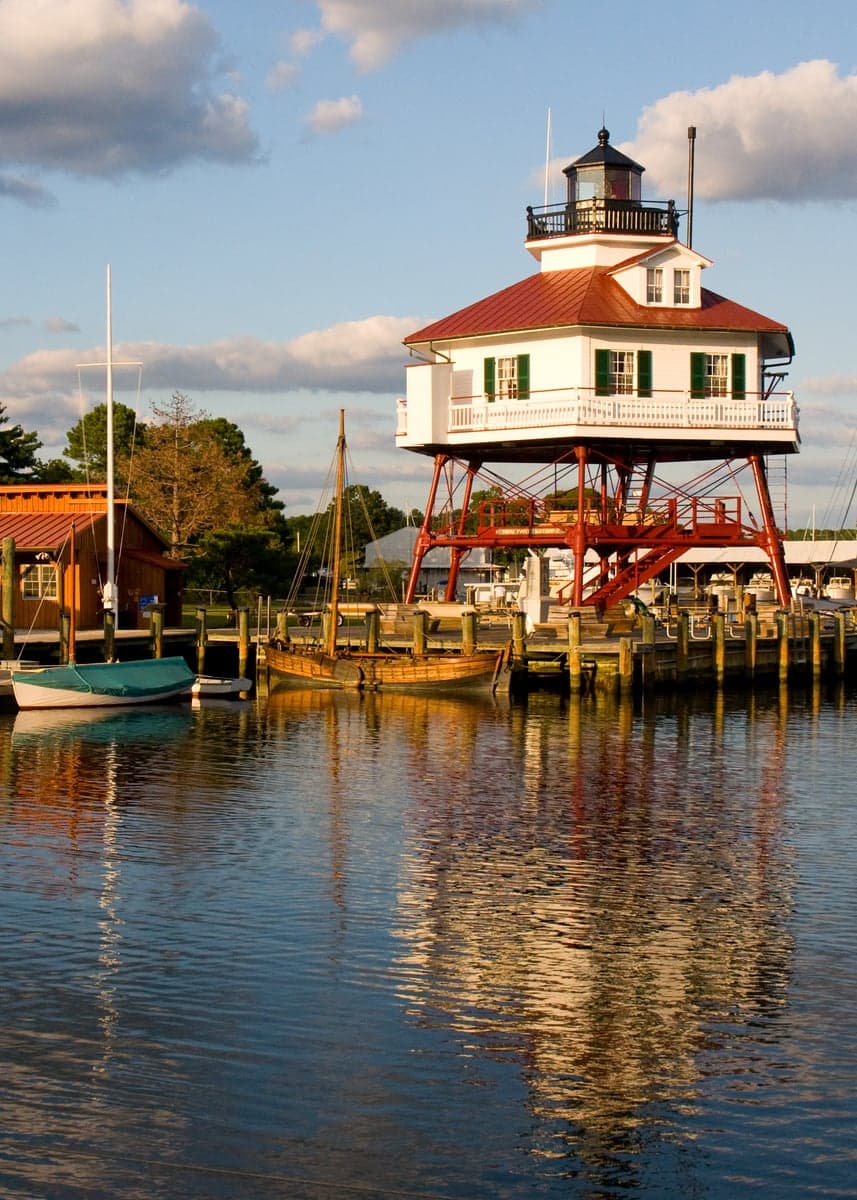
Photo: Wikipedia
Personal Sovereignty in Calvert County
Viable for self-reliance. Generally workable, though some barriers may limit total independence.
What does Personal Sovereignty tell us?
Personal Sovereignty measures your capacity for self-reliance and independence with minimal government friction. Higher scores mean fewer barriers between you and the way you want to live... but it assumes you have the space you need and good neighbors.
What does this tell us?
Personal Sovereignty measures your capacity for self-reliance and independence with minimal government friction. Higher scores mean fewer barriers between you and the way you want to live... but it assumes you have the space you need and good neighbors.
State Policy
Energy independence: Importer (8% of energy produced in-state)
Personal Liberty
Homesteading

Personal Liberty Analysis
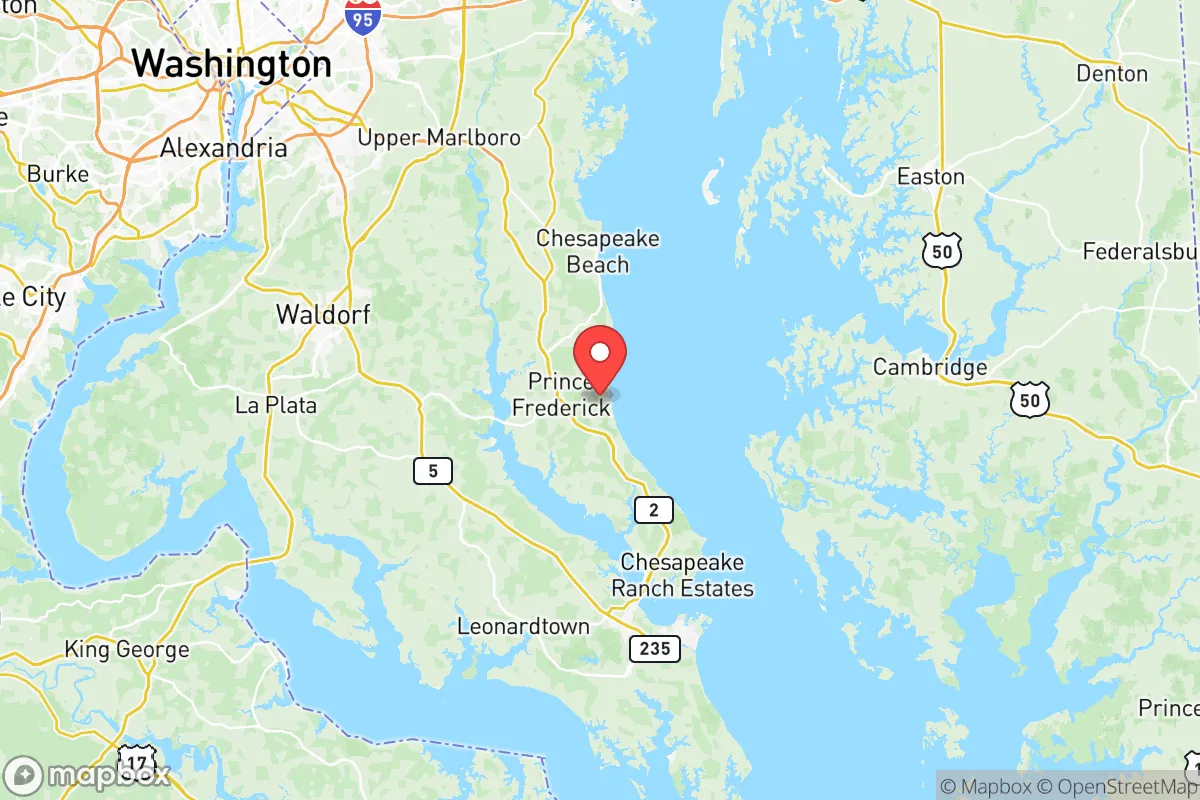
Calvert County, Maryland, offers a notably balanced environment for personal sovereignty, where residents enjoy significant autonomy in daily life while operating within a state-level framework that is moderately regulatory. Unlike the more restrictive policies found in neighboring Montgomery or Prince George’s counties, Calvert’s rural character and local governance create a lighter touch on individual decisions, particularly in areas like property use, self-defense, and family life. For those prioritizing personal freedom, the county’s mix of Chesapeake Bay waterfront, farmland, and suburban pockets provides a spectrum of independence, from the more hands-off atmosphere in towns like Lusby and Prince Frederick to the slightly more structured environment in Chesapeake Beach and North Beach.
Tax burden and regulatory posture: how Calvert County compares to the rest of Maryland
Maryland’s overall tax burden is among the highest in the nation, but Calvert County mitigates this with a relatively moderate local approach. The county’s income tax rate is set at 3.00% of taxable income, which is the state-mandated minimum for counties, meaning residents pay the lowest possible local income tax in Maryland. Property taxes are also competitive, with a county rate of approximately $0.892 per $100 of assessed value, significantly lower than in Anne Arundel or Howard counties. This lighter local tax burden is a deliberate policy choice, reflecting a regulatory posture that favors individual financial autonomy. Zoning is generally permissive for agricultural and residential uses, especially in the northern and southern parts of the county. For example, in Huntingtown and St. Leonard, large-lot residential zoning (typically 1-5 acres) is common, allowing for greater freedom in land use without the heavy-handed oversight seen in more urbanized jurisdictions. However, the state’s regulatory reach is still felt: Maryland’s strict environmental laws, particularly around the Chesapeake Bay Critical Area, impose restrictions on shoreline development and tree removal, which can limit property rights near the water. Overall, Calvert’s local government is pragmatic and business-friendly, but residents must navigate state-level mandates on everything from vehicle emissions to building codes.
Self-defense and gun law specifics: what Second Amendment supporters need to know
Calvert County is one of the more gun-friendly jurisdictions in Maryland, a state with some of the nation’s strictest firearm laws. The county’s sheriff’s office has historically been supportive of concealed carry permits, and the local culture strongly respects the right to self-defense. In practice, this means that while Maryland requires a permit to carry a handgun (a “wear and carry” permit), Calvert County residents often find the application process more straightforward than in Baltimore City or Montgomery County. The sheriff’s office in Prince Frederick processes applications efficiently, and the local gun culture is robust, with several shooting ranges and gun shops in towns like Lusby and Dunkirk. However, state law imposes significant constraints: a “good and substantial reason” is still required for a carry permit (though this is being challenged post-Bruen), and “assault weapons” and high-capacity magazines are banned statewide. For home defense, long guns and handguns are legal without a permit for possession, and Castle Doctrine protections apply, meaning no duty to retreat in one’s home. For those prioritizing self-defense, Calvert County offers a more welcoming environment than much of the state, but it is not a constitutional carry jurisdiction. The practical advice for a relocating Second Amendment supporter is to understand that while local enforcement is lenient, the state’s legal framework remains restrictive.
Self-reliance and homesteading viability: lot sizes, zoning, and off-grid feasibility
Calvert County is a strong candidate for homesteading and self-reliant living, particularly in its rural stretches. Zoning in areas like Huntingtown, St. Leonard, and Port Republic permits agricultural uses on parcels as small as 1-2 acres, and larger tracts of 5-10 acres are common. The county’s Agricultural Preservation Program has protected over 15,000 acres of farmland, ensuring that rural character remains intact. For off-grid living, the feasibility is moderate: Maryland requires connection to the electrical grid for new construction in most zones, but solar panels with net metering are widely permitted, and rainwater collection for irrigation is allowed (though potable rainwater collection for drinking is regulated by the health department). Septic systems are standard in rural areas, and well water is common, reducing reliance on municipal utilities. Composting toilets are legal with proper permitting. The county’s zoning code allows for “home occupations” and small-scale agricultural enterprises, such as beekeeping, chicken raising, and market gardening, without excessive red tape. In Lusby and Dowell, where the landscape is more wooded and less developed, residents often enjoy greater privacy and fewer neighbor complaints about activities like wood-burning or small workshops. However, the state’s environmental regulations, particularly the Critical Area Law, can restrict clearing, grading, and building within 1,000 feet of tidal waters, which affects many waterfront properties. For a homesteader, the best bet is to focus on inland parcels in the northern or southern ends of the county, where zoning is most permissive and state oversight is minimal.
Personal liberties: parental rights, medical autonomy, speech, and property
Calvert County generally respects personal liberties in line with its conservative-leaning character. Parental rights are strongly supported: the county’s school board has resisted controversial curriculum mandates from the state, and local parents have significant influence over school policies, particularly in areas like library materials and health education. Medical autonomy is a mixed bag: Maryland has a vaccine mandate for school attendance, but Calvert County has seen active parental choice movements, and the local health department is less aggressive than in urban counties. For medical freedom, the county has several independent-minded healthcare providers, and the rural nature means fewer restrictions on alternative medicine practices. Free speech is robust, with local government meetings and public forums being genuinely open to citizen input. Property rights are generally well-protected, though the state’s eminent domain powers and environmental regulations can be a concern for waterfront landowners. The county’s comprehensive plan emphasizes growth management, which can limit development density but also protects property values and rural character. In Chesapeake Beach and North Beach, where tourism and second homes are more common, there are stricter short-term rental regulations, but these are exceptions. For a family or individual who values the right to make personal decisions without government overreach, Calvert County offers a more favorable environment than most of the Washington, D.C., suburbs.
Overall, Calvert County stands out as a stronghold of personal sovereignty within Maryland, offering a lighter regulatory touch than the state average while still operating under its legal framework. For those coming from more restrictive states like California or New York, the county will feel liberating in terms of property use, gun culture, and local governance. For those from truly free states like Texas or New Hampshire, the state-level constraints on firearms, taxes, and off-grid living will be noticeable. The key advantage of Calvert County is its local culture: the sheriff, county commissioners, and school board are all responsive to residents who prioritize freedom, and the rural landscape provides ample room for self-reliance. For a relocation decision, it represents a pragmatic middle ground—substantial personal autonomy within a state that is not fully libertarian, but where local control makes a meaningful difference in daily life.

* Values derived from national, state, county, city and local statistics and may differ in a specific area. Last updated: 2026-06-12T16:56:14.000Z
Narrative content on this page is AI-generated and may contain mistakes. Verify any details that matter before acting on them.
ReloMaps may earn a commission from affiliate links at no extra cost to you.

