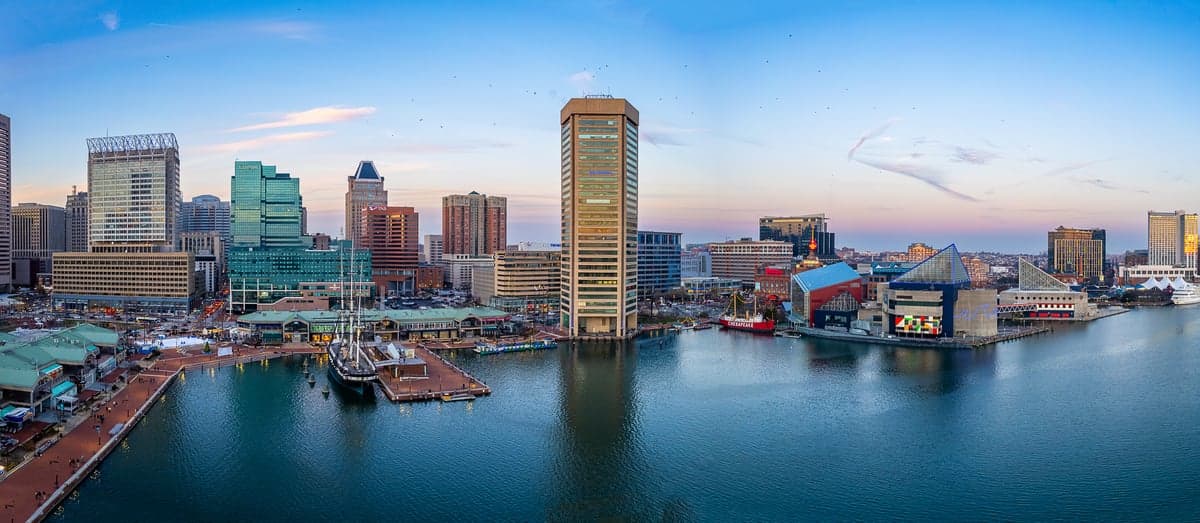
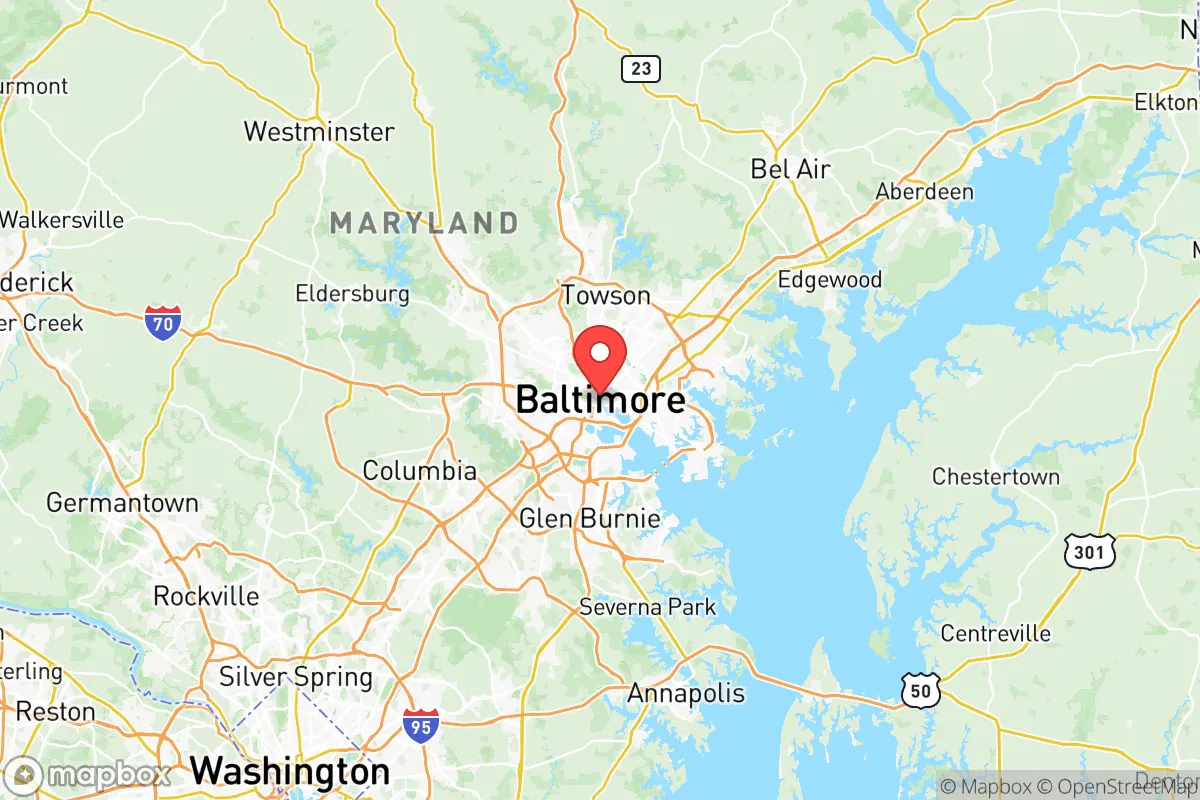
Photo: Wikipedia
Quality of Life in Baltimore City County
A livable area that tracks near national norms for affordability, walkability, and neighborhood health.
What does Quality of Life tell us?
Quality of Life measures an area by evaluating factors like cost of living, nearby amenities, country club access, airport proximity, socioeconomic signals and neighborhood character. For large states, this is a general average — quality of life can vary dramatically between metro areas, suburbs, and rural communities within the same state.
What does this tell us?
Quality of Life measures an area by evaluating factors like cost of living, nearby amenities, country club access, airport proximity, socioeconomic signals and neighborhood character. For large states, this is a general average — quality of life can vary dramatically between metro areas, suburbs, and rural communities within the same state.
Cost of Living
2% below national average
95%
The Real Cost of Living in Baltimore City County for 2026
| Tier | Individual | Family (4) |
|---|---|---|
| Survival | $21k | $39k |
| Comfortable | $43k | $63k |
| Luxury | $108k+ | $167k+ |
| Elite (Top 5%) | $152k+ | $235k+ |
Quality-of-Life Analysis
Baltimore City County, Maryland, presents a unique quality-of-life spectrum because it is coterminous with the independent city of Baltimore itself — there are no separate towns, villages, or rural unincorporated areas within its 92 square miles. The county’s character is defined entirely by the dense, historic urban fabric of Baltimore City, drawing residents who value walkable neighborhoods, cultural institutions, and employment hubs, while those seeking suburban or rural lifestyles must look to the surrounding counties of Baltimore, Howard, or Harford. The range of living options here is therefore not geographic but neighborhood-based, spanning from high-energy downtown districts to quieter, tree-lined residential enclaves, all within a single municipal boundary.
Largest town(s) & population centers
As the sole municipality, Baltimore City itself is the population center, with an estimated 570,000 residents. Daily life varies dramatically by neighborhood. Downtown and the Inner Harbor anchor the city’s commercial and tourist core, with high-rise apartments, office towers, and attractions like the National Aquarium and Oriole Park at Camden Yards. Fells Point and Federal Hill offer historic rowhouse living with bustling waterfront bars, restaurants, and a young professional crowd. Canton and Locust Point have seen rapid redevelopment, featuring modern townhomes and condos popular with families and millennials. Mount Vernon is the cultural heart, home to the Walters Art Museum, the Peabody Institute, and Washington Monument, attracting artists and academics. Hampden offers a quirky, village-like feel with independent shops and a strong sense of community. The average commute of 29.4 minutes reflects the city’s compact layout, though traffic on I-95 and the Baltimore Beltway can extend travel times for those working in the suburbs or Washington, D.C.
Smaller towns & rural pockets
Because Baltimore City County contains no separate incorporated towns or rural areas, the concept of “smaller towns” applies to distinct neighborhoods that function as self-contained communities. Roland Park and Guilford are historic, affluent enclaves with winding streets, large early 20th-century homes, and private schools, offering a suburban feel within city limits. Hamilton and Lauraville, in the northeast, provide a more middle-class, family-oriented atmosphere with single-family homes and local commercial strips. Cherry Hill and Brooklyn, in the south, are quieter residential areas with more green space. There are no rural pockets — the city is fully urbanized. Residents seeking true rural living must cross into Baltimore County, where areas like Hereford or Upperco offer farmland and horse country, but those are outside Baltimore City County’s jurisdiction.
Cost & lifestyle range
The cost of living index of 98 (slightly below the national average of 100) masks wide variation across neighborhoods. The median home value of $219,300 and median rent of $1,290 are affordable relative to the Northeast corridor, but prices climb sharply in desirable areas. At the high end, Roland Park and Federal Hill see median home values above $400,000, while Mount Washington and Locust Point command premium rents. At the lower end, neighborhoods like Sandtown-Winchester, Park Heights, and Frankford offer homes well below $100,000, though these areas face higher vacancy rates and fewer amenities. Lifestyle options range from the 24/7 energy of Power Plant Live! entertainment district to the quiet, leafy streets of Medfield or Beverly Hills. Amenities like grocery stores, parks, and transit access are unevenly distributed, with food deserts in parts of east and west Baltimore contrasting with the abundant farmers’ markets and specialty shops in Hampden and Mount Vernon.
Baltimore City County is best suited for those who value urban authenticity, historic architecture, and cultural density over suburban space or rural quiet. Professionals in healthcare, education, and tech — anchored by employers like Johns Hopkins University and Hospital, Under Armour, and T. Rowe Price — find the city’s affordability and walkability appealing. Families willing to navigate the city’s school choice system and higher crime rates in some areas can find strong communities in Canton or Roland Park. Those seeking a traditional suburban or rural lifestyle will not find it within the county’s borders and should look to adjacent counties. The trade-off is clear: lower cost of living and rich urban fabric in exchange for the challenges of an older, denser city.

Crime in Baltimore City County
WARNING: The crime statistics are unreliable for this jurisdiction. Local authorities have either not reported or under reported their data to the FBI. This could be due to bad intentions, incompetence or technical issues. Regardless, we suggest skepticism.
Higher crime rates than 72% of comparable U.S. locations.
Violent CrimeViolent Crime Analysis
Property CrimeProperty Crime Analysis
Crime Analysis
Baltimore City, Maryland, operates as its own county-equivalent jurisdiction and reports a violent crime rate of 362.8 incidents per 100,000 residents and a property crime rate of 1,845.7 per 100,000. These figures place the city among the most dangerous urban centers in the Mid-Atlantic, with safety conditions varying dramatically between neighborhoods. The city’s status as a progressive jurisdiction with a liberal judiciary has contributed to a revolving-door justice system that prioritizes offender rehabilitation over public safety, a dynamic that residents and visitors must navigate daily.
Crime in context
Baltimore’s violent crime rate is nearly triple the national average of roughly 122 per 100,000 and more than double Maryland’s statewide rate of approximately 150 per 100,000. Property crime in the city also exceeds national benchmarks, with the 1,845.7 rate outpacing the U.S. average of about 1,954 per 100,000 — though the gap is narrower. The city’s homicide count consistently ranks among the highest per capita in the nation, driven largely by open-air drug markets and gang conflicts in neighborhoods like Sandtown-Winchester, Park Heights, and Greenmount East. These areas see concentrated violence that skews the citywide average upward, while the presence of progressive prosecutors who routinely offer plea deals and diversion programs has been linked to low clearance rates and repeat offending.
What residents experience
Daily life in Baltimore involves heightened vigilance. Property crimes such as auto theft, burglary, and larceny are pervasive, particularly in areas with high foot traffic and tourist activity like Fells Point and Inner Harbor. Residents report that the city’s State’s Attorney’s Office, under progressive leadership, has deprioritized prosecution for non-violent offenses and reduced bail requirements, leading to a perception that criminals face few consequences. This approach has emboldened property crime rings and contributed to a sense of lawlessness in commercial corridors. Conversely, neighborhoods with strong community policing and active civic associations — such as Federal Hill, Canton, and Hampden — experience lower incident rates, though they remain vulnerable to spillover from higher-crime districts.
Neighborhood-level variation
Safety in Baltimore is hyperlocal. The safest enclaves are typically found in the southern and northern edges of the city. Locust Point and Roland Park report violent crime rates well below the city average, with property crime also suppressed by private security patrols and neighborhood watch programs. In contrast, West Baltimore neighborhoods like Penn North and Upton experience violent crime rates exceeding 500 per 100,000, driven by open-air drug trafficking and retaliatory shootings. The Central District, which includes downtown and the Inner Harbor, sees high property crime but lower violent crime, making it a mixed bag for commuters and tourists. For those considering relocation, the safest strategy is to target neighborhoods with active community organizations and avoid areas with high vacancy rates and weak judicial oversight. The city’s progressive governance model, while well-intentioned, has failed to deliver equitable safety outcomes, leaving residents to rely on private measures and neighborhood solidarity for protection.
* Values derived from national, state, county, city and local statistics and may differ in a specific area. Last updated: 2026-06-28T02:21:05.000Z
Narrative content on this page is AI-generated and may contain mistakes. Verify any details that matter before acting on them.
ReloMaps may earn a commission from affiliate links at no extra cost to you.

