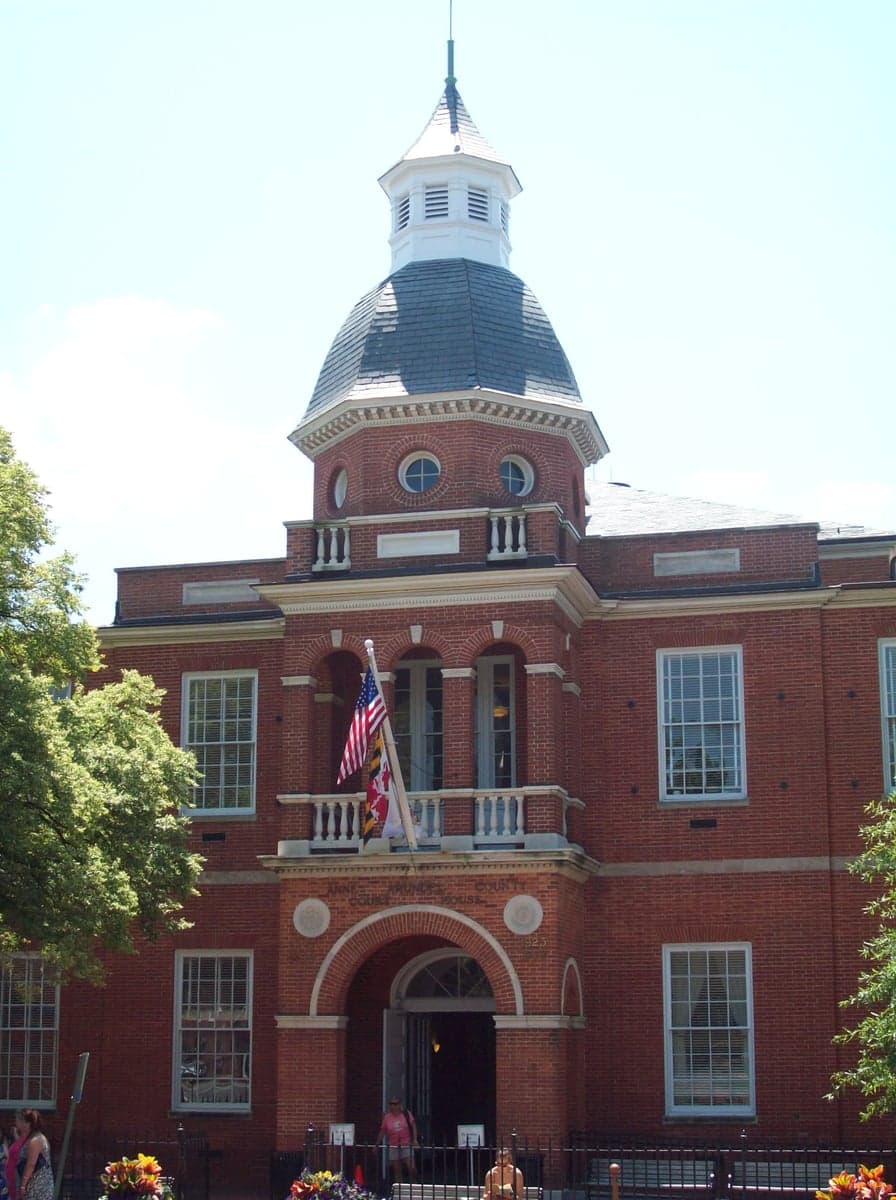
Photo: Wikipedia
Political ClimatePolitical Climate in Anne Arundel County
Showing district-level results — no local-only data available.
Local Political AnalysisPolitical Analysis of Anne Arundel County
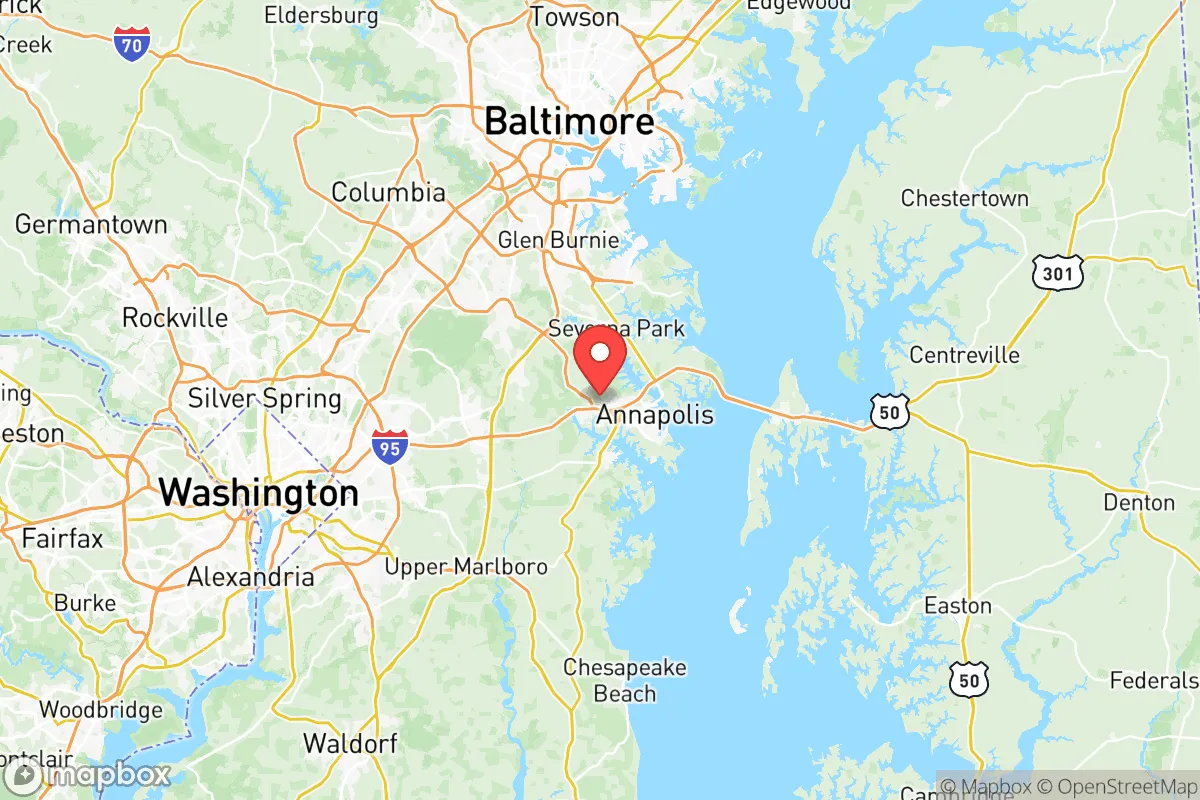
Anne Arundel County is a classic purple-to-blue battleground that has been steadily drifting left, but it still holds plenty of surprises for anyone who assumes "D+12" means a uniform liberal landscape. The county's Cook Partisan Voting Index of D+12 puts it five points to the right of Maryland as a whole (D+17), and that gap reflects a real internal tug-of-war. You can see it in the precinct returns: Annapolis and the close-in suburbs of Glen Burnie and Severna Park have been trending bluer for a decade, while the southern and western reaches—places like Davidsonville, Edgewater, and the rural pockets around Lothian—still vote reliably red. The swing precincts are the ones that decide county executive races, and they tend to cluster in the central corridor around Millersville and Crofton, where moderate suburbanites split tickets more often than you'd expect in a D+17 state.
How it compares
Compared to the rest of Maryland, Anne Arundel is the state's most competitive large county. While Montgomery and Prince George's are deep blue fortresses (both D+40 or more), and the Eastern Shore and Western Maryland are solidly red, Anne Arundel sits right in the middle. The county voted for Joe Biden by about 16 points in 2020, which is close to its PVI, but down-ballot races tell a different story. Republican county executives have held office for 12 of the last 20 years, and the county council often splits 4-3 or 5-2 between parties. That's unheard of in most of Maryland's suburban counties. The state's overall D+17 PVI is pulled left by the massive Democratic margins in Baltimore City and the D.C. suburbs, but Anne Arundel's D+12 is a truer reflection of the kind of moderate, fiscally conservative but socially mixed electorate that decides Maryland's statewide races. In 2022, Republican Dan Cox lost the county by only 8 points, even as he lost the state by 32—a reminder that this place still has a strong independent streak.
What this means for residents
For conservative residents, Anne Arundel is one of the few places in central Maryland where your vote still feels competitive. You can win a school board seat, a county council district, or even the county executive's office with a solid ground game, especially if you focus on the southern and western precincts. The local GOP is well-organized in places like Pasadena and Severna Park, and the county's strong military presence—Naval Support Activity Annapolis and Fort Meade are major employers—keeps a steady flow of veterans and defense contractors who lean right on national security and fiscal issues. For liberal residents, the county's blue shift means you're increasingly in the majority, but you still have to work for it. The Annapolis city council is reliably progressive, but countywide, you'll find that housing policy, school funding, and development debates are fought on moderate ground. The county's Democratic establishment is more centrist than its counterparts in Montgomery or Baltimore County, so don't expect a wave of rent control or defunding initiatives anytime soon.
Culturally, the biggest distinction between Anne Arundel and the rest of Maryland is the Chesapeake Bay identity. The county's politics are shaped by a deep attachment to water access, crabbing, and boating, which cuts across party lines. You'll see Republican and Democratic candidates alike competing to be the "bay champion," and that shared priority often tempers the kind of hyper-partisan fights you see in other parts of the state. The county also has a strong tradition of fiscal pragmatism—tax hikes are rare and usually tied to specific infrastructure projects like the new Bay Bridge or school renovations. Policy-wise, Anne Arundel is more likely to pursue "both-and" solutions than the "either-or" battles that dominate Annapolis (the state capital, which sits right inside the county). For example, the county has embraced both smart-growth zoning near transit stations and preserved rural buffers in the south, a balancing act that frustrates purists on both sides but keeps the place livable. If you're moving here, expect a political climate that rewards coalition-building over ideological purity, and don't be surprised if your neighbor at the dock votes differently than you but shares your opinion on the price of crab cakes.

State Political ClimatePolitical Climate in Maryland
State Political AnalysisPolitical Environment in the State
Maryland is one of the most reliably Democratic states in the country, with a Cook Partisan Voting Index of D+17, meaning it votes about 17 points more Democratic than the national average. The state hasn’t voted for a Republican presidential candidate since George H.W. Bush in 1988, and Democrats hold supermajorities in both chambers of the General Assembly. However, that blue veneer hides a deeply fractured political landscape: the state’s population and power are concentrated in the Washington, D.C. suburbs and Baltimore, while vast stretches of the Eastern Shore, Western Maryland, and the rural counties between them are as conservative as any in the South. Over the last 20 years, the Democratic lean has actually intensified as the D.C. suburbs—places like Montgomery County and Prince George’s County—have grown faster and become more uniformly liberal, while rural counties have lost population and influence.
Urban vs. rural divide
Maryland’s political map is a textbook case of the urban-rural split. The entire state’s electoral weight is in the Baltimore-Washington corridor. Montgomery County (just north of D.C.) and Prince George’s County (east of D.C.) alone cast about a third of the state’s votes, and they routinely deliver 75-85% of those votes to Democrats. Baltimore City is even more lopsided, often exceeding 90% Democratic. On the other side, the Eastern Shore counties—like Queen Anne’s, Talbot, and Wicomico—vote Republican by 20-30 points. Western Maryland (Garrett, Allegany, and Washington counties) is similarly red, with Garrett County often being the most Republican in the state. The Baltimore suburbs are a mixed bag: Baltimore County is a perennial swing county that has trended blue in recent cycles, while Harford County and Carroll County remain reliably Republican. The result is that a conservative moving to Maryland will feel at home in the rural counties but politically isolated in the metro areas, while a liberal will find the opposite.
Policy environment
Maryland’s policy environment is shaped by one-party Democratic control in Annapolis. The state has a progressive income tax with rates from 2% to 5.75%, and local counties add their own piggyback taxes, pushing the combined top rate over 9% in some jurisdictions. Sales tax is 6%, and property taxes vary widely but are generally above the national median. The regulatory posture is business-friendly in some sectors (biotech, cybersecurity) but heavily regulated in others (energy, housing, firearms). Education policy is a major focus: the Blueprint for Maryland’s Future law, passed in 2021, pumps billions into K-12 funding, with a heavy emphasis on early childhood education and teacher pay. Healthcare is dominated by the state’s own exchange, Maryland Health Connection, and the state has expanded Medicaid. Election laws are among the most accessible in the country: no-excuse mail-in voting, same-day registration, and early voting are all standard. For a conservative, the policy environment feels like a high-tax, high-service state with a strong safety net and a regulatory apparatus that can be frustrating for small businesses and gun owners.
Recent policy direction
The last five years have seen Maryland move decisively left on several fronts. On gun and self-defense law, the General Assembly passed the Gun Safety Act of 2023, which bans the open carry of firearms in most public places (including parks, hospitals, and government buildings) and requires a “good and substantial reason” for a concealed carry permit—a provision that is currently being litigated after the Bruen decision. On parental and education rights, the state has moved in the opposite direction of many red states: it passed the Trans Health Equity Act in 2023, which requires Medicaid to cover gender-affirming care for minors, and it has not passed any parental notification laws for school library materials. On speech and privacy, Maryland enacted the Online Data Privacy Act in 2024, giving residents more control over how companies collect and sell their data. On medical and bodily autonomy, the state has become a regional safe haven: the Abortion Care Access Act (2022) expanded who can perform abortions and requires most insurance plans to cover them with no out-of-pocket costs. On property rights, the state has been aggressive in using eminent domain for transit-oriented development, particularly around the Purple Line light rail project. On taxation, the trend is upward: the 2024 legislative session saw a new digital advertising tax (the first of its kind in the nation) and a push to raise the corporate income tax. On voting and ballot access, the state has made it easier to vote, not harder: automatic voter registration at the MVA, same-day registration, and no-excuse mail-in voting are all now permanent. For a relocator, the direction is clear: Maryland is doubling down on a high-tax, high-service, socially liberal model.
Civil unrest & political movements
Maryland has a history of visible political activism, though it rarely reaches the level of sustained unrest seen in some states. The George Floyd protests in 2020 were large and occasionally violent in Baltimore and in the D.C. suburbs, with property damage in downtown Baltimore and clashes with police in Silver Spring. On the right, the “We the People” movement and local Second Amendment sanctuary resolutions have been active in rural counties—Garrett County and Allegany County both declared themselves Second Amendment sanctuaries in 2020. Immigration politics are a flashpoint: Maryland has a sanctuary state law (the Maryland Trust Act, 2017) that limits local law enforcement cooperation with ICE, and this has led to tensions in counties like Frederick and Harford, where some sheriffs have resisted. Election integrity controversies have been muted compared to states like Georgia or Arizona, but there was a notable controversy in 2022 when the state’s redistricting map was struck down by the courts as an extreme partisan gerrymander (the 6th Congressional District was famously drawn to connect two separate parts of the state across the Chesapeake Bay). The secession or nullification rhetoric is mostly confined to fringe groups; there was a minor movement in 2021 for Western Maryland counties to join West Virginia, but it never gained serious traction. A new resident would notice the political divide most visibly in the stark contrast between the “Black Lives Matter” murals in Baltimore and the “Trump 2024” flags on the Eastern Shore.
Projection
Over the next 5-10 years, Maryland will almost certainly become more Democratic, not less. The D.C. suburbs continue to grow faster than the rest of the state, and they are becoming younger, more diverse, and more liberal. The rural counties are aging and losing population. The in-migration pattern is also a factor: people moving to Maryland are overwhelmingly coming from the D.C. area or from other blue states (New York, California), not from red states. The only wild card is the possibility of a national realignment that pulls the D.C. suburbs back toward the center, but that seems unlikely given the current trajectory. For a conservative moving in now, the expectation should be that the state will continue to pass progressive legislation on guns, taxes, and social issues, and that the rural counties will have less and less political power. For a liberal, the state will likely become a more comfortable and ideologically aligned place, but the high cost of living (especially housing in the D.C. suburbs) will remain a challenge.
Bottom line for a new resident: If you’re a conservative, you can find a welcoming community in the rural counties or on the Eastern Shore, but you will be voting in a state where your vote for statewide office is effectively meaningless. You’ll pay high taxes and deal with gun laws you likely disagree with, but you’ll also have excellent schools and infrastructure in many areas. If you’re a liberal, you’ll find a state that aligns with your values on most issues, but you’ll pay for it—literally—with some of the highest taxes in the country. Either way, Maryland is a state where your local community matters more than the state government, and where the political reality is best understood by looking at a map of the counties, not the statewide vote totals.
* Values derived from national, state, county, city and local statistics and may differ in a specific area. Last updated: 2026-07-10T08:39:25.000Z
Narrative content on this page is AI-generated and may contain mistakes. Verify any details that matter before acting on them.
ReloMaps may earn a commission from affiliate links at no extra cost to you.

