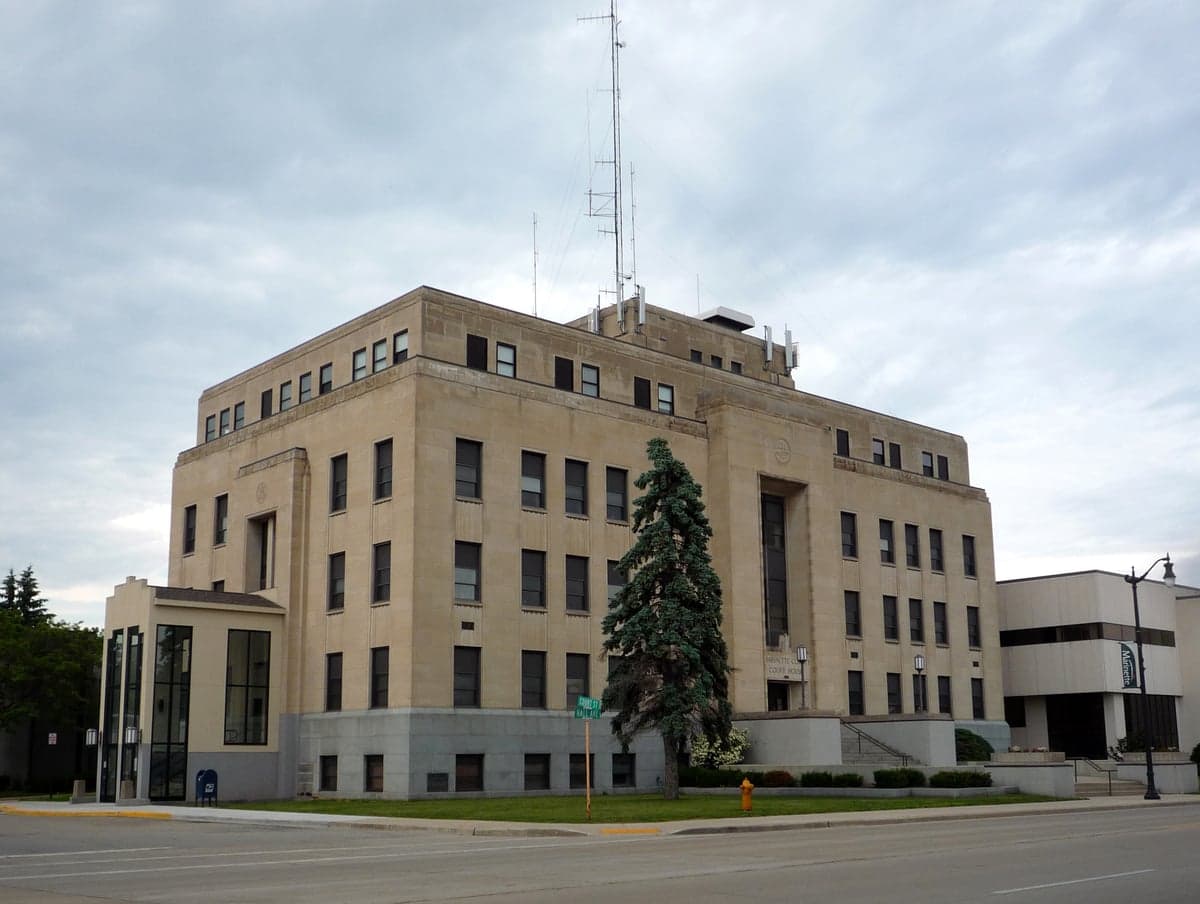
Photo: Wikipedia
Political ClimatePolitical Climate in Marinette, WI
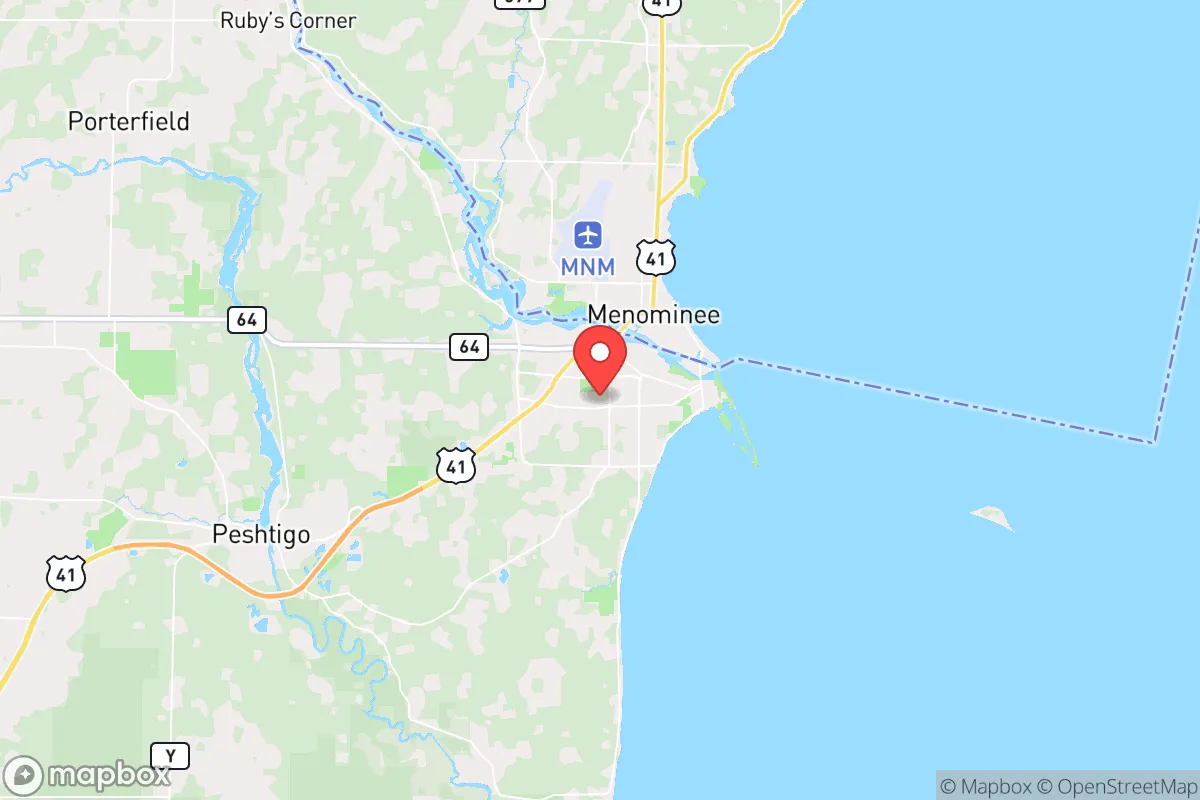
District shown is the primary district for this city’s centroid. Cities may span multiple districts.
Inherited from parent county — no local data available.
* Lean and PVI are calculated from Marinette, WI’s own 2020 presidential results (precinct returns summed to the city), with 2024 estimated from the surrounding county’s 2020–2024 shift, Cook-style. Sources: state election offices; VEST 2020 precinct results (CC BY 4.0).
Political rankings in Wisconsin
- Most Conservative Cities in Wisconsin
- Most Liberal Cities in Wisconsin
- Best Liberal-Leaning Towns in the Midwest
- Safest Liberal-Leaning Towns in the Midwest
- Safest Conservative-Leaning Towns in the Midwest
- Affordable Small Towns for Conservatives
- Most Affordable Liberal-Leaning Small Towns in the U.S.
- Safest Conservative-Leaning Cities in the U.S.
- Most Conservative Counties in Wisconsin
- Most Liberal Counties in Wisconsin
Local Political AnalysisPolitical Analysis of Marinette, WI
Marinette is a solidly conservative area, with a Cook Partisan Voting Index of R+19 that makes it one of the most reliably Republican small cities in Wisconsin. The city itself and surrounding Marinette County have voted for the GOP presidential candidate by wide margins in every election since 2000, often by 20 points or more. This isn't a recent shift—this part of the Upper Peninsula-adjacent Northwoods has been trending red for decades, long before the broader state and national polarization took hold. The contrast with the rest of Wisconsin is stark: the state as a whole has a Cook PVI of EVEN, meaning it's a pure swing state that flipped from Trump in 2016 and 2020 to Biden in 2024 by less than a point. Marinette, meanwhile, sits in a deep-red pocket that feels a world away from the purple suburbs of Milwaukee or the liberal stronghold of Madison.
How it compares
Marinette's politics are best understood in contrast to its neighbors. Drive 45 minutes south to Green Bay, and you'll find a more moderate, swing-voting area—Brown County went for Trump by only 3 points in 2024. Head 90 minutes southwest to Appleton, and you're in a district that's been competitive in state legislative races. But Marinette's closest city of any size, Menominee, Michigan, just across the river, is also conservative (R+14), so there's no nearby urban counterweight. The real political divide in this region is between the rural, resource-dependent Northwoods and the rest of Wisconsin. Marinette's economy is built on paper mills, logging, and manufacturing—industries that have historically leaned union but now vote heavily Republican. The city's population has shrunk by about 5% since 2010, and the remaining residents tend to be older, whiter, and more culturally conservative than the state average. In contrast, Wisconsin's swing-vote status is driven by the Milwaukee suburbs (Waukesha County, R+14) and the Madison area (Dane County, D+35), which pull the state in opposite directions. Marinette is essentially a smaller, more extreme version of the Waukesha model, but without the economic growth.
What this means for residents
For conservative residents, Marinette is a comfortable place where their values are the norm. Local government, school board meetings, and civic organizations are dominated by Republican-aligned thinking. You'll see Trump signs on lawns year-round, and the local paper's opinion page leans right. For liberal residents, it can feel isolating. There's no active Democratic Party presence in the county, and progressive candidates rarely bother to campaign here. That said, the political homogeneity means less day-to-day friction than in a swing area—people generally agree on the basics, like keeping taxes low (the county's property tax rate is among the lowest in Wisconsin) and opposing new gun restrictions. The trade-off is that Marinette has less political diversity than even many other rural Wisconsin towns, which can make it feel insular. The biggest practical impact is on state funding: Marinette's representatives in Madison are reliably conservative, so the city gets a fair share of road and school aid, but it has little influence on statewide policy debates about abortion, marijuana, or election law.
One cultural distinction worth noting: Marinette's proximity to Michigan's Upper Peninsula gives it a slightly different flavor than the rest of Wisconsin. People here identify more with U.P. culture—hunting, snowmobiling, and a certain independent streak—than with the dairy-farming traditions of central Wisconsin. The local Catholic church is a major social institution, and the annual Marinette County Fair is a bigger deal than any political rally. In practice, this means the area's conservatism is less about culture-war issues and more about a live-and-let-live, don't-tell-me-what-to-do attitude. The trajectory is likely to stay the same: Marinette will remain R+19 or redder as long as its economy doesn't diversify and its population continues to age. The only wild card is if the paper industry rebounds or a new employer moves in, which could bring younger, more moderate workers. But for now, this is one of the most reliably Republican corners of a swing state, and it's not changing anytime soon.

State Political ClimatePolitical Climate in Wisconsin
State Political AnalysisPolitical Environment in the State
Wisconsin has earned its reputation as one of the most evenly divided states in the country, with a Cook Partisan Voting Index of EVEN—meaning it sits dead center on the national political spectrum. Over the past 20 years, the state has swung from reliably blue (voting for John Kerry in 2004) to a perennial battleground that flipped for Donald Trump in 2016, then for Joe Biden in 2020 by just 20,000 votes, and back to Trump in 2024 by a similarly razor-thin margin. The dominant coalitions are a classic Rust Belt split: a Democratic stronghold in the urban crescent of Milwaukee and Madison, versus a deeply Republican rural and exurban base that stretches from the Driftless Region in the west to the Northwoods and the Fox Valley. What makes Wisconsin unique is that neither side can claim a lasting majority—every election feels like a coin flip, and the state’s political culture reflects that constant tension.
Urban vs. rural divide
The political map of Wisconsin is a textbook study in geographic polarization. The Democratic base is concentrated in two major metros: Milwaukee (the state’s largest city, with a strong African American and Latino population) and Madison (the capital, home to the University of Wisconsin and a progressive enclave). Dane County, where Madison sits, routinely delivers 75%+ of its vote to Democrats, making it the single most powerful Democratic county in the state. Milwaukee County, despite population loss, still provides a massive blue margin. On the Republican side, the rural and exurban counties of the WOW counties—Waukesha, Ozaukee, and Washington—form the conservative anchor, regularly giving Republicans 60-65% of the vote. The Fox Valley, anchored by Appleton and Green Bay, is more mixed but leans Republican, while the Northwoods counties like Vilas and Oneida are reliably red. The key swing territory is the Driftless Region in the southwest (counties like Crawford, Vernon, and Richland) and the Chippewa Valley around Eau Claire, which has been trending blue as college graduates and remote workers move in. The 2020 election saw Brown County (Green Bay) flip back to Trump after going for Obama twice, while Kenosha County—a bellwether that voted for Obama, Trump, and Biden in consecutive cycles—remains the ultimate swing county.
Policy environment
Wisconsin’s policy environment reflects its divided government. The state has a flat income tax rate of 4.4% (as of 2025, down from 7.65% in 2011), with a sales tax of 5% that local counties can add up to 0.5%. Property taxes are moderate—around $2,500 on a median home—but vary widely by district. The state is a right-to-work state (passed in 2015), and Act 10 (2011) effectively ended collective bargaining for most public employees, a move that still defines Wisconsin politics. On education, Wisconsin has a robust school choice program, including the Milwaukee Parental Choice Program (the oldest in the nation) and a statewide voucher system. The state also has open enrollment, allowing students to attend schools across district lines. Healthcare is a mixed bag: Wisconsin expanded Medicaid under the Affordable Care Act (BadgerCare Plus), but the state legislature has resisted a full expansion, leaving a coverage gap for some adults. Election laws are a flashpoint: Wisconsin has no-excuse absentee voting, same-day voter registration, and voter ID requirements. The state uses paper ballots and has a bipartisan election commission, but controversies over drop boxes and ballot curing have persisted since 2020.
Recent policy direction
Over the past five years, Wisconsin has moved in a distinctly conservative direction on several fronts, even while Democrats hold the governor’s office. In 2023, the Republican-controlled legislature passed a constitutional amendment to ban the use of private funds for election administration (a response to the 2020 Zuckerberg grants), which voters approved in 2024. On gun rights, Wisconsin is a shall-issue state for concealed carry (since 2011), with no permit required for open carry. In 2024, the legislature passed a bill allowing constitutional carry (permitless carry), though Governor Tony Evers vetoed it. On education, the state expanded the school choice program to nearly all families in 2023, removing income caps. On abortion, Wisconsin reverted to an 1849 law after Dobbs, but a 2023 court ruling (Kaul v. Urmanski) clarified that the law only applies to feticide, not consensual abortion—effectively leaving abortion legal up to 20 weeks. The state has no parental notification law for minors, but does require parental consent for abortion. On property rights, Wisconsin has a strong private property rights tradition, with no statewide rent control and limited eminent domain use. On taxes, the 2023-25 budget cut the top income tax rate from 5.3% to 4.4% and expanded the retirement income exemption. On voting, the state has maintained same-day registration and no-excuse absentee voting, but the legislature has pushed for stricter ID requirements and limits on drop boxes.
Civil unrest & political movements
Wisconsin has been a flashpoint for political unrest, most notably the 2020 Kenosha protests following the shooting of Jacob Blake, which saw two nights of arson and looting, and the subsequent killing of two protesters by Kyle Rittenhouse (who was acquitted in 2021). The 2011 Act 10 protests at the state capitol in Madison drew 100,000 people and lasted weeks, becoming a national symbol of labor resistance. More recently, the 2022 election integrity movement has been active, with Republican activists pushing for a full audit of the 2020 election (which found no widespread fraud) and the creation of a nonpartisan elections commission. On the left, the Indivisible and Wisconsin Democrats have organized heavily around abortion rights and voting access. Immigration politics are less heated than in border states, but Milwaukee has a sanctuary city policy (limited cooperation with ICE), which has drawn criticism from rural Republicans. The Wisconsin Farm Bureau and Wisconsin Manufacturers & Commerce are powerful lobbying forces on the right, while the Wisconsin Education Association Council and AFSCME remain influential on the left. The state has seen no serious secession or nullification rhetoric, but the rural-urban divide is so deep that some residents joke about splitting the state into "Wisconsin" and "Madison."
Projection
Over the next 5-10 years, Wisconsin is likely to remain a battleground, but demographic trends favor a slow shift toward Democrats. The Milwaukee suburbs (Waukesha, Ozaukee, Washington) are aging and slowly diversifying, while Madison continues to grow rapidly, driven by tech and biotech jobs. The Fox Valley is seeing an influx of Hmong and Latino residents, which could moderate its Republican lean. However, rural counties are losing population and becoming even more Republican, creating a "donut" effect where the state’s overall vote margin stays tight. The 2024 election results suggest that Trump’s appeal in rural areas and among working-class voters in the Fox Valley and Green Bay may be durable, but the WOW counties are showing signs of suburban drift toward Democrats, especially among college-educated women. The wild card is the Wisconsin Supreme Court, which flipped to a 4-3 liberal majority in 2023 after the election of Janet Protasiewicz. This court is likely to rule on redistricting, abortion, and election laws, potentially reshaping the political landscape. If the court orders new legislative maps (the current ones are heavily gerrymandered for Republicans), Democrats could gain seats in the Assembly and Senate, making the state more competitive at the state level.
For a new resident, the bottom line is that Wisconsin offers a genuine political battleground where your vote truly matters. If you’re conservative, you’ll find a strong network of rural and suburban communities, low taxes, and a business-friendly environment, but you’ll also face a Democratic governor who can veto your priorities. If you’re liberal, you’ll find vibrant urban centers in Milwaukee and Madison, strong labor and environmental movements, and a growing progressive base, but you’ll have to contend with a Republican legislature that can block most of your agenda. The state’s political culture is intense but civil—Wisconsinites are famously polite, even when they disagree. The practical takeaway: if you’re moving here, expect to be part of a swing state where every election feels like a national event, and where your local school board, county board, and state legislature races matter as much as the presidential one. It’s not a place for political apathy—but for those who enjoy the fight, it’s one of the most rewarding states in the country to call home.
* Values derived from national, state, county, city and local statistics and may differ in a specific area. Last updated: 2026-11-22T17:24:42.000Z
Narrative content on this page is AI-generated and may contain mistakes. Verify any details that matter before acting on them.
ReloMaps may earn a commission from affiliate links at no extra cost to you.

