 Popular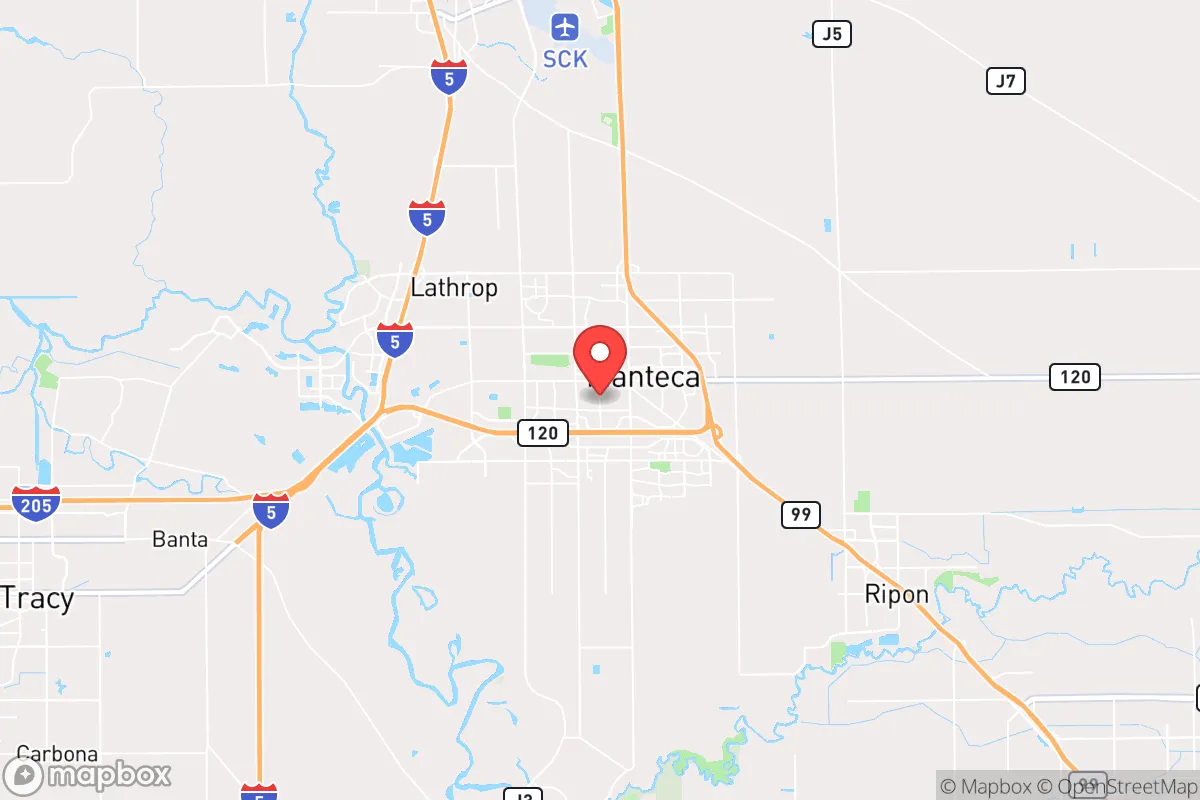
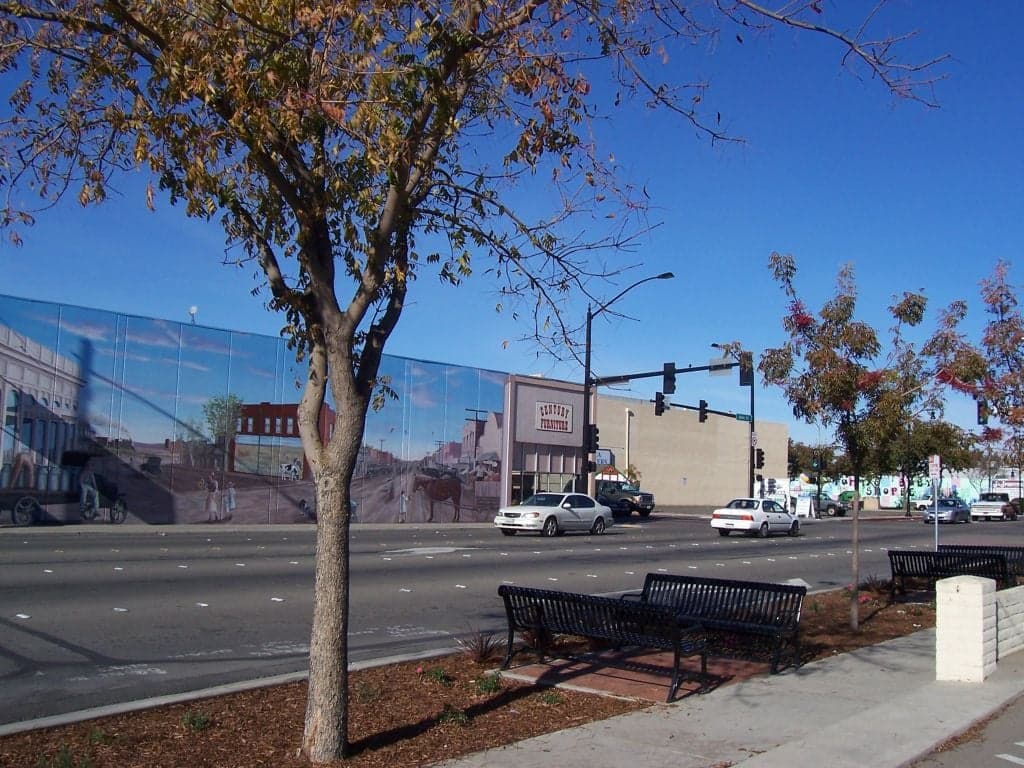
Photo: Wikipedia
Political ClimatePolitical Climate in Manteca, CA
District shown is the primary district for this city’s centroid. Cities may span multiple districts.
Local Political AnalysisPolitical Analysis of Manteca, CA
Manteca’s political climate is best described as a quiet battleground that’s shifting left, but not as fast as the rest of the state. The city’s Cook Partisan Voting Index (PVI) of D+1 means it’s essentially a toss-up district—slightly more Democratic than the nation as a whole, but far more conservative than California’s statewide average. If you’ve lived here a while, you’ve seen it: the old-timers who remember when this was a farm town still lean Republican, but the new arrivals from the Bay Area are pulling the needle toward blue. In 2024, San Joaquin County as a whole voted for Kamala Harris by about 11 points, but Manteca itself was closer to a 5- or 6-point margin for Democrats—a sign that the city is a purple island in a blue county.
How it compares
Compared to California as a whole—where Democrats hold a 2-to-1 registration advantage and the PVI is roughly D+13—Manteca is a moderate outlier. Drive 15 minutes west to Tracy, and you’ll find a similar D+2 vibe, but head 20 minutes north to Stockton (D+10) and the politics get noticeably more progressive. The real contrast is east: Ripon and Escalon, just 10 miles away, are solidly Republican (PVI R+10 or more), with Trump signs still common in yards. Manteca sits right in the middle of this corridor, which means local elections often hinge on a few hundred votes. The city council is nonpartisan on paper, but in practice, it’s a mix of moderate Democrats and pragmatic Republicans who focus on growth and water issues rather than culture wars. Statewide, Manteca’s Assembly district (AD-13) is represented by Democrat Carlos Villapudua, but he’s one of the more conservative Democrats in the legislature—voting against some gun control bills and pushing for ag-friendly water policies.
What this means for residents
For conservative residents, Manteca is a relatively comfortable place to live politically. You won’t feel like a pariah at the grocery store, and local GOP clubs are active. The downside is that your vote for governor or president is essentially symbolic—California’s statewide races are not competitive. For liberal residents, you’re in the majority locally, but not overwhelmingly so. You’ll encounter plenty of neighbors who disagree on taxes and immigration, but the discourse is generally civil. The practical effect of Manteca’s purple lean is that city services—parks, police, road maintenance—tend to be funded at moderate levels, without the deep cuts you see in deep-red rural counties or the high-tax expansions of coastal cities. Property taxes are capped by Prop 13, but local sales tax (8.75%) is middle-of-the-pack for the region.
What daily life is like for families
One cultural distinction that matters day-to-day: Manteca is more family-oriented and less activist-driven than cities like Berkeley or even Stockton. You won’t see many political protests downtown, and the local newspaper’s letters page is a mix of conservative and liberal voices. The biggest political fights in recent years have been over housing density—developers want to build more subdivisions, while some residents worry about traffic and school crowding. That’s a classic suburban tension, not a red-vs-blue one. Looking ahead, the trajectory is clear: as more Bay Area transplants arrive (drawn by cheaper homes and the Altamont Corridor Express train), Manteca will likely trend bluer. But the city’s agricultural roots and strong church community mean it will probably stay a D+2 or D+3 for another decade, making it one of the few places in California where both sides can feel heard.

State Political ClimatePolitical Climate in California
State Political AnalysisPolitical Environment in the State
California is a deeply blue state, with Democrats holding every statewide office and supermajorities in both legislative chambers, but its reputation as a monolithic liberal bastion overshadows a far more complex reality. The state hasn't voted Republican in a presidential election since 1988, and in 2024, Kamala Harris carried it by roughly 20 points, a margin that has narrowed from the 30-point blowouts of the Obama era. Over the last 10-20 years, the dominant coalition has been a coastal, urban, and increasingly diverse electorate that prioritizes progressive social policy and environmental regulation, but that coalition is showing cracks as the state's high cost of living and homelessness crisis drive a slow but steady rightward shift in the Central Valley and inland suburbs.
Urban vs. rural divide
The political map of California is a study in stark contrasts. The Democratic strongholds are the coastal metros: San Francisco, Los Angeles, Oakland, and San Jose deliver massive vote margins that decide statewide elections before the rest of the state is even counted. In 2024, Los Angeles County alone gave Harris a 1.5-million-vote cushion. Meanwhile, the vast interior — the Central Valley, the Sierra foothills, and the far north — is deeply Republican. Bakersfield and Fresno are conservative anchors, with Kern County voting +20 R in 2024. The real story is the suburbs: places like Orange County, once a GOP stronghold, have flipped purple-to-blue as Asian American and Latino voters shifted left, while inland exurbs like Temecula and Murrieta remain reliably red. The divide isn't just urban vs. rural — it's coastal vs. inland, and it's growing sharper as housing prices push moderate and conservative families further from the coast.
Policy environment
California's policy environment is defined by the highest state income tax rate in the nation (13.3% for top earners), a 7.25% sales tax floor that local add-ons push well above 10% in many cities, and some of the strictest environmental and labor regulations in the country. The state operates a top-two primary system, meaning general elections often feature two Democrats, which can disenfranchise conservative voters in deep-blue districts. Education policy is dominated by the California Teachers Association, one of the state's most powerful political donors, and the state has some of the nation's strongest tenure protections. Healthcare is heavily regulated, with a state-run insurance exchange (Covered California) and a recent push toward a single-payer system that has stalled over funding. Election laws are among the most accessible in the country: universal mail-in voting was made permanent after 2020, same-day registration is available, and ballot drop boxes are ubiquitous. For a conservative relocator, the tax burden and regulatory density are the most immediate shocks — property taxes are capped at 1% of purchase price under Prop 13, but the income tax and cost of living are punishing.
Recent policy direction
The last five years have seen California accelerate leftward on several fronts, but with notable pushback. On gun law, the state passed some of the nation's strictest measures: SB 2 (2023) effectively banned concealed carry in most public places, and the state's assault weapons ban and 10-day waiting period remain in place despite legal challenges. On parental and education rights, the state passed AB 1955 (2024), which prohibits school districts from requiring parental notification when a child changes their gender identity — a direct response to conservative school board movements in places like Temecula and Chino Hills. On speech and privacy, the California Age-Appropriate Design Code Act (2022) imposes strict data privacy rules on platforms used by minors, though it's been partially blocked by courts. Medical and bodily autonomy is fully protected: abortion is codified as a constitutional right (Prop 1, 2022), and the state has positioned itself as a sanctuary for out-of-state patients. Property rights are heavily constrained by rent control (AB 1482 caps annual increases at 5% plus inflation) and by the California Environmental Quality Act (CEQA), which gives broad standing to block development. On voting, the state expanded mail-in ballot access and automatic voter registration, but also passed AB 3070 (2024), which bans voter ID requirements — a flashpoint for election integrity concerns among conservatives. The overall direction is toward tighter regulation of firearms, stronger privacy protections, and a deepening of the social safety net, but the cost of living and housing crisis are creating a backlash that has shifted some local races rightward.
Civil unrest & political movements
California has been a national epicenter for political activism on both sides. The 2020 George Floyd protests in Los Angeles and Oakland were among the largest and most destructive in the country, with billions in property damage and a lasting political fallout that helped fuel the 2022 recall attempt against District Attorney George Gascón. On the right, the "California Exodus" movement has been real but overstated — net domestic migration has been negative for years, with many relocating to Texas and Arizona, but the state's population has stabilized due to international immigration. The secessionist "Calexit" movement has fizzled, but rural counties like Siskiyou and Modoc have periodically floated secession from the state, citing neglect from Sacramento. Immigration politics are a daily reality: California is a "sanctuary state" (SB 54, 2017), which limits local law enforcement cooperation with federal immigration authorities, and this has created tension in border-adjacent communities like San Diego and El Centro. Election integrity controversies have been less intense than in swing states, but conservative activists have raised concerns about the state's universal mail-in system and the lack of voter ID, particularly after the 2020 election saw a surge in ballot harvesting. A new resident would notice the ubiquity of political signage, the frequency of local ballot measures, and the visible homelessness crisis that has become a political flashpoint in every major city.
Projection
Over the next 5-10 years, California is likely to remain solidly Democratic at the statewide level, but the margins will continue to narrow as the cost of living drives moderate and conservative families to inland counties and out of state. The biggest demographic shift is the aging of the white progressive base and the growth of the Latino electorate, which is not as uniformly Democratic as it was a decade ago — in 2024, Trump made significant gains with Latino voters in the Central Valley, particularly in Kern County and Tulare County. The housing crisis will be the defining political issue: if the state can't build enough housing to bring down costs, it will continue to lose domestic migrants, and the political center of gravity will shift inland. The Republican Party in California is unlikely to win statewide office, but it could gain seats in the legislature and Congress as the coastal advantage erodes. For a conservative moving in now, expect a decade of continued progressive governance on social and environmental policy, but with a growing backlash on housing, crime, and education that could produce more competitive local races and a more pragmatic tone from Sacramento.
For a new resident, the bottom line is that California offers unmatched economic opportunity, natural beauty, and cultural diversity, but it comes with a heavy tax burden, a high cost of living, and a political environment that is actively hostile to conservative values on guns, parental rights, and regulation. If you're a conservative who can afford the lifestyle and is willing to live in an inland county like Riverside or San Joaquin, you'll find like-minded neighbors and a growing political counterweight. If you're moving to the coast, expect to be in the minority politically, but also to find a functional, well-funded public infrastructure and a state government that, for all its flaws, is stable and predictable. The key is knowing which California you're moving to — the coastal blue or the inland red — and making peace with the trade-offs.
* Values derived from national, state, county, city and local statistics and may differ in a specific area. Last updated: 2026-08-23T00:46:30.000Z
Narrative content on this page is AI-generated and may contain mistakes. Verify any details that matter before acting on them.
ReloMaps may earn a commission from affiliate links at no extra cost to you.

