 Popular
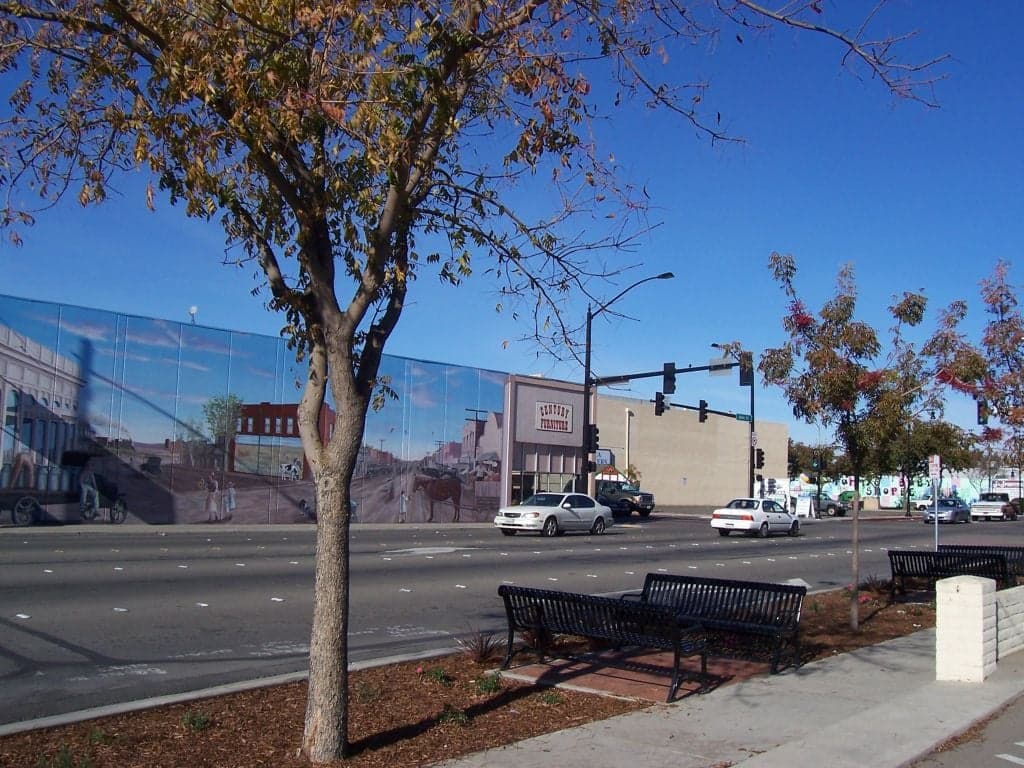
Photo: Wikipedia
Demographics of Manteca, CA
Affluence Level in Manteca, CA
A middle-class area roughly in line with national averages across income, home values, education, and employment.
People of Manteca, CA
Manteca, California is a rapidly growing city of 86,521 residents where no single ethnic group holds a majority, creating a distinctive blend of Hispanic plurality (39.9%) and a substantial White population (36.1%), alongside notable East/Southeast Asian (7.3%) and Indian subcontinent (6.6%) communities. The city’s character is defined by its transition from a quiet agricultural crossroads to a commuter-heavy suburb of the Bay Area and Stockton, with a relatively low foreign-born share of 7.4% and a blue-collar, family-oriented identity. Manteca’s population is younger and less college-educated (20.9%) than the regional average, reflecting its roots in farming and logistics rather than tech or professional services. The city’s human history is a story of successive waves — first drawn by land and water, then by affordable housing and highway access — each leaving a distinct mark on specific neighborhoods.
How the city was settled and grew
Manteca was founded in 1861 as a railroad stop on the Southern Pacific line, but its real growth began after the completion of the South San Joaquin Irrigation District canals in the early 1900s, which turned the dry valley floor into prime farmland. The original population was overwhelmingly White, drawn from the Midwest and Dust Bowl states by cheap land and the promise of irrigated agriculture — primarily dairy farming, hay, and later almonds and cherries. These early families settled the historic core around Library Park and the original downtown grid, where many of the city’s oldest homes and churches still stand. A smaller but significant wave of Portuguese immigrants arrived in the 1910s and 1920s, working as dairy farmers and settling along the French Camp Road corridor west of downtown, where their descendants remain active in the agricultural supply business. By 1950, Manteca was still a town of fewer than 5,000 people, overwhelmingly White and rural, with a tight-knit social life centered on the downtown commercial district and the Manteca Unified School District’s original campuses.
Modern era (post-1965)
The post-1965 era transformed Manteca’s population in two distinct phases. The first phase, from the 1970s through the 1990s, saw the arrival of Hispanic families — primarily of Mexican descent — who came to work in the region’s expanding agricultural and food-processing industries. These families concentrated in the South Manteca neighborhoods around Yosemite Avenue and Airport Way, an area that remains the heart of the city’s Hispanic community, with Spanish-language signage, panaderías, and Catholic parishes like St. Anthony’s serving as community anchors. The second phase, beginning in the early 2000s, was driven by the Bay Area housing exodus: families from Alameda and Contra Costa counties — many of them White, but also a growing number of East/Southeast Asian and Indian subcontinent professionals — moved east in search of affordable single-family homes. This wave settled overwhelmingly in the master-planned communities of Woodward Park and Del Webb at Woodbridge, the latter a 55+ community that has drawn retirees from across Northern California. The Indian subcontinent population, now 6.6% of the city, is heavily concentrated in the newer subdivisions east of Highway 99, particularly around Union Road and Lathrop Road, where Sikh gurdwaras and Indian grocery stores have opened to serve a community that includes many professionals in healthcare and logistics. The East/Southeast Asian population (7.3%) is more dispersed but has a visible presence in the North Manteca neighborhoods near the 120 Bypass, where Filipino and Vietnamese families have established small businesses and community organizations.
The future
Manteca’s population is projected to continue growing toward 100,000 by 2035, driven by the same Bay Area affordability pressures that fueled the 2000s boom, but the character of that growth is shifting. The Hispanic share is rising slowly, while the White share is declining, and the Indian subcontinent and East/Southeast Asian shares are both growing steadily as new subdivisions open east of Highway 99 and south of the 120 Bypass. The city is becoming more diverse in absolute terms, but the diversity is increasingly segregated by neighborhood: older, more affordable areas near downtown remain predominantly Hispanic, while newer developments attract a mix of White, Asian, and Indian families. The foreign-born share (7.4%) is low compared to the Bay Area, suggesting that most new residents are domestic migrants rather than international arrivals, which may slow the pace of cultural change. The biggest wildcard is the planned Manteca 2050 general plan update, which envisions large-scale annexations south of the city toward the Stanislaus County line, potentially opening thousands of acres for new housing that could attract a more diverse, younger population. For a family or individual moving in now, Manteca offers a relatively affordable, family-oriented environment with a growing multicultural character, but the city’s identity remains rooted in its agricultural past and its role as a bedroom community for the broader San Joaquin Valley economy.
Manteca is becoming a more diverse, more suburban version of itself — less White, more Hispanic, and with growing Asian and Indian communities — but it remains a place where neighborhood identity is closely tied to when your family arrived and which highway exit you take home. For a conservative-leaning family seeking a lower-cost alternative to the Bay Area, Manteca offers a stable, family-oriented environment with a strong sense of local identity, though the cultural and political character varies noticeably between the older downtown neighborhoods and the newer master-planned communities. The city’s future will be shaped by how well these distinct communities integrate — or whether they continue to develop as separate enclaves within the same municipal boundaries.

* Values derived from national, state, county, city and local statistics and may differ in a specific area. Last updated: 2026-08-23T00:46:30.000Z
Narrative content on this page is AI-generated and may contain mistakes. Verify any details that matter before acting on them.
ReloMaps may earn a commission from affiliate links at no extra cost to you.

