 Popular
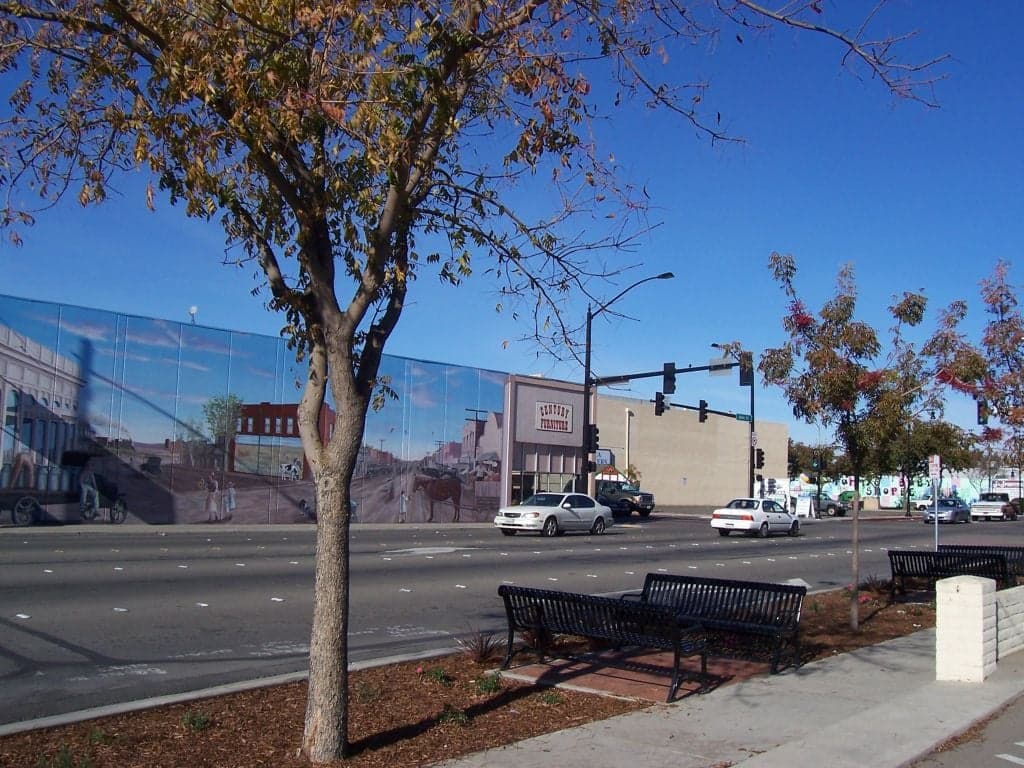
Photo: Wikipedia
Personal Sovereignty in Manteca, CA
Viable for self-reliance. Generally workable, though some barriers may limit total independence.
What does Personal Sovereignty tell us?
Personal Sovereignty measures your capacity for self-reliance and independence with minimal government friction. Higher scores mean fewer barriers between you and the way you want to live... but it assumes you have the space you need and good neighbors.
What does this tell us?
Personal Sovereignty measures your capacity for self-reliance and independence with minimal government friction. Higher scores mean fewer barriers between you and the way you want to live... but it assumes you have the space you need and good neighbors.
State Policy
Energy independence: Importer (33% of energy produced in-state)
Personal Liberty
Homesteading

Personal Liberty Analysis
Manteca, California, presents a complex autonomy environment for those prioritizing personal sovereignty, where the state’s heavy regulatory and tax framework is partially offset by local conditions that support self-reliance and individual decision-making. While California’s statewide policies impose significant constraints on income, property, and business freedom, Manteca’s lower cost of living relative to the Bay Area, its agricultural zoning allowances, and its proximity to rural San Joaquin County create pockets of practical independence. For a conservative-leaning individual or family, the city offers a trade-off: you accept higher state-level burdens in exchange for a community where homesteading, self-defense rights, and property control are more attainable than in coastal urban centers.
Tax burden and regulatory posture in Manteca and San Joaquin County
California’s tax burden is among the highest in the nation, and Manteca residents feel this directly. The state’s progressive income tax tops out at 13.3% on high earners, and the state sales tax rate is 7.25%, with San Joaquin County adding a local surcharge that brings the combined rate to roughly 8.75% in Manteca. Property taxes are capped at 1% of assessed value under Proposition 13, but annual increases are limited to 2%, which provides long-term predictability—a key advantage for homeowners who stay put. However, the regulatory posture in California is decidedly heavy-touch: environmental reviews (CEQA) can delay or kill development projects, and the California Environmental Quality Act is frequently used to challenge new housing, businesses, and even agricultural expansions. For a self-reliant individual, this means starting a home-based business or building an accessory dwelling unit (ADU) requires navigating a thicket of permits and fees. Manteca’s local government is generally more business-friendly than the Bay Area, but it still enforces strict zoning codes, especially in residential areas. The city’s general plan emphasizes suburban growth with master-planned communities, which limits the ability to operate a commercial enterprise from a home without a conditional use permit. Overall, the tax and regulatory environment in Manteca is moderate by California standards but heavy compared to states like Texas or Nevada—a factor that directly reduces disposable income and entrepreneurial freedom.
Self-defense and gun law specifics in Manteca and California
California’s gun laws are among the most restrictive in the United States, and Manteca residents must comply with a dense web of regulations. The state requires a 10-day waiting period for all firearm purchases, a background check through the California Department of Justice, and a Firearm Safety Certificate (FSC) obtained by passing a written test. Semi-automatic rifles with “assault weapon” features—like a pistol grip or adjustable stock—are banned, and magazines capable of holding more than 10 rounds are prohibited for most firearms. Carrying a concealed weapon (CCW) is possible but requires a permit from the San Joaquin County Sheriff’s Office, which is a “may-issue” jurisdiction—meaning the sheriff has discretion. In practice, San Joaquin County is more permissive than coastal counties like Alameda or Santa Clara, but applicants must demonstrate “good cause” beyond self-defense, complete a training course, and pass a background check. Open carry of handguns is illegal in California, and long guns can only be openly carried in unincorporated areas with specific restrictions. For a self-defense-minded individual, Manteca offers a moderate environment: you can own firearms for home defense, but the process is bureaucratic, and the legal landscape shifts frequently. The California Supreme Court’s 2024 ruling in Bruen-related cases has not yet overturned the state’s restrictive CCW standards, so local sheriffs retain significant control. If personal sovereignty means the right to carry a firearm without government permission, Manteca—and California as a whole—is a poor fit. However, for those willing to navigate the system, San Joaquin County is one of the more gun-friendly areas in the state, with a strong hunting culture and several shooting ranges within a 30-minute drive.
Self-reliance and homesteading viability in Manteca: lot sizes, zoning, and off-grid feasibility
Manteca’s agricultural roots and relatively affordable land make it a viable location for homesteading and self-reliance, though off-grid living is heavily constrained by state and local codes. Typical residential lots in Manteca range from 5,000 to 10,000 square feet in newer subdivisions, but older neighborhoods and unincorporated areas near the city limits offer parcels of 1 to 5 acres. Zoning in Manteca is predominantly R-1 (single-family residential), which allows for vegetable gardens, small livestock like chickens (up to 4 hens, no roosters), and beekeeping with a permit. Larger animals like goats or pigs are generally prohibited within city limits, but properties in the county’s agricultural zones (A-1 and A-2) allow for full-scale farming. Off-grid feasibility is low: California’s building codes require connection to the municipal water and sewer system in most urbanized areas, and solar panels must be grid-tied unless the property is in a remote rural zone. Rainwater harvesting is legal but regulated—you can collect up to 5,000 gallons without a permit, but larger systems require approval from the county. Composting toilets are not permitted as a primary sanitation method in Manteca’s city limits. For a family seeking to reduce dependence on utilities, the best option is to buy land in the unincorporated areas east of Manteca, near the Stanislaus County line, where well water and septic systems are common. The cost of such land is roughly $50,000–$100,000 per acre, which is high by national standards but low for California. Overall, Manteca supports a moderate level of self-reliance—you can grow food and keep small livestock, but true off-grid independence is impractical without moving to a more remote rural area.
Personal liberties in Manteca: parental rights, medical autonomy, speech, and property
California’s statewide policies significantly shape personal liberties in Manteca, with a mixed record for conservative values. Parental rights are a contentious area: the state mandates that public schools cannot notify parents if a child requests a name or pronoun change without the child’s consent, a policy that many conservative families view as an infringement on parental authority. Manteca Unified School District follows state law, but local school board meetings have seen heated debates over curriculum transparency and parental opt-out rights for sex education. Medical autonomy is similarly constrained: California requires all children to be vaccinated against 10 diseases before attending school, with only medical exemptions allowed—no personal belief exemptions. The state also mandates that health insurance plans cover abortion and contraception, and it has a “shield law” protecting providers who perform abortions for out-of-state residents. For those who prioritize medical freedom, these policies are a significant drawback. Free speech is protected under the First Amendment, but California’s “hate speech” laws and workplace harassment regulations can limit expression in public and professional settings. Property rights are relatively strong under Proposition 13, which caps property tax increases, but the state’s rent control laws (the Costa-Hawkins Act) allow local governments to impose rent stabilization on older apartments. Manteca does not have its own rent control ordinance, so the market is largely unregulated for newer units. However, the California Coastal Commission and CEQA can restrict how you use your land, especially if you plan to build or modify structures. For a property owner, the biggest liberty issue is the state’s ability to impose new regulations—like the 2020 ban on natural gas in new construction, which affects Manteca’s new developments. In summary, personal liberties in Manteca are constrained by state mandates on education, healthcare, and property use, but local enforcement is less aggressive than in coastal cities.
Overall, Manteca offers a moderate level of personal sovereignty relative to other California cities, but it falls short of the autonomy found in states like Texas, Florida, or Idaho. The city’s lower cost of living, agricultural zoning, and relatively permissive gun culture under the county sheriff provide meaningful advantages for self-reliant individuals and families. However, the state’s high taxes, restrictive gun laws, and mandates on education and healthcare create a ceiling on personal freedom. For a conservative-leaning reader, Manteca is a compromise: you gain affordability and a community that values independence, but you must accept a regulatory environment that prioritizes collective outcomes over individual choice. If your top priority is maximum sovereignty, look to states with lower taxes, constitutional carry, and fewer mandates. But if you need to stay in California for work or family, Manteca is one of the better options for preserving a degree of self-reliance and personal liberty.

* Values derived from national, state, county, city and local statistics and may differ in a specific area. Last updated: 2026-08-23T00:46:30.000Z
Narrative content on this page is AI-generated and may contain mistakes. Verify any details that matter before acting on them.
ReloMaps may earn a commission from affiliate links at no extra cost to you.

