
Photo: Wikipedia
Political ClimatePolitical Climate in Mansfield, OH
District shown is the primary district for this city’s centroid. Cities may span multiple districts.
Local Political AnalysisPolitical Analysis of Mansfield, OH
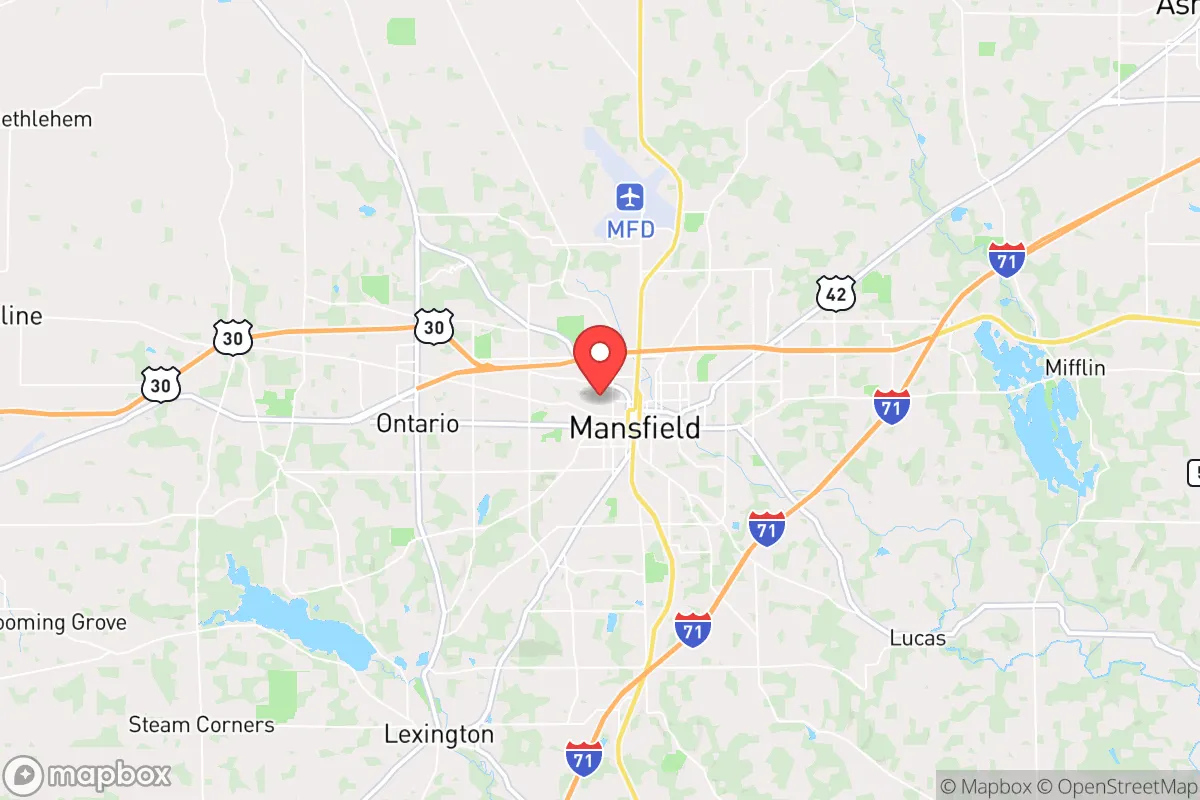
Mansfield, Ohio, sits deep in conservative territory, with a Cook PVI of R+18 that tells you pretty much everything you need to know about the area’s political DNA. This isn’t a place that flips on a dime—it’s been reliably red for decades, and the surrounding Richland County has only gotten more solidly Republican in recent cycles. But if you’ve lived here as long as I have, you’ll notice the political vibe isn’t as simple as just “red county.” There’s a quiet tension between the old-school, leave-us-alone conservatism that built this town and a creeping progressive influence that’s starting to show up in local school board meetings and city council debates.
How it compares
Drive 30 minutes north to Sandusky or 45 minutes west to Toledo, and you’re in a completely different political world—those areas lean blue, with Sandusky’s Erie County voting Democratic in recent presidential races. Mansfield, by contrast, feels like a bulwark against that kind of shift. Even compared to nearby Ashland (R+22) or Mount Vernon (R+20), Mansfield is slightly more moderate on paper, but in practice, the conservative majority here is still the one calling the shots. The real contrast is with Columbus, about an hour south, where the progressive machine is in full swing—Mansfield residents watch that with a wary eye, seeing it as a cautionary tale of what happens when government overreach gets a foothold.
What this means for residents
For folks living here, the R+18 lean means your personal freedoms—whether it’s how you run your small business, what you teach your kids, or how you choose to protect your home—are still largely respected by local government. The county commissioners and most city council members are conservative enough to push back against state-level mandates that feel like overreach, like when Columbus tried to force certain public health measures down our throats a few years back. That said, there’s been a noticeable uptick in progressive activism around the downtown area, especially from younger transplants who moved here for the low cost of living. They’re pushing for things like “equity” initiatives in the schools and zoning changes that sound harmless but often come with strings attached—more regulations, more bureaucracy, less freedom for property owners. It’s not a crisis yet, but it’s something to keep an eye on.
Long-term, I see Mansfield staying conservative, but the battle lines are shifting. The old manufacturing base that made this a union-heavy blue-collar town has been fading for decades, and the new jobs coming in—warehouses, logistics, healthcare—tend to attract workers who lean right on economic issues. The real fight is cultural: will the school board stay focused on academics and parental rights, or will it get bogged down in the same divisive social agendas that have wrecked districts in bigger cities? So far, the conservative majority has held the line, but it takes constant vigilance. If you’re thinking of moving here, know that you’ll find plenty of neighbors who share your values—but don’t be surprised if you also run into a few who think government knows better than you do. That’s the price of living in a town that’s still figuring out its identity in a changing state.

State Political ClimatePolitical Climate in Ohio
State Political AnalysisPolitical Environment in the State
Ohio has long been the quintessential bellwether state, but over the past decade its political center of gravity has shifted noticeably rightward, even as its national electoral importance has faded. The state now leans Republican by about 8 points in statewide races, with a dominant GOP trifecta in Columbus that has held since 2011. However, this isn't your grandfather's Ohio—the old Rust Belt coalition of union Democrats and moderate Republicans has fractured, replaced by a sharper urban-rural divide that makes the state a fascinating, if volatile, place to live. The 10-20 year arc shows a state that was once a pure purple battleground now settling into a reliably red, but not deeply red, posture, driven by the exodus of population from its Democratic-leaning cities and the continued growth of its conservative exurbs and small towns.
Urban vs. rural divide
The political map of Ohio is a study in stark contrasts. The three big Cs—Cleveland, Columbus, and Cincinnati—are the Democratic anchors, with Cuyahoga County (Cleveland) delivering a 66% vote share for Biden in 2020, while Franklin County (Columbus) and Hamilton County (Cincinnati) are now reliably blue, though not as overwhelmingly. But drive 20 minutes outside any of these metros, and the landscape flips hard. The real action is in the exurbs and small cities: Delaware County (north of Columbus) has become a GOP stronghold, voting +22 points for Trump in 2020, while Warren County (north of Cincinnati) is one of the most Republican counties in the nation, at +35 points. Meanwhile, the rural southeast—places like Meigs County and Vinton County—are deep red, with Trump winning by 40+ points. The shift is most dramatic in the old industrial towns: Youngstown (Mahoning County) flipped from Obama +18 in 2012 to Trump +4 in 2020, a seismic 22-point swing that tells you everything about the collapse of the old Democratic coalition. The suburbs of Dayton and Toledo are also trending red, though the cities themselves remain Democratic. In short, if you're looking for a place where conservative values dominate, you want to be in the exurbs or any small town outside the I-71 corridor.
Policy environment
Ohio's policy environment is a mixed bag for a conservative. On the plus side, the state has a flat income tax rate of 3.5% (down from 4.8% a decade ago), and the GOP legislature has been aggressively cutting it further, with a goal of elimination. Property taxes are moderate, and there is no estate tax. The regulatory posture is generally business-friendly, with right-to-work laws not on the books but a strong tort reform environment. On education, Ohio has a robust school choice program—the EdChoice scholarship system lets families use state funds for private or parochial schools, a major win for parental rights. However, the state also has a sales tax that can hit 8% in some counties, and the gas tax was raised in 2019. The real red flag for conservatives is the healthcare landscape: Ohio expanded Medicaid under the Affordable Care Act in 2014, and over 3 million residents are now on the program, creating a massive entitlement that is hard to unwind. Election laws are solid—voter ID is required, and the state purges inactive voters regularly, though not without legal fights. Overall, the policy environment is center-right on economics and education, but the Medicaid expansion and a relatively high sales tax are points of concern.
Trajectory & freedom
On the freedom front, Ohio has been a mixed bag over the last five years, but the trend is cautiously positive for conservatives. The biggest win was the passage of Issue 1 in 2023, which enshrined a 60% supermajority requirement for future constitutional amendments—a direct response to the abortion rights amendment that passed the same year. That amendment, Issue 1 (2023), codified abortion access up to fetal viability, which was a major loss for pro-life advocates. On gun rights, Ohio became a constitutional carry state in 2022, meaning no permit is needed to carry a concealed firearm—a clear expansion of personal liberty. The state also passed a parental bill of rights in 2023, requiring schools to notify parents of any medical or mental health services offered to their children. However, the state has not passed a school choice expansion beyond EdChoice, and there is no religious freedom restoration act. The biggest threat to freedom is the state's tax burden: while income taxes are falling, property taxes in growing exurbs like Delaware and Union County are rising fast due to school levies. On medical autonomy, Ohio has not banned any specific treatments for adults, but the transgender youth medical ban passed in 2024 (overriding a veto) shows the legislature is willing to act on cultural issues. Overall, Ohio is becoming more free on guns and parental rights, but the tax and entitlement trajectory is concerning.
Civil unrest & political movements
Ohio has seen its share of political flashpoints. The 2020 protests in Columbus and Cincinnati over George Floyd's death were large but mostly peaceful, though there was looting in downtown Columbus. The state has a strong pro-life movement, with annual marches at the Statehouse, and the Ohio Right to Life organization remains influential. On the left, the Ohio Organizing Collaborative and ProgressOhio are active, pushing for voting rights and criminal justice reform. Immigration politics are relatively quiet—Ohio is not a border state, and there are no sanctuary cities, though Cleveland has a "welcoming city" ordinance that limits cooperation with ICE. The most visible flashpoint in recent years was the 2023 special election on Issue 1, which saw massive turnout and intense partisan warfare, with both sides spending millions. Election integrity remains a hot topic: the 2020 election in Ohio was clean, but the GOP legislature has since passed laws tightening absentee ballot rules and banning ballot drop boxes. There is no serious secession or nullification rhetoric in Ohio, but the state has a strong "county supremacy" movement in rural areas, with some counties passing resolutions declaring themselves "Second Amendment sanctuaries." A new resident would notice the political divide most acutely in the suburbs: drive through Upper Arlington (Columbus) and you'll see Biden signs; drive through Mason (Cincinnati) and it's Trump flags everywhere.
Projection
Looking ahead 5-10 years, Ohio is likely to become more Republican, but not necessarily more conservative in a libertarian sense. The demographic trends are clear: the population is aging, and the young, college-educated voters moving to Columbus and Cincinnati are more liberal, but they are a smaller cohort than the retirees and families fleeing to exurbs like Powell and Liberty Township. The in-migration from blue states is modest but growing—people from California and Illinois are moving to Ohio for lower housing costs, and they tend to be more conservative than the average Ohioan. The biggest wildcard is the state's fiscal health: the income tax cuts are popular, but they are squeezing the budget, and the Medicaid expansion is a ticking time bomb. If the economy slows, expect pressure to raise sales or property taxes. On cultural issues, the legislature will likely continue to push parental rights and school choice, but a statewide abortion ban is off the table after the 2023 amendment. The real fight will be over education funding and local control. Someone moving in now should expect a state that is reliably red in statewide elections, but with a growing blue urban core that will keep the culture wars alive. The exurbs will be the battleground for the next decade.
For a new resident, the bottom line is this: Ohio offers a relatively low cost of living, a business-friendly tax environment that is improving, and a political climate that respects gun rights and parental authority. But you need to pick your location carefully. If you want a conservative community with good schools and low crime, target the exurbs of Cincinnati (like Mason or West Chester) or Columbus (like Delaware or Dublin). Avoid the urban cores of Cleveland and Youngstown if you want to escape progressive policies and high taxes. The state is trending in the right direction on most freedom metrics, but the Medicaid expansion and rising property taxes are real concerns. Overall, Ohio is a solid choice for a conservative family looking for a place where your values are respected and your vote actually counts—just be prepared for the occasional cold winter and the constant debate over school levies.
* Values derived from national, state, county, city and local statistics and may differ in a specific area. Last updated: 2026-04-30T01:17:03.000Z
Narrative content on this page is AI-generated and may contain mistakes. Verify any details that matter before acting on them.
ReloMaps may earn a commission from affiliate links at no extra cost to you.

