
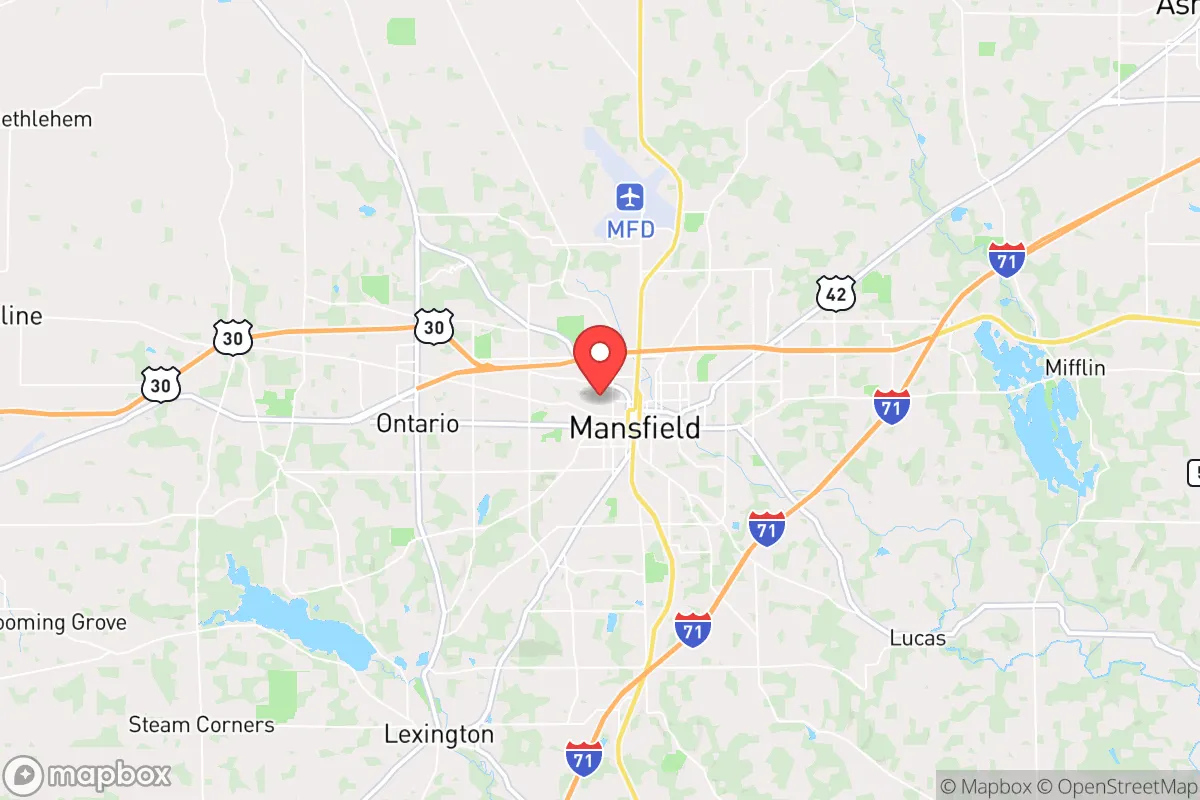
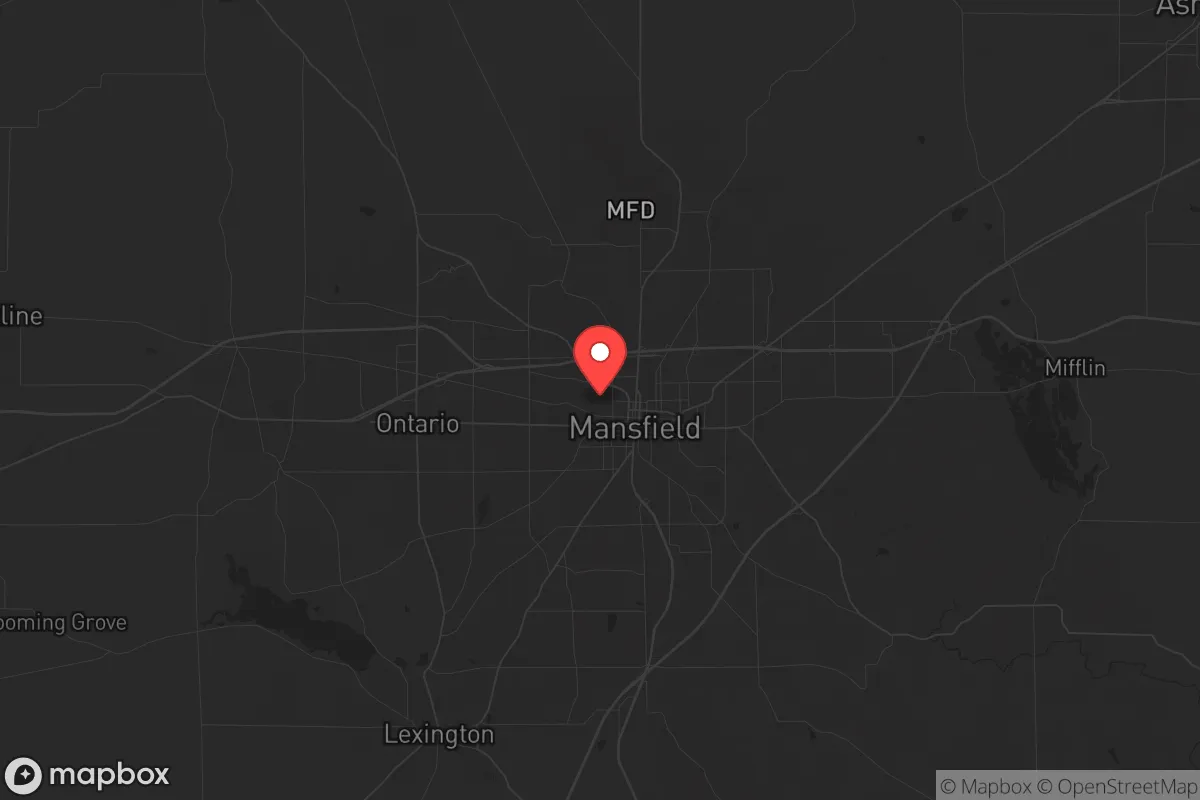
Photo: Wikipedia
Strategic Assessment of Mansfield, OH
Meaningful friction. Expect exposure to either population pressure, blast zones, or natural disaster risk. Consider buying a retreat property.
What does the Strategic Assessment tell us?
Our Strategic Assessment grades tactical survivability of an area. Major population centers, military targets, fallout zones, natural disasters, and border exposure all drive risk — lower exposure means a more defensible position in a crisis.
This is heavily inspired by Joel Skousen's Strategic Relocation book. Highly recommended you checkout the book ($)What does this tell us?
Our Strategic Assessment grades tactical survivability of an area. Major population centers, military targets, fallout zones, natural disasters, and border exposure all drive risk — lower exposure means a more defensible position in a crisis.
This is heavily inspired by Joel Skousen's Strategic Relocation book. Highly recommended you checkout the book ($)Strategic Pillars

Key Distances
Regional Safe Places
Below is our recommended "safe zones" in Ohio and the surrounding area based on our strategic heuristics. For most people, it's unrealistic to live in a “safe zone” full-time due to work, family or other personal reasons. They tend to be more rural. However, many of these areas are perfect for second homes and retreat properties that double as a vacation home or even a short-term rental.

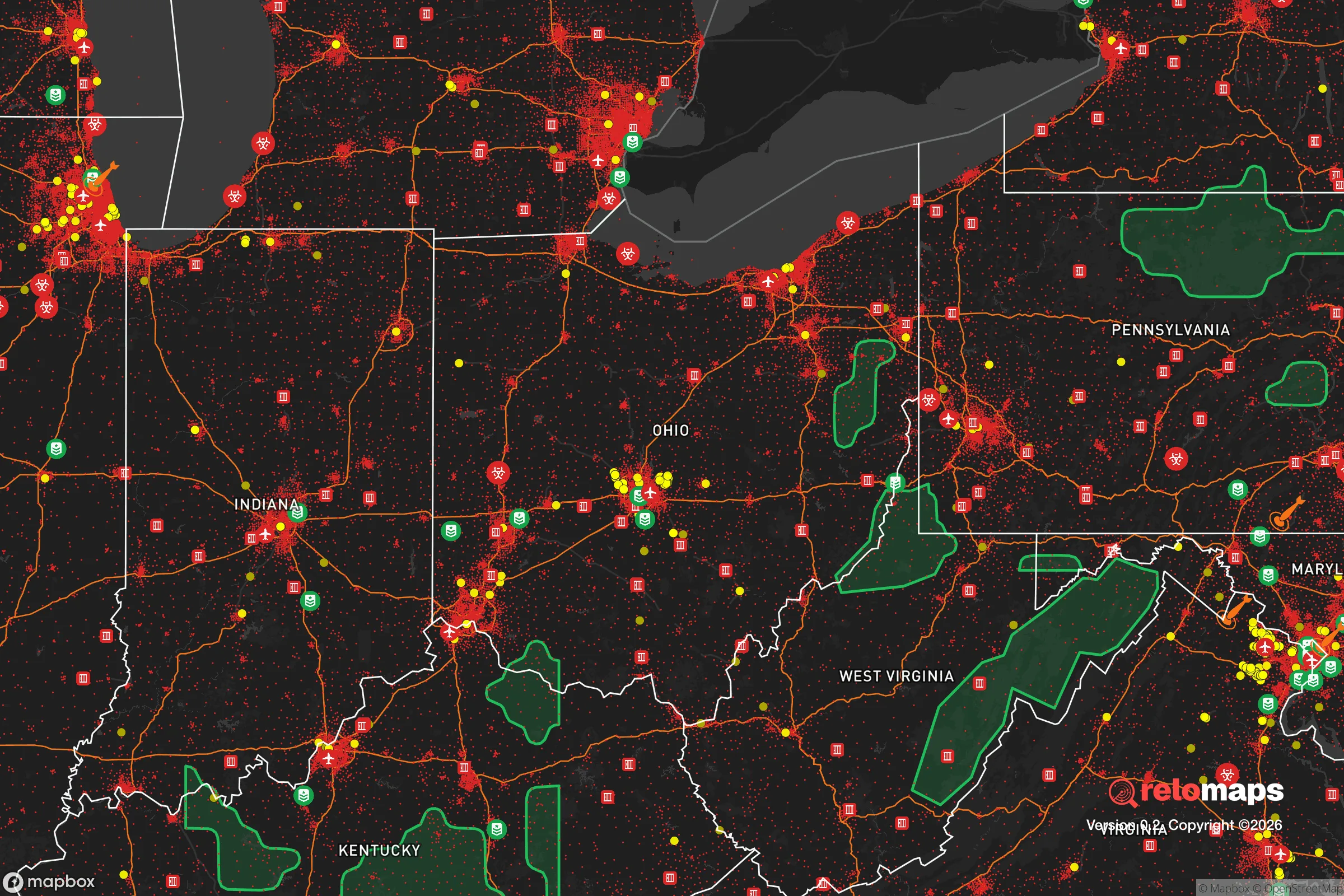


Important Note: For informational purposes only. This does not mean nothing bad ever happens in the green zones. Please use common sense. This is based on public data and modeled with AI. We tried to take a conservative approach but mistakes happen. We update this regularly as new information becomes available.
Solar Generator Recommendations
Backup power matters more here than in safer locations. We've picked three solar generators across budgets and capacity tiers — start with the budget unit if you only need a few essentials, or step up if you want to run a fridge and HVAC for days at a time.

Jackery Portable Power Station Explorer 300
Budget OptionPower on the Go: Weighing only 11 lbs, it's convenient to set up and store with book-sized foldable solar panels

BLUETTI Portable Power Station AC180
Designed for both indoor and outdoor scenarios, AC180 is highly capable as it has a robost capacity and continuous output power.

EF ECOFLOW DELTA Pro Ultra Power Station
Upgraded PickEcoFlow DELTA Pro Ultra is a whole-home energy system designed to grow with your family. Integrated with the Smart Home Panel 2, it scales to meet your evolving energy needs — keeping your home powered, intelligent, and secure through every stage of life.
We earn a commission, at no additional cost to you.
Strategic Assessment Analysis
Mansfield, Ohio, sits in a sweet spot that few relocation analysts give it credit for: close enough to the industrial and logistical arteries of the Midwest to matter, but far enough from the blast zones and population-density risks that make places like Columbus or Cleveland a prepper’s nightmare. The city itself has seen better days economically, but that very decline has created a low-profile, low-cost environment where a prepared individual or family can build serious resilience without drawing attention. For a conservative-leaning relocator thinking about civic unrest, supply-chain collapse, or larger-scale disasters, Mansfield offers a surprisingly solid foundation—provided you understand both its quiet strengths and its real vulnerabilities.
Geographic position and natural advantages for long-term security
Mansfield’s location in north-central Ohio places it roughly 60 miles from both Cleveland and Columbus, and about 35 miles from the Lake Erie shoreline. That sounds like a liability—and for a pure bug-out scenario, it is—but for a strategic relocation, it’s actually a strength. You’re within a two-hour drive of major medical centers, industrial supply chains, and transportation hubs (including the Mansfield Lahm Regional Airport, which has a military presence), but you’re not living in the shadow of any single target. The area sits on the edge of the Appalachian foothills, which means rolling terrain, decent tree cover, and a climate that supports four-season agriculture. The Richland County soil is productive, and the region gets enough rainfall (around 38 inches annually) that a well-planned garden or small farm can be viable without heavy irrigation. The natural water table is generally good, and there are multiple small lakes and reservoirs within a 20-minute drive—Pleasant Hill Lake, Charles Mill Lake, and the Clear Fork Reservoir—that provide both recreation and emergency water sources. For a prepper, the key advantage here is low population density outside the city core: Richland County’s population has been flat or declining for decades, which means fewer people competing for resources in a crisis.
Risks, exposures, and proximity to fallout-relevant landmarks
No honest strategic assessment can ignore the downsides. Mansfield is roughly 50 miles from the Davis-Besse Nuclear Power Station on Lake Erie, and about 70 miles from the Perry Nuclear Plant. In a worst-case event—whether accident or deliberate attack—that puts you inside the potential fallout zone for a plume, though prevailing winds in this region typically blow from the west, which would push contamination toward Lake Erie and away from Mansfield. Still, a relocator should plan for at least a 72-hour shelter-in-place capability with HEPA filtration and sealed rooms, and have a pre-planned evacuation route south or southeast toward the Appalachian foothills. The bigger concern is proximity to major infrastructure targets. The Norfolk Southern rail line runs through Mansfield, and the city sits near the intersection of I-71 and US-30, both major freight corridors. In a scenario involving civil unrest or supply-chain collapse, those routes could become chokepoints or targets themselves. The city’s own industrial base—including a large steel plant (AK Steel, now Cleveland-Cliffs) and a major plastics manufacturer—means there are localized hazards like chemical releases or industrial accidents that a relocator should account for. On the plus side, Mansfield is not a primary target for any strategic strike: no major military bases, no nuclear command centers, no high-value government facilities. The Ohio Air National Guard’s 179th Airlift Wing operates out of Mansfield Lahm, but that’s a tactical asset, not a first-strike target. For a prepper, the calculus is clear: you’re in the risk zone for secondary effects from a major event, but you’re not on the menu for a direct hit.
Practical resilience for a relocator: food, water, energy, and defensibility
Where Mansfield really shines is in the nuts-and-bolts of daily preparedness. The cost of living is well below the national average—housing is particularly cheap, with decent single-family homes available for under $150,000 and larger properties with acreage within a 15-minute drive of downtown. That means a relocator can afford to invest in solar panels, a backup generator, a well, or a septic system without breaking the bank. The local building codes are relatively lax compared to suburban Columbus or Cleveland, so a determined prepper can set up a self-sufficient homestead without constant regulatory interference. Water is the biggest win: the area sits atop the Sandusky River watershed, and many rural properties have access to groundwater at reasonable depths (50-150 feet). For those on city water, the Mansfield Water Treatment Plant draws from the Clear Fork Reservoir, which holds about 2.5 billion gallons—a solid buffer for a medium-term disruption. Food resilience is also feasible. The surrounding county has active farmers’ markets, several u-pick orchards, and a handful of Amish and Mennonite communities within a 30-minute drive (particularly around Loudonville and Bellville). Those communities are a huge asset for barter, bulk food purchases, and practical skills that most suburbanites have lost. Energy is the weak link: the local grid is aging, and power outages from winter storms or summer thunderstorms are common. Any serious relocator should budget for a whole-house generator or a robust solar-plus-battery setup—the area gets enough sun (about 170 sunny days per year) to make solar viable, but not enough to rely on it alone in winter. Defensibility is mixed. The city itself is a typical Rust Belt town with some blighted neighborhoods and a higher-than-average property crime rate. But the rural areas to the north, east, and south offer good terrain for a retreat: wooded hills, winding roads, and limited through-traffic. A property with a long driveway, good sightlines, and a creek or pond is entirely achievable for under $200,000.
The overall strategic picture for Mansfield is one of moderate risk with high upside for the prepared relocator. You’re not in a fortress—you’re in a quiet, overlooked corner of the Midwest that offers affordable land, decent water, and a low profile. The downsides are real: proximity to nuclear plants, a declining local economy, and the usual Rust Belt issues of drug abuse and petty crime. But for a conservative-minded individual or family who wants to be ready for the worst while still living a normal life, Mansfield gives you room to breathe, room to build, and room to stay under the radar. It’s not a bug-out location—it’s a live-in location that can double as a base of operations when things go sideways. If you’re looking for a place where you can put down roots, stock a pantry, and still be within striking distance of real infrastructure when you need it, this area deserves a serious look.

* Values derived from national, state, county, city and local statistics and may differ in a specific area. Last updated: 2026-04-30T01:17:03.000Z
Narrative content on this page is AI-generated and may contain mistakes. Verify any details that matter before acting on them.
ReloMaps may earn a commission from affiliate links at no extra cost to you.

