Photo: Wikipedia
Demographics of Mansfield, CT
Affluence Level in Mansfield, CT
An upper-middle-class area. Household wealth, education levels, and homeownership run ahead of national benchmarks.
People of Mansfield, CT
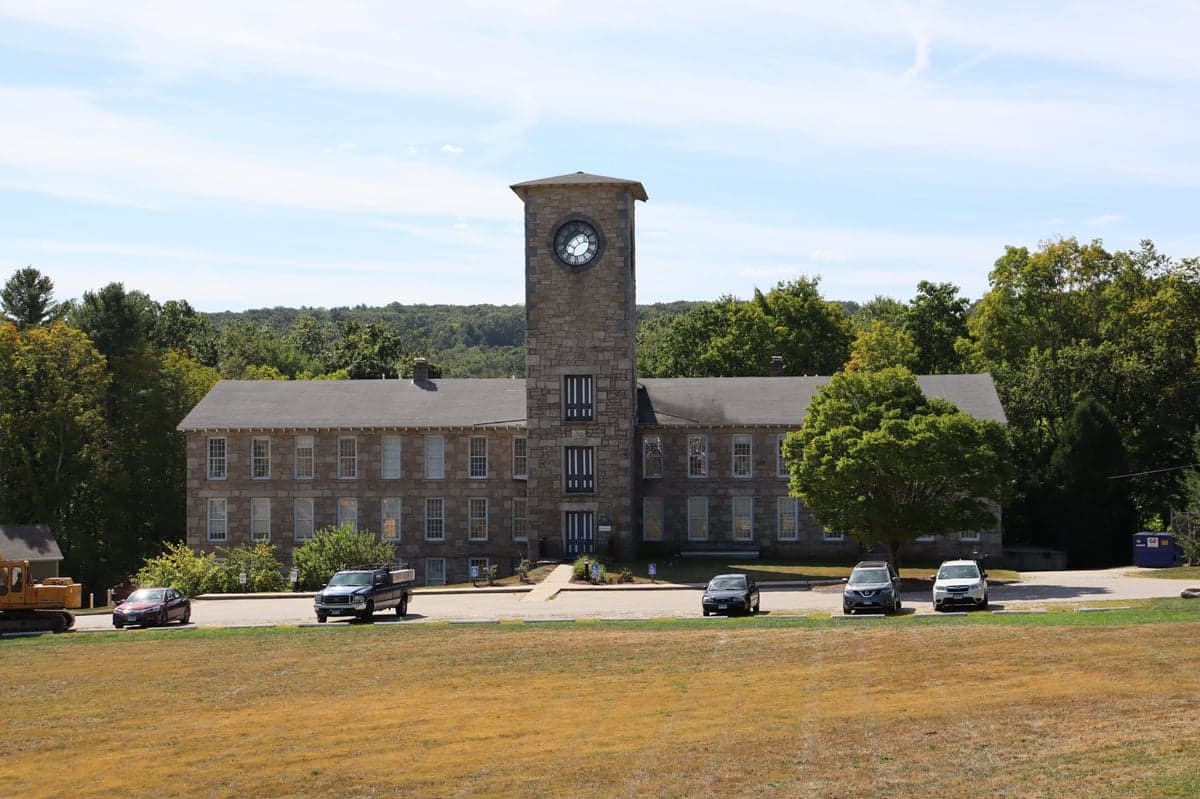
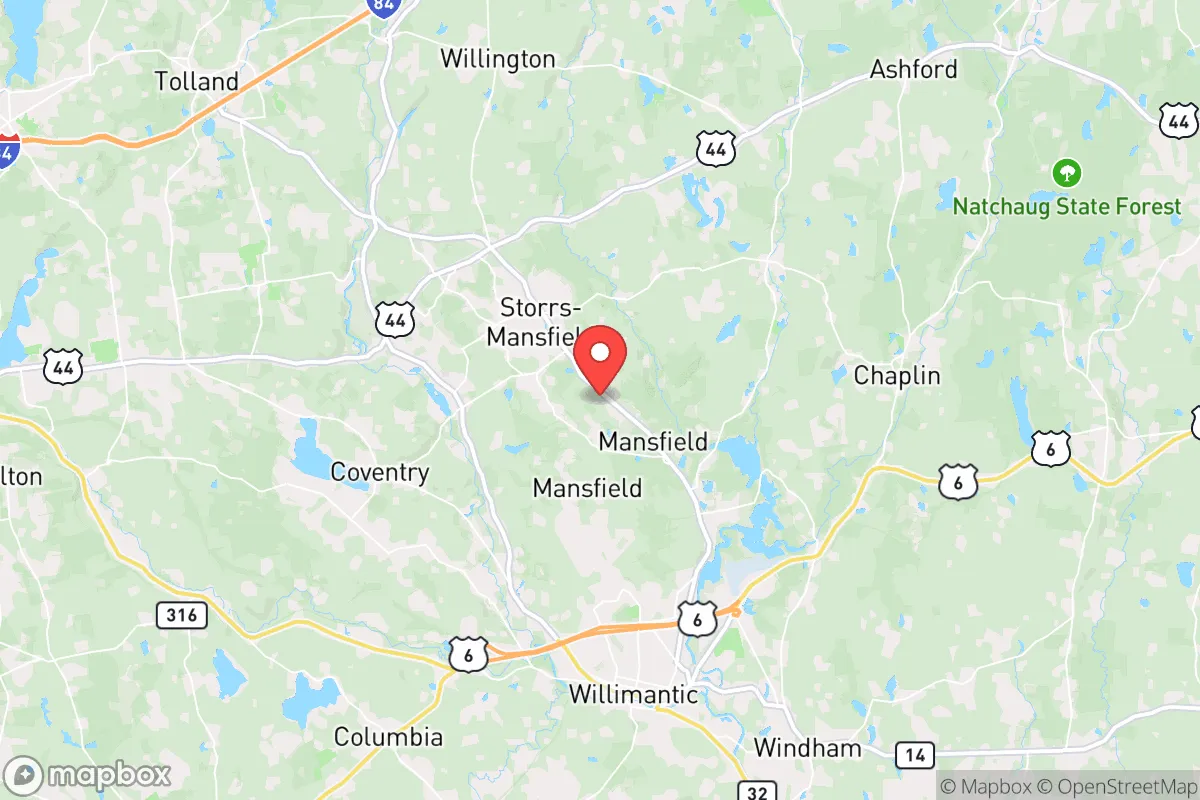
The people of Mansfield, Connecticut, today form a small, highly educated, and predominantly white community of just under 1,000 residents, shaped overwhelmingly by the presence of the University of Connecticut. With a college-educated rate of 64.2%—more than double the national average—the population is defined by its academic and professional character, with a notable East/Southeast Asian minority of 3.6% and a Hispanic share of 4.3%. The community is dense for a rural town, concentrated in the village centers of Mansfield Center and Storrs, and its identity is a blend of longtime Yankee families, university faculty and staff, and students who have chosen to stay after graduation.
How the city was settled and grew
Mansfield was settled in the late 17th century by English colonists from the Massachusetts Bay Colony, who were granted land in the Nipmuc territory along the Willimantic River. The original settlement clustered around what is now Mansfield Center, where the town's first meetinghouse and common were established in 1703. These early families were subsistence farmers, and the town remained a quiet agricultural community through the 19th century, with small mills operating along the Fenton River and Mount Hope River. The arrival of the railroad in the mid-1800s brought a modest wave of Irish and later French-Canadian laborers, who settled in the Storrs village area and worked on the rail line and in local mills. The population grew slowly, reaching about 1,500 by 1900, but the town's character remained overwhelmingly Yankee Protestant until the 20th century.
Modern era (post-1965)
The single most transformative event in Mansfield's modern history was the expansion of the University of Connecticut in Storrs after World War II, and especially after the 1965 Hart-Cellar Immigration Act. The university's growth as a flagship public research institution drew faculty, researchers, and graduate students from across the United States and abroad. This influx reshaped the Storrs Center neighborhood, which evolved from a small college crossroads into a dense, walkable hub of apartments, townhouses, and university-owned housing. The post-1965 wave also brought the town's first significant non-white populations: East/Southeast Asian academics and their families, primarily Chinese and Korean, who concentrated in the Horsebarn Hill area and the newer subdivisions near the university's south campus. Domestic in-migration from other parts of Connecticut and the Northeast accelerated in the 1980s and 1990s, as professionals and families sought the area's strong schools and rural character. The Mansfield Depot neighborhood, once a separate mill village, was absorbed into the town's suburban fabric during this period, attracting faculty and staff who wanted larger lots and quieter streets than Storrs offered.
The future
Mansfield's population is projected to remain stable or grow very slowly, with the university continuing to be the primary demographic driver. The town's racial and ethnic composition is likely to become slightly more diverse, driven by continued recruitment of international faculty and graduate students, particularly from East and Southeast Asia. The Hispanic share, currently 4.3%, may increase modestly as service-sector workers and their families settle in more affordable parts of the region, such as Willimantic (just south of Mansfield) rather than within Mansfield itself. The white share, now 92.0%, is expected to decline gradually as older Yankee families age out and are replaced by younger, more diverse cohorts. New residential development is concentrated in the Storrs-Mansfield area, where mixed-use projects near the university are adding apartments and condominiums aimed at faculty and graduate students, while single-family home construction remains limited by the town's conservation-oriented zoning. The cultural identity of Mansfield will likely remain anchored to the university—intellectual, progressive, and transient—rather than evolving into a more traditional suburban or rural community.
For someone moving in now, Mansfield offers a unique blend: a rural New England setting with the intellectual and cultural resources of a major university, a highly educated and stable population, and a demographic trajectory that is slowly diversifying but remains overwhelmingly white and academic. The town is not a place of rapid change or broad economic growth, but rather a steady, insular community where the university's rhythms define daily life and where newcomers are most likely to find their place through professional or academic ties to UConn.

* Values derived from national, state, county, city and local statistics and may differ in a specific area. Last updated: 2026-10-29T02:36:58.000Z
Narrative content on this page is AI-generated and may contain mistakes. Verify any details that matter before acting on them.
ReloMaps may earn a commission from affiliate links at no extra cost to you.

