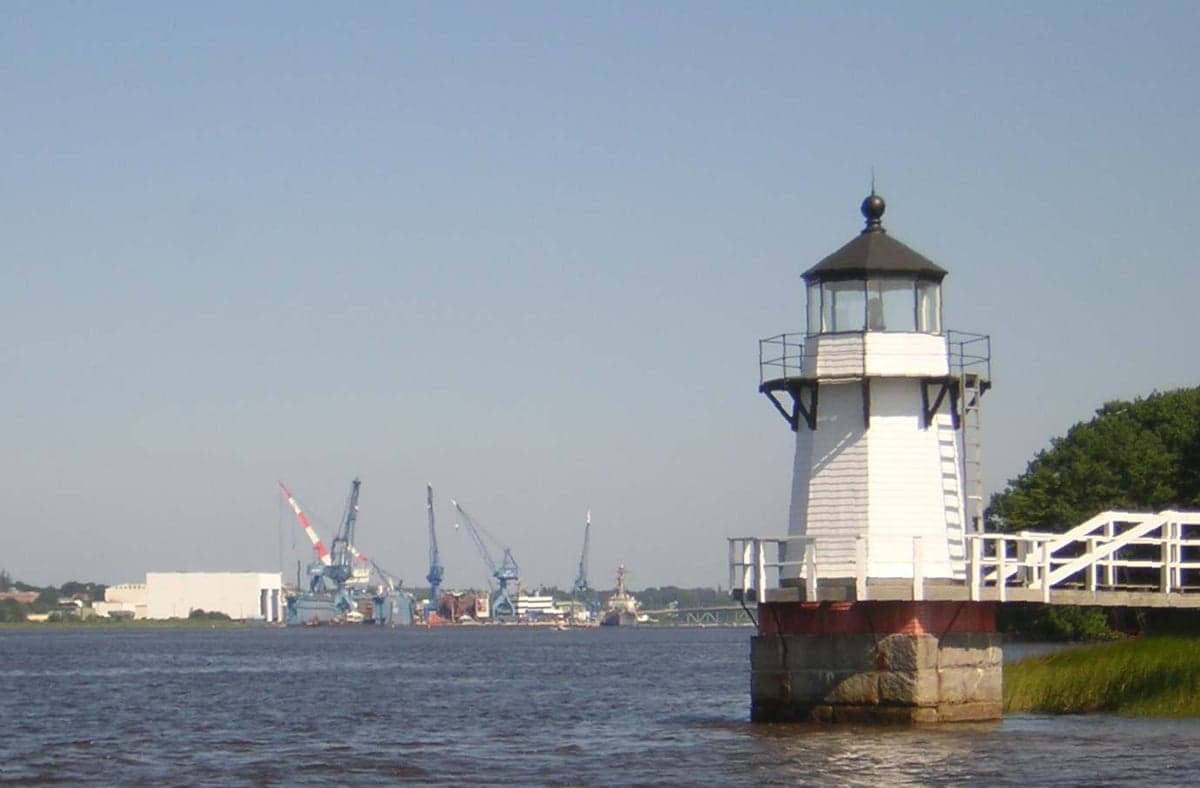
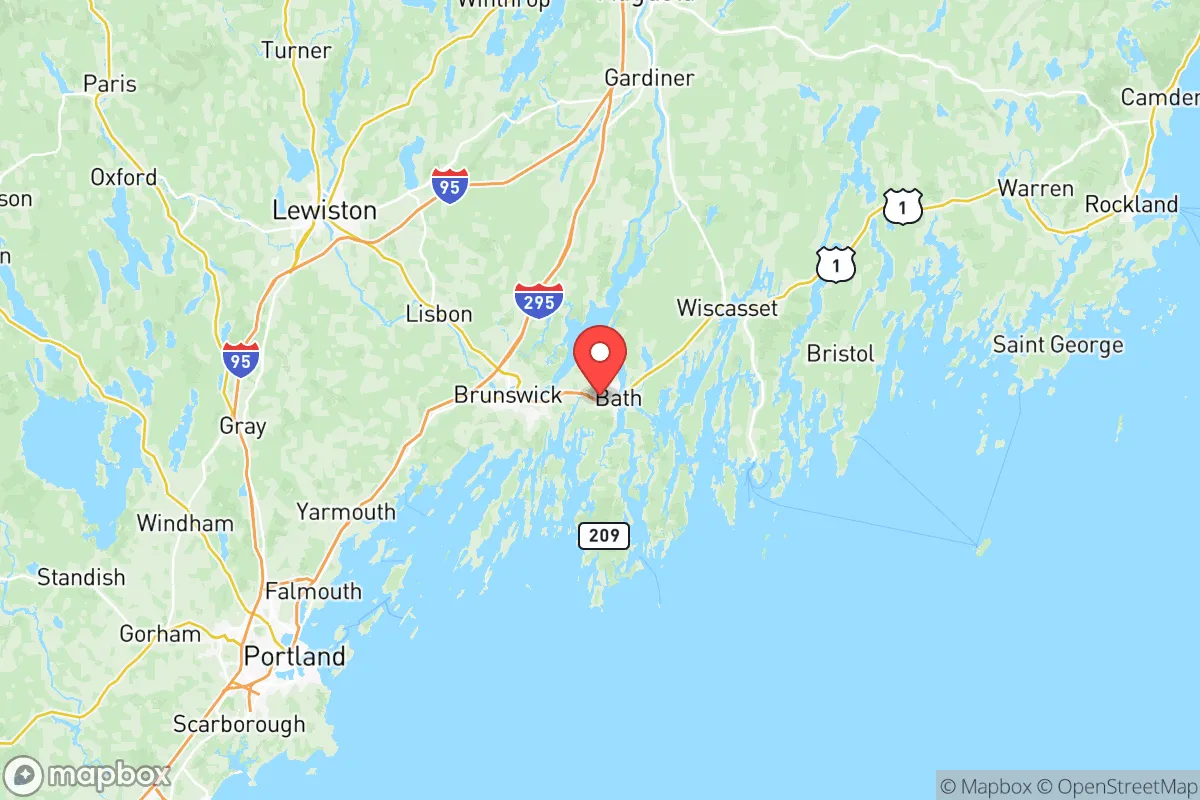
Photo: Wikipedia
Quality of Life in Sagadahoc County
A livable area that tracks near national norms for affordability, walkability, and neighborhood health.
What does Quality of Life tell us?
Quality of Life measures an area by evaluating factors like cost of living, nearby amenities, country club access, airport proximity, socioeconomic signals and neighborhood character. For large states, this is a general average — quality of life can vary dramatically between metro areas, suburbs, and rural communities within the same state.
What does this tell us?
Quality of Life measures an area by evaluating factors like cost of living, nearby amenities, country club access, airport proximity, socioeconomic signals and neighborhood character. For large states, this is a general average — quality of life can vary dramatically between metro areas, suburbs, and rural communities within the same state.
Cost of Living
3% below national average
96%
The Real Cost of Living in Sagadahoc County for 2026
| Tier | Individual | Family (4) |
|---|---|---|
| Survival | $17k | $32k |
| Comfortable | $58k | $86k |
| Luxury | $131k+ | $204k+ |
| Elite (Top 5%) | $155k+ | $240k+ |
Quality-of-Life Analysis
Sagadahoc County, Maine, offers a distinct quality-of-life spectrum that ranges from the walkable, historic riverfront of Bath to the deep woods and tidal creeks of its unincorporated territories. The county's character is defined by its position at the mouth of the Kennebec River, blending maritime industry, coastal recreation, and working farmland. People drawn to the county's larger towns tend to prioritize walkability, local services, and a compact community feel, while those settling in the smaller towns and rural pockets often seek land, privacy, and direct access to the water or woods.
Largest town(s) & population centers
Bath is the county seat and the largest population center by a significant margin, with roughly 8,300 residents. Daily life here is centered on a compact, walkable downtown of brick storefronts, independent restaurants, and the Bath Farmers Market. The dominant employer is Bath Iron Works (BIW), a major shipbuilder for the U.S. Navy, which anchors the local economy and draws a workforce from across the county. The median home value in Sagadahoc County is $300,200, and Bath's housing stock is a mix of historic 19th-century homes, triple-deckers, and newer condos, with prices generally above the county median near the downtown core. Topsham, directly across the Androscoggin River from Brunswick, functions as the county's commercial hub, with big-box retail, grocery stores, and medical offices along Route 196. It is less walkable than Bath but offers more rental options; the countywide median rent is $1,050. The average commute across the county is 24.9 minutes, a figure that reflects the many residents who drive to BIW, to Brunswick Naval Air Station (now a business park), or south to Portland.
Smaller towns & rural pockets
South of Bath, Phippsburg is a coastal town of roughly 2,200 residents that stretches from the Kennebec River to the open Atlantic. It includes the popular Popham Beach State Park and the historic Fort Popham, and daily life here is defined by seasonal tourism, fishing, and second homes. Georgetown, with about 1,000 year-round residents, is even more rural, centered on the village of Five Islands and its working lobster wharves. Inland, Bowdoin (pop. 3,100) and Bowdoinham (pop. 2,900) are agricultural and wooded towns with large lots, dirt roads, and a strong sense of local independence. Bowdoinham's village along the Cathance River has a small store, a library, and a popular farmers market, but most services require a drive to Topsham or Brunswick. West Bath and Woolwich are primarily residential towns with no real downtowns, offering a mix of waterfront homes and inland lots. The county also includes the unorganized territory of Perkins Township, a sparsely populated island community in the Kennebec River that is accessible only by boat.
Cost & lifestyle range
The county's cost of living index is 97, slightly below the national average of 100, but the range within the county is wide. At the higher end, waterfront homes in Phippsburg and Georgetown routinely exceed $500,000, and the seasonal influx of tourists drives up prices for goods and services in summer. At the lower end, older homes in Bowdoin and Woolwich can be found for under $250,000, and the county's rural character keeps property taxes relatively moderate compared to coastal York County. Rentals are scarce countywide, with the median rent of $1,050 often representing an older apartment or a duplex in Topsham or Bath. Lifestyle varies dramatically: a resident of downtown Bath can walk to a coffee shop, the library, and the YMCA, while a resident of Georgetown may drive 20 minutes to the nearest grocery store. The county lacks a major hospital (the closest is in Brunswick), and public transportation is limited to a few bus routes along the Route 1 corridor.
This county is best suited for people who value a strong sense of place, whether that place is a historic shipbuilding city, a quiet farming town, or a remote coastal peninsula. Families and professionals working at Bath Iron Works or commuting to Portland find the balance of affordability and access appealing, while retirees and second-home buyers are drawn to the coastal towns for their natural beauty and slower pace. Those who need urban amenities, frequent public transit, or a diverse rental market will find Sagadahoc County limiting, but for people who want a grounded, community-oriented life in a working coastal landscape, it offers a rare and genuine range of options.

Crime in Sagadahoc County
Lower crime rates than 81% of comparable U.S. locations.
Violent CrimeViolent Crime Analysis
Property CrimeProperty Crime Analysis
Crime Analysis
Sagadahoc County, Maine, is one of the safest counties in the state by violent crime metrics, with a rate of 93.4 incidents per 100,000 residents — roughly half the national average. Property crime, however, runs higher at 944.9 per 100,000, a figure that approaches the national median and reflects the county’s mix of coastal tourism, seasonal population shifts, and rural poverty. The county’s overall safety profile is strong, but residents in the more populous towns of Bath and Topsham should be more alert to theft and vehicle break-ins than to violent confrontations.
Crime in context
Sagadahoc County’s violent crime rate of 93.4 per 100,000 is well below the Maine state average of roughly 110 per 100,000 and far under the U.S. rate of about 380 per 100,000. Property crime at 944.9 per 100,000 sits slightly above the Maine average of approximately 900 per 100,000 but remains below the national figure of around 1,950 per 100,000. The county’s low violent crime is consistent with the broader Midcoast region, where communities like Boothbay Harbor and Georgetown report very few aggravated assaults or robberies. However, the property crime rate is a meaningful concern — especially in Bath, the county seat and largest town, where a concentration of retail, waterfront parking, and transient populations creates more opportunity for larceny and motor vehicle theft.
What residents experience
For most residents, daily life in Sagadahoc County feels safe. The violent crime that does occur is rarely random; it is typically domestic in nature or tied to known disputes. The more tangible risk is property crime, particularly unlocked vehicle entries and package theft in the denser neighborhoods of Topsham and along the Route 1 corridor. Seasonal tourism in Phippsburg and West Bath brings a temporary uptick in theft from cars at trailheads and beach access points. Law enforcement coverage is split between the Sagadahoc County Sheriff’s Office and municipal police in Bath and Topsham, with response times in rural areas like Woolwich and Arrowsic stretching to 15–20 minutes for non-emergency calls. The county’s judicial district falls under Maine District Court in Bath, which has not adopted the progressive prosecutor policies seen in Portland or Lewiston; sentencing remains generally consistent with state norms, and repeat property offenders do face meaningful consequences. That said, the proximity to larger, more liberal-leaning jurisdictions — particularly Cumberland County to the south — means that some offenders cycling through the regional justice system may receive lighter treatment than residents would prefer, a dynamic that contributes to recidivism in property crime.
Neighborhood-level variation
Safety varies noticeably within the county. Bath’s downtown and South End see the highest concentration of police calls, including disorderly conduct and theft, while the quieter residential streets of Topsham’s Highland Avenue area report far fewer incidents. The coastal towns of Georgetown and Phippsburg have violent crime rates near zero but experience seasonal property crime tied to unoccupied summer homes. Richmond, on the county’s northern edge, has a small-town feel but a slightly elevated rate of drug-related arrests relative to its population. Overall, Sagadahoc County is a safe place to live, but residents should take standard precautions — lock vehicles, secure packages, and report suspicious activity — especially in the more populated towns along the Kennebec River corridor.
* Values derived from national, state, county, city and local statistics and may differ in a specific area. Last updated: 2026-06-27T01:59:07.000Z
Narrative content on this page is AI-generated and may contain mistakes. Verify any details that matter before acting on them.
ReloMaps may earn a commission from affiliate links at no extra cost to you.

