Photo: Wikipedia
Demographics of Sagadahoc County
Affluence Level in Sagadahoc County
A middle-class area roughly in line with national averages across income, home values, education, and employment.
People of Sagadahoc County
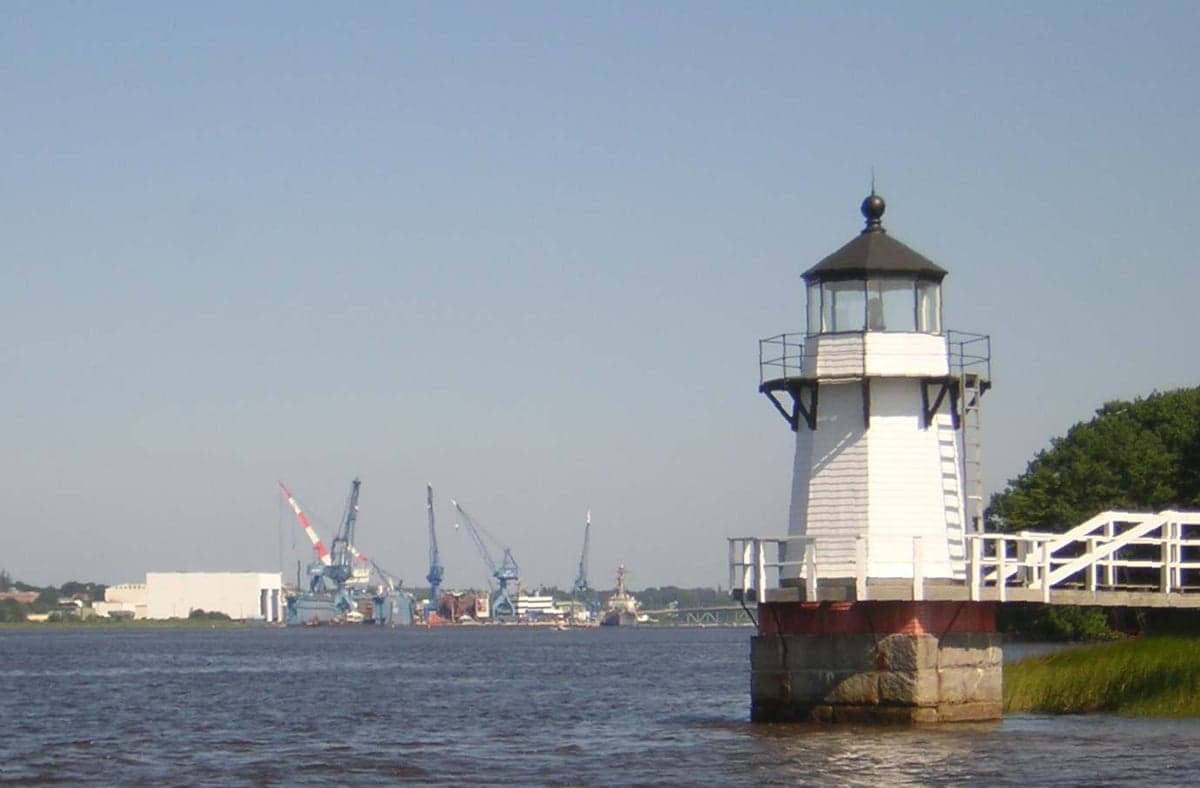
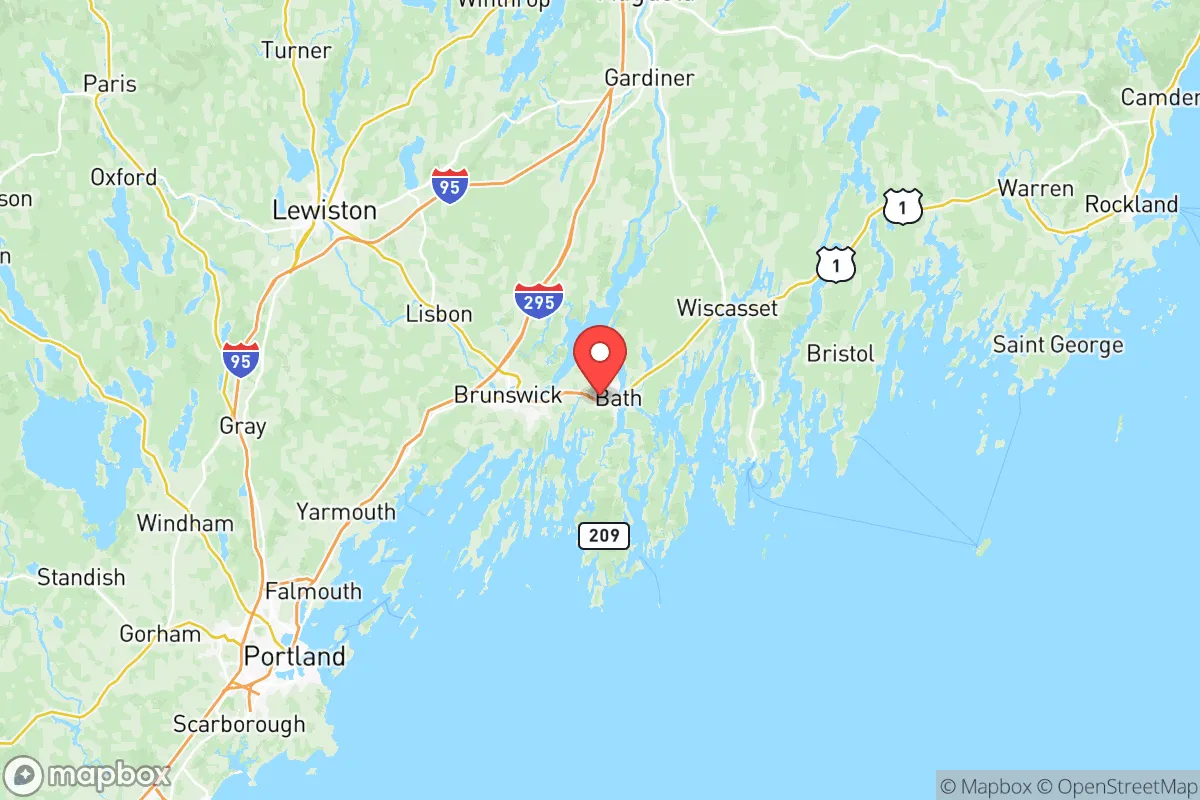
Sagadahoc County, Maine, is home to roughly 37,000 residents, making it one of the state's smallest counties by population. The population is overwhelmingly white (92.4%) and native-born, with only 1.0% foreign-born, a figure far below the national average. Its character is defined by a blend of historic coastal villages, working-class mill towns, and growing bedroom communities for commuters to Bath's shipyard and the Portland metro area. The county's identity remains deeply rooted in its maritime and industrial heritage, with a distinct sense of place that is both insular and quietly evolving.
Settlement & growth (pre-1960)
The original inhabitants of the Sagadahoc region were the Wabanaki Confederacy, particularly the Abenaki people, who used the Kennebec River as a major travel and trade corridor. European contact began with English explorers in the early 1600s, and the short-lived Popham Colony was established at the mouth of the Kennebec in 1607—a failed settlement that predates Plymouth. Permanent English settlement did not take hold until the late 1600s and early 1700s, driven by land grants and the fur trade. These early settlers were primarily of English and Scots-Irish stock, establishing the towns of Georgetown (1716) and Bath (incorporated 1781) as coastal farming and fishing communities.
The 19th century brought a transformative wave of immigration tied to shipbuilding and the maritime economy. Bath became a national shipbuilding hub, and the industry drew skilled workers from across New England and the British Isles. Irish immigrants arrived in significant numbers during the 1840s and 1850s, fleeing the Great Famine, and settled in Bath and Woolwich, working in the shipyards and on the railroad. A smaller but notable wave of French-Canadian immigrants came from Quebec in the late 1800s, drawn by jobs in the region's sawmills, textile mills, and shipyards. They concentrated in Bath and Richmond, where French was spoken in homes and churches well into the 20th century. The county's population peaked around 1900 at roughly 28,000, then stagnated as the shipbuilding industry declined between the world wars.
The mid-20th century saw a modest revival driven by the expansion of Bath Iron Works (BIW) during World War II. The shipyard's workforce swelled, drawing domestic migrants from rural Maine and other parts of New England. This period solidified Bath as the county's economic and population anchor, while smaller towns like Phippsburg and West Bath remained sparsely populated, summer-resort communities. By 1960, the county's population had grown to about 32,000, still overwhelmingly white and native-born, with a strong Catholic minority from the Irish and French-Canadian waves.
Modern era (post-1965)
The 1965 Hart-Cellar Act had a minimal direct impact on Sagadahoc County. Unlike urban centers or Sun Belt states, the county did not attract significant post-1965 immigration. The foreign-born population today stands at just 1.0%, and the county's racial demographics have shifted only slightly. The Hispanic population has grown from near zero to 2.0%, and the Asian (East/Southeast Asian) population is 0.5%, with a separate Indian (subcontinent) population of 0.2%. These small communities are concentrated almost entirely in Bath, often tied to professional roles at BIW or at Maine Maritime Academy in neighboring Castine (Hancock County).
The most significant demographic change since 1965 has been domestic migration, not immigration. The decline of traditional manufacturing in the 1970s and 1980s led to population stagnation and out-migration of younger residents. However, the post-2000 period brought a reverse trend: an influx of retirees and remote workers from southern New England and the mid-Atlantic, drawn by lower housing costs, coastal scenery, and a slower pace of life. These newcomers have concentrated in Bath's historic district, in Georgetown's coastal enclaves, and in the village of Bowdoinham, which has become a popular bedroom community for commuters to Portland and Augusta. Suburbanization has been modest but noticeable, with new single-family homes and subdivisions appearing on the outskirts of Bath and in Woolwich along Route 1.
The county's population has grown slowly but steadily, reaching 37,093 by the 2020s. The college-educated share is 41.1%, reflecting the influx of professionals and the presence of BIW's engineering workforce. The Black population remains tiny at 0.5%, and there is no significant Arab population. The county remains one of the least diverse in New England, a fact that shapes its social and political character.
The future
Sagadahoc County is likely to continue its slow, steady growth, driven by domestic in-migration rather than international immigration. The population will become slightly more diverse, but the pace will be gradual. The Hispanic and Asian populations may grow from their current low bases, but they will remain small shares of the total. The county's cultural identity will likely remain rooted in its maritime and shipbuilding heritage, with a growing tension between long-time residents and newcomers from away. The biggest demographic wildcard is the aging of the population: the county has a higher median age than the national average, and attracting and retaining younger families will be a challenge. The continued health of Bath Iron Works is the single most important factor for population stability.
For someone moving in now, Sagadahoc County offers a stable, safe, and historically rich environment with a strong sense of community. It is not a place of rapid change or high diversity, but rather a place where tradition and a quiet coastal lifestyle remain paramount. The county is becoming a bit more educated, a bit more affluent, and a bit more connected to the broader Portland economy, but its essential character as a white, native-born, working waterfront community is likely to persist for the foreseeable future.

* Values derived from national, state, county, city and local statistics and may differ in a specific area. Last updated: 2026-06-27T01:59:07.000Z
Narrative content on this page is AI-generated and may contain mistakes. Verify any details that matter before acting on them.
ReloMaps may earn a commission from affiliate links at no extra cost to you.

