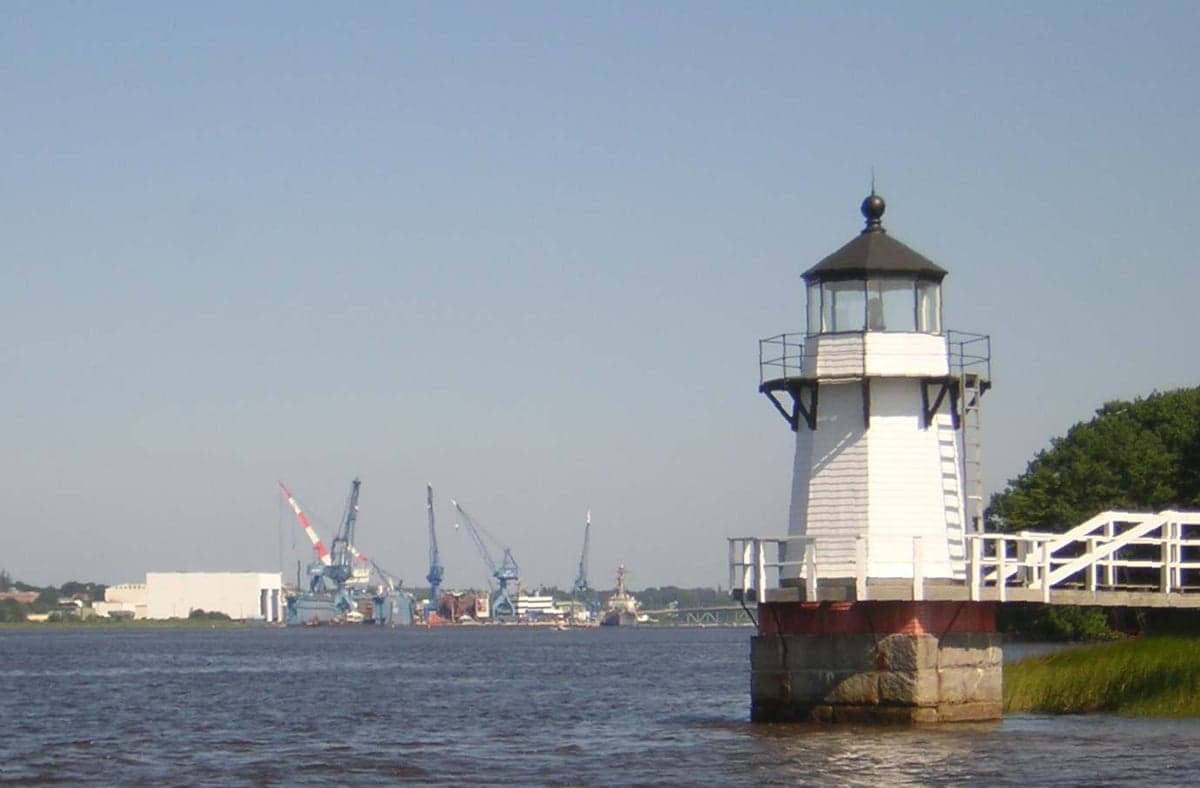
Photo: Wikipedia
Political ClimatePolitical Climate in Sagadahoc County
Showing district-level results — no local-only data available.
Local Political AnalysisPolitical Analysis of Sagadahoc County
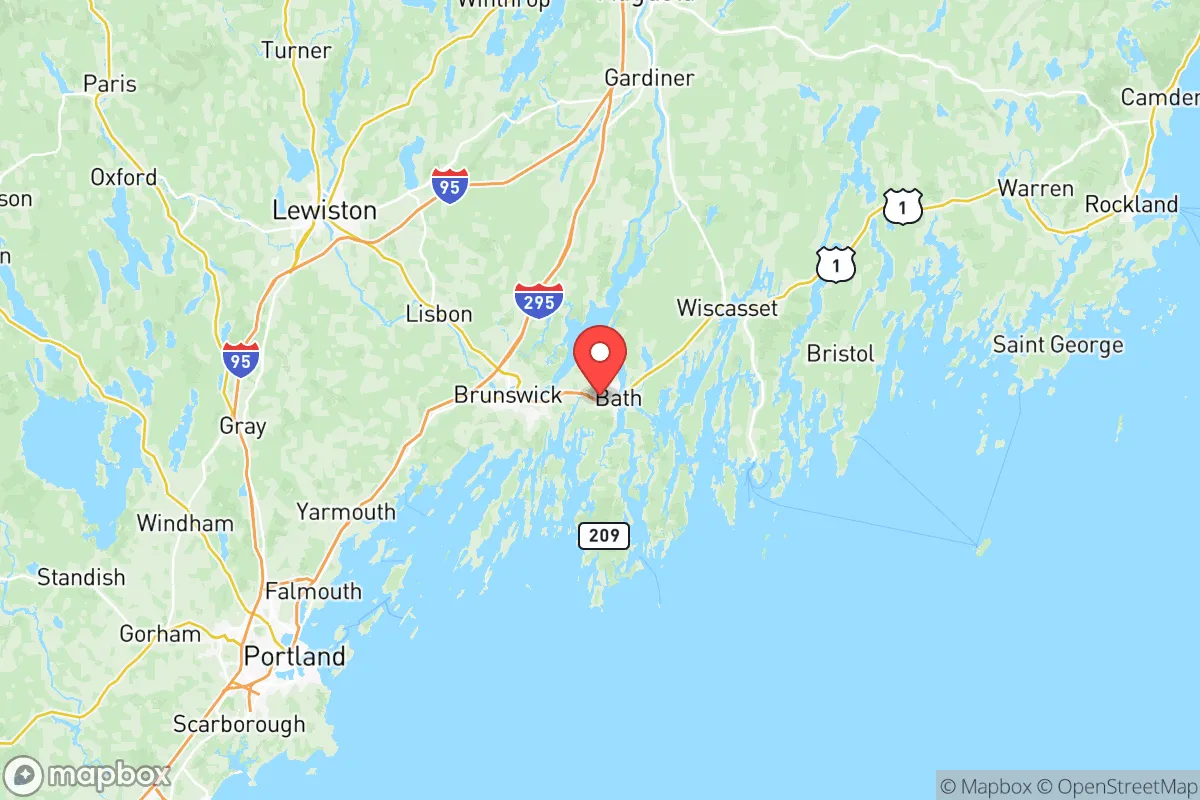
Sagadahoc County, Maine, is a reliably Democratic stronghold with a Cook PVI of D+11, meaning it votes about 11 points more Democratic than the national average. This coastal county, anchored by the town of Bath and stretching from the Kennebec River to the coast, has been trending steadily blue over the past decade, though its politics are far from monolithic. The county's Democratic lean is driven largely by its urban and coastal precincts, while inland and more rural areas show a distinctly more conservative streak, making it a fascinating microcosm of Maine's broader political divide.
How it compares
Compared to the state of Maine as a whole, Sagadahoc County is notably more Democratic. Maine is a classic "purple" state that has split its electoral votes in recent presidential elections, with a Cook PVI that is roughly even or slightly Democratic-leaning. Sagadahoc's D+11 rating places it firmly in the blue column, alongside other coastal counties like Cumberland (Portland). The political geography within the county mirrors the state's own urban-rural split. Bath, the county seat and home to Bath Iron Works, is the Democratic heartland, consistently delivering large margins for Democratic candidates. Topsham, a growing suburb just north of Brunswick, also leans blue, driven by a mix of professionals and younger families. In contrast, towns like Bowdoin and Richmond are more conservative, often voting Republican by comfortable margins. The swing precincts are found in towns like Woolwich and Georgetown, where a mix of year-round residents and seasonal coastal homeowners can tip the balance. This means that while the county as a whole is safe for Democrats, a Republican candidate who can appeal to moderates and focus on economic issues—especially those tied to the shipyard and working waterfront—can still be competitive in local races.
What this means for residents
For liberal residents, Sagadahoc County offers a comfortable political environment where Democratic candidates are the norm and progressive policies on climate change, healthcare, and education are generally popular. You'll find active Democratic committees in Bath and Topsham, and local elections often focus on issues like affordable housing, coastal resilience, and school funding. For conservative residents, the reality is more nuanced. While you may feel outnumbered in county-wide elections, your voice is far from absent. In towns like Bowdoin and Richmond, Republican candidates often win local offices, and the county's strong libertarian streak means that even in blue areas, there is a deep respect for individual rights and a skepticism of overreach. The presence of Bath Iron Works, a major employer with a unionized workforce, also creates a unique political dynamic: many workers are culturally conservative but vote Democratic due to union ties and support for defense spending. This means that practical, kitchen-table issues often transcend party labels, and residents on both sides can find common ground on local matters like road maintenance, property taxes, and supporting the local economy.
Culturally, Sagadahoc County is defined by its working waterfront, shipbuilding heritage, and a strong sense of local identity. The county is more secular than many parts of Maine, with a focus on outdoor recreation, local food systems, and community events. Policy-wise, the county tends to support environmental regulations that protect the coast and rivers, which can sometimes put it at odds with more development-friendly state policies. For anyone moving here, the key takeaway is that Sagadahoc County is a place where political labels matter less than your willingness to show up, volunteer, and be a good neighbor. Whether you're a liberal from Portland or a conservative from Aroostook, you'll find your tribe here—and you'll likely find yourself working alongside people who disagree with you on national politics but share your commitment to the community.

State Political ClimatePolitical Climate in Maine
State Political AnalysisPolitical Environment in the State
Maine has a reputation as a quintessentially blue New England state, but the reality on the ground is far more nuanced. At the presidential level, Maine has voted Democratic in every election since 1992, but it is one of only two states that awards electoral votes by congressional district, and its 2nd Congressional District has gone for Donald Trump twice. The state’s overall partisan lean is a soft Democratic tilt, driven by the populous southern coast, while the vast, rural interior and northern counties lean heavily Republican. Over the last 20 years, the state has become more polarized, with the Portland metro area pulling sharply left and the rural north and west pulling right, creating a political landscape that feels like two different states under one capitol dome.
Urban vs. rural divide
The political map of Maine is a textbook case of urban-rural polarization. The Portland metro area, including Cumberland County and the city of Portland itself, is the Democratic stronghold, delivering margins of 60-70% for Democratic candidates. This region is growing, affluent, and increasingly diverse, and it drives the state’s overall blue lean. In contrast, the 2nd Congressional District, which covers the vast majority of the state’s landmass, is deeply red. Counties like Piscataquis, Somerset, and Franklin routinely vote Republican by 20-30 points. The city of Bangor is a notable swing area, often acting as a bellwether for the state’s political mood. Lewiston, the second-largest city, has a more mixed political character, with a working-class, Franco-American heritage that has shifted toward the GOP in recent cycles, though it remains competitive. The Augusta area, the state capital, leans slightly Democratic but is more moderate than Portland. This geographic split means that a conservative moving to rural Aroostook County will experience a very different political environment than a liberal moving to Portland’s West End.
Policy environment
Maine’s state-level policy environment is a mix of progressive governance and pragmatic Yankee independence. The state has a graduated income tax with rates from 5.8% to 7.15%, and a state sales tax of 5.5%, though many services are exempt. Property taxes are relatively high, particularly in rural areas with small tax bases. The state has expanded Medicaid under the Affordable Care Act and has a strong regulatory posture on environmental issues, particularly regarding land use and coastal development. On education, Maine has a school-choice program that allows students in towns without public high schools to attend private or public schools elsewhere, a system that has broad support across the political spectrum. Election laws are relatively accessible, with same-day voter registration and no-excuse absentee voting. The state uses a ranked-choice voting system for federal and state primaries, as well as presidential elections, which has been a source of both praise and controversy. Gun laws are moderate: the state requires background checks for private sales at gun shows but does not require a permit to carry a concealed firearm, a policy that has remained stable even as other New England states have tightened restrictions.
Recent policy direction
In the last five years, Maine has moved in a distinctly progressive direction on several fronts, though with notable exceptions. The state passed LD 2003 in 2024, which expanded abortion access by allowing advanced practice clinicians to perform the procedure and removed the requirement for a 24-hour waiting period. On gun policy, the state passed a 72-hour waiting period for firearm purchases and expanded background checks to private sales after the Lewiston mass shooting in 2023, a significant shift in a state with a strong hunting culture. On education, the state has maintained its school-choice framework but has also increased funding for public schools and expanded LGBTQ+ inclusive curriculum requirements. On property rights, Maine has a strong tradition of local control, but the state has imposed new regulations on short-term rentals and shoreline development, which have been controversial in tourist-dependent areas. On taxation, the state has not followed the national trend of cutting income taxes, instead maintaining its progressive rate structure. On voting, the state has expanded access with automatic voter registration and has defended ranked-choice voting against repeated repeal efforts. For a conservative relocator, the key takeaway is that Maine is not a libertarian haven, but it is also not as aggressively progressive as Massachusetts or Vermont, particularly on gun rights and school choice.
Civil unrest & political movements
Maine has a relatively low level of visible civil unrest compared to larger states, but there are active political movements on both sides. The Lewiston mass shooting in October 2023 was a major flashpoint, leading to large protests for and against gun control, and fundamentally altering the state’s gun policy debate. The Yellow Jackets movement, a grassroots property tax revolt that emerged in the 2000s, remains active in rural areas, organizing around tax relief and local control. There is a small but vocal secessionist movement in northern Maine, with periodic calls for Aroostook County to join New Brunswick or form a new state, though this remains fringe. Immigration politics are less heated than in southern border states, but the arrival of asylum seekers in Portland has strained city services and sparked debate. The state has a sanctuary city policy in Portland, but no statewide sanctuary law. Election integrity controversies have been minimal, though the 2020 and 2024 cycles saw some localized disputes over ranked-choice voting and mail-in ballot processing. For a new resident, the most visible political expression will be the ubiquitous yard signs and bumper stickers, which are more common in rural areas and tend to reflect the national partisan divide rather than local issues.
Projection
Over the next 5-10 years, Maine is likely to become more politically polarized, not less. The Portland metro area is growing faster than the rest of the state, driven by remote workers and retirees from Massachusetts and New York, which will continue to pull the state’s overall lean to the left. However, the 2nd Congressional District is likely to remain Republican, and the rural-urban divide will deepen. The state’s demographic profile—aging, predominantly white, and with low birth rates—means that in-migration patterns will be the primary driver of political change. If current trends hold, the state could become more competitive at the statewide level, as the rural Republican vote becomes more concentrated and the urban Democratic vote grows. However, the state’s independent streak and ranked-choice voting system make it difficult for either party to gain a durable majority. For a conservative moving to Maine, the best bet is to settle in a rural or exurban area like Oxford County or Washington County, where the political culture is more aligned with their values. For a liberal, the Portland suburbs or the Midcoast region around Camden and Rockland will feel more familiar.
For a new resident, the bottom line is that Maine offers a political environment that is neither a progressive utopia nor a conservative stronghold. It is a state where your experience will vary dramatically depending on whether you live in Portland or Presque Isle. The state’s policy environment is moderately progressive, but with enough Yankee pragmatism to preserve school choice and a relatively permissive gun culture. If you are looking for a place where your vote will feel impactful, Maine’s competitive 2nd District and its independent electorate offer that. If you are looking for a state that mirrors your own political beliefs perfectly, you will need to choose your town carefully. Maine rewards those who understand its local character and punishes those who assume it is just another New England blue state.
* Values derived from national, state, county, city and local statistics and may differ in a specific area. Last updated: 2026-06-27T01:59:07.000Z
Narrative content on this page is AI-generated and may contain mistakes. Verify any details that matter before acting on them.
ReloMaps may earn a commission from affiliate links at no extra cost to you.

