
Photo: Wikipedia
Personal Sovereignty in Sagadahoc County
Viable for self-reliance. Generally workable, though some barriers may limit total independence.
What does Personal Sovereignty tell us?
Personal Sovereignty measures your capacity for self-reliance and independence with minimal government friction. Higher scores mean fewer barriers between you and the way you want to live... but it assumes you have the space you need and good neighbors.
What does this tell us?
Personal Sovereignty measures your capacity for self-reliance and independence with minimal government friction. Higher scores mean fewer barriers between you and the way you want to live... but it assumes you have the space you need and good neighbors.
State Policy
Energy independence: Importer (30% of energy produced in-state)
Personal Liberty
Homesteading

Personal Liberty Analysis
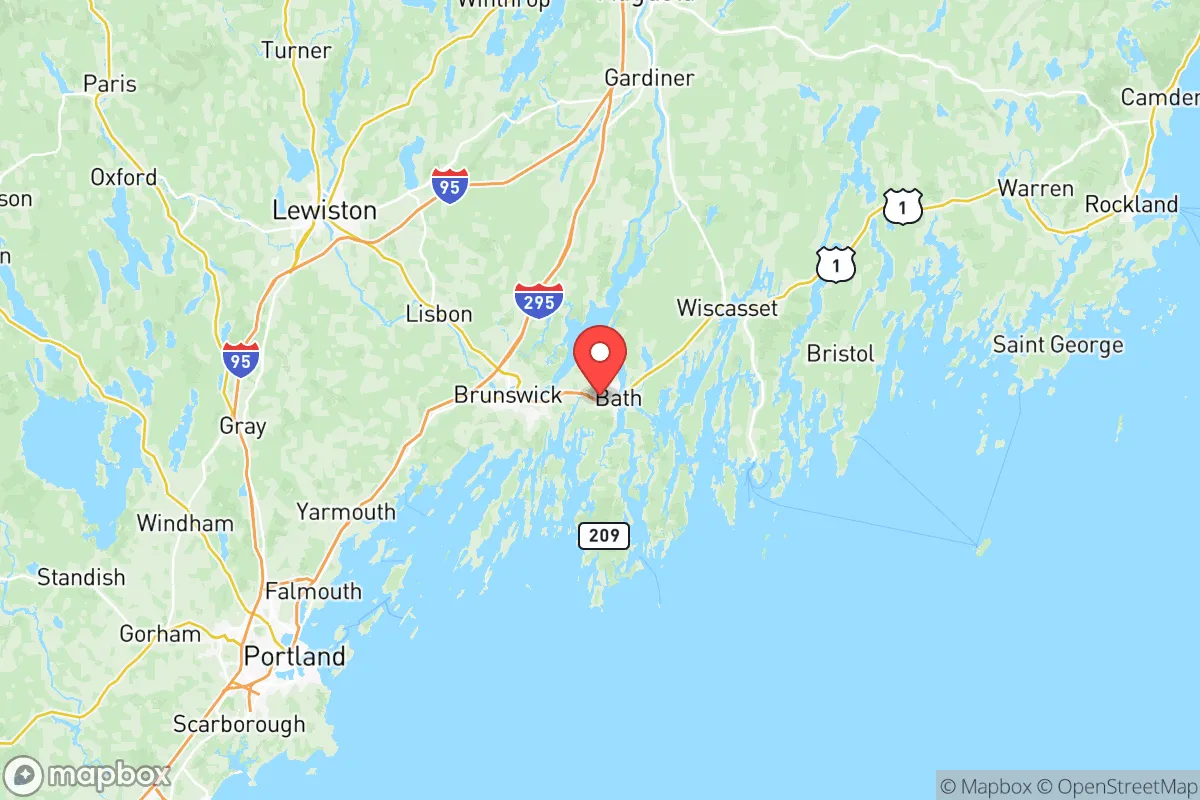
Sagadahoc County, Maine, offers a nuanced personal sovereignty environment that balances traditional New England self-reliance with a moderate regulatory framework, making it a distinctive option for freedom-minded individuals and families. Unlike the more restrictive policies found in southern Maine or the deep libertarian pockets of northern Maine, Sagadahoc County provides a middle ground where property rights, gun ownership, and homesteading are generally respected, but with clear state-level oversight. The county's coastal and rural character, anchored by towns like Bath, Woolwich, and Georgetown, shapes a culture where personal autonomy is exercised within a community-oriented, historically independent mindset.
Tax burden and regulatory posture in Sagadahoc County
Maine's overall tax burden is among the highest in the nation, and Sagadahoc County residents face a combination of state income tax (a flat 5.8% on most income) and property taxes that average around 1.2% of assessed home value, slightly above the national median. The county's regulatory posture is moderate: zoning is present but not oppressive, particularly in unincorporated areas and smaller towns like Phippsburg and Georgetown, where land-use ordinances are less detailed than in the county seat of Bath. Business licensing and building permits follow state codes, but the county lacks the aggressive environmental overlay seen in coastal communities further south. For a relocation audience, the key takeaway is that while taxes are not low, the regulatory environment is predictable and generally respects property rights, especially outside the more densely settled village centers.
Self-defense and gun law specifics in coastal Maine
Maine is a shall-issue state for concealed carry permits, and Sagadahoc County's sheriff's office processes applications without undue delay or discretionary denial. The state does not require a permit to open carry, and the county's rural character means firearm ownership is common and socially accepted. Bath and Topsham have more visible law enforcement presence, but no local ordinances restrict firearms beyond state law. Magazine capacity is not limited, and there is no state-level assault weapons ban. Stand-your-ground principles apply, and the castle doctrine is recognized. For self-defense-minded individuals, Sagadahoc County offers a legal environment that is among the most permissive in New England, though less expansive than states like Texas or Florida. The practical reality is that gun culture here is quiet, responsible, and integrated into daily life, particularly in hunting-oriented communities like Arrowsic and West Bath.
Self-reliance and homesteading viability: lot sizes, zoning, and off-grid feasibility
Homesteading and off-grid living are viable in Sagadahoc County, but feasibility varies significantly by town. In Woolwich and Georgetown, minimum lot sizes of 2 to 5 acres are common, and zoning allows for accessory dwelling units, small-scale agriculture, and livestock without extensive permitting. Off-grid systems such as solar panels, rainwater collection, and composting toilets are generally permitted, though state-level plumbing codes require licensed installers for septic systems. Phippsburg and West Bath offer more flexibility for self-sufficient lifestyles, with fewer restrictions on outbuildings and home-based businesses. In contrast, Bath and Topsham have more suburban-style zoning that limits livestock and imposes stricter building codes. The county's coastal location means well water and septic are standard, and many properties already have alternative energy setups. For a family seeking to reduce reliance on utilities, Sagadahoc County provides a realistic path, especially in the less developed eastern and northern portions of the county.
Personal liberties: parental rights, medical autonomy, speech, and property
Maine law generally supports parental rights in education and healthcare decisions, though the state mandates vaccination for school attendance and has a centralized medical records system that some privacy-conscious families find intrusive. Sagadahoc County's school districts, including Regional School Unit 1 (serving Bath, Woolwich, Arrowsic, and Phippsburg), have not adopted the more progressive curriculum mandates seen in Portland or southern Maine, and local school boards are responsive to community input. Medical autonomy is limited by state-level licensing and insurance mandates, but the county has a growing network of independent healthcare providers, including naturopaths and direct-primary-care clinics in Topsham and Bath. Free speech and property rights are strongly protected under Maine's constitution, and the county's courts have a reputation for upholding property boundaries and contract law. For the conservative-leaning reader, the trade-off is clear: state-level policies on healthcare and education are more restrictive than in the South or Midwest, but local enforcement is often lenient, and community norms in Sagadahoc County lean toward live-and-let-live individualism.
Overall, Sagadahoc County offers a balanced personal sovereignty environment that is more accommodating than most of coastal New England but less permissive than the libertarian strongholds of northern Maine or the western states. The county's tax burden is a real consideration, but the regulatory posture is moderate, gun laws are favorable, and homesteading is feasible in the right towns. For individuals and families who value personal freedom but also want access to coastal amenities, good schools, and a stable community, Sagadahoc County represents a pragmatic middle ground—where autonomy is respected but not absolute, and where self-reliance is still a lived value rather than a political slogan.

* Values derived from national, state, county, city and local statistics and may differ in a specific area. Last updated: 2026-06-27T01:59:07.000Z
Narrative content on this page is AI-generated and may contain mistakes. Verify any details that matter before acting on them.
ReloMaps may earn a commission from affiliate links at no extra cost to you.

