Demographics of Maine
Affluence Level in Maine
A middle-class area roughly in line with national averages across income, home values, education, and employment.
People of Maine
The people of Maine today number roughly 1.38 million, making it the most rural state in the nation by population density, with just 43 people per square mile. The state is overwhelmingly white (90.6%) and native-born, with a foreign-born population of only 1.8% — the lowest of any state. Maine's distinctive identity is shaped by a deep-rooted Yankee and Franco-American heritage, a strong independent streak, and a population that is both the oldest by median age in the country and among the slowest-growing. For a conservative-leaning audience, Maine represents a place where traditional community structures, outdoor livelihoods, and local self-governance remain intact, even as its coastal and southern towns experience gradual demographic change.
Settlement & growth (pre-1960)
Long before European arrival, Maine was home to the Wabanaki Confederacy — the Abenaki, Penobscot, Passamaquoddy, and Maliseet peoples — who lived along the coast and river valleys for thousands of years. The Penobscot Nation's main settlement at Indian Island (near Old Town) remains a sovereign tribal community today. European contact began with French explorers in the early 1600s; Samuel de Champlain mapped the coast in 1604, and French missionaries and fur traders established posts along the Kennebec and Penobscot Rivers. The first permanent English settlement was at York in 1636, followed by Portland (then Falmouth) and Kittery. For over a century, control of Maine was contested between French and English colonists, with the region finally falling under British control after the Treaty of Paris in 1763.
After the American Revolution, Maine was still part of Massachusetts until 1820, when it entered the Union as a free state under the Missouri Compromise. The early 19th century saw a wave of Yankee settlers from southern New England pushing north along the coast and up the river valleys. They cleared land for subsistence farming, built sawmills, and established shipbuilding centers in Bath, Portland, and Belfast. The state's population grew from 298,000 in 1820 to 628,000 by 1850, driven by natural increase and modest migration from the British Isles.
The largest single ethnic wave to shape Maine's identity came from French Canada. Between 1840 and 1930, hundreds of thousands of French Canadians — primarily from Quebec — crossed the border to work in Maine's booming textile mills, paper mills, and shoe factories. They concentrated in mill towns along the Androscoggin and Kennebec Rivers: Lewiston, Auburn, Biddeford, Waterville, and Sanford. By 1900, French-speakers made up over 30% of Maine's population. These Franco-American communities maintained their language, Catholic faith, and distinct cultural institutions well into the 20th century, and their descendants remain a defining presence in central and western Maine today.
Irish immigrants arrived in significant numbers during the Great Famine of the 1840s, settling primarily in Portland and along the coast, where they worked as dockworkers, laborers, and on railroad construction. Smaller numbers of Scots, English, and Germans also arrived, but Maine never experienced the large-scale immigration from Southern or Eastern Europe that transformed states like New York or Massachusetts. The state's population peaked at 969,000 in 1960, having grown slowly through the first half of the 20th century as the decline of textile and paper manufacturing began to push young people out.
Modern era (post-1965)
The 1965 Hart-Cellar Act had a minimal direct impact on Maine compared to most states. The state's foreign-born population actually declined from its early-20th-century peak and remained below 3% through the 1990s. However, the post-1965 period brought two significant domestic shifts. First, the decline of manufacturing accelerated after 1970, with mill closures in Lewiston, Biddeford, and Millinocket leading to decades of out-migration by young adults. Second, a countervailing in-migration began in the 1980s and 1990s as retirees, second-home buyers, and remote workers from Massachusetts, New York, and Connecticut discovered Maine's affordable coastal property and rural quality of life.
The most visible new immigrant group since 1965 has been Somali refugees, who began resettling in Lewiston and Portland in the early 2000s through federal refugee programs. By 2020, an estimated 6,000-10,000 Somali and other East African residents lived in Lewiston alone, making it one of the most concentrated African immigrant communities in northern New England. This wave has been controversial locally, with debates over cultural integration, public school resources, and housing costs. Smaller refugee populations from Iraq, Afghanistan, and the Democratic Republic of Congo have also settled in Portland and Bangor.
Hispanic and Asian populations remain very small statewide — 2.1% and 1.0% respectively — but have grown from near-zero baselines since 1990. Hispanic residents are concentrated in southern Maine, particularly in Portland and Biddeford, with many working in agriculture, hospitality, and construction. East and Southeast Asian communities, including Vietnamese and Chinese residents, are most visible in Portland and Brunswick, often connected to the state's universities and hospitals. The Indian subcontinent population is negligible at 0.1%, with a handful of professionals in Portland and Orono tied to the University of Maine system.
Domestically, the most significant population trend since 2000 has been the growth of Maine's coastal and southern counties — Cumberland, York, and Sagadahoc — at the expense of the rural north and east. Portland's metropolitan area has grown modestly while counties like Piscataquis and Washington have lost population. This pattern reflects the pull of jobs in healthcare, education, and tourism versus the decline of resource-based economies in the interior.
The future
Maine's population is projected to grow very slowly — perhaps reaching 1.4 million by 2040 — but the composition will continue to shift. The state has the oldest median age in the nation (44.8 years), and natural increase (births minus deaths) has been negative since 2018. Future growth depends entirely on net in-migration. That in-migration is likely to remain predominantly domestic — retirees and remote workers from the Northeast — rather than international, given the state's limited job base and high housing costs in desirable coastal areas.
Diversity will increase slowly but from a very low base. The foreign-born share may rise from 1.8% to 3-4% by 2040, driven primarily by refugee resettlement and healthcare-sector recruitment. The Somali community in Lewiston is likely to grow and disperse into surrounding towns like Auburn and Lisbon. Hispanic and Asian populations will remain small but will become more visible in Portland's suburbs and in agricultural areas of Aroostook County. The state's rural northern and eastern counties will continue to lose population and age further, while the southern coast and the Portland-Brunswick corridor will absorb most new arrivals.
Culturally, Maine is likely to become more polarized between its growing, diverse, and politically liberal southern coast and its shrinking, older, and more conservative interior and north. For a conservative-leaning mover, this means that the Maine of small-town self-reliance, low crime, and traditional community life is still very real — but increasingly concentrated in places like Oxford County, Franklin County, and the Down East coast, rather than in Portland or its suburbs.
What Maine is becoming is a state of two demographic speeds: a slow-growth, diversifying, service-economy south, and a depopulating, aging, resource-dependent north. For someone moving in now, the choice is between the economic opportunity and cultural change of the Portland orbit, or the affordability, stability, and demographic homogeneity of rural Maine — where the population is thinning but the character remains deeply rooted.

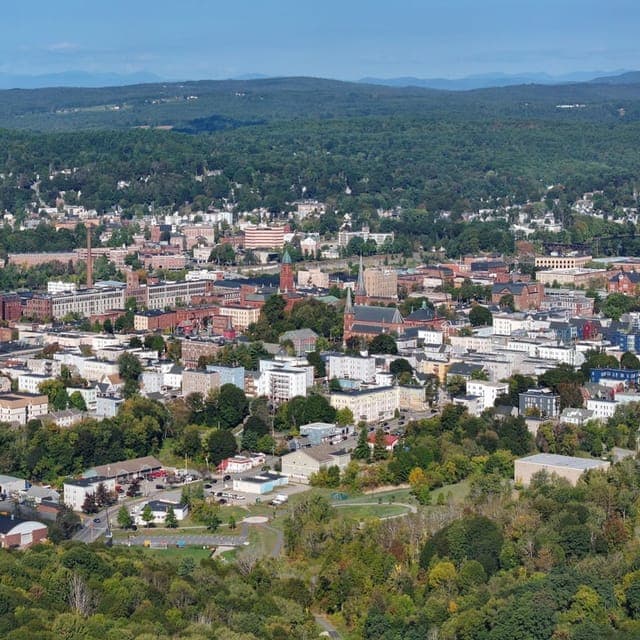
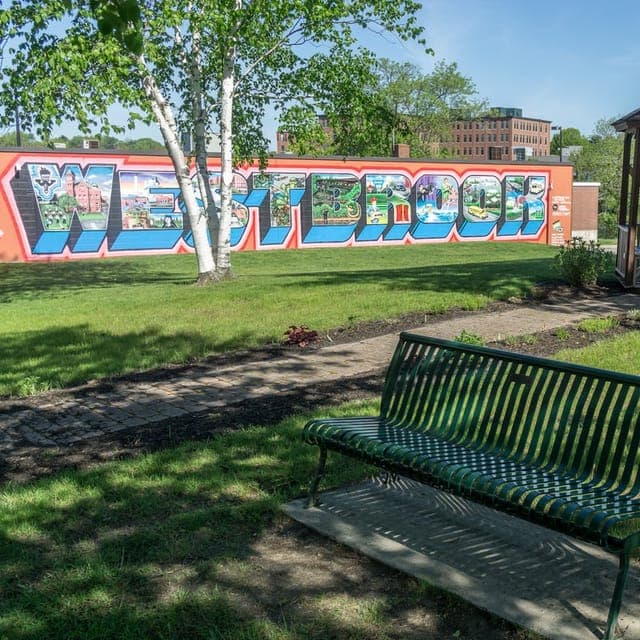
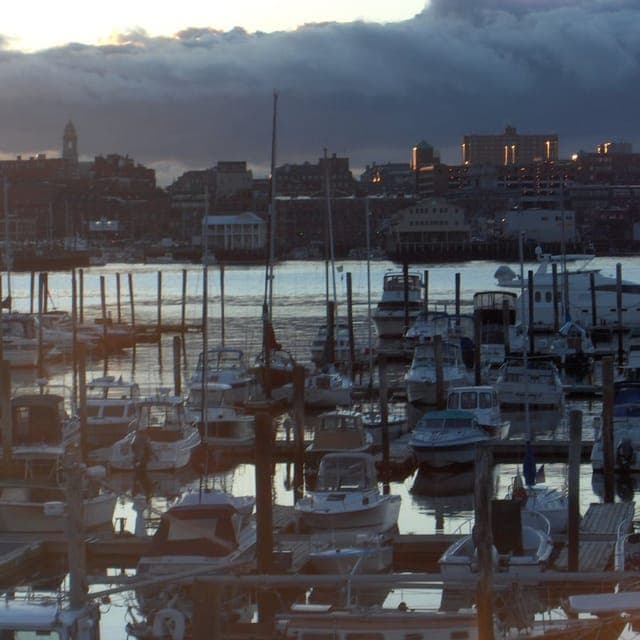
Most Diverse Cities in Maine

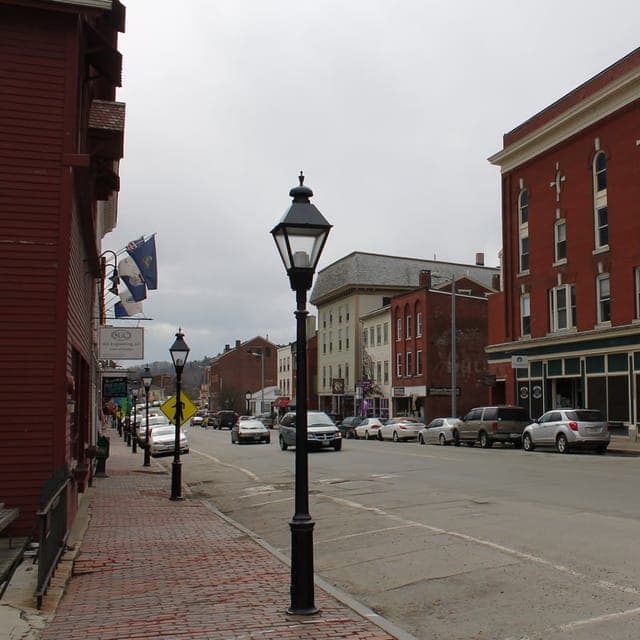
Most Homogenous Cities in Maine
* Values derived from national, state, county, city and local statistics and may differ in a specific area. Last updated: 2026-08-02T00:14:56.000Z
Narrative content on this page is AI-generated and may contain mistakes. Verify any details that matter before acting on them.
ReloMaps may earn a commission from affiliate links at no extra cost to you.

