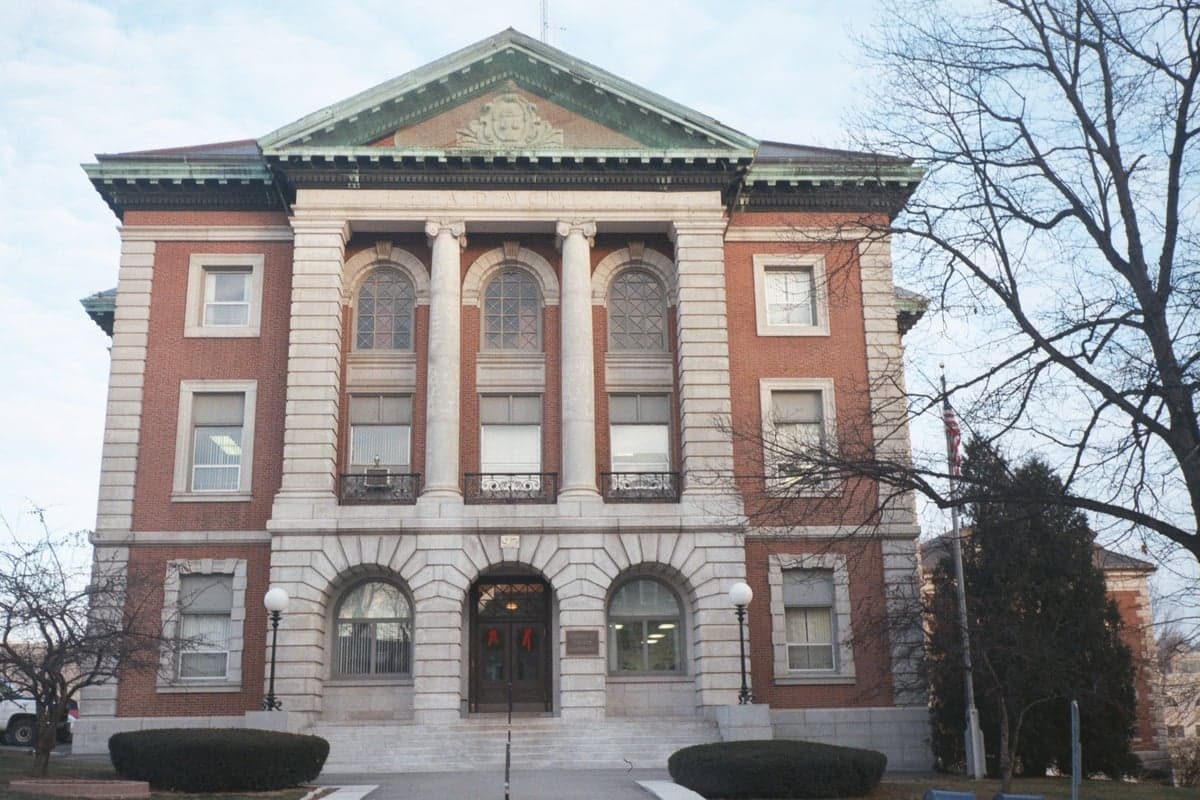
Photo: Wikipedia
Personal Sovereignty in Penobscot County
Viable for self-reliance. Generally workable, though some barriers may limit total independence.
What does Personal Sovereignty tell us?
Personal Sovereignty measures your capacity for self-reliance and independence with minimal government friction. Higher scores mean fewer barriers between you and the way you want to live... but it assumes you have the space you need and good neighbors.
What does this tell us?
Personal Sovereignty measures your capacity for self-reliance and independence with minimal government friction. Higher scores mean fewer barriers between you and the way you want to live... but it assumes you have the space you need and good neighbors.
State Policy
Energy independence: Importer (30% of energy produced in-state)
Personal Liberty
Homesteading

Personal Liberty Analysis
Penobscot County offers one of the more robust environments for personal sovereignty in New England, blending Maine's famously live-and-let-live ethos with a rural, low-density landscape that naturally limits government overreach. The county's 150,000 residents are spread across 3,400 square miles, creating a setting where individual autonomy is less a political abstraction and more a daily necessity. While Maine as a whole leans left on social issues, Penobscot County's practical culture — from its logging and outdoor-recreation economy to its strong tradition of self-reliance — means personal freedom in daily life is generally respected, particularly outside the county seat of Bangor.
Tax burden and regulatory posture for residents and small businesses
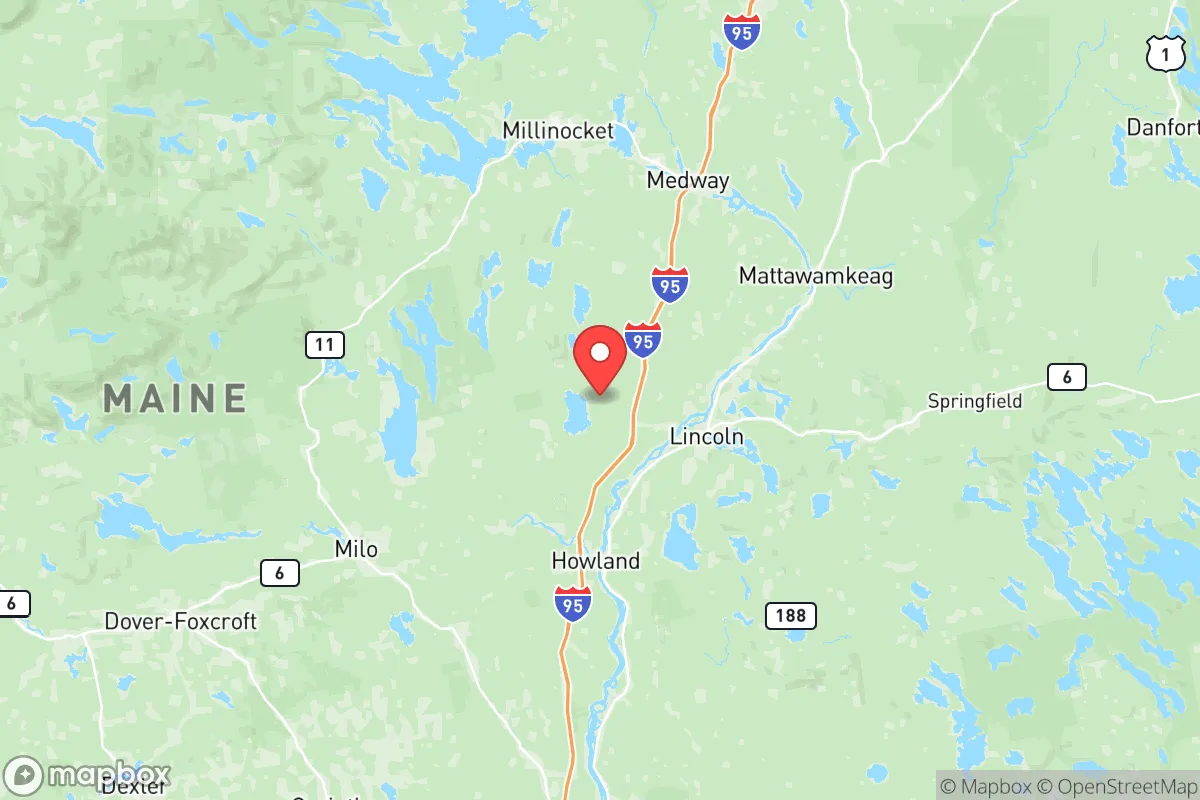
Maine's state-level tax burden is among the highest in the nation, ranking 7th highest in combined state and local taxes as a share of income. However, Penobscot County residents benefit from property tax rates that are moderate by Maine standards — the median effective rate hovers around 1.3%, compared to coastal counties like Cumberland (Portland area) where rates can exceed 1.5%. The regulatory posture in unincorporated townships and smaller communities like Mattawamkeag, Lincoln, and Millinocket is notably lighter than in Bangor or Orono. These rural areas have minimal zoning, no building codes in many unorganized territories, and a county government that takes a hands-off approach to land use. For small businesses, Maine's corporate income tax (recently cut to 3.5% for the first $350,000 of income) and a relatively straightforward sales tax (5.5%) are manageable, though the state's workers' compensation and unemployment insurance systems add overhead. The real regulatory friction comes from state-level environmental permitting — anything involving wetlands, waterways, or forest harvesting triggers Maine Department of Environmental Protection review — but within Penobscot County, local officials are generally pragmatic and pro-business, especially in towns like Howland and Enfield where the economy depends on timber and trucking.
Self-defense and gun law specifics in Penobscot County
Maine is a "shall issue" state for concealed carry permits, and Penobscot County is one of the most gun-friendly jurisdictions in New England. The county sheriff's office processes permits efficiently, and there is no discretionary denial — if you meet the statutory requirements, you receive the permit. As of 2025, Maine also permits permitless (constitutional) carry for residents 21 and older, meaning no license is required to carry a concealed handgun. Long guns and handguns are not registered at the state level, and there is no waiting period for purchases. The practical culture in towns like Millinocket and Lincoln is heavily pro-Second Amendment; gun stores, shooting ranges, and hunting clubs are common, and open carry is unremarkable. Bangor and Orono are more politically mixed, but even there, firearm ownership is common enough that it does not carry social stigma. The only notable restriction is that Maine prohibits carrying firearms in courthouses, secure mental health facilities, and K-12 schools (unless the permit holder has written authorization). For a relocation-minded individual or family who prioritizes self-defense rights, Penobscot County offers as much latitude as any place east of the Mississippi.
Self-reliance and homesteading viability: lot sizes, zoning, and off-grid feasibility
Penobscot County is one of the best places in the Northeast for off-grid living and homesteading, particularly in its vast unorganized territories. In townships like T3 R8 WELS and T4 R9 WELS (north of Millinocket), there are no zoning ordinances, no building codes, and no property tax on land that is not improved — you can buy a 40-acre parcel for under $1,000 per acre and build a cabin with no permits required. Even in organized towns, lot sizes for homesteading are generous: Mattawamkeag and Enfield typically require minimum 2-acre lots for single-family homes, and many parcels available for sale are 5 to 20 acres. Off-grid systems — solar panels, composting toilets, rainwater catchment, wood heat — are legal and common throughout the county. The only significant regulatory hurdle is the state's plumbing code, which requires a licensed installer for septic systems, but even that is manageable with a simple mound system costing $5,000–$10,000. Wells are regulated by the Maine Drinking Water Program, but the process is straightforward. For families seeking to raise livestock, garden, and heat with wood, Penobscot County's rural towns offer a level of self-reliance that is increasingly rare in the Lower 48.
Personal liberties: parental rights, medical autonomy, speech, and property
Maine's state-level policies on parental rights and medical autonomy are more restrictive than in many Southern or Western states, but Penobscot County's local culture and enforcement patterns create a more permissive reality. Parental rights in education are a live issue: Maine requires schools to adopt policies on LGBTQ+ inclusivity, and there is no statutory right for parents to opt their children out of specific curriculum content. However, in practice, school boards in Millinocket, Lincoln, and Mattawamkeag are conservative-leaning and responsive to parental concerns; opt-outs are generally granted informally. On medical autonomy, Maine has broad vaccine mandates for school attendance (including COVID-19 for healthcare workers, though that has been relaxed), but philosophical exemptions are available for school vaccines, and the county's rural healthcare providers are more accommodating of alternative treatment preferences than those in Portland. Free speech is robustly protected under both the U.S. and Maine constitutions, and property rights are strong — Maine's "right to farm" law protects agricultural operations from nuisance lawsuits, and there is no statewide zoning that restricts what you can do on your own land in unorganized territories. The primary limitation on property rights is the state's tree-growth tax program, which requires a forest management plan for reduced tax rates, but participation is voluntary.
Overall, Penobscot County ranks among the top 20% of U.S. counties for personal sovereignty, especially when compared to the heavily regulated coastal Northeast. The trade-off is clear: you accept Maine's higher state-level taxes and some social policy restrictions in exchange for a county government that largely leaves you alone, cheap land, and a culture that respects self-reliance. For a conservative-leaning individual or family who values autonomy over convenience, Penobscot County — particularly its rural townships and small communities north of Bangor — offers a freedom profile that rivals much of the Mountain West, with the added benefit of abundant water, timber, and four-season access.

* Values derived from national, state, county, city and local statistics and may differ in a specific area. Last updated: 2026-07-01T12:43:00.000Z
Narrative content on this page is AI-generated and may contain mistakes. Verify any details that matter before acting on them.
ReloMaps may earn a commission from affiliate links at no extra cost to you.

