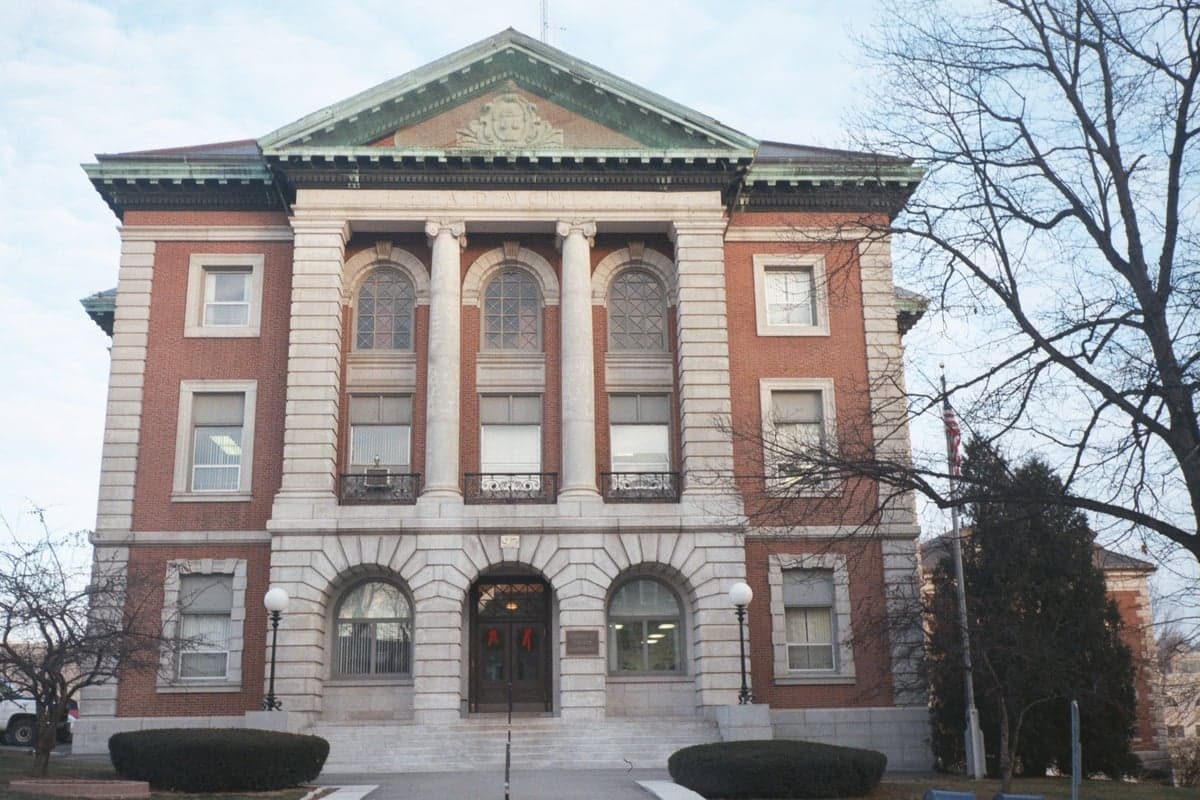
Photo: Wikipedia
Demographics of Penobscot County
Affluence Level in Penobscot County
A middle-class area roughly in line with national averages across income, home values, education, and employment.
People of Penobscot County
Today, Penobscot County is home to roughly 153,571 residents, a population that remains overwhelmingly white (91.4%) and native-born, with only 1.5% foreign-born. The county’s character is shaped by its deep Franco-American heritage, a legacy of the 19th-century lumber boom, and a strong rural identity centered on the county seat of Bangor and the university town of Orono. While the population is less diverse than the national average, the presence of the Penobscot Nation on Indian Island near Old Town provides a continuous Indigenous thread, and recent decades have seen modest growth in Hispanic and Asian communities, primarily in the Bangor area.
Settlement & growth (pre-1960)
The human history of Penobscot County begins with the Penobscot people, an Algonquian-speaking tribe whose name means "place of the descending rocks." For thousands of years, they controlled the Penobscot River watershed, living in seasonal villages along the river and its tributaries, with major settlements at what is now Indian Island (near Old Town) and at the river's mouth. French explorers and Jesuit missionaries arrived in the early 1600s, establishing a mission at present-day Bangor in 1613, but sustained European settlement did not begin until after the French and Indian War. The 1769 Treaty of Fort Stanwix opened the region to British colonists, and the first permanent English-speaking settlers arrived in the 1770s, founding the town of Bangor in 1791 and Hampden in 1794.
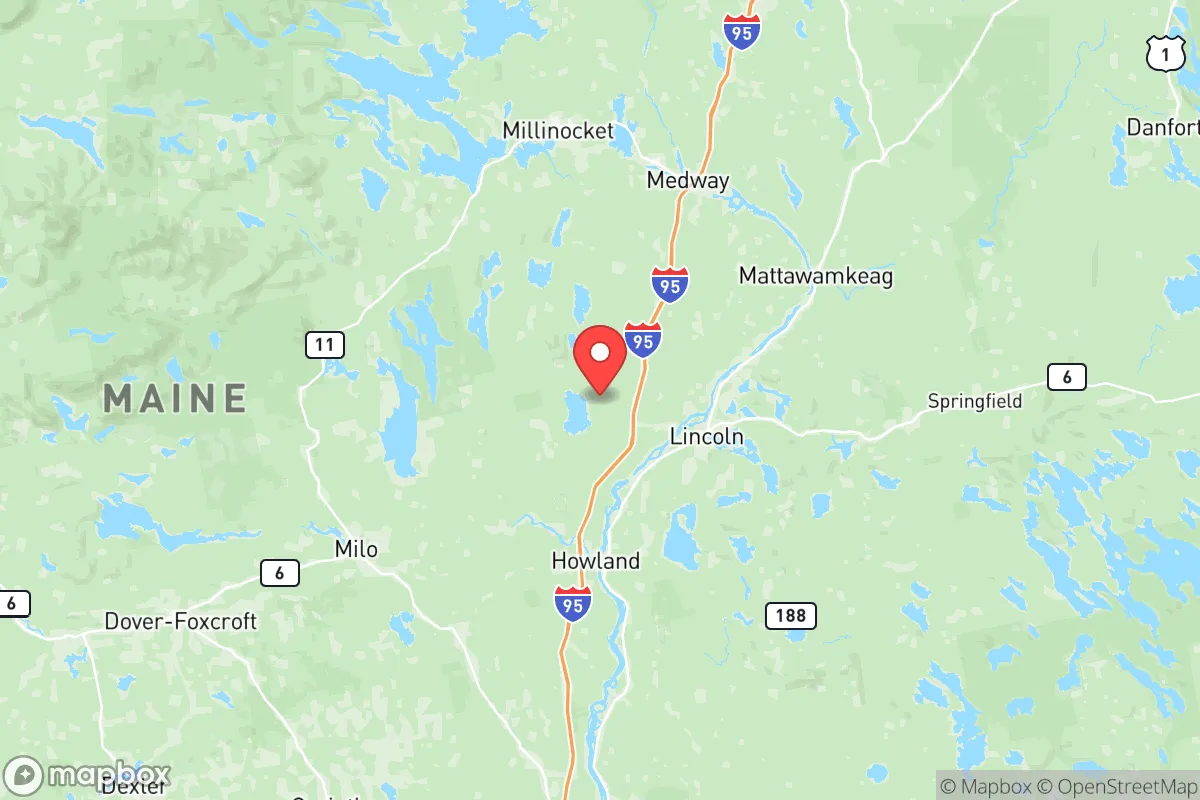
The defining demographic wave of the 19th century was the arrival of French Canadians from Quebec. Beginning in the 1830s and accelerating after the Civil War, tens of thousands of French-speaking Quebecois migrated south into Maine's mill towns, drawn by jobs in the booming lumber and paper industries. They settled heavily in Old Town, Millinocket, and Lincoln, where the Penobscot River powered sawmills and pulp mills. By 1900, Franco-Americans made up roughly a third of Penobscot County's population, and they remain the largest ethnic group in the county today. A smaller wave of Irish immigrants arrived in the 1840s and 1850s, fleeing the Great Famine, and found work building railroads and in the lumber camps around Orono and Brewer. The county also saw a modest influx of Swedish and Finnish immigrants in the 1870s and 1880s, who settled in the northern townships around Mattawamkeag and Medway, working in the forests and on the railroad.
The 20th century brought little new immigration to Penobscot County. The 1924 Immigration Act sharply curtailed arrivals from Southern and Eastern Europe, and the Great Depression and subsequent decline of the lumber and paper industries reduced the county's economic pull. By 1960, the population was overwhelmingly white, native-born, and either of Franco-American or Yankee (English-descended) stock. The Penobscot Nation, confined to Indian Island, had been reduced to a few hundred members. The county's population peaked at roughly 148,000 in 1960, then began a slow decline as mill jobs disappeared and younger residents left for southern New England and the Sun Belt.
Modern era (post-1965)
The 1965 Hart-Cellar Act had a minimal direct impact on Penobscot County. Unlike coastal cities or Sun Belt metros, the county did not experience large-scale immigration from Asia, Latin America, or Africa. The foreign-born share of the population remains just 1.5% in 2026, far below the national average of roughly 14%. However, the post-1965 period did see two significant demographic shifts. First, the Penobscot Nation experienced a cultural and political resurgence, with the 1980 Maine Indian Land Claims Settlement providing funds for economic development and the tribe regaining control over its governance and natural resources. Today, the Penobscot Nation has roughly 2,400 enrolled members, with many living on Indian Island or in Old Town and Bangor.
Second, the county saw modest diversification through domestic migration and refugee resettlement. Bangor became a secondary resettlement site for refugees from Southeast Asia in the 1980s and 1990s, with small communities of Vietnamese, Cambodian, and Laotian families settling in the city's east side. More recently, a small but growing Somali refugee community has established itself in Bangor, drawn by affordable housing and the presence of a mosque. The Hispanic population, while still small at 1.9%, has grown from near zero in 1990, driven by Puerto Rican families moving from the Northeast and a small number of Mexican immigrants working in agriculture and food processing. The Asian population (East and Southeast Asian) stands at 1.0%, concentrated in Bangor and Orono, where the University of Maine attracts a small number of international students and faculty. The Indian subcontinent population is negligible at 0.1%.
Suburbanization reshaped the county's settlement patterns after 1970. Bangor's population declined slightly as middle-class families moved to surrounding towns like Hampden, Orrington, and Glenburn, which saw steady growth. The development of the Bangor Mall in 1978 and the Interstate 95 corridor accelerated this trend, creating a suburban ring that now houses a significant share of the county's population. The mill towns of Millinocket, Lincoln, and Old Town, by contrast, have lost population steadily since the 1980s as the paper industry contracted.
The future
Penobscot County's population is projected to remain stable or decline slightly over the next decade, as out-migration of young adults is only partially offset by in-migration of retirees and remote workers drawn by affordable housing and outdoor recreation. The county is likely to become slightly more diverse, but slowly. The Hispanic and Asian populations are expected to grow from a low base, driven by continued refugee resettlement in Bangor and by the University of Maine's efforts to recruit international students. The Penobscot Nation's population is expected to remain stable or grow modestly, as tribal members return to Indian Island for cultural and economic reasons. However, the county will remain overwhelmingly white and native-born for the foreseeable future, with a cultural identity rooted in its Franco-American and Yankee heritage.
For someone moving to Penobscot County now, the region offers a stable, low-cost, and safe environment with a strong sense of place and community. The population is aging and slowly diversifying, but the county's character remains deeply tied to its history as a Franco-American lumber and mill region. New residents will find a welcoming but insular culture, where family ties and local roots matter, and where the pace of change is slow. The county is not becoming a melting pot, but it is becoming a more complex and varied place than it was a generation ago.

* Values derived from national, state, county, city and local statistics and may differ in a specific area. Last updated: 2026-07-01T12:43:00.000Z
Narrative content on this page is AI-generated and may contain mistakes. Verify any details that matter before acting on them.
ReloMaps may earn a commission from affiliate links at no extra cost to you.

