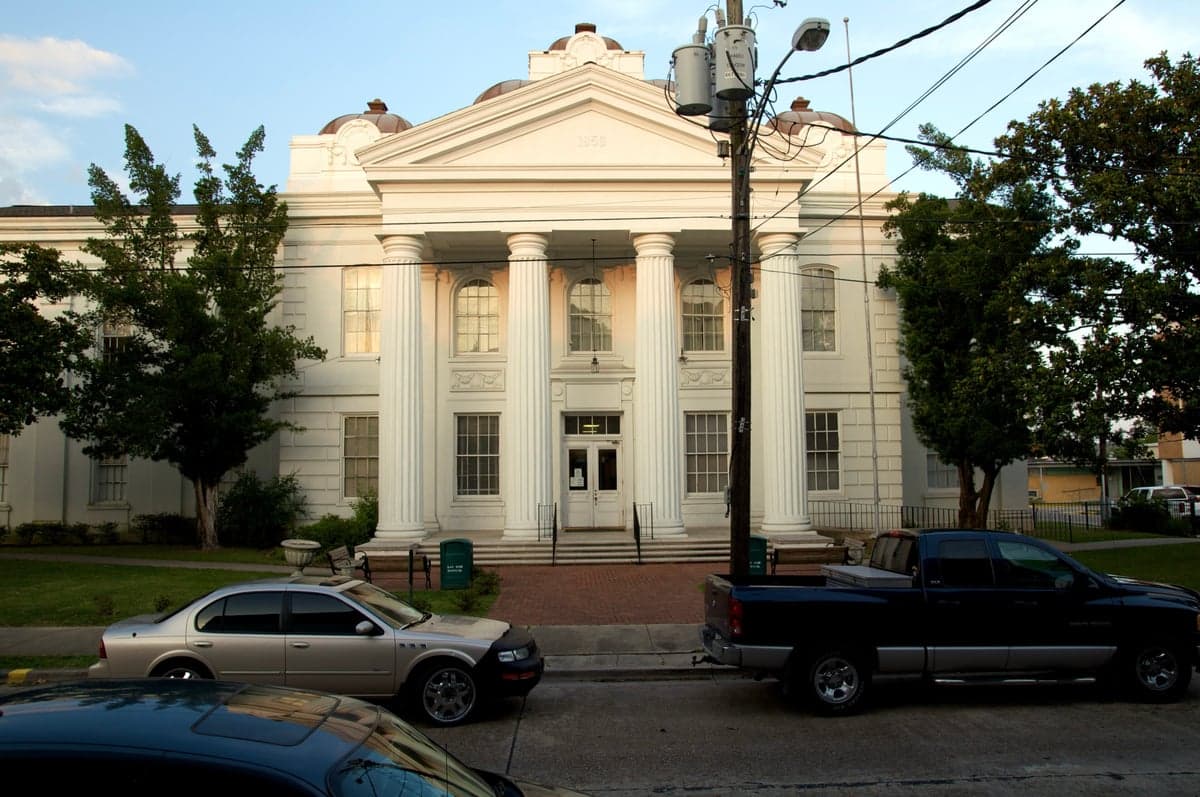
Photo: Wikipedia
Political ClimatePolitical Climate in Lafourche County
Showing district-level results — no local-only data available.
Local Political AnalysisPolitical Analysis of Lafourche County
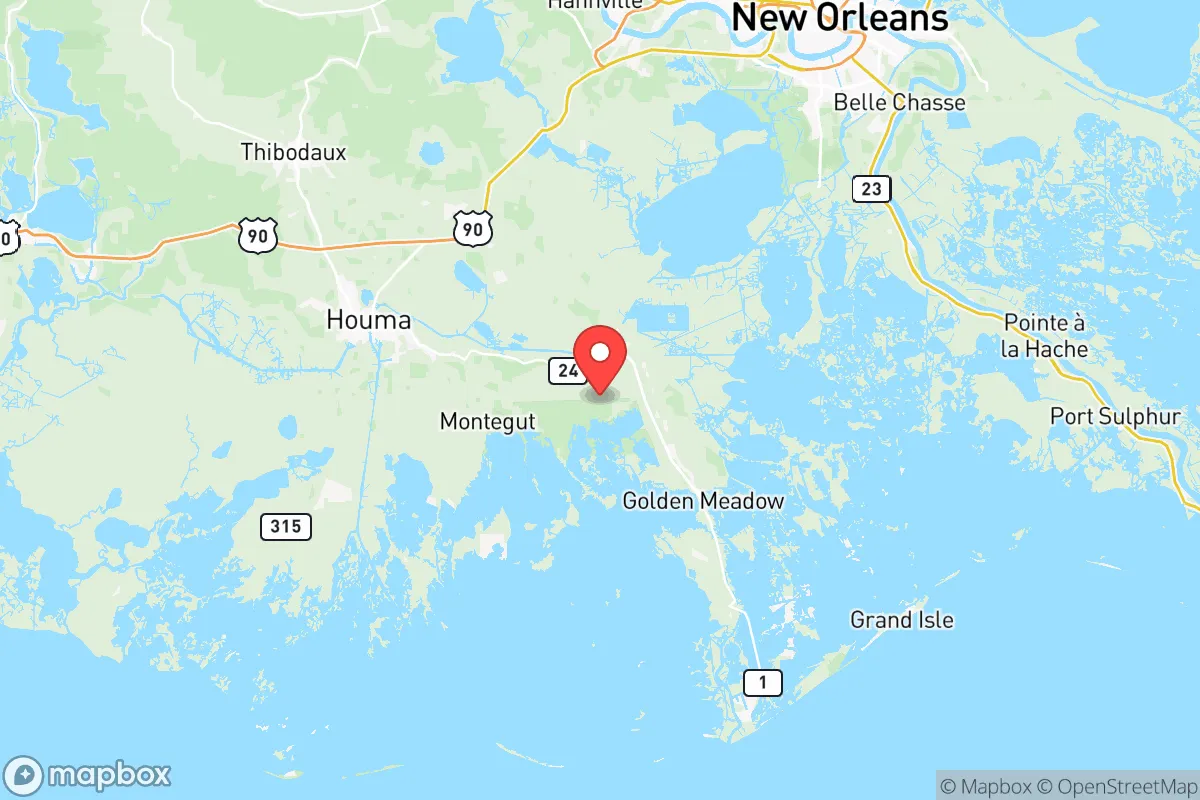
Lafourche Parish is one of the most reliably Republican strongholds in Louisiana, carrying a Cook Partisan Voting Index of R+19 — nearly double the state's already solid R+10 rating. This isn't a recent shift; the bayou parishes have been trending red for decades, but Lafourche has hardened into a deep-red anchor. In 2024, Donald Trump carried the parish with over 72% of the vote, outperforming his statewide margin by roughly 12 points. The real story, though, is the internal variation: the northern half of the parish, anchored by Thibodaux, is where you'll find the only real Democratic resistance, with precincts around Nicholls State University and the historic downtown occasionally breaking 40% for Democratic candidates. Head south toward Golden Meadow, Galliano, and Cut Off, and you're looking at precincts that routinely hit 80% Republican or higher. The swing precincts — the ones that occasionally flip or tighten — cluster around Raceland and Larose, where a mix of oilfield workers, teachers, and retirees creates a more competitive middle ground.
How it compares to Louisiana as a whole
Louisiana as a state is R+10, meaning Lafourche is about 9 points more Republican than the statewide average. That gap matters because it places Lafourche in the same league as the most conservative parishes — Allen, Beauregard, and Livingston — rather than the more purple parishes like Jefferson or St. Tammany (both R+12 to R+14). The practical difference: statewide Democratic candidates like John Bel Edwards (who won in 2015 and 2019) could count on losing Lafourche by 20-25 points but still winning statewide by running up margins in Orleans, East Baton Rouge, and Caddo. A Democrat running for governor in 2026 will likely lose Lafourche by 30+ points, but the parish's 50,000-ish voters aren't enough to swing a statewide race on their own. The real contrast is cultural: Lafourche is more rural, more Cajun, and more economically tied to oil and gas than the state as a whole, which explains why it's shifted right faster than the state average since 2012.
What this means for residents
For conservative residents, Lafourche is about as comfortable as it gets. Local offices — sheriff, district attorney, school board, parish council — are almost uniformly held by Republicans or conservative Democrats who caucus with the GOP. The parish government rarely passes ordinances that would cause friction with conservative values; gun rights, property rights, and low taxes are the default. For liberal residents, the reality is more isolating. There's no active Democratic Party infrastructure in the parish; the nearest organized Democratic groups are in Houma (Terrebonne Parish) or New Orleans. Socially, being openly progressive in Galliano or Golden Meadow can be a genuine challenge — not because of hostility, but because the cultural expectation is that everyone leans right. That said, Thibodaux offers a relative haven: the university community and the presence of Thibodaux Regional Medical Center (one of the parish's largest employers) bring in a more diverse, moderately liberal population that keeps the town's politics from being monolithic.
The cultural and policy distinctions in Lafourche are unmistakable. The parish is deeply Cajun and Catholic, which creates a specific kind of conservatism — pro-life, pro-gun, pro-oil — but also pro-environment in a local sense (bayou preservation, coastal restoration) and skeptical of national GOP orthodoxy on trade and immigration (many residents work in seafood and maritime industries that rely on immigrant labor). The parish government has been aggressive in opposing coastal erosion policies it sees as federal overreach, and local officials have publicly clashed with both state and federal agencies over floodplain management and energy regulation. For anyone moving here, the political climate isn't just about who you vote for — it's about understanding that Lafourche's conservatism is rooted in place, not ideology. People vote Republican because they believe it protects their way of life on the bayou, not because they're following a national party line. That distinction matters more here than in almost any other part of Louisiana.

State Political ClimatePolitical Climate in Louisiana
State Political AnalysisPolitical Environment in the State
Louisiana is a solidly Republican state with a Cook PVI of R+10, but its political reality is far more complex than that number suggests. The state has shifted rightward over the past two decades, driven by the realignment of white working-class voters and the out-migration of Black populations from rural areas, yet it retains a uniquely populist and culturally conservative flavor that sets it apart from other Deep South states. While Democrats can still win statewide in rare circumstances—Governor John Bel Edwards served two terms as a Democrat as recently as 2024—the legislature and most parish-level offices are firmly under GOP control, and the trendline points toward continued Republican dominance.
Urban vs. rural divide
The political map of Louisiana is a textbook study in urban-rural polarization. New Orleans and its surrounding parishes—Orleans, Jefferson, and St. Bernard—are the state's Democratic stronghold, with Orleans Parish routinely delivering 75-80% of its vote to Democratic candidates. Baton Rouge is more competitive but still leans Democratic, especially in East Baton Rouge Parish, though the suburban areas like Livingston Parish are deeply red. Lafayette and Shreveport are swing cities; Lafayette's core is moderate-to-conservative, while Shreveport's Black population keeps it Democratic-leaning. The rural parishes—Allen, Beauregard, Vernon, and Washington—vote Republican by margins of 70-80%, and the Florida Parishes (St. Tammany, Tangipahoa, Washington) are among the most reliably GOP areas in the state. The Acadiana region (Lafayette, St. Landry, Evangeline) is culturally conservative but has a history of voting for populist Democrats like Edwards, though it has trended Republican in presidential races since 2016.
Policy environment
Louisiana's policy environment reflects its conservative lean with a populist twist. The state has no state income tax on corporate income and a flat 3% individual income tax rate (as of 2025), making it one of the lowest-tax states in the South. Sales taxes are high, averaging 9.5% combined state and local, which disproportionately affects lower-income residents. The regulatory posture is business-friendly, with a right-to-work law and weak unions, though the state's legacy of oil-and-gas dominance means environmental regulations are often contested. Education policy is a mixed bag: Louisiana has a robust school choice program (the Louisiana Scholarship Program) and charter school expansion, but public school performance ranks near the bottom nationally. Healthcare is a flashpoint—the state expanded Medicaid under the Affordable Care Act in 2016, a decision that remains controversial among conservatives, but the expansion has covered over 400,000 residents. Election laws are moderately restrictive: the state requires a photo ID to vote, has no-excuse absentee voting (since 2020), and conducts all elections using a closed primary system for party primaries, with a jungle primary for nonpartisan races.
Recent policy direction
Recent legislation shows Louisiana moving decisively to the right on multiple fronts. In 2024, the state passed a constitutional carry law (Act 123), allowing permitless concealed carry for anyone 18 or older who can legally possess a firearm. On education, the 2023 "Parental Rights in Education" law (Act 468) requires schools to notify parents of any curriculum involving sexual orientation or gender identity, and the 2024 "Don't Say Gay" expansion (Act 7) bans classroom discussion of gender identity in K-12. On abortion, Louisiana has a near-total ban with no exceptions for rape or incest, triggered by the Dobbs decision in 2022. The state also passed a school voucher expansion in 2024 (Act 3), allowing state funds to follow students to private or religious schools. On property rights, the 2023 "Takings" law (Act 498) strengthened compensation requirements for regulatory takings. On voting, the 2024 "Election Integrity" law (Act 800) requires signature verification for mail ballots and limits drop boxes. Notably, Louisiana has not passed any major surveillance or privacy legislation, leaving residents with minimal protections against government data collection.
Civil unrest & political movements
Louisiana has a history of political activism that is both intense and localized. The Black Lives Matter protests in New Orleans and Baton Rouge in 2020 were large and occasionally violent, with the Baton Rouge protests following the killing of Alton Sterling drawing national attention. On the right, the Louisiana Republican Party has been a hotbed of grassroots activism, with groups like the Louisiana Family Forum driving the anti-abortion and school-choice agenda. Immigration politics are less visible here than in border states, but the 2023 "Sanctuary City" ban (Act 319) prohibits local governments from adopting sanctuary policies, and the state has deployed National Guard troops to the Texas border. Secession rhetoric is minimal—Louisiana is not a "nullification" state—but there is a strong strain of localism, particularly in Acadiana, where residents resist coastal restoration and flood-control mandates from the federal government. Election integrity controversies flared after 2020, with the state GOP pushing for audits, but no major fraud was found. A new resident would notice the Confederate monument debates in New Orleans and Baton Rouge, which remain divisive, and the visible presence of "Don't Tread on Me" flags in rural areas.
Projection
Over the next 5-10 years, Louisiana is likely to become more Republican and more culturally conservative, but with a twist. The state's population is slowly declining (down about 1% since 2020), driven by out-migration of young, educated residents to Texas and Florida. The remaining population is aging and whiter, which favors the GOP. However, the New Orleans metro is attracting some remote workers and retirees from blue states, which could moderate the city's politics but not the state's overall lean. The Baton Rouge area is seeing growth in its petrochemical and tech sectors, which may bring in more moderate voters. The biggest wildcard is climate change: as coastal erosion and hurricane risks worsen, the state may face a fiscal crisis that forces tax increases or spending cuts, which could shift the political conversation. A relocator moving in now should expect a state that is solidly red, with a populist bent, where cultural issues dominate and taxes remain low, but where public services (especially infrastructure and education) are underfunded.
For a new resident, the bottom line is this: Louisiana offers a low-tax, culturally conservative environment where your gun rights are strong, your school choice options are broad, and your vote will likely be cast in a Republican primary. Liberal residents will find a supportive community in New Orleans and parts of Baton Rouge, but will face a state government that is actively hostile to their views on abortion, LGBTQ+ rights, and education. The state's political trajectory is clear—more conservative, more focused on parental rights and gun access, and less concerned with public investment. If you value low taxes and cultural alignment with the right, Louisiana is a good fit. If you want robust public services or a politically diverse environment, you'll need to look at the urban islands or consider another state.
* Values derived from national, state, county, city and local statistics and may differ in a specific area. Last updated: 2026-06-27T16:03:39.000Z
Narrative content on this page is AI-generated and may contain mistakes. Verify any details that matter before acting on them.
ReloMaps may earn a commission from affiliate links at no extra cost to you.

