Photo: Wikipedia
Demographics of Lafourche County
Affluence Level in Lafourche County
A below-average socioeconomic profile. Incomes, home values, and educational attainment trail the U.S., with higher poverty and unemployment.
People of Lafourche County
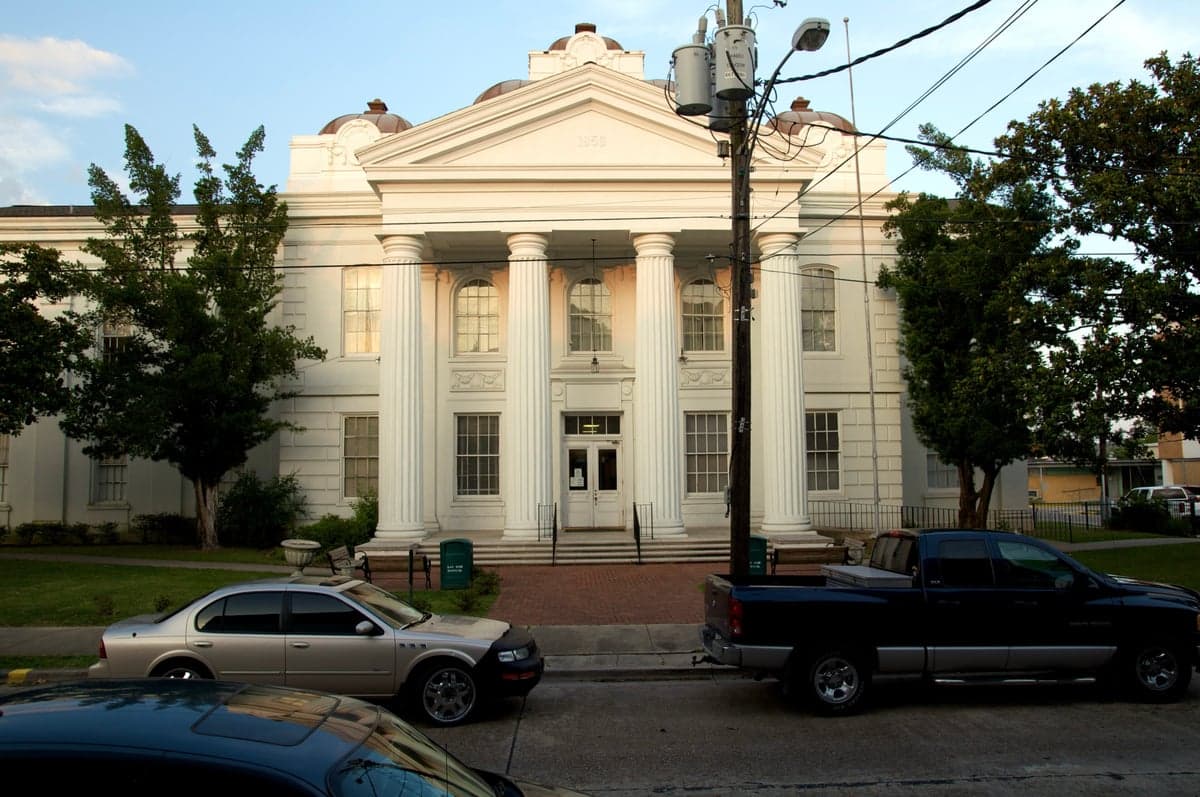
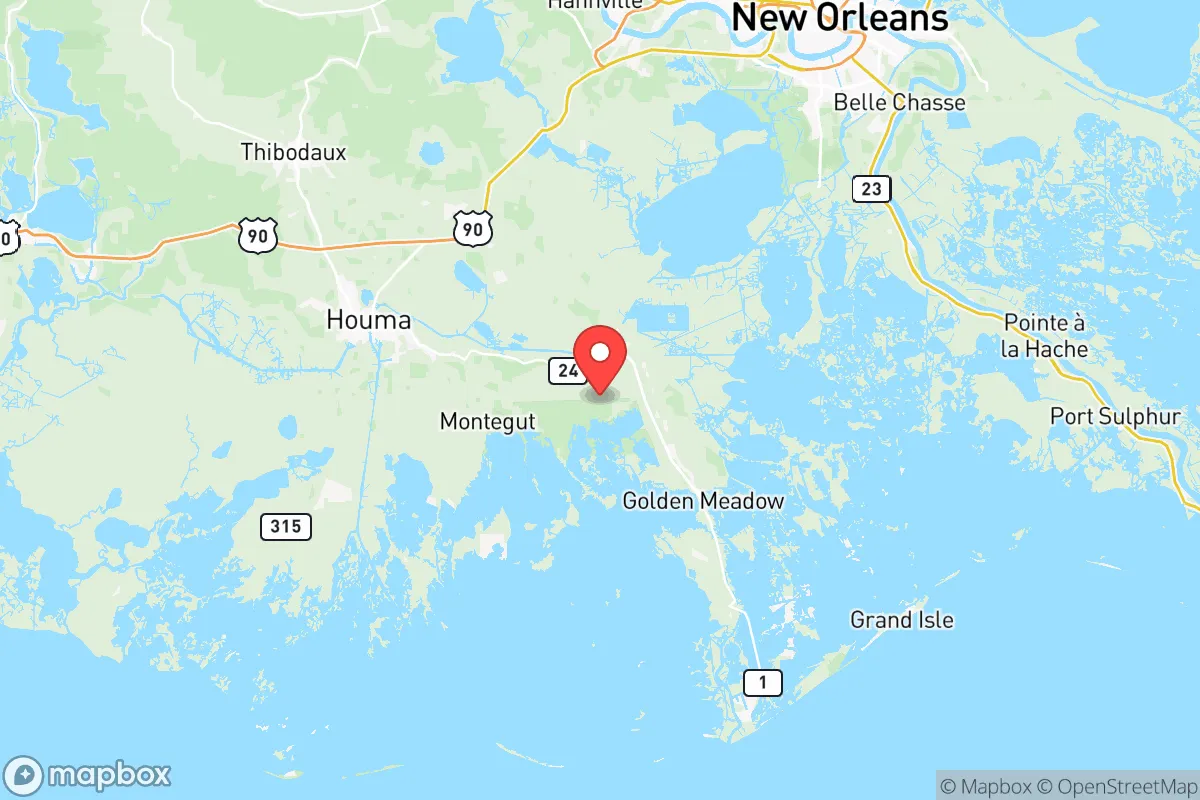
The people of Lafourche Parish, Louisiana, are a predominantly white, deeply rooted population of 96,670 whose identity is shaped by a distinct Cajun and Creole heritage, a strong Catholic tradition, and an economy historically tied to the Gulf Coast's oil, gas, and seafood industries. With a foreign-born population of just 1.7%, the parish is one of the least ethnically diverse in the state, though a notable Black community (13.1%) and a growing Hispanic population (5.8%) add layers to its cultural fabric. The population is concentrated along Bayou Lafourche, a 106-mile waterway that serves as the parish's historic and economic spine, with the largest communities being Thibodaux, the parish seat, and the smaller towns of Raceland, Lockport, Larose, and Golden Meadow. This is a place where family names like Boudreaux, Hebert, and Theriot dominate phone books, and where the French-influenced dialect and cuisine remain living markers of a unique American subculture.
Settlement & growth (pre-1960)
Before European contact, the area now known as Lafourche Parish was inhabited by the Chitimacha and Atakapa peoples, who lived along the bayous and Gulf marshes for thousands of years. The name "Lafourche" itself comes from the French word for "the fork," referring to the point where Bayou Lafourche diverges from the Mississippi River. French explorers and Acadian exiles were the first Europeans to settle the region in significant numbers. Beginning in the 1760s, the British expulsion of the Acadians from Nova Scotia drove thousands of French-speaking Catholic refugees into Spanish-controlled Louisiana. These Acadians—the ancestors of today's Cajuns—paddled their pirogues up Bayou Lafourche and established small farms and fishing camps at what would become Thibodaux (founded 1830) and Lockport (settled by the 1790s). They were joined by French Creoles from New Orleans and by German immigrants who arrived in the 1720s and 1730s, settling along the "German Coast" of the Mississippi and later spreading into Lafourche. These German families, often Catholic and agrarian, intermarried heavily with the Acadians, creating a blended population that remains the parish's demographic core.
The 19th century brought a second major wave: enslaved Black laborers, who were forced into the parish to work on sugar plantations along the bayou. By 1860, enslaved people made up roughly 40% of Lafourche's population, with large plantations concentrated near Raceland and Thibodaux. After the Civil War and emancipation, many freedmen remained in the parish as sharecroppers and laborers, forming small rural communities like Choupic and Gheens. The post-Reconstruction era saw the rise of the sugar industry's "plantation system" under white ownership, and racial tensions culminated in the 1887 Thibodaux Massacre, where white vigilantes killed dozens of Black sugar workers striking for better wages—a traumatic event that suppressed Black political power for generations. Meanwhile, the late 19th and early 20th centuries brought a small influx of Italian immigrants, mostly from Sicily, who settled in Thibodaux and worked as fishermen, farmers, and merchants. The oil boom of the 1930s through 1950s transformed the parish's economy, drawing workers from across Louisiana and Texas to towns like Larose and Golden Meadow, which became hubs for offshore oilfield support services. By 1960, the parish was overwhelmingly white (roughly 80%), Catholic, and French-speaking, with a Black minority concentrated in segregated neighborhoods and rural pockets.
Modern era (post-1965)
The 1965 Hart-Cellar Act, which ended national-origin quotas and opened immigration from Asia and Latin America, had a muted effect on Lafourche Parish compared to urban Louisiana. The parish's foreign-born population remains tiny at 1.7%, far below the national average. However, the post-1965 period did see a gradual increase in Hispanic residents, driven by labor demand in the oilfields, seafood processing plants, and construction industries. Many of these workers came from Mexico and Central America, settling in Thibodaux and Raceland, where they formed small but stable communities. The Hispanic share of the population grew from under 1% in 1980 to 5.8% today, making it the fastest-growing ethnic group in the parish. The Black population, meanwhile, has remained relatively stable at 13.1%, with most Black residents living in Thibodaux and the unincorporated areas around Raceland. The East/Southeast Asian population (0.5%) and Indian-subcontinent population (0.2%) are negligible, consisting mostly of professionals employed at Nicholls State University in Thibodaux or at regional hospitals.
Domestic migration has been the more significant demographic force since 1965. The decline of the Louisiana oil industry in the 1980s triggered an out-migration of younger residents to Houston, Baton Rouge, and Lafayette, a trend that has continued in fits and starts. However, the parish has also attracted retirees and second-home buyers from the New Orleans metro area, particularly after Hurricane Katrina in 2005, when some displaced families relocated permanently to Thibodaux and Lockport. Suburbanization has been limited by the parish's linear geography along Bayou Lafourche; new subdivisions have filled in along the bayou corridor rather than spreading outward. The college-educated share of the population is just 20.4%, reflecting the parish's blue-collar economic base in oil, fishing, and agriculture. The Cajun French language, once dominant, has declined sharply; only about 10% of residents now speak French at home, though cultural revival efforts in Thibodaux schools have slowed the loss.
The future
Lafourche Parish is projected to experience slow population growth or stagnation over the next 10–20 years, constrained by an aging population, limited immigration, and the volatility of the oil-and-gas sector. The Hispanic share is expected to continue rising, potentially reaching 10–12% by 2040, as younger Hispanic families settle in Thibodaux and Raceland to fill labor gaps in the seafood and construction industries. The white population, while still the overwhelming majority, will likely shrink slightly in relative terms due to lower birth rates and out-migration of young adults to urban job centers. The Black population is expected to remain stable, with little new in-migration from outside the region. The parish's cultural identity is likely to remain strongly Cajun and Catholic, but with a growing Hispanic influence visible in restaurants, churches, and festivals. New communities are not forming distinct enclaves; rather, Hispanic families are dispersing into existing neighborhoods, particularly in Thibodaux's south side and Raceland's newer subdivisions. The biggest wildcard is climate change: rising sea levels and stronger hurricanes threaten the low-lying coastal communities of Larose and Golden Meadow, which could trigger a gradual retreat of population northward toward Thibodaux and Raceland over the coming decades.
For someone moving into Lafourche Parish now, the area offers a stable, family-oriented community with a strong sense of place and tradition, but with limited ethnic diversity and economic opportunity compared to larger Louisiana cities. The population is becoming slightly more Hispanic and slightly less French-speaking, but the core identity—Cajun, Catholic, bayou-centric—remains intact. New residents should expect a welcoming but insular culture where family connections and local history matter deeply, and where the pace of life is dictated by the tides of the bayou rather than the rhythms of a booming metropolis.

* Values derived from national, state, county, city and local statistics and may differ in a specific area. Last updated: 2026-06-27T16:03:39.000Z
Narrative content on this page is AI-generated and may contain mistakes. Verify any details that matter before acting on them.
ReloMaps may earn a commission from affiliate links at no extra cost to you.

