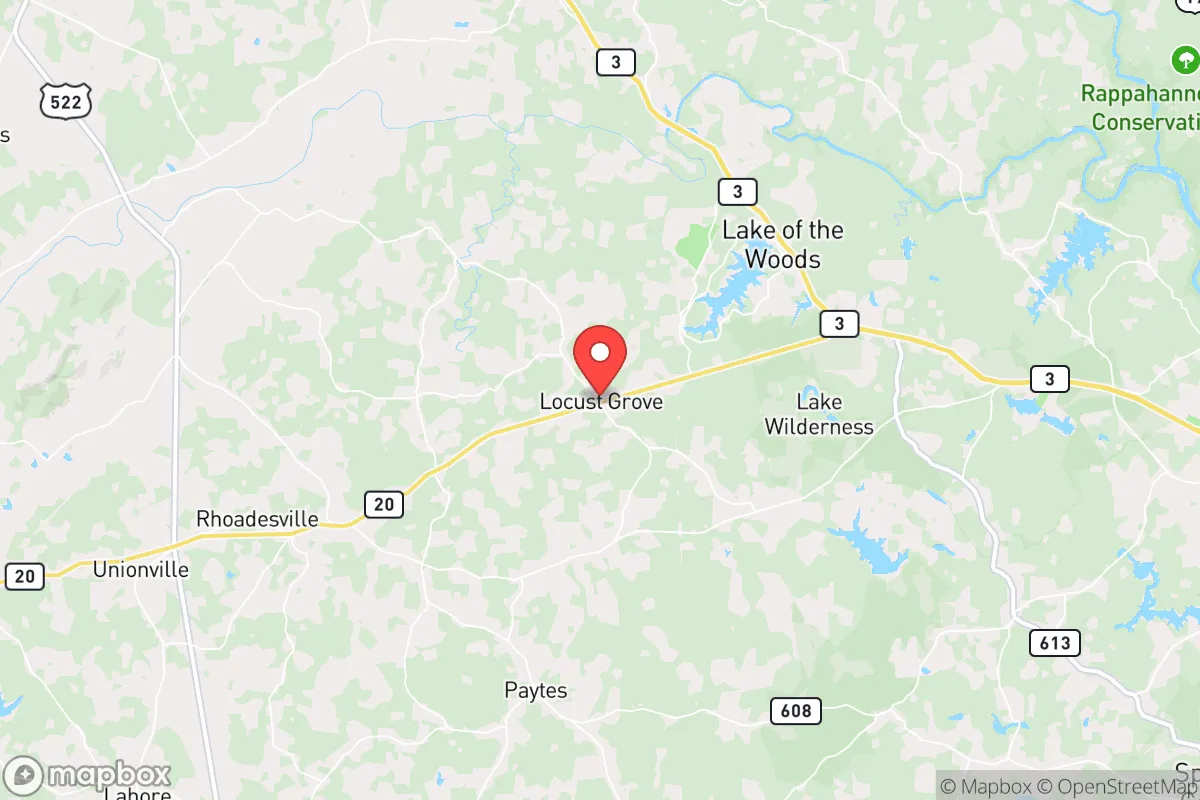
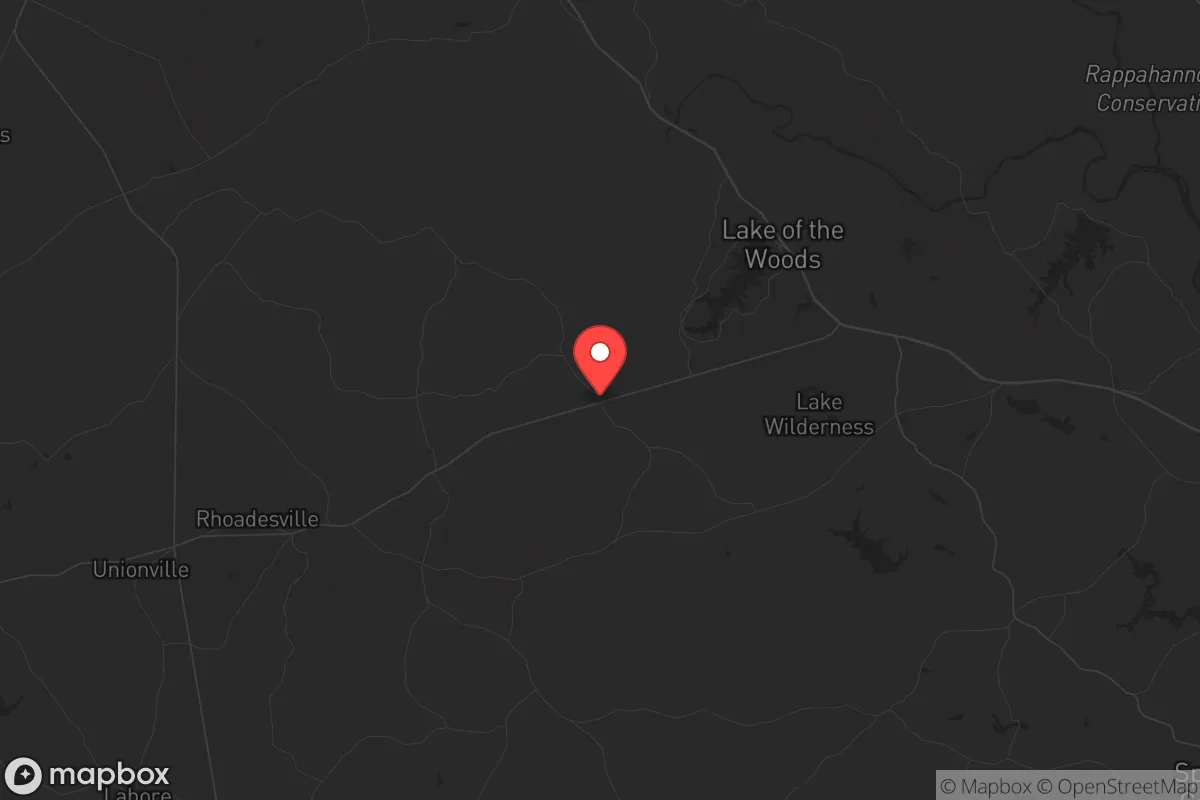
Strategic Assessment of Locust Grove, VA
Workable tactical position. Some exposure to population density or targets, but generally defensible in a crisis.
What does the Strategic Assessment tell us?
Our Strategic Assessment grades tactical survivability of an area. Major population centers, military targets, fallout zones, natural disasters, and border exposure all drive risk — lower exposure means a more defensible position in a crisis.
This is heavily inspired by Joel Skousen's Strategic Relocation book. Highly recommended you checkout the book ($)What does this tell us?
Our Strategic Assessment grades tactical survivability of an area. Major population centers, military targets, fallout zones, natural disasters, and border exposure all drive risk — lower exposure means a more defensible position in a crisis.
This is heavily inspired by Joel Skousen's Strategic Relocation book. Highly recommended you checkout the book ($)Strategic Pillars

Key Distances
Regional Safe Places
Below is our recommended "safe zones" in Virginia and the surrounding area based on our strategic heuristics. For most people, it's unrealistic to live in a “safe zone” full-time due to work, family or other personal reasons. They tend to be more rural. However, many of these areas are perfect for second homes and retreat properties that double as a vacation home or even a short-term rental.
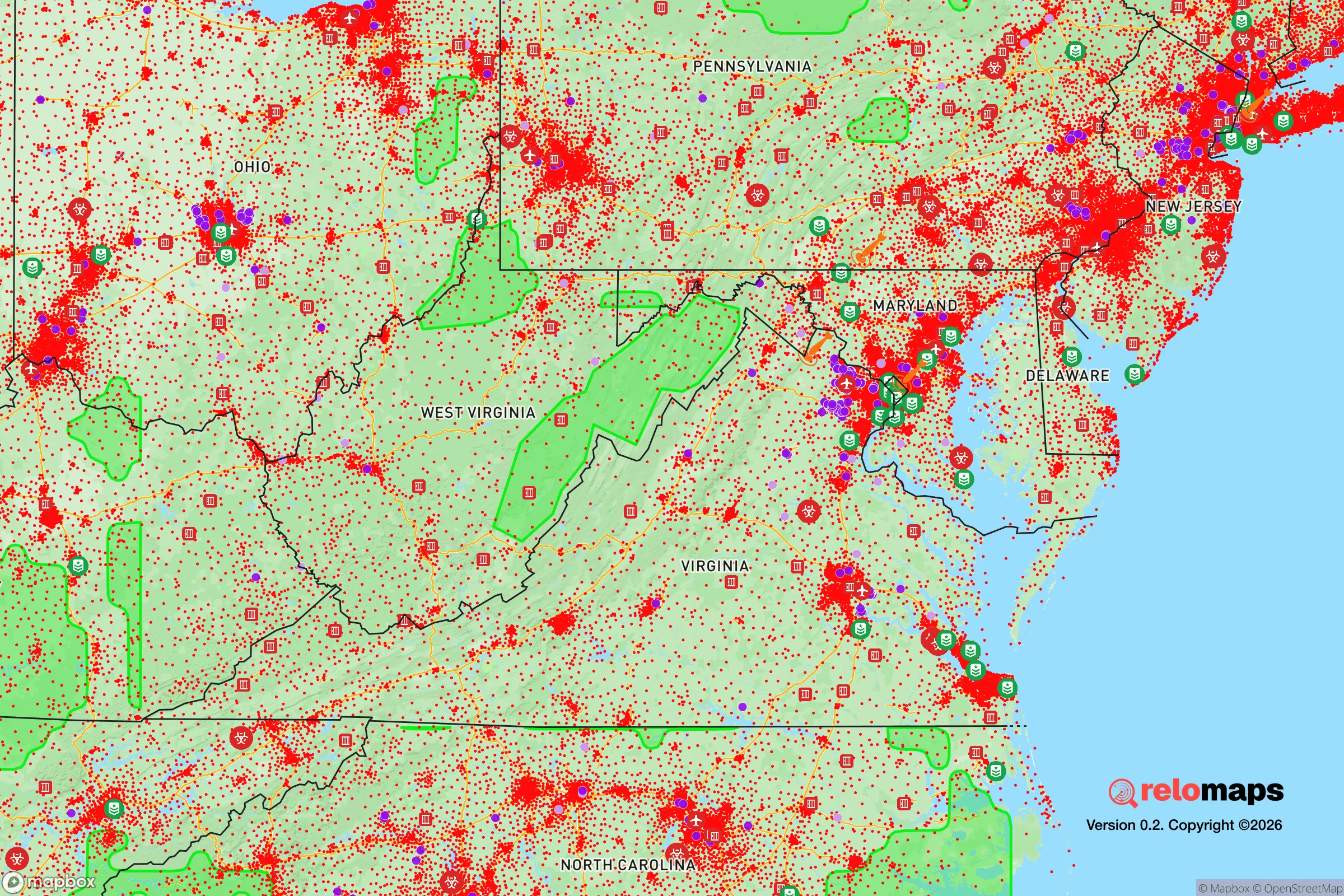
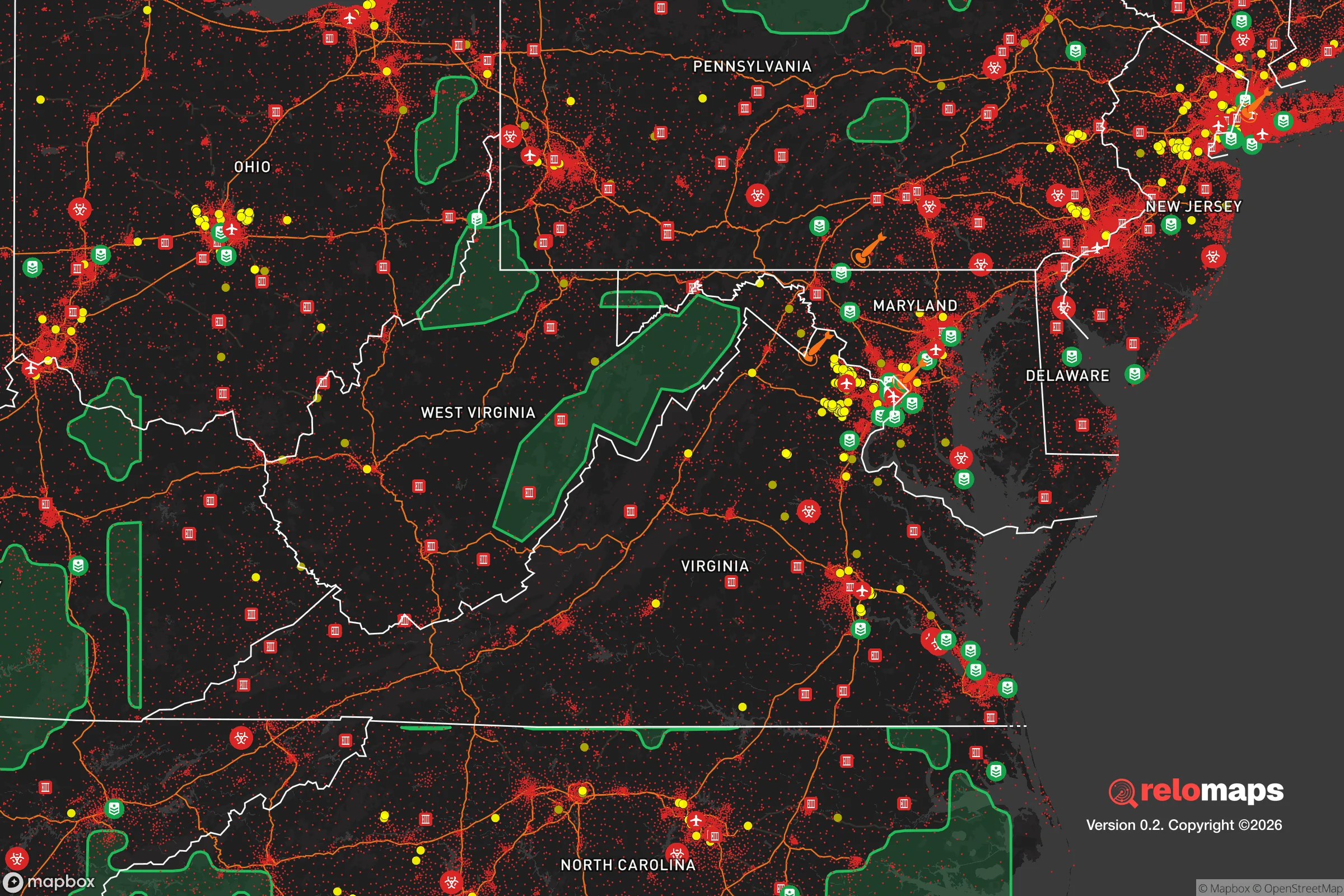


Important Note: For informational purposes only. This does not mean nothing bad ever happens in the green zones. Please use common sense. This is based on public data and modeled with AI. We tried to take a conservative approach but mistakes happen. We update this regularly as new information becomes available.
Solar Generator Recommendations
Backup power matters more here than in safer locations. We've picked three solar generators across budgets and capacity tiers — start with the budget unit if you only need a few essentials, or step up if you want to run a fridge and HVAC for days at a time.

Jackery Portable Power Station Explorer 300
Budget OptionPower on the Go: Weighing only 11 lbs, it's convenient to set up and store with book-sized foldable solar panels

BLUETTI Portable Power Station AC180
Designed for both indoor and outdoor scenarios, AC180 is highly capable as it has a robost capacity and continuous output power.

EF ECOFLOW DELTA Pro Ultra Power Station
Upgraded PickEcoFlow DELTA Pro Ultra is a whole-home energy system designed to grow with your family. Integrated with the Smart Home Panel 2, it scales to meet your evolving energy needs — keeping your home powered, intelligent, and secure through every stage of life.
We earn a commission, at no additional cost to you.
Strategic Assessment Analysis
Locust Grove, Virginia, occupies a strategic niche in Orange County that balances rural self-sufficiency with practical access to critical infrastructure, making it a serious contender for relocation-minded individuals and families who prioritize resilience. Situated roughly 70 miles southwest of Washington, D.C., and 30 miles west of Fredericksburg, the area sits just outside the immediate blast and fallout zones of major population centers while remaining close enough to leverage supply chains and medical facilities when needed. Its position along the Route 3 corridor, with the Rapidan River forming its southern boundary and the vast Lake of the Woods development anchoring its center, offers a mix of defensible terrain, water resources, and low population density that appeals to those thinking about long-term preparedness.
Geographic position and natural advantages for self-sufficiency
Locust Grove’s geography is defined by the rolling Piedmont foothills and the dense hardwood forests of the Rappahannock River watershed, which together create a natural buffer against both urban sprawl and certain disaster scenarios. The area sits at an elevation of roughly 300–400 feet, well above the floodplains of the nearby Rapidan and Rappahannock rivers, reducing the risk of catastrophic flooding that plagues lower-lying communities along the coast. The local topography includes numerous ridges and hollows that provide natural cover and multiple defensible positions, a feature that has historically made this region a strategic backcountry during conflicts like the Civil War. The presence of Lake of the Woods—a 2,600-acre man-made lake with private access for residents—offers a reliable surface water source that can be used for irrigation, firefighting, and emergency supply, though it is a managed resource that could be contested in a prolonged crisis. The surrounding National Forest land (the Rapidan Wildlife Management Area and parts of the George Washington National Forest to the west) provides additional buffer space and potential foraging or timber resources, though these are public lands with access restrictions that a relocator should verify. The area’s distance from major military installations like Quantico Marine Corps Base (60 miles east) and Dahlgren Naval Surface Warfare Center (50 miles southeast) is a double-edged sword: it reduces proximity to potential kinetic targets, but also means that emergency response times from federal assets could be slower than in more suburban zones.
Risks, exposures, and proximity to fallout-relevant landmarks
While Locust Grove avoids the worst of urban risk, it is not immune to man-made and natural threats that a preparedness-minded relocator must weigh. The most significant man-made risk comes from its location within the broader Washington, D.C., metropolitan region’s secondary fallout zone. In a nuclear exchange scenario, prevailing winds from the southwest would carry fallout from a D.C. strike toward the Chesapeake Bay, sparing Locust Grove the heaviest contamination, but a strike on Richmond (60 miles south) or the Norfolk naval complex (120 miles southeast) could deposit lighter fallout across the area depending on weather patterns. The North Anna Nuclear Generating Station, located just 20 miles southeast in Louisa County, is a nearer concern: while its containment structures are robust, a catastrophic failure or targeted attack could render large portions of Orange and Spotsylvania counties uninhabitable for months. The area also sits within 30 miles of the Vint Hill Farms Station (a former NSA listening post now redeveloped as a business park) and the Culpeper National Guard base, both of which are secondary targets in a conflict scenario. Natural risks are more mundane but still relevant: the region experiences occasional tornadoes (EF-1 or EF-2 strength, typically 1–2 per decade), ice storms that can knock out power for a week or more, and the slow-moving threat of drought that affects well water levels in the Piedmont’s fractured bedrock aquifers. Wildfire risk is moderate, with the surrounding forests posing a threat during dry summers, though the area’s fire departments (Orange County Volunteer Fire Company and the Locust Grove Volunteer Fire Department) are well-organized and have mutual aid agreements with neighboring counties.
Practical resilience for a relocator: food, water, energy, and defensibility
For a family or individual serious about self-sufficiency, Locust Grove offers a mix of enabling factors and hard limitations. Water is the strongest asset: most homes in the rural parts of Locust Grove rely on private wells drawing from the Potomac Group aquifer, which yields moderate volumes (5–15 gallons per minute) at depths of 100–300 feet. However, drought years can lower static water levels, and well drilling permits are regulated by the Virginia Department of Health, so a pre-purchase well test is non-negotiable. Lake of the Woods residents have the lake as a backup, but it is a private resource managed by a homeowners’ association, meaning access could be restricted in an emergency. Food production is viable but not effortless: the growing season runs from mid-April to mid-October (Zone 7a), with fertile loam soils in the river bottoms and clay-heavy soils on the ridges. A typical half-acre garden can produce enough vegetables for a family of four, but soil amendments and raised beds are often needed for the clay areas. Local livestock is common—chickens, goats, and even small cattle operations are visible along Route 20 and 611—but zoning in the Lake of the Woods development restricts farm animals, so relocators should target the unincorporated areas north of the lake for true agricultural freedom. Energy resilience is a weak point: the grid is served by Dominion Energy, which has a mixed reliability record in rural areas during storms. Solar potential is good (4.5–5.0 peak sun hours per day), but HOA restrictions in Lake of the Woods may limit panel placement, and off-grid solar setups require significant battery storage to handle the region’s cloudy winter months. Wood heating is a practical backup, with abundant firewood available from private timberland, but air quality regulations in Orange County limit outdoor burning during summer. Defensibility is moderate: the area’s road network—primarily two-lane roads like Route 3, 20, and 611—creates natural chokepoints that could be monitored or blocked, but also means that evacuation routes are limited and could clog quickly if a mass exodus from D.C. occurs. The community is tight-knit, with a strong volunteer fire and rescue presence, but law enforcement coverage from the Orange County Sheriff’s Office is thin (roughly 1 deputy per 1,500 residents), so personal security and neighborhood watch arrangements are essential.
The overall strategic picture for Locust Grove is one of cautious optimism for the prepared relocator. It offers a rare combination of water security, agricultural potential, and distance from primary targets that few areas within a two-hour drive of D.C. can match. The trade-offs are real: the reliance on a private HOA for lake access, the moderate risk from the North Anna plant, and the limited evacuation routes all demand proactive planning rather than passive assumption of safety. For a family willing to invest in well testing, solar backup, and a wood-heating system, and who chooses a property outside the HOA’s restrictive covenants, Locust Grove provides a defensible base that can sustain itself through most regional disruptions. It is not a bunker—no place in the Mid-Atlantic truly is—but it is a rational, grounded choice for those who want to be close enough to civilization to function, yet far enough to survive its collapse.

* Values derived from national, state, county, city and local statistics and may differ in a specific area. Last updated: 2026-09-10T03:06:51.000Z
Narrative content on this page is AI-generated and may contain mistakes. Verify any details that matter before acting on them.
ReloMaps may earn a commission from affiliate links at no extra cost to you.

