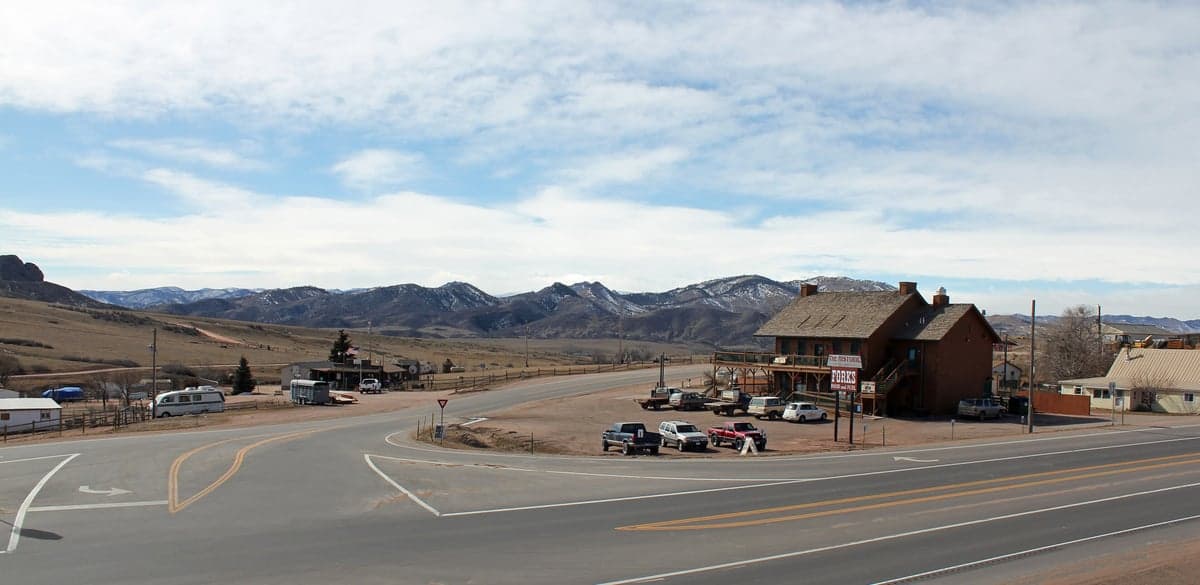
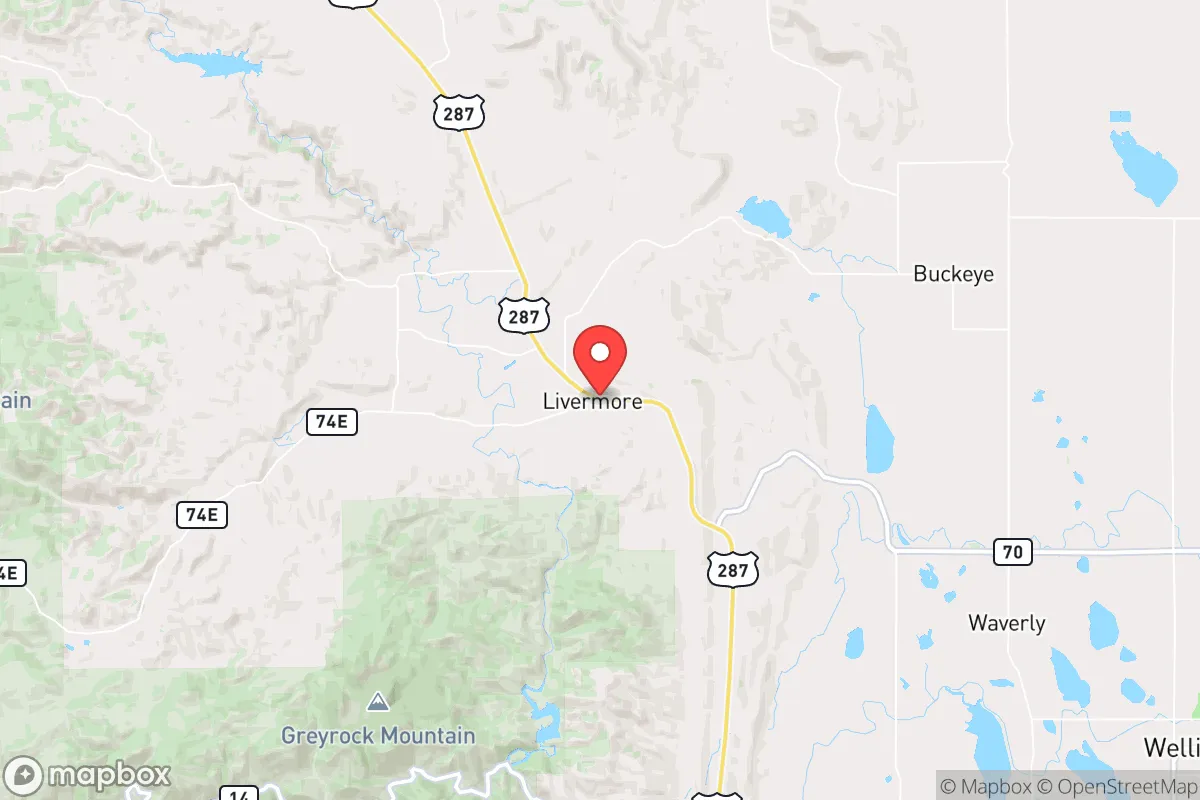
Photo: Wikipedia
Quality of Life in Livermore, CO
Above-average quality of iife. The area offers a reasonable cost of living, decent mobility, and a mix of neighborhood amenities.
What does Quality of Life tell us?
Quality of Life blends cost of living, nearby amenities, socioeconomic signals, and neighborhood character. City-level scores represent the whole municipality; individual neighborhoods can differ.
What does this tell us?
Quality of Life blends cost of living, nearby amenities, socioeconomic signals, and neighborhood character. City-level scores represent the whole municipality; individual neighborhoods can differ.
Cost of Living
51% above national average
The Real Cost of Living in Livermore, CO for 2026
| Tier | Individual | Family (4) |
|---|---|---|
| Survival | $26k | $49k |
| Comfortable | $73k | $107k |
| Luxury | $107k+ | $165k+ |
| Elite (Top 5%) | $125k+ | $194k+ |
92%
* median rent substituted from county-level data — local Census figures unavailable for small populations
The Area Signal
A metric tracking the socioeconomic signals of the area.
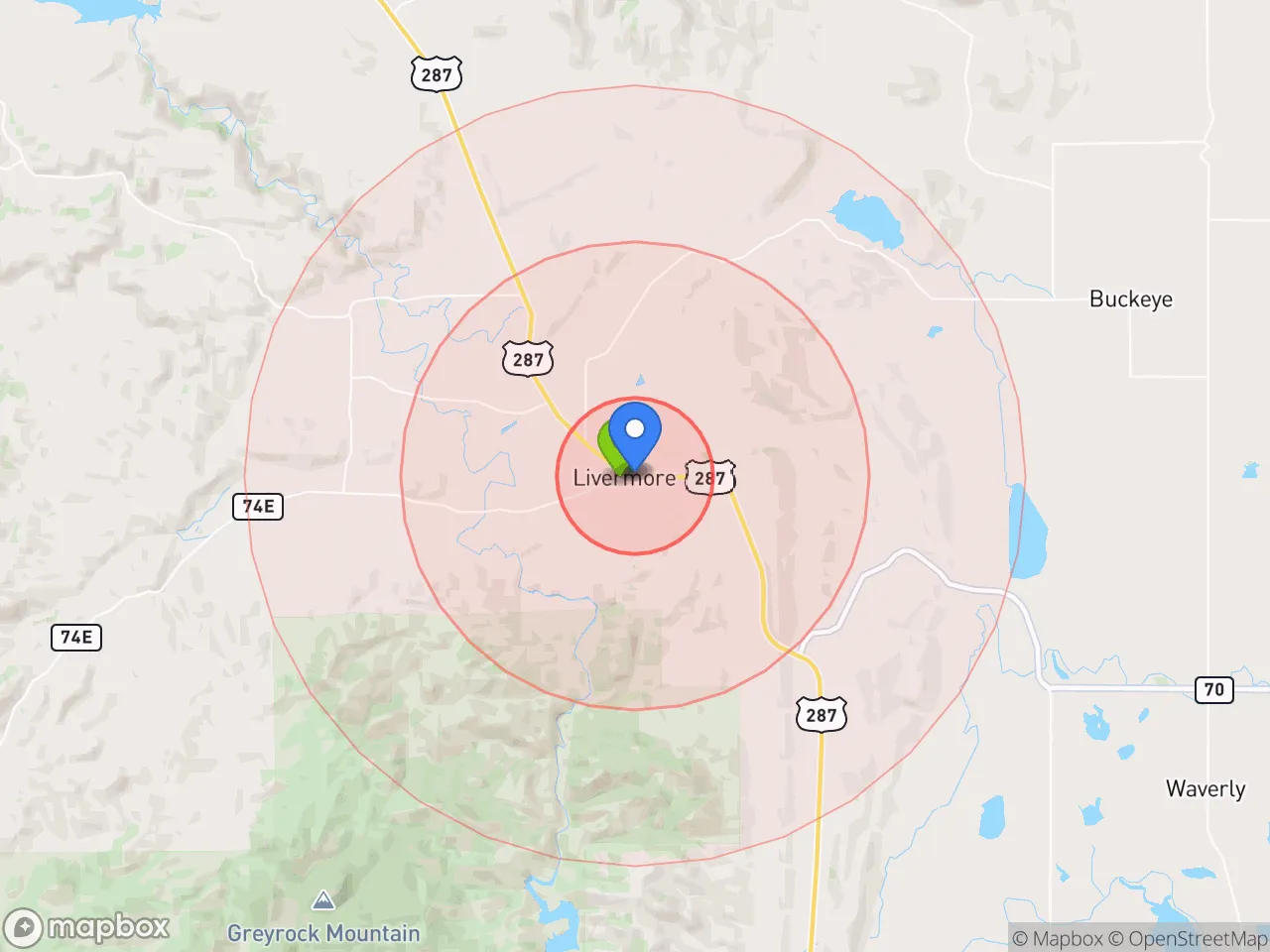
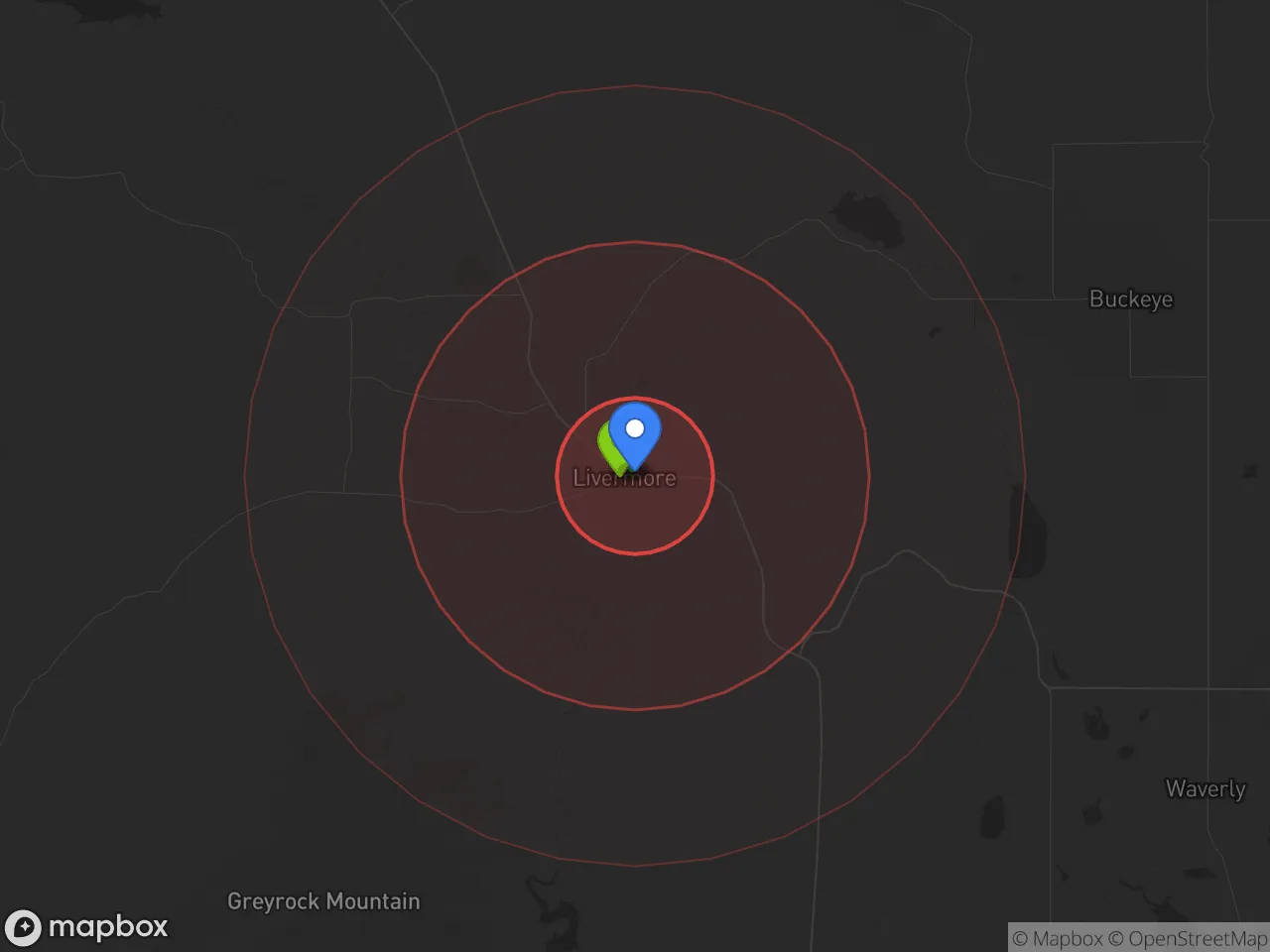
Limited data for this area
Limited data for this area
Hobbies
Explore the areaGroceries
0 within 10 miles
Gas
0 within 10 miles
Hospital
0 within 20 miles
Airport
DEN — Denver International
Post Office
Critical Amenities
Quality-of-Life Analysis
Livermore, Colorado, is a high-cost, high-amenity enclave in Larimer County, attracting affluent professionals, remote workers, and families who prioritize space, privacy, and outdoor access over urban convenience. With a cost of living index of 151 (51% above the U.S. average), the area is notably more expensive than nearby Fort Collins (index ~115) and Wellington, but offers larger lots, lower density, and direct access to Roosevelt National Forest. The typical resident is a homeowner with a long commute to a professional job in Fort Collins or Loveland, or a fully remote worker who chose Livermore for its quiet, rural character.
Cost of living, housing affordability, and how Livermore compares to Fort Collins and Wellington
Livermore’s housing market is the primary driver of its elevated cost of living. The median home value sits at $457,700, significantly higher than the Larimer County median of roughly $480,000 but comparable to Fort Collins’ core neighborhoods. However, Livermore buyers get substantially more land — most properties are on 1–35 acres — whereas a Fort Collins home at the same price typically sits on a quarter-acre lot. Median rent is $1,677, which is slightly below Fort Collins’ median of ~$1,750 but above Wellington’s ~$1,500. Renters in Livermore are rare; the housing stock is overwhelmingly owner-occupied single-family homes on acreage. The average commute of 23.3 minutes is shorter than many exurban areas, thanks to Livermore’s location along U.S. Highway 287, which provides a direct 20–25 minute drive to central Fort Collins. Commuters heading to Loveland or Boulder face 35–50 minute drives. Property taxes in Larimer County average about 0.55% of assessed value, which on a $457,700 home amounts to roughly $2,500 annually — moderate for Colorado’s Front Range. For buyers accustomed to suburban HOA fees and smaller lots, Livermore’s trade-off is clear: higher upfront cost for privacy, no HOA restrictions, and direct trail access from the back door.
Schools, daily amenities, and the rhythm of life in a rural Front Range community
Livermore is served by Poudre School District, with most children attending Livermore Elementary School (a small K-5 school with strong parent involvement) and then busing to Cache La Poudre Middle School and Poudre High School in Laporte/Fort Collins. The district is well-regarded, with Poudre High earning consistent ratings in the top 20% of Colorado high schools. Daily amenities are minimal within Livermore itself — there is a general store, a post office, and a few local businesses, but residents drive 15–20 minutes to Fort Collins for groceries, healthcare, dining, and shopping. The area has no stoplights, no chain restaurants, and no nightlife. The daily rhythm revolves around outdoor recreation: hiking, horseback riding, mountain biking, and fishing on the Poudre River are immediate from home. The nearby Red Feather Lakes area and Roosevelt National Forest provide year-round trail access. Internet connectivity has improved significantly since 2020, with fiber-optic service available from Rise Broadband and CenturyLink in most subdivisions, making Livermore viable for remote work. Cell coverage remains spotty in the deeper canyons, so residents often rely on Wi-Fi calling. The community is tight-knit but not insular; annual events like the Livermore Volunteer Fire Department barbecue and the Livermore Community Church gatherings serve as social anchors.
Livermore is best suited for buyers who value land, quiet, and outdoor access over walkability and urban amenities. Families with school-age children will find good schools and a safe, low-crime environment, but should be prepared for a 20–30 minute drive to most extracurricular activities and grocery stores. Remote workers and retirees who already own vehicles and enjoy solitude will find Livermore’s trade-offs worthwhile. Those who need frequent access to Denver International Airport (about 75 minutes away) or who prefer walkable neighborhoods with coffee shops and restaurants should look instead at Fort Collins or Loveland. For the right buyer — someone who wants acreage, no HOA, and the Poudre River as a backyard amenity — Livermore offers a quality of life that is difficult to replicate elsewhere on Colorado’s Front Range.

Crime in Livermore, CO
Higher crime rates than 58% of comparable U.S. locations.
Violent CrimeViolent Crime Analysis
Property CrimeProperty Crime Analysis
Crime Analysis
Livermore, Colorado, presents a complex safety profile that requires careful examination. With a violent crime rate of 436.5 per 100,000 residents and a property crime rate of 2,216.6 per 100,000, the community faces challenges that exceed national averages. These figures place Livermore in a concerning position, particularly given its proximity to the progressive judicial environment of the broader Larimer County and Front Range metro area, where lenient sentencing policies and offender-focused district attorneys have been linked to elevated recidivism and reduced public safety outcomes.
Crime in context
Livermore's violent crime rate of 436.5 per 100K is 25% higher than the national average of approximately 380 per 100K, and significantly above Colorado's statewide rate of roughly 410 per 100K. Property crime at 2,216.6 per 100K also exceeds the national benchmark of about 1,950 per 100K. These statistics reflect a community that, while rural in character, is not insulated from the broader crime trends affecting the Denver-Fort Collins corridor. The influence of progressive prosecutorial policies in Larimer County — including reduced bail requirements, deferred prosecution programs for repeat offenders, and sentencing guidelines that prioritize rehabilitation over incarceration — has created an environment where property and violent offenders face diminished consequences, contributing to Livermore's elevated crime rates relative to more conservative rural areas in northern Colorado.
What residents experience
For Livermore residents, the daily reality involves a tangible risk of both violent and property crime. The violent crime category includes aggravated assault, robbery, and a notable incidence of sexual offenses, with the rate suggesting roughly 4-5 violent incidents per 1,000 residents annually. Property crime is more pervasive, with theft, burglary, and motor vehicle theft occurring at a frequency that affects approximately 22 out of every 1,000 households per year. Residents report that vehicle break-ins and shed burglaries are common nuisances, particularly along the Highway 287 corridor. The progressive judicial philosophy in Larimer County, which has seen district attorneys decline to prosecute certain low-level property crimes and advocate for sentence reductions for violent offenders, directly undermines deterrence and leaves victims with limited recourse. This systemic leniency means that even when perpetrators are identified, meaningful accountability is often elusive.
Neighborhood-level variation in Livermore is limited due to the area's sparse, rural layout, but some patterns emerge. Properties along the Poudre River corridor and near the Livermore Community Church area report slightly lower incident rates, likely due to stronger neighborhood watch dynamics and fewer transient populations. Conversely, areas closer to the Highway 287 junction and properties with easy road access experience higher property crime, as offenders exploit quick escape routes. The lack of a dedicated local police force — Livermore relies on Larimer County Sheriff's Office response — means that patrol presence is minimal, and response times can exceed 30 minutes for non-emergency calls. Residents considering relocation should weigh these safety realities carefully, particularly if they value a community where justice policies prioritize public protection over offender rehabilitation.
* Values derived from national, state, county, city and local statistics and may differ in a specific area. Last updated: 2026-10-21T19:15:22.000Z
Narrative content on this page is AI-generated and may contain mistakes. Verify any details that matter before acting on them.
ReloMaps may earn a commission from affiliate links at no extra cost to you.

