Photo: Wikipedia
Demographics of Livermore, CO
Affluence Level in Livermore, CO
An upper-middle-class area. Household wealth, education levels, and homeownership run ahead of national benchmarks.
People of Livermore, CO
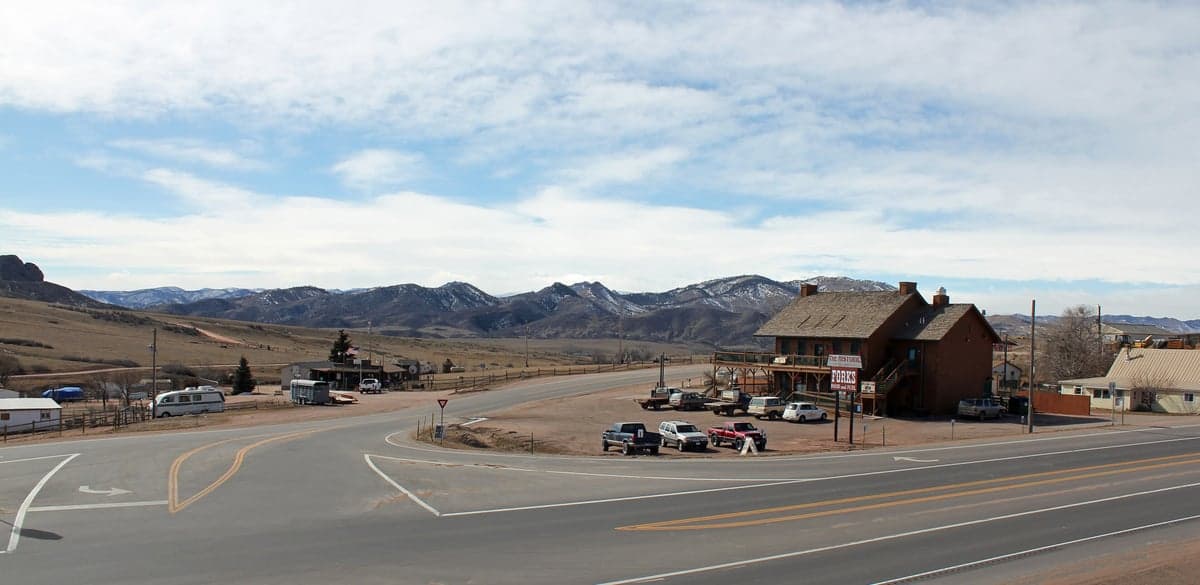
The people of Livermore, Colorado, today number roughly 1,490, forming a small, tightly-knit rural community in Larimer County where nearly half of adults hold a college degree. The population is overwhelmingly White (90.1%) with a Hispanic or Latino share of 8.1%, and the foreign-born population stands at 0.0%, reflecting a deeply rooted, native-born character. Livermore is not a dense suburb but a spread-out, unincorporated area of large-lot homes and working ranches, where residents value privacy, open space, and a self-sufficient lifestyle. For those moving in, the area offers a quiet, conservative-leaning environment with strong ties to the land and a population that has changed little in its ethnic composition over generations.
How the city was settled and grew
Livermore's human history begins with the Arapaho and Cheyenne peoples, who used the Cache la Poudre River valley for seasonal hunting before Euro-American settlement. The first permanent White settlers arrived in the 1860s and 1870s, drawn by the Homestead Act and the promise of cattle ranching on the shortgrass prairie. These early families—many of German, English, and Scots-Irish stock—established ranches along the river bottom and in the sheltered valleys north of the present-day town center. The original settlement cluster, now referred to as Old Town Livermore, grew around a general store and post office established in 1879, serving ranchers who needed supplies without traveling to Fort Collins. By the early 1900s, the area had a school, a church, and a handful of small farms, but it never incorporated as a city; Livermore remains an unincorporated community to this day. The Poudre River Ranches area, stretching west along the river, became the heart of the ranching community, with families like the Livermores (for whom the town is named) and the Bells holding large tracts. A second wave of settlement came in the 1910s and 1920s, when dryland farming attracted homesteaders to the flatter uplands east of town, an area now known as Livermore Mesa. These farmers grew wheat and barley, but the Dust Bowl and subsequent droughts drove many off the land by the 1940s, consolidating property back into larger ranches.
Modern era (post-1965)
After the 1965 Hart-Cellar Act, Livermore saw virtually no immigration-driven demographic change; the foreign-born population remains at 0.0% in 2026 data, and the area has never been a destination for international migration. Instead, the modern era has been defined by domestic in-migration from urban Colorado and out-of-state transplants seeking rural retreat. Beginning in the 1970s and accelerating through the 1990s, professionals from Fort Collins and Denver bought former ranch parcels for hobby farms and second homes. This wave concentrated in the Red Feather Lakes area (a nearby census-designated place often grouped with Livermore in local conversation) and along County Road 74E, where newer subdivisions of 5-to-40-acre lots were platted. The Hispanic share, now 8.1%, grew modestly during this period, primarily through families working in the construction and landscaping trades that supported the area's home-building boom. These households tended to settle in the more affordable Livermore Mesa area, where smaller lots and older homes offered entry points. The White share, while still dominant at 90.1%, has held steady rather than declining, as the area has not attracted significant numbers of any other racial or ethnic group. The college-educated share of 49.1% is notably high for a rural community, reflecting the influx of remote workers, retirees, and second-home owners with professional backgrounds.
The future
Livermore's population is likely to remain small and predominantly White for the foreseeable future, with slow growth driven by continued domestic in-migration from Colorado's Front Range. The area's lack of rental housing, high land prices, and absence of major employers will continue to filter for affluent, property-owning households rather than a diverse mix of renters or immigrants. The Hispanic share may grow incrementally as service-sector workers seek affordable lots on Livermore Mesa and in the Poudre River Ranches area, but the foreign-born population is expected to stay near zero. The cultural identity of Livermore is evolving from a working ranching community toward a bedroom-and-retreat community for professionals who commute to Fort Collins or work remotely. Over the next 10 to 20 years, expect the population to become slightly older, slightly more educated, and slightly more politically conservative, as the area attracts retirees and families who explicitly choose a rural, low-density lifestyle.
For someone moving in now, Livermore offers a stable, homogeneous community where the population is not diversifying rapidly and where the dominant culture remains rooted in Western ranching traditions blended with modern rural-residential living. New arrivals will find neighbors who value self-reliance, private property, and quiet, and who expect newcomers to respect the area's open-space character. The bottom line: Livermore is becoming a refuge for those who want Colorado's scenery and climate without the density, diversity, or urban politics of the Front Range cities.

* Values derived from national, state, county, city and local statistics and may differ in a specific area. Last updated: 2026-10-21T19:15:22.000Z
Narrative content on this page is AI-generated and may contain mistakes. Verify any details that matter before acting on them.
ReloMaps may earn a commission from affiliate links at no extra cost to you.

