Photo: Wikipedia
Personal Sovereignty in Livermore, CO
Viable for self-reliance. Generally workable, though some barriers may limit total independence.
What does Personal Sovereignty tell us?
Personal Sovereignty measures your capacity for self-reliance and independence with minimal government friction. Higher scores mean fewer barriers between you and the way you want to live... but it assumes you have the space you need and good neighbors.
What does this tell us?
Personal Sovereignty measures your capacity for self-reliance and independence with minimal government friction. Higher scores mean fewer barriers between you and the way you want to live... but it assumes you have the space you need and good neighbors.
State Policy
Energy independence: Net exporter (110% of energy produced in-state)
Personal Liberty
Homesteading

Personal Liberty Analysis
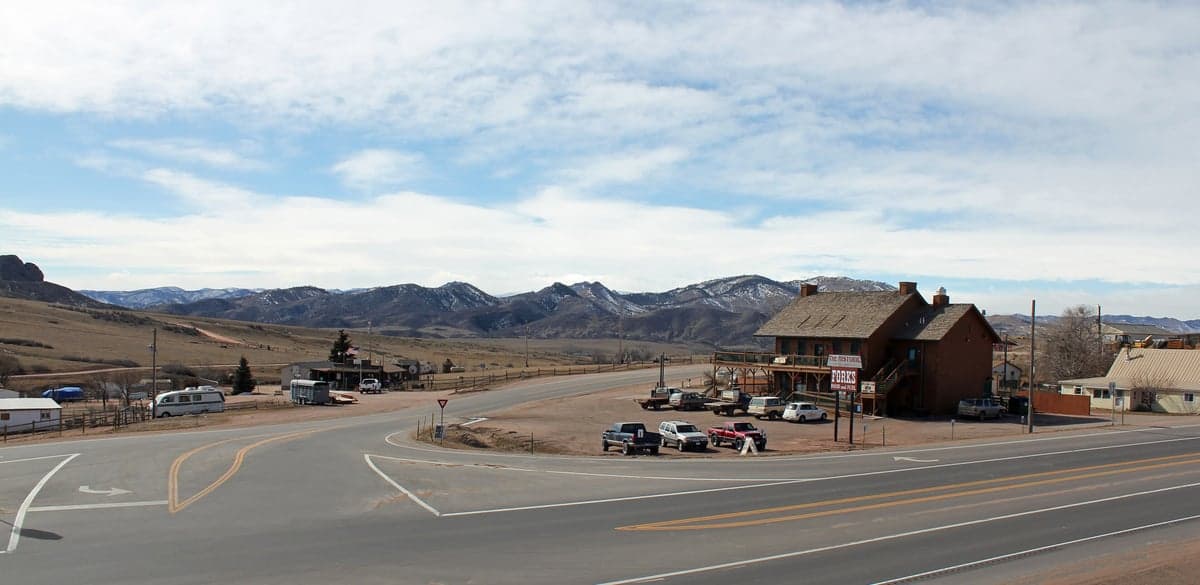
Livermore, Colorado, offers a notably high degree of personal sovereignty for those seeking autonomy in a rural mountain setting, largely due to its location in unincorporated Larimer County and the state's broader legal framework. While Colorado is not a uniformly libertarian state, Livermore's sparse population, distance from major regulatory hubs, and the practical realities of mountain living create an environment where self-reliance is not just a value but a necessity. For single individuals and families prioritizing personal freedom, the area presents a compelling mix of low local government interference, strong self-defense protections, and viable off-grid living options, though residents must navigate state-level tax and regulatory structures that are moderate compared to the most freedom-oriented states.
Tax burden and regulatory posture in Larimer County
Livermore residents benefit from a relatively light local regulatory touch, but the overall tax burden is moderate by national standards. Larimer County imposes a property tax rate that averages around 0.55% of assessed value, which is below the national average and manageable for landowners. There is no county-level sales tax on groceries, and the combined state and county sales tax rate is approximately 7.5%, applied to most goods. Colorado's state income tax is a flat 4.4% as of 2026, which is competitive but not the lowest. The regulatory posture in unincorporated areas like Livermore is notably hands-off regarding land use: there are no county building codes for agricultural structures, and zoning is minimal, allowing for significant flexibility in how property is developed. However, state-level environmental regulations, particularly concerning water rights and septic systems, do apply and require compliance. For a conservative-leaning audience, the key takeaway is that local government interference is low, but state-level taxes and rules are present and should be factored into financial planning.
Self-defense and gun law specifics in Colorado
Colorado is a "shall-issue" state for concealed carry permits, meaning that as long as an applicant meets statutory requirements—such as being 21, passing a background check, and completing a firearms training course—the county sheriff must issue the permit. Larimer County has a reputation for efficient processing of permits, and Livermore's rural character means gun ownership is common and socially accepted. The state does not require registration of firearms, and there is no ban on commonly owned semi-automatic rifles or standard-capacity magazines. However, Colorado does have a "red flag" law (Extreme Risk Protection Order) that allows law enforcement or family members to petition a court to temporarily remove firearms from an individual deemed a risk. This law is enforced statewide, including in Larimer County, and is a point of contention for some sovereignty-minded residents. For self-defense in the home, the state's "Make My Day" law provides strong legal protection, granting immunity from prosecution for using deadly force against an intruder who has unlawfully entered a dwelling. Overall, Livermore offers a robust environment for the exercise of Second Amendment rights, with the caveat that the red flag law remains a statutory limitation.
Self-reliance and homesteading viability in Livermore
Livermore is exceptionally well-suited for homesteading and off-grid living, with large lot sizes and permissive zoning that encourage self-reliance. Most residential parcels in the area are 35 acres or larger, a legacy of the original land grants and subdivision patterns, which provides ample space for gardens, livestock, and alternative energy systems. Larimer County's land use code allows for accessory dwelling units, barns, and workshops without extensive permitting, and there are no county-level restrictions on keeping chickens, goats, or even larger livestock like cattle or horses on these parcels. Off-grid feasibility is high: many properties lack natural gas lines, so residents commonly rely on solar panels, propane, and wood stoves. Wells and septic systems are standard, and the county does not require connection to municipal water or sewer. However, Colorado water law is complex and strictly enforced—any new well must be permitted, and the use of rainwater collection is legal but regulated under the 2016 "Rainwater Harvesting" law, which allows it only for properties with a permitted well. For families seeking to reduce dependence on external systems, Livermore's regulatory environment is among the most accommodating in the Front Range, though the upfront costs of infrastructure (well drilling, solar installation) are significant.
Personal liberties: parental rights, medical autonomy, speech, and property
In Livermore, personal liberties are generally well-protected, with a strong emphasis on parental rights and property freedom. Colorado law grants parents broad authority over their children's education, including the right to homeschool without onerous reporting requirements—parents need only submit a notice of intent and provide a standardized test or evaluation every other year. Medical autonomy is a mixed picture: Colorado has legalized recreational marijuana and maintains a robust medical freedom framework, including a state-level right to refuse vaccines for adults and children for medical or religious reasons. However, the state does not have a broad "right to try" law for experimental treatments beyond federal provisions, and vaccine mandates for school attendance have been a point of political tension. Free speech is fully protected under the First Amendment, and Livermore's rural isolation means there is little local government overreach into expression or assembly. Property rights are strong, with no county-level rent control or landlord licensing, and the absence of homeowners' associations (HOAs) on most parcels means no private restrictions on land use. For a conservative-leaning audience, the area offers a high degree of autonomy in family and personal decisions, with the primary limitations coming from state-level public health and education policies rather than local governance.
Overall, Livermore ranks as a strong choice for personal sovereignty within Colorado, particularly for those who value low local regulation, large land holdings, and a culture of self-reliance. Compared to more urbanized areas of the state or the heavily regulated West Coast, Livermore's environment is light-touch and freedom-oriented. However, it does not match the extreme sovereignty of states like Wyoming or Idaho, where income taxes are absent and gun laws are even less restrictive. For the individual or family willing to accept moderate state-level taxes and the presence of a red flag law, Livermore provides a practical, high-autonomy lifestyle where independence is both legally supported and culturally expected.

* Values derived from national, state, county, city and local statistics and may differ in a specific area. Last updated: 2026-10-21T19:15:22.000Z
Narrative content on this page is AI-generated and may contain mistakes. Verify any details that matter before acting on them.
ReloMaps may earn a commission from affiliate links at no extra cost to you.

