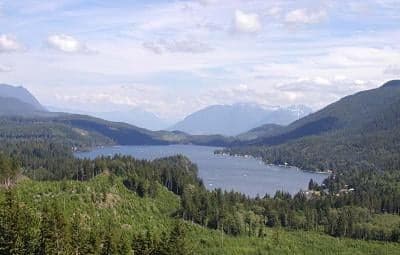
Photo: Wikipedia
Political ClimatePolitical Climate in Lake Cavanaugh, WA
District shown is the primary district for this city’s centroid. Cities may span multiple districts.
Local Political AnalysisPolitical Analysis of Lake Cavanaugh, WA
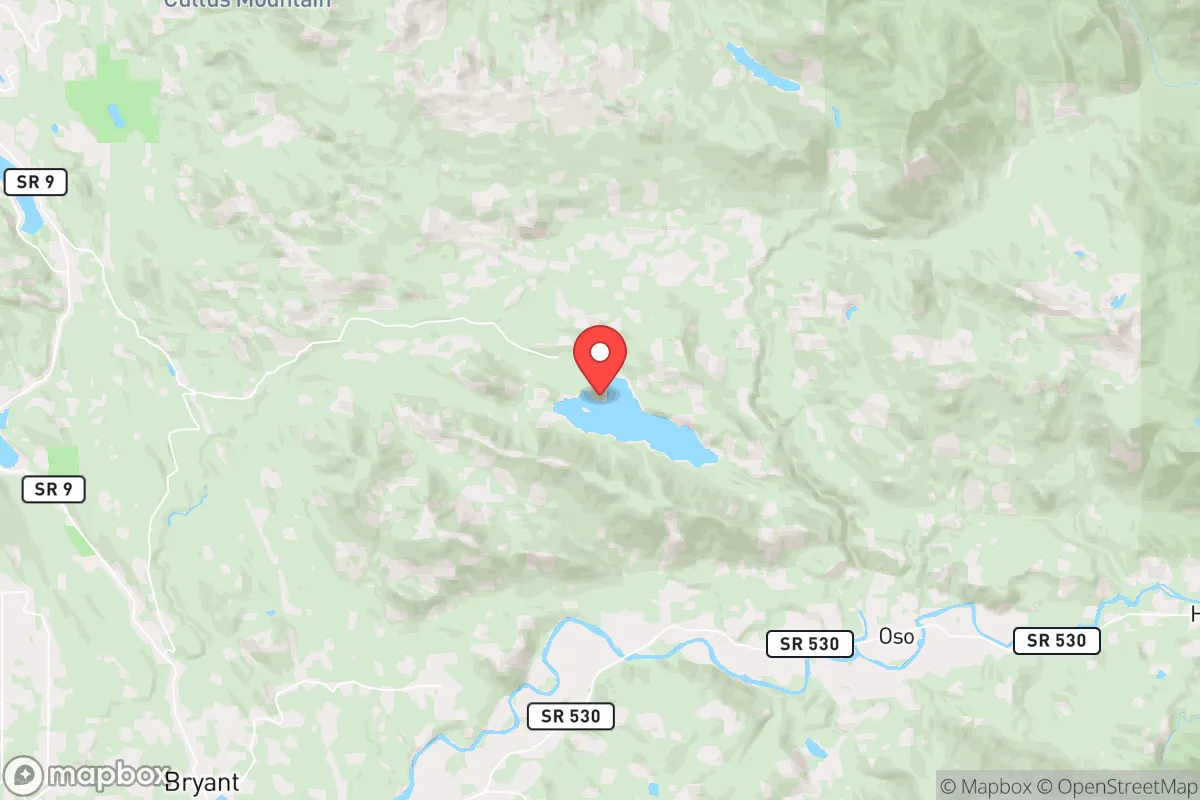
Lake Cavanaugh is a small, unincorporated community in Skagit County, and its political character is shaped more by its rural, lakeside setting than by any single party label. The area sits within a county that has a Cook Partisan Voting Index (PVI) of D+12, meaning Skagit County as a whole leans about 12 points more Democratic than the national average. However, that county-level number masks a sharp urban-rural divide: the town of Mount Vernon and the college city of Bellingham to the north drive the Democratic lean, while the unincorporated areas around Lake Cavanaugh, Big Lake, and Clear Lake tend to vote more conservatively. In practice, Lake Cavanaugh itself is a politically mixed community where you’ll find Trump signs and Harris signs on the same gravel road, and local elections often turn on land-use and water rights issues rather than national party lines.
How it compares to the rest of Washington state
Washington state as a whole is reliably Democratic at the statewide level—no Republican has won a gubernatorial or presidential race there since 1984—but that blue veneer is thin in many rural pockets. Lake Cavanaugh’s immediate surroundings in Skagit County are more moderate than the deep-blue urban cores of Seattle or King County, but they are also less conservative than the eastern Washington counties like Yakima or Spokane. For example, nearby Sedro-Woolley and Concrete are working-class towns that lean right, while the city of Mount Vernon is a Democratic stronghold. Lake Cavanaugh sits in the middle of that spectrum: it’s not as red as the ranching communities east of the Cascades, but it’s noticeably more conservative than the county’s coastal and river-valley towns. The key difference from the state average is that Lake Cavanaugh residents are more likely to prioritize property rights, low taxes, and local control over natural resources—issues that often put them at odds with the state legislature in Olympia, regardless of party affiliation.
What this means for residents
For conservative residents, the political reality is that they live in a county where their votes are often outnumbered by the urban centers, but they still hold significant influence in local government—especially on the Skagit County Board of Commissioners, where rural districts have a voice. Liberal residents, meanwhile, find that their views on environmental protection and social services are generally aligned with county policy, but they may feel outnumbered at community meetings where land-use debates can get heated. The practical effect is that Lake Cavanaugh is a place where you can have a neighbor with a Trump flag and another with a Pride flag, and both will show up to the same potluck. The area’s political trajectory is toward gradual moderation: as more remote workers and retirees move in from the Seattle area, the Democratic share is slowly increasing, but the pace is slow enough that the community’s independent, live-and-let-live character remains intact.
One cultural distinction that sets Lake Cavanaugh apart from much of Washington is the strong local emphasis on lake access and environmental stewardship—issues that transcend party lines. The community has fought hard to keep the lake clean and to limit overdevelopment, which means that both conservative property-rights advocates and liberal conservationists often find common ground. State-level policies on shoreline management and septic system regulations are a frequent source of tension, but locally, the shared love of the lake tends to override partisan bickering. If you’re moving here, expect to hear more talk about water levels and fire risk than about national politics, and be prepared for a community where your vote matters less than your willingness to help a neighbor haul a boat out of the water.

State Political ClimatePolitical Climate in Washington
State Political AnalysisPolitical Environment in the State
Washington state has been a reliably Democratic stronghold for over a decade, but its politics are far more complex than a simple blue label. The state’s overall lean is driven by the massive, liberal-leaning population of King County (Seattle), which alone casts about a third of the state’s votes. However, the rest of the state—particularly east of the Cascade Range—is deeply conservative, creating one of the sharpest urban-rural divides in the country. Over the last 20 years, the state has shifted leftward on social and environmental policy, but recent ballot measures and local elections show a growing resistance to some of the most progressive policies, especially around taxes and education.
Urban vs. rural divide
The political map of Washington is essentially two states. The I-5 corridor from Olympia through Seattle to Bellingham is the engine of Democratic power, with King County delivering margins of 70-80% for Democratic candidates. In contrast, the eastern half of the state—places like Spokane, Yakima, and the Tri-Cities (Kennewick, Pasco, Richland)—votes reliably Republican, often by 20-30 point margins. The suburbs are where the real action is. Pierce County (Tacoma) and Snohomish County (Everett) have trended blue but still have competitive pockets, while Clark County (Vancouver) has flipped from purple to solidly blue in the last two cycles, driven by Portland-area transplants. The most politically distinct suburb is probably Redmond, home to Microsoft, which votes like a mini-Seattle, while places like Puyallup and Marysville remain more moderate or conservative. The rural counties—Ferry, Stevens, Pend Oreille—often vote 70%+ Republican, but their small populations mean they have little statewide influence.
Policy environment
Washington’s policy environment is defined by a few key features. There is no state income tax, which is a major draw for conservatives, but the state relies heavily on a high sales tax (averaging 9-10% in most cities) and property taxes. The regulatory posture is generally business-friendly for tech and green energy, but strict on land use, labor, and environmental rules. Education policy is a flashpoint: the state has a fully funded public school system but also a robust charter school sector that has survived legal challenges. Healthcare is dominated by the state’s own exchange, with high insurance costs but broad coverage. Election laws are among the most accessible in the country: all elections are vote-by-mail, with same-day registration and no excuse needed for absentee voting. This system is popular across the political spectrum, though some conservatives have raised concerns about ballot security.
Recent policy direction
The last five years have seen a flurry of legislation that signals where the state is headed. On gun and self-defense law, Washington passed a ban on high-capacity magazines (2022) and a ban on assault weapons (2023), both of which are being challenged in court. Parental and education rights have been contentious: the state passed a law requiring schools to notify parents if a child requests a name or pronoun change (2024), but it also expanded sex education standards that some parents oppose. On speech and privacy, the state has a strong shield law for journalists and limits on government surveillance, but it also passed a law regulating social media algorithms (2023). Medical and bodily autonomy is fully protected: abortion is legal up to viability, and gender-affirming care is protected for all ages. Property rights are a mixed bag: the state has strong environmental regulations that can limit development, but it also has a relatively low property tax rate. Taxation remains the biggest issue: a 2021 capital gains tax (on gains over $250,000) was upheld by the state supreme court, and a proposed wealth tax is being debated. Voting and ballot access remains expansive, with automatic voter registration and no voter ID requirement.
Civil unrest & political movements
Washington has a history of visible political activism. The 2020 protests in Seattle, including the Capitol Hill Autonomous Zone (CHAZ), were a national flashpoint and still shape local political discourse. Since then, organized movements have become more structured. On the left, groups like the Washington State Labor Council and environmental organizations like 350 Seattle are highly active. On the right, the Washington State Republican Party has been fractured between moderates and Trump-aligned factions, but grassroots groups like the Washington Gun Rights Alliance and the Moms for Liberty chapters in places like Spokane and Vancouver are growing. Immigration politics are a major divide: Seattle and King County are sanctuary jurisdictions, while rural counties like Yakima have passed resolutions opposing sanctuary policies. Election integrity controversies have been relatively muted compared to other states, but some rural counties have called for hand-counting ballots. The most visible flashpoint for a new resident would be the constant presence of political signs and protests along major roads, especially in Seattle and Olympia.
Projection
Over the next 5-10 years, Washington is likely to become more polarized, not less. The Seattle metro area will continue to grow and drive state policy leftward, especially on climate and social issues. However, the suburbs are shifting: places like Vancouver and Bellingham are becoming more liberal, while exurbs like Yelm and Graham are becoming more conservative. The biggest wildcard is in-migration: the state is gaining people from California and Oregon, who tend to be more liberal, but also from Texas and the Midwest, who are often more conservative. The net effect is likely a continued Democratic hold on statewide offices, but with narrower margins in the legislature. A new resident moving in now should expect that tax policy will be the defining issue—a state income tax is unlikely but not impossible, and property taxes will likely rise. Socially, the state will remain one of the most progressive in the country on abortion, LGBTQ rights, and gun control, but with strong pockets of resistance in the east and south.
For a conservative-leaning relocator, the bottom line is that Washington offers a unique trade-off: no income tax and beautiful geography, but a policy environment that is increasingly hostile to gun rights, parental control in education, and traditional social values. If you’re moving to a red county like Spokane or the Tri-Cities, you’ll find a like-minded community and local representation, but you’ll still be subject to state laws you may disagree with. For a liberal relocator, the state is a haven for progressive policies, but the high cost of living and traffic in the urban core are real downsides. Either way, the key is to pick your county carefully—the political reality of Washington is that your zip code matters more than your state.
* Values derived from national, state, county, city and local statistics and may differ in a specific area. Last updated: 2026-10-11T18:53:41.000Z
Narrative content on this page is AI-generated and may contain mistakes. Verify any details that matter before acting on them.
ReloMaps may earn a commission from affiliate links at no extra cost to you.

