Photo: Wikipedia
Personal Sovereignty in Lake Cavanaugh, WA
Viable for self-reliance. Generally workable, though some barriers may limit total independence.
What does Personal Sovereignty tell us?
Personal Sovereignty measures your capacity for self-reliance and independence with minimal government friction. Higher scores mean fewer barriers between you and the way you want to live... but it assumes you have the space you need and good neighbors.
What does this tell us?
Personal Sovereignty measures your capacity for self-reliance and independence with minimal government friction. Higher scores mean fewer barriers between you and the way you want to live... but it assumes you have the space you need and good neighbors.
State Policy
Energy independence: Importer (55% of energy produced in-state)
Personal Liberty
Homesteading

Personal Liberty Analysis
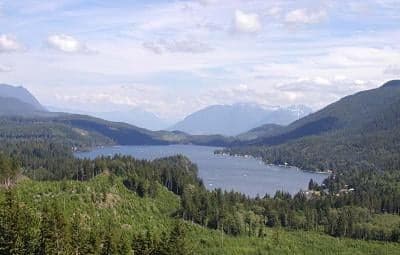
Lake Cavanaugh, Washington, offers a distinctive balance of personal sovereignty for those who value autonomy, combining the state’s relatively permissive self-defense and property rights framework with the practical realities of rural living in Skagit County. While Washington’s overall tax burden is moderate and its regulatory posture leans progressive in urban centers, this unincorporated community of roughly 200 residents operates with a light local touch, allowing residents significant latitude in daily life. For individuals and families prioritizing independence, the area presents a viable option—provided they are prepared for the trade-offs inherent in remote, self-sufficient living.
Tax burden and regulatory posture in Skagit County
Washington State has no personal income tax, which directly benefits residents of Lake Cavanaugh by leaving more disposable income in their hands. The primary revenue sources are a state sales tax (6.5%) and local sales taxes that bring the combined rate in Skagit County to approximately 8.7% as of 2026. Property taxes are moderate, with Skagit County’s effective rate around 0.93% of assessed value, slightly below the national average. The regulatory environment is shaped by state-level mandates—such as the Growth Management Act, which requires counties to designate urban growth areas—but Lake Cavanaugh’s rural classification exempts it from many of the densification and land-use restrictions that apply closer to cities like Mount Vernon or Burlington. Zoning is primarily Rural Resource or Rural Residential, which permits a range of agricultural and light commercial uses without the need for extensive permitting. However, the Washington State Department of Ecology enforces strict water rights and shoreline management rules on Lake Cavanaugh itself, meaning any construction or water extraction near the lake requires state approval. Overall, the tax burden is low for those who avoid heavy consumption, and the regulatory posture is hands-off for most rural activities, but not entirely laissez-faire.
Self-defense and gun law specifics in Washington
Washington is a shall-issue state for concealed pistol licenses, meaning that any resident who passes a background check and completes a training course can obtain a permit without discretionary denial by local authorities. Open carry is legal without a permit for anyone who can legally possess a firearm, though it is less common in practice. Lake Cavanaugh’s rural setting means that encounters with wildlife—black bears, cougars, and coyotes—are a realistic concern, and the state’s laws allow for the use of deadly force in defense of self or others when there is an imminent threat of death or great bodily harm. Washington does not have a stand-your-ground statute; instead, it follows a duty-to-retreat rule in public spaces, though that duty does not apply inside one’s home or vehicle. Magazine capacity restrictions (10 rounds for rifles, 15 for handguns) and a ban on certain semi-automatic firearms enacted in 2023 apply statewide, which may be a consideration for firearm enthusiasts. For residents of Lake Cavanaugh, the practical effect is that self-defense options are robust for home and property protection, but the state’s recent firearm legislation imposes limits that are more restrictive than in many other rural Western counties.
Self-reliance and homesteading viability: lot sizes, zoning, and off-grid feasibility
Lake Cavanaugh’s zoning allows for substantial self-reliance. Minimum lot sizes in the Rural Resource zone are typically 5 acres, and many parcels in the area are 10 acres or larger, providing ample space for gardens, orchards, and small livestock. The county’s zoning code explicitly permits accessory dwelling units, farm stands, and home-based businesses without special permits, supporting income diversification. Off-grid living is feasible but requires careful planning: the area lacks natural gas infrastructure, so heating and cooking rely on propane, wood, or electricity. Solar power is viable given the region’s moderate sun exposure, though winter cloud cover reduces generation capacity, making battery storage or a backup generator advisable. Well water is common, but new wells must be permitted through the state’s water rights system, and the Washington Department of Health requires septic system approval for any dwelling. Composting toilets are allowed under certain conditions, but full off-grid sewage systems must meet county health codes. The county’s building department enforces the state’s energy code, which adds insulation and window requirements that increase construction costs but reduce long-term energy use. For those willing to navigate permitting, Lake Cavanaugh offers a realistic path to a self-sufficient homestead, though it is not a regulatory-free zone.
Personal liberties: parental rights, medical autonomy, speech, and property
Washington State law grants parents broad authority over their children’s education, medical decisions, and religious upbringing. Homeschooling is legal with a simple annual declaration and no mandated curriculum approval, though students must participate in standardized testing in grades 4, 7, and 10. Medical autonomy is protected by state law, including the right to refuse treatment and to choose alternative therapies, though Washington’s vaccine mandates for school attendance apply unless a medical or philosophical exemption is filed. Free speech is fully protected under the state and federal constitutions, and Lake Cavanaugh’s small, dispersed population means that social pressure is minimal compared to denser communities. Property rights are strong: the county does not impose rent control, and there are no local ordinances restricting short-term rentals, though the state’s landlord-tenant laws favor tenants in disputes. The primary limitation on property use comes from the Growth Management Act and shoreline regulations, which can restrict development near the lake and require environmental review for significant alterations. For a family or individual who values personal liberty, Lake Cavanaugh provides a high degree of autonomy in daily life, with the main constraints being those imposed by state-level environmental and firearm laws rather than local governance.
Overall, Lake Cavanaugh ranks as a strong option for personal sovereignty within Washington, offering a low-tax, low-regulation environment for rural living, with robust self-defense rights tempered by recent state firearm restrictions. Compared to more urbanized parts of the Puget Sound region, the area provides significantly greater latitude for self-reliance, homesteading, and personal choice. For those willing to accept the logistical challenges of remote living and the constraints of state-level environmental and water rights laws, Lake Cavanaugh delivers a level of autonomy that is increasingly rare in the Pacific Northwest.

* Values derived from national, state, county, city and local statistics and may differ in a specific area. Last updated: 2026-10-11T18:53:41.000Z
Narrative content on this page is AI-generated and may contain mistakes. Verify any details that matter before acting on them.
ReloMaps may earn a commission from affiliate links at no extra cost to you.

