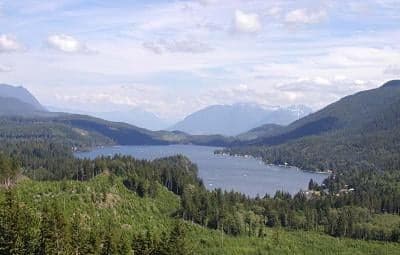
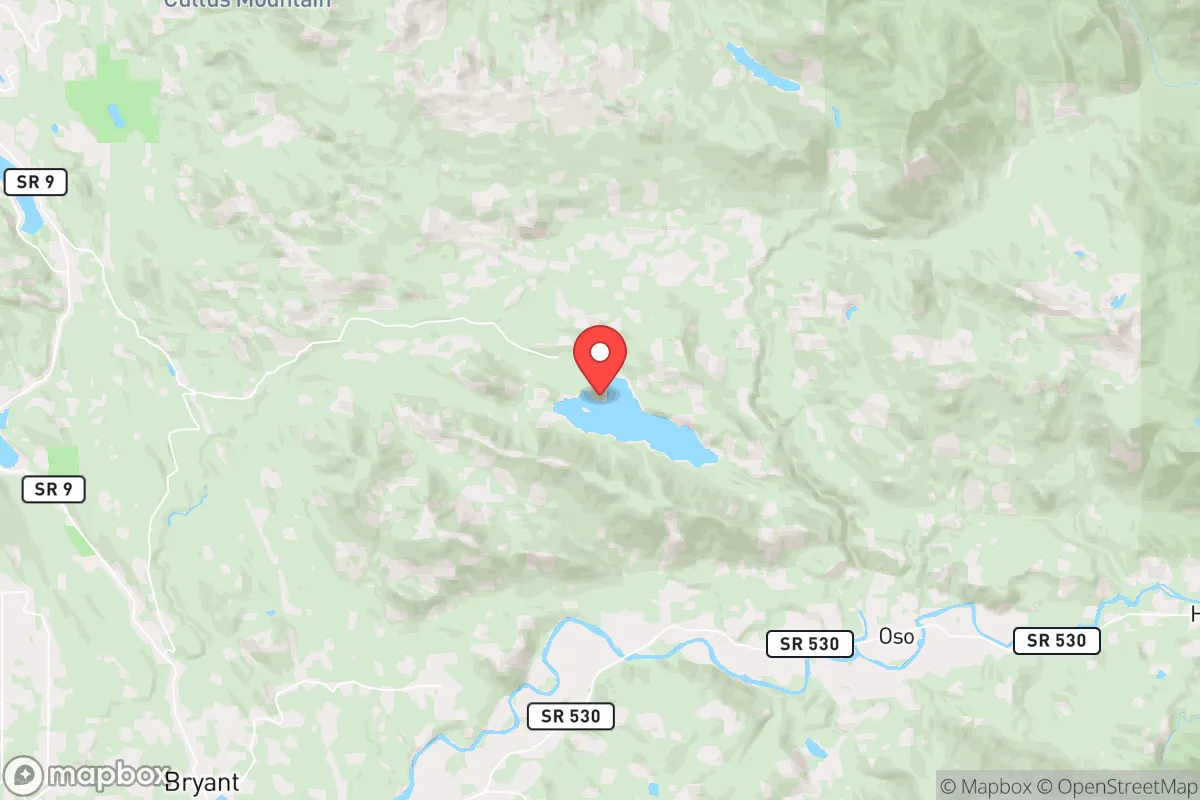
Photo: Wikipedia
Demographics of Lake Cavanaugh, WA
Affluence Level in Lake Cavanaugh, WA
An upper-middle-class area. Household wealth, education levels, and homeownership run ahead of national benchmarks.
People of Lake Cavanaugh, WA
Lake Cavanaugh, Washington, is a small, tight-knit lakeside community of 305 residents, characterized by its complete racial homogeneity and a highly educated population—61.3% hold a college degree. The town’s identity is rooted in seasonal recreation and second-home ownership, with a year-round population that is overwhelmingly white and native-born, reflecting zero foreign-born residents. This is a place where privacy, lake access, and a quiet, rural lifestyle are the primary draws, not diversity or urban amenities.
How the city was settled and grew
Lake Cavanaugh’s human history is not one of pioneer homesteading or resource extraction, but of recreational escape. The lake itself was dammed in the early 1900s to create a reservoir, and the surrounding area was platted as a summer-home community in the 1920s and 1930s. The original population consisted of families from the Seattle and Everett areas seeking a rustic, private retreat. The earliest cabins and seasonal homes were concentrated along the lake’s shoreline, particularly in the North Shore and South Shore districts, where original families built simple wood-frame cottages. There was no significant industry or land grant; the community was deliberately planned as a low-density, water-access-only enclave. Through the mid-20th century, growth remained minimal, limited to a few dozen families who passed down their lakefront properties through generations. The West Bay area saw a small cluster of permanent homes in the 1950s, but the community’s character as a seasonal, white, middle-to-upper-class retreat was firmly established by 1960.
Modern era (post-1965)
After the 1965 Hart-Cellar Act reshaped national immigration patterns, Lake Cavanaugh experienced no demographic shift. The 1970s and 1980s saw a gradual conversion of seasonal cabins into year-round residences, particularly in the East Shore and Island View neighborhoods, as telecommuting and retirement migration from the Seattle metro area increased. The population remained 100% white and entirely native-born, with no foreign-born residents recorded in any census since 2000. The 1990s brought a wave of second-home buyers from the tech sector, drawn by the lake’s seclusion and proximity to the North Cascades. These newcomers built larger, modern homes on previously undeveloped lots in the Southwest Ridge area, raising the median home value significantly. The college-educated share—now 61.3%—reflects this professional, remote-worker demographic. The community’s racial and ethnic makeup has not changed: the 2020 census confirmed 0.0% Hispanic, 0.0% Black, 0.0% Asian, and 0.0% Indian residents. The population is aging, with a median age well above the state average, as younger families are priced out of lakefront properties.
The future
Lake Cavanaugh’s population is likely to remain small, white, and highly educated over the next decade. The primary driver of change will be the continued replacement of aging seasonal cabins with larger, permanent homes, a trend concentrated in the North Shore and South Shore districts. The town’s zoning—which limits development density and requires waterfront access for most lots—will keep growth below 1% annually. There is no indication of increasing diversity: the foreign-born share has been zero for decades, and the area lacks the employment base or housing stock to attract immigrant populations. The cultural identity will remain that of a quiet, private lake community, with an emphasis on environmental conservation and property rights. For new residents, this means joining a community where neighbors value solitude, where local governance is minimal, and where the social fabric is built around shared lake use and property maintenance rather than civic institutions.
Lake Cavanaugh is becoming a more exclusive, permanent-home version of its historic self—a place for affluent, white professionals and retirees who prioritize lakefront living and privacy over community diversity or urban access. For someone moving in now, the area offers a stable, predictable social environment but little demographic change or cultural variety. The trade-off is clear: seclusion and homogeneity in exchange for a limited social and economic base.

* Values derived from national, state, county, city and local statistics and may differ in a specific area. Last updated: 2026-10-11T18:53:41.000Z
Narrative content on this page is AI-generated and may contain mistakes. Verify any details that matter before acting on them.
ReloMaps may earn a commission from affiliate links at no extra cost to you.

