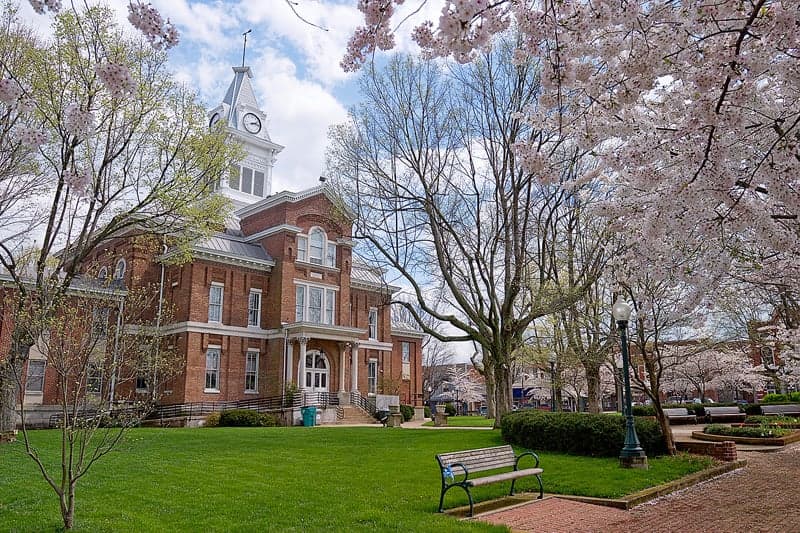
Photo: Wikipedia
Quality of Life in Simpson County
A livable area that tracks near national norms for affordability, walkability, and neighborhood health.
What does Quality of Life tell us?
Quality of Life measures an area by evaluating factors like cost of living, nearby amenities, country club access, airport proximity, socioeconomic signals and neighborhood character. For large states, this is a general average — quality of life can vary dramatically between metro areas, suburbs, and rural communities within the same state.
What does this tell us?
Quality of Life measures an area by evaluating factors like cost of living, nearby amenities, country club access, airport proximity, socioeconomic signals and neighborhood character. For large states, this is a general average — quality of life can vary dramatically between metro areas, suburbs, and rural communities within the same state.
Cost of Living
20% below national average
103%
The Real Cost of Living in Simpson County for 2026
| Tier | Individual | Family (4) |
|---|---|---|
| Survival | $16k | $30k |
| Comfortable | $38k | $56k |
| Luxury | $90k+ | $140k+ |
| Elite (Top 5%) | $106k+ | $164k+ |
Quality-of-Life Analysis
Simpson County, Kentucky, offers a quality-of-life spectrum that ranges from the walkable, amenity-rich environment of its county seat, Franklin, to the quiet, land-oriented lifestyle of its unincorporated crossroads and deep-rural farmsteads. The county’s overall cost of living index of 80 (20% below the U.S. average) makes it broadly affordable, but the trade-offs between convenience and space shift noticeably depending on whether a resident chooses a town lot, a subdivision on the outskirts, or a multi-acre property in the countryside. People drawn to Simpson County typically value low taxes, short commutes, and a slower pace, but they must decide how much access to retail and dining they are willing to trade for privacy and acreage.
Largest town(s) & population centers
Franklin is the undisputed population and commercial hub of Simpson County, home to roughly 10,000 of the county’s 19,000 residents. Daily life here centers on the historic downtown square, which hosts local restaurants, a farmers market, and seasonal festivals, and on the commercial corridors along U.S. 31-W and Ky 100, where big-box retailers, grocery stores, and medical clinics are concentrated. The average commute in the county is just 21.7 minutes, and for Franklin residents, many jobs at Simpson County’s top employers — including Fruit of the Loom’s distribution center, Trace Die Cast, and the Simpson County School District — are within a 10-minute drive. Housing in Franklin is a mix of early-20th-century craftsman bungalows near the square, mid-century ranch homes in established neighborhoods, and newer subdivisions like Hunter’s Ridge and Cedar Springs on the town’s east side. The median home value in the county is $195,700, and median rent is $1,011, making Franklin one of the most affordable county seats in the Bowling Green–Frankfort corridor. Residents here trade some privacy for walkability and immediate access to services.
Smaller towns & rural pockets
Outside Franklin, Simpson County’s smaller communities offer a markedly different daily rhythm. Gold City, an unincorporated area about 5 miles northwest of Franklin, is a loose cluster of homes and farmland with no commercial core — residents drive into Franklin for groceries and school. Prices Mill, located along the county’s eastern edge near the Warren County line, is a historic mill community that now functions as a rural residential enclave, with homes on 1-to-5-acre lots and a strong sense of local identity tied to the Prices Mill Volunteer Fire Department. Providence, in the southern part of the county, is a tiny crossroads with a handful of houses and a church; it epitomizes the deep-rural option where the nearest gas station or dollar store is a 15-minute drive. Black Jack, near the Tennessee border, and Mount Union, in the county’s northwest corner, are similar unincorporated places where land is the primary asset and neighbors are measured in tenths of a mile rather than feet. These areas attract people who prioritize space, privacy, and lower property taxes over proximity to amenities.
Cost & lifestyle range
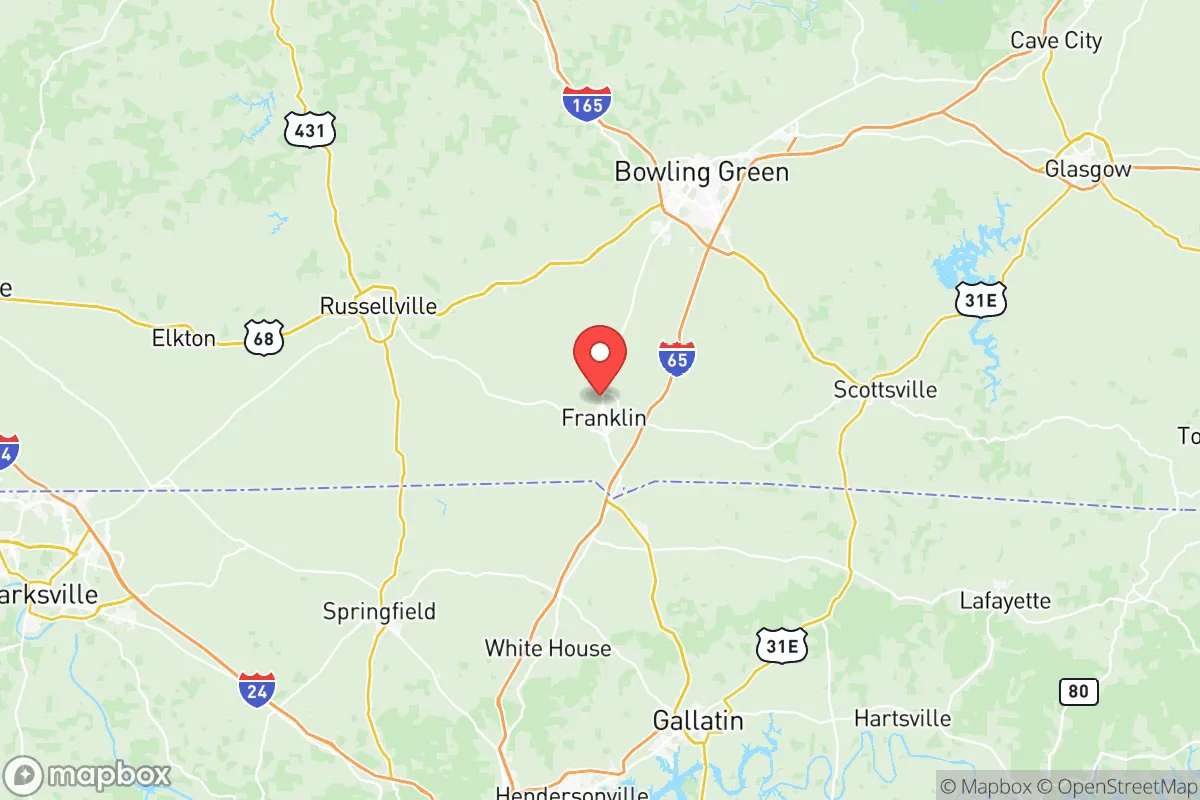
The cost-of-life spread across Simpson County is driven almost entirely by housing type and lot size. At the lower end, a small rental home or a starter house in Franklin’s older neighborhoods can be found for $800–$1,000 per month in rent or $150,000–$180,000 to purchase — well below the county median. At the upper end, a newer 3-bedroom home in a subdivision like Hunter’s Ridge or a custom-built house on 5–10 acres near Gold City or Prices Mill can run $280,000–$350,000, still far below the national median home price of roughly $420,000. Property taxes in Simpson County are among the lowest in Kentucky, with a rate of about $0.82 per $100 of assessed value, so the annual tax bill on a $200,000 home is roughly $1,640. The lifestyle trade-off is clear: Franklin offers sidewalks, a public library, a YMCA, and a downtown coffee shop, while rural areas offer quiet, land for gardening or livestock, and lower density — but require driving for every errand. The county’s location along I-65, with Bowling Green 20 minutes north and Nashville 50 minutes south, means even rural residents can access urban amenities within an hour.
Simpson County is best suited for people who want a low-cost, low-stress base in the South-Central Kentucky region and are comfortable making deliberate choices about convenience versus space. Families who prioritize short school commutes and walkable downtown activities will gravitate to Franklin. Retirees, remote workers, and hobby farmers who value acreage and quiet will find their niche in Gold City, Prices Mill, or Providence. The county’s affordability and short average commute make it a practical choice for workers employed in Bowling Green or even northern Tennessee, while its rural pockets preserve the agricultural character that defines the region.

Crime in Simpson County
Generally safer than 62% of comparable U.S. locations.
Violent CrimeViolent Crime Analysis
Property CrimeProperty Crime Analysis
Crime Analysis
Simpson County, Kentucky, presents a mixed safety picture for prospective residents. The county's violent crime rate of 212.6 incidents per 100,000 residents is notably lower than the national average, but its property crime rate of 1,275.5 per 100,000 is significantly higher than both state and national benchmarks. This divergence means that while the risk of violent assault or robbery is relatively contained, residents face a substantially elevated threat of theft, burglary, and vehicle break-ins, particularly in and around the county seat of Franklin.
Crime in context
To understand Simpson County's safety profile, it must be compared against broader Kentucky and U.S. figures. The county's violent crime rate of 212.6 per 100,000 is roughly 40% lower than the national average of approximately 380 per 100,000, and also below the Kentucky state average of around 240 per 100,000. This is a genuine positive, placing Simpson County in a safer tier for violent offenses like homicide and aggravated assault. However, the property crime rate of 1,275.5 per 100,000 is a stark contrast. It is roughly 25% higher than the national average of about 1,020 per 100,000 and significantly above the Kentucky state average of roughly 1,100 per 100,000. This elevated property crime rate is the primary safety concern for the county, driven largely by larceny-theft and motor vehicle theft, which are often concentrated in commercial and high-traffic areas.
What residents experience
Daily life in Simpson County is shaped by this property crime reality. Residents in Franklin, the county's largest city and commercial hub, frequently report issues with theft from vehicles and package theft, particularly in neighborhoods near the downtown square and along the Nashville Road corridor. The presence of Interstate 65, which runs directly through the county, contributes to transient property crime, as criminals can quickly move in and out. In contrast, the more rural communities like Gold City and Providence experience far fewer incidents, with violent crime being exceptionally rare. The Simpson County Sheriff's Office and the Franklin Police Department maintain a visible presence, but the sheer volume of property crime cases can strain resources. Residents are advised to practice routine security measures: locking vehicles, securing outbuildings, and using home security systems, especially in Franklin's more densely populated subdivisions.
Neighborhood-level variation and judicial concerns
Safety varies considerably within Simpson County. The safest areas are generally the unincorporated rural communities and the outer edges of Franklin, where lower population density naturally reduces crime opportunities. Conversely, the highest concentration of property crime occurs in Franklin's commercial zones, particularly around the South Main Street and West Cedar Street intersections, and in apartment complexes near the interstate exits. A critical factor for residents to consider is the local judicial philosophy. Simpson County is part Kentucky's 8th Judicial Circuit, and while the current Commonwealth's Attorney and District Judges are generally considered conservative in their sentencing, there is growing concern about the influence of progressive criminal justice reforms emanating from the state level in Frankfort. Progressive policies that prioritize diversion and reduced incarceration for property offenders can lead to a revolving-door effect, where repeat theft and burglary offenders are quickly returned to the streets. This directly undermines public safety and victim justice, as a lenient approach to property crime in Franklin can embolden criminals and increase the likelihood of becoming a victim. For those prioritizing safety, choosing a home in the quieter, rural portions of the county—away from Franklin's commercial core and the transient population of I-65—is a prudent strategy.
* Values derived from national, state, county, city and local statistics and may differ in a specific area. Last updated: 2026-06-17T07:52:02.000Z
Narrative content on this page is AI-generated and may contain mistakes. Verify any details that matter before acting on them.
ReloMaps may earn a commission from affiliate links at no extra cost to you.

