
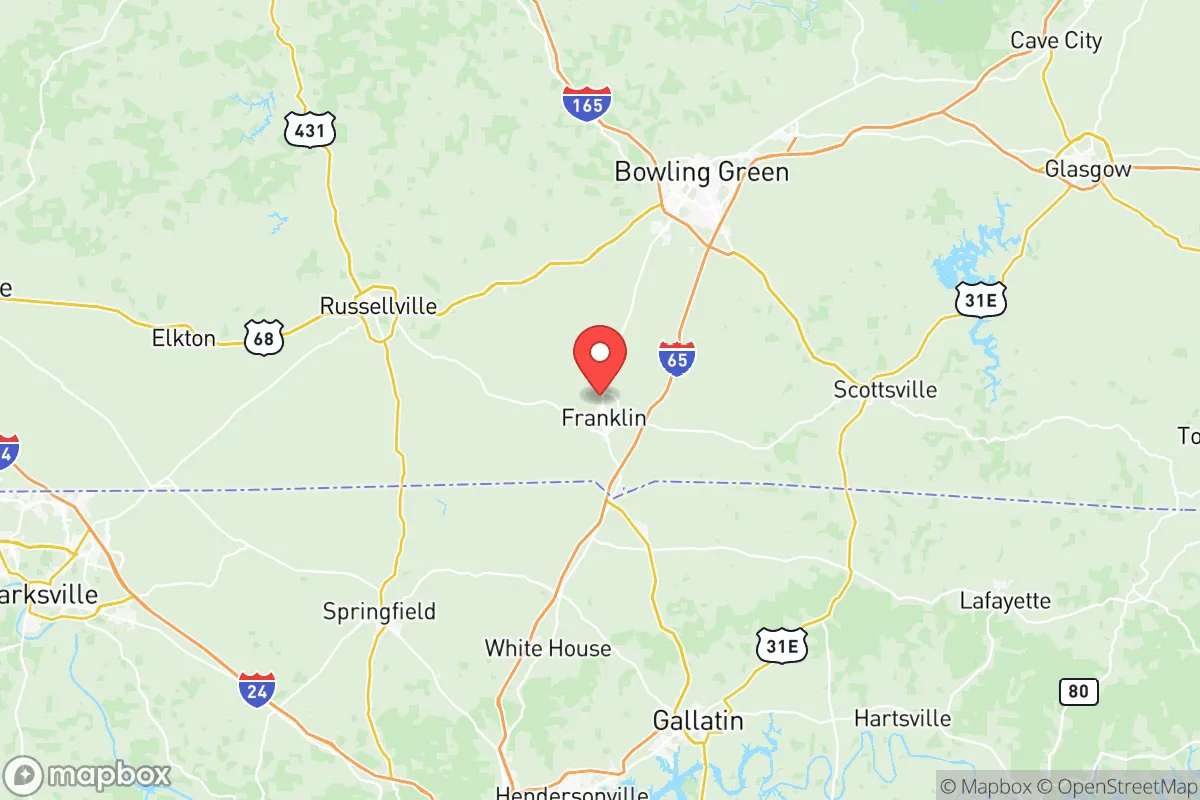
Photo: Wikipedia
Personal Sovereignty in Simpson County
Viable for self-reliance. Generally workable, though some barriers may limit total independence.
What does Personal Sovereignty tell us?
Personal Sovereignty measures your capacity for self-reliance and independence with minimal government friction. Higher scores mean fewer barriers between you and the way you want to live... but it assumes you have the space you need and good neighbors.
What does this tell us?
Personal Sovereignty measures your capacity for self-reliance and independence with minimal government friction. Higher scores mean fewer barriers between you and the way you want to live... but it assumes you have the space you need and good neighbors.
State Policy
Energy independence: Importer (60% of energy produced in-state)
Personal Liberty
Homesteading

Personal Liberty Analysis
Simpson County, Kentucky, offers a notably high degree of personal sovereignty, grounded in Kentucky’s strong constitutional protections for gun rights, parental authority, and property use, combined with a relatively light local regulatory touch. The county seat of Franklin, along with smaller communities like Gold City and Prices Lane, operates under a framework that prioritizes individual autonomy over government oversight, making it a compelling option for those seeking to minimize external control over daily life. While not as libertarian as some rural Western counties, Simpson County’s blend of low taxes, permissive zoning, and robust self-defense laws creates an environment where self-reliance is both feasible and culturally supported.
Tax burden and regulatory posture in Simpson County
Kentucky’s state-level tax structure is moderately favorable for personal sovereignty, with a flat individual income tax rate of 4.5% as of 2026, down from 5% in 2024, and a corporate income tax rate of 5%. Simpson County adds a local occupational tax of 1.5% on wages and net profits, which is standard for the region but still keeps the combined burden lower than in many neighboring states. Property taxes are notably light: the county’s real property tax rate is approximately $0.12 per $100 of assessed value, one of the lowest in Kentucky, meaning a $200,000 home carries an annual tax bill of roughly $240. The regulatory posture is similarly hands-off. Simpson County does not impose county-level building codes outside of state-mandated electrical and plumbing standards, and there are no local rent control or business licensing requirements beyond basic state registration. In Franklin, the only incorporated city, zoning is minimal, primarily focused on commercial corridors along U.S. 31-W and I-65, leaving most residential and agricultural land largely unregulated. This contrasts with more restrictive counties like Warren (Bowling Green) to the north, where urban growth boundaries and stricter codes apply.
Self-defense and gun law specifics in Simpson County
Kentucky is a constitutional carry state, meaning no permit is required to carry a concealed firearm for anyone legally allowed to possess one, and Simpson County fully aligns with this framework. The county sheriff’s office in Franklin issues concealed carry permits for reciprocity purposes, but the process is administrative, not discretionary. Stand-your-ground laws apply statewide, with no duty to retreat in any place where a person is lawfully present, and Kentucky’s Castle Doctrine explicitly covers vehicles and occupied structures. Local gun culture is strong: Simpson County has no local ordinances restricting firearm possession, and open carry is common in Franklin, Gold City, and rural areas. The county’s proximity to the Tennessee border means residents often cross into a state with similarly permissive laws, but Kentucky’s preemption statute prevents any city or county from enacting stricter gun regulations than state law, ensuring uniformity across Simpson County. For those prioritizing self-defense, the area offers one of the most permissive legal environments in the South, with no waiting periods, no magazine capacity limits, and no firearm registration requirements.
Self-reliance and homesteading viability in Simpson County
Homesteading and off-grid living are highly viable in Simpson County, particularly outside the Franklin city limits. Agricultural zoning applies to most of the county’s 236 square miles, with minimum lot sizes of 5 acres for agricultural use and 1 acre for rural residential parcels in unincorporated areas. In communities like Neoshe and Middleton, properties with 10–20 acres are common and affordable, with land prices averaging $4,000–$6,000 per acre as of 2025. Off-grid feasibility is strong: Kentucky has no statewide ban on rainwater collection, and Simpson County does not restrict solar panel installation or composting toilets. The county health department requires septic system permits, but these are straightforward for standard gravity-fed systems. Livestock ordinances are minimal—chickens, goats, and even cattle are allowed on parcels over 2 acres without special permits. Franklin’s city limits are more restrictive, with a 1-acre minimum for livestock and a ban on outdoor wood boilers, but these rules do not apply in the county’s rural areas. For those seeking true self-reliance, the area around Gold City and Prices Lane offers the best combination of low land costs, minimal regulation, and access to Franklin’s hardware stores and feed suppliers.
Personal liberties in Simpson County: parental rights, medical autonomy, speech, and property
Kentucky law provides strong protections for parental rights, including a 2023 law requiring school districts to notify parents of any changes to a student’s health or mental health services, and a 2024 law prohibiting instruction on sexual orientation or gender identity in K-12 classrooms. Simpson County Schools in Franklin adhere to these statutes, and the district’s conservative board has resisted any local deviations. Medical autonomy is mixed: Kentucky has no state-level vaccine mandate for adults, and COVID-19-era restrictions were lifted early in 2021, but the state does require certain childhood immunizations for school attendance, with only medical exemptions allowed. Telehealth and direct-primary-care arrangements are legal and growing, with several providers in Franklin offering subscription-based services. Free speech is protected under Kentucky’s broad anti-SLAPP statute, and Simpson County has no local noise or sign ordinances that would restrict political or religious expression. Property rights are robust: Kentucky’s right-to-farm law protects agricultural operations from nuisance lawsuits, and Simpson County does not enforce any form of rent control or short-term rental bans outside of Franklin’s limited zoning. The county’s approach to property is best described as permissive, with no county-level tree preservation, historic district, or wetland overlay regulations that would limit land use.
Overall, Simpson County ranks among the more sovereignty-friendly areas in Kentucky, comparable to counties like Hart or Edmonson but with better access to infrastructure via I-65. The combination of constitutional carry, low property taxes, minimal zoning outside Franklin, and strong parental rights creates an environment where personal autonomy is the default, not the exception. For individuals and families who prioritize self-reliance and minimal government interference, Simpson County offers a practical balance of freedom and accessibility, without the extreme isolation or regulatory voids found in some Western states.

* Values derived from national, state, county, city and local statistics and may differ in a specific area. Last updated: 2026-06-17T07:52:02.000Z
Narrative content on this page is AI-generated and may contain mistakes. Verify any details that matter before acting on them.
ReloMaps may earn a commission from affiliate links at no extra cost to you.

