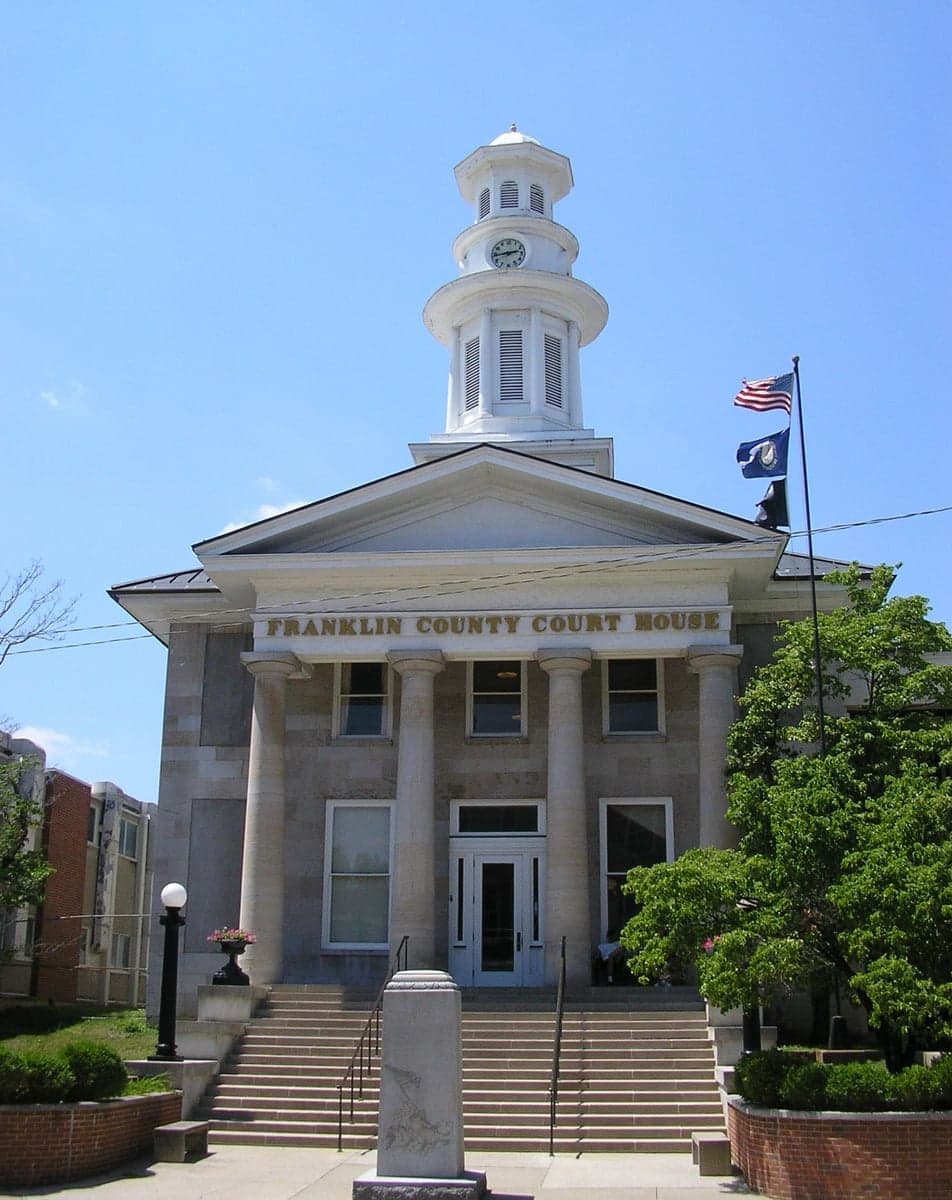
Photo: Wikipedia
Quality of Life in Franklin County
A livable area that tracks near national norms for affordability, walkability, and neighborhood health.
What does Quality of Life tell us?
Quality of Life measures an area by evaluating factors like cost of living, nearby amenities, country club access, airport proximity, socioeconomic signals and neighborhood character. For large states, this is a general average — quality of life can vary dramatically between metro areas, suburbs, and rural communities within the same state.
What does this tell us?
Quality of Life measures an area by evaluating factors like cost of living, nearby amenities, country club access, airport proximity, socioeconomic signals and neighborhood character. For large states, this is a general average — quality of life can vary dramatically between metro areas, suburbs, and rural communities within the same state.
Cost of Living
23% below national average
117%
The Real Cost of Living in Franklin County for 2026
| Tier | Individual | Family (4) |
|---|---|---|
| Survival | $15k | $28k |
| Comfortable | $39k | $57k |
| Luxury | $120k+ | $186k+ |
| Elite (Top 5%) | $146k+ | $226k+ |
Quality-of-Life Analysis
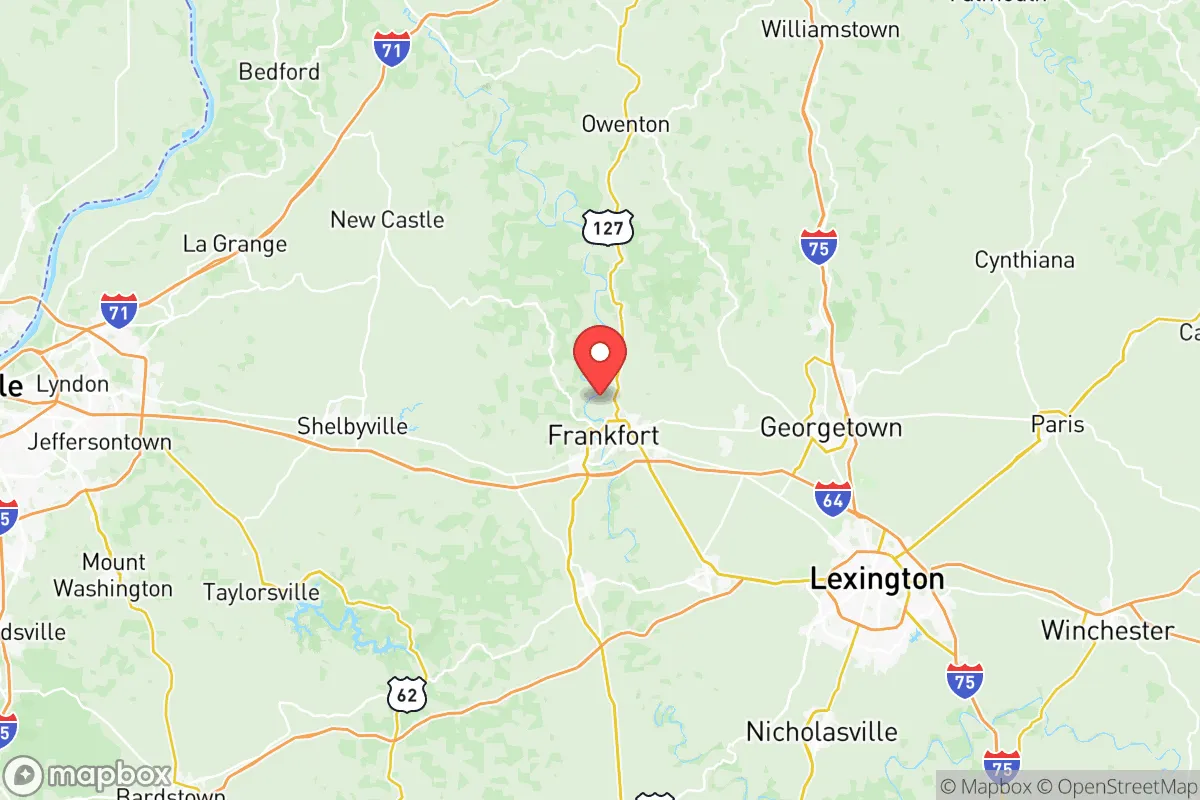
Franklin County, Kentucky, offers a broad quality-of-life spectrum that ranges from the historic, walkable core of its seat, Frankfort, to quiet unincorporated crossroads and working farmland. The county draws state government professionals and retirees to its capital city, while families seeking lower land costs and commuters willing to drive 20 minutes to Lexington or Louisville gravitate toward the smaller communities and rural pockets. With a cost-of-living index of 77 — 23 percent below the national average — the county provides markedly different lifestyles within a compact geography.
Largest town(s) & population centers
Frankfort, the state capital and the county's only city of significant size, anchors daily life for roughly 28,000 residents. The downtown area, centered around the Kentucky State Capitol and the historic Old State Capitol, features a mix of government offices, local restaurants, and a growing craft beverage scene along the Kentucky River. The median home value in Frankfort sits at $198,700, and the median rent is $946, making it one of the more affordable state capitals in the nation. Residents here enjoy a walkable core, the 12-mile Capital City Riverwalk, and a calendar of events tied to the legislative session and local festivals. The average commute across the county is just under 20 minutes, but Frankfort residents often have the shortest trips, with many working within a few miles of home at state agencies, Franklin County Public Schools, or major employers like the Kentucky Lottery Corporation and the state's Cabinet for Health and Family Services.
Smaller towns & rural pockets
Outside Frankfort, the county's smaller communities offer a distinctly quieter pace. Bridgetown, a small unincorporated area along US-127, serves as a bedroom community with a handful of local businesses and quick access to Frankfort's amenities. Jett, located near the Shelby County line, is a rural crossroads with scattered homes and farmland, popular among those who want acreage without being completely isolated. Switzer, in the county's northern section, is another unincorporated hamlet where residents are drawn to the low property taxes and the ability to reach Frankfort in 15 minutes. These areas lack municipal services like public water and sewer in many spots, but they offer larger lots, lower home prices — often under $150,000 for a fixer-upper — and a strong sense of neighborly self-reliance. The county's rural character is preserved by the Franklin County Agricultural District, which encourages farming and limits subdivision development in designated areas.
Cost & lifestyle range
The cost-of-living spread across Franklin County is narrower than in many metro areas, but real differences exist. At the higher end, Frankfort's historic districts — such as South Frankfort and West Frankfort — feature restored Victorian and Craftsman homes priced between $250,000 and $400,000, with walkable access to downtown restaurants, the riverfront, and the Capital City Museum. At the lower end, rural areas like Benson and Peaks Mill offer homes on one to five acres for $120,000 to $180,000, though these properties often require a well and septic system. Renters pay a countywide median of $946, but in Frankfort's newer apartment complexes near the US-127 bypass, two-bedroom units can reach $1,100, while rural rentals are scarce and typically older. The county's overall COL index of 77 means groceries, healthcare, and utilities are all below national averages, but the trade-off in rural areas is limited access to public transit, grocery stores, and high-speed internet — though fiber-optic service is expanding through the Frankfort Plant Board in the city and some outlying areas.
Franklin County best suits people who value a short commute, historic character, and a mix of urban and rural options within a single county. State employees, remote workers, and retirees who want to be near Frankfort's cultural amenities but can afford a house on a half-acre lot will find the county's middle ground appealing. Those who prioritize absolute quiet and land for gardening or livestock will prefer the unincorporated areas like Switzer or Jett, while anyone seeking a true small-city lifestyle with restaurants, museums, and a walkable downtown will be happiest in Frankfort's historic core. The county's diversity of settings — all within a 20-minute drive of the capital — makes it a practical choice for a wide range of budgets and preferences.

Crime in Franklin County
Generally safer than 62% of comparable U.S. locations.
Violent CrimeViolent Crime Analysis
Property CrimeProperty Crime Analysis
Crime Analysis
Franklin County, Kentucky, anchored by the state capital of Frankfort, presents a mixed safety profile where property crime rates significantly exceed national averages while violent crime remains below the U.S. median. The county's 2024 reported violent crime rate of 213.8 per 100,000 residents is roughly 40% lower than the national average, but its property crime rate of 1,279.9 per 100,000 runs about 15% higher than the U.S. figure. This divergence reflects the unique pressures of a small capital city with a transient government workforce, a historic downtown, and a growing number of rental properties.
Crime in context
When compared to Kentucky's statewide averages, Franklin County's violent crime rate is slightly below the state's 2023 figure of approximately 230 per 100,000, while property crime is notably higher than the state's 1,100 per 100,000. The county's crime profile is heavily influenced by Frankfort, which accounts for the vast majority of reported incidents. Neighboring communities like Bridgeport and Forks of Elkhorn report far fewer incidents per capita, largely due to their rural, low-density character. The disparity is most pronounced in property crimes: larceny-theft and motor vehicle theft are the primary drivers, with Frankfort's downtown and commercial corridors along U.S. 127 and U.S. 60 seeing the highest concentrations of theft from vehicles and shoplifting. The county's clearance rate for violent crime hovers around 55%, slightly above the national average, but property crime clearance rates are lower, reflecting the difficulty of investigating non-violent offenses in a jurisdiction with limited detective resources.
What residents experience
For residents, the day-to-day safety experience varies sharply by neighborhood. The historic districts near the Kentucky State Capitol and the Kentucky River are generally considered safe, with low violent crime and a visible police presence. However, areas along Versailles Road and East Main Street in Frankfort report higher rates of car break-ins and package thefts. The Franklin County Sheriff's Office and Frankfort Police Department have both adopted community policing models, but staffing levels remain a concern—the county has roughly 1.8 officers per 1,000 residents, below the national average of 2.3. Residents in the Briarwood and South Frankfort neighborhoods frequently cite property crime as their top concern in community surveys, while violent incidents are rare and typically involve domestic disputes or isolated altercations. The county's judicial system, overseen by the Franklin County Commonwealth's Attorney, has been criticized by some residents for a perceived leniency in plea bargaining for property offenders, a concern that echoes broader frustrations with progressive prosecutorial policies in capital cities. This approach, while aimed at reducing incarceration rates, can result in repeat property offenders cycling through the system, undermining the sense of security for victims and the public.
Neighborhood-level variation
Neighborhood-level data reveals clear patterns. The safest areas in Franklin County are the rural communities of Jett and Polsgrove, where violent crime is virtually nonexistent and property crime is limited to occasional farm equipment theft. In contrast, the West Frankfort area, particularly near the intersection of Wilkinson Boulevard and West Main Street, sees the highest concentration of reported incidents, including aggravated assaults and thefts. The county's three school resource officers provide a visible deterrent in school zones, but the lack of a dedicated transit police force means that crime on public buses and at transit stops is underreported. For prospective residents, the key takeaway is that Franklin County offers a generally safe environment for families and professionals, but vigilance against property crime—especially in Frankfort's denser neighborhoods—is essential. The county's crime trends are stable, with no significant year-over-year spikes, but the underlying property crime rate remains a persistent concern that local authorities have yet to fully address.
* Values derived from national, state, county, city and local statistics and may differ in a specific area. Last updated: 2026-07-18T06:34:46.000Z
Narrative content on this page is AI-generated and may contain mistakes. Verify any details that matter before acting on them.
ReloMaps may earn a commission from affiliate links at no extra cost to you.

