
Photo: Wikipedia
Personal Sovereignty in Boyd County
Viable for self-reliance. Generally workable, though some barriers may limit total independence.
What does Personal Sovereignty tell us?
Personal Sovereignty measures your capacity for self-reliance and independence with minimal government friction. Higher scores mean fewer barriers between you and the way you want to live... but it assumes you have the space you need and good neighbors.
What does this tell us?
Personal Sovereignty measures your capacity for self-reliance and independence with minimal government friction. Higher scores mean fewer barriers between you and the way you want to live... but it assumes you have the space you need and good neighbors.
State Policy
Energy independence: Importer (60% of energy produced in-state)
Personal Liberty
Homesteading

Personal Liberty Analysis
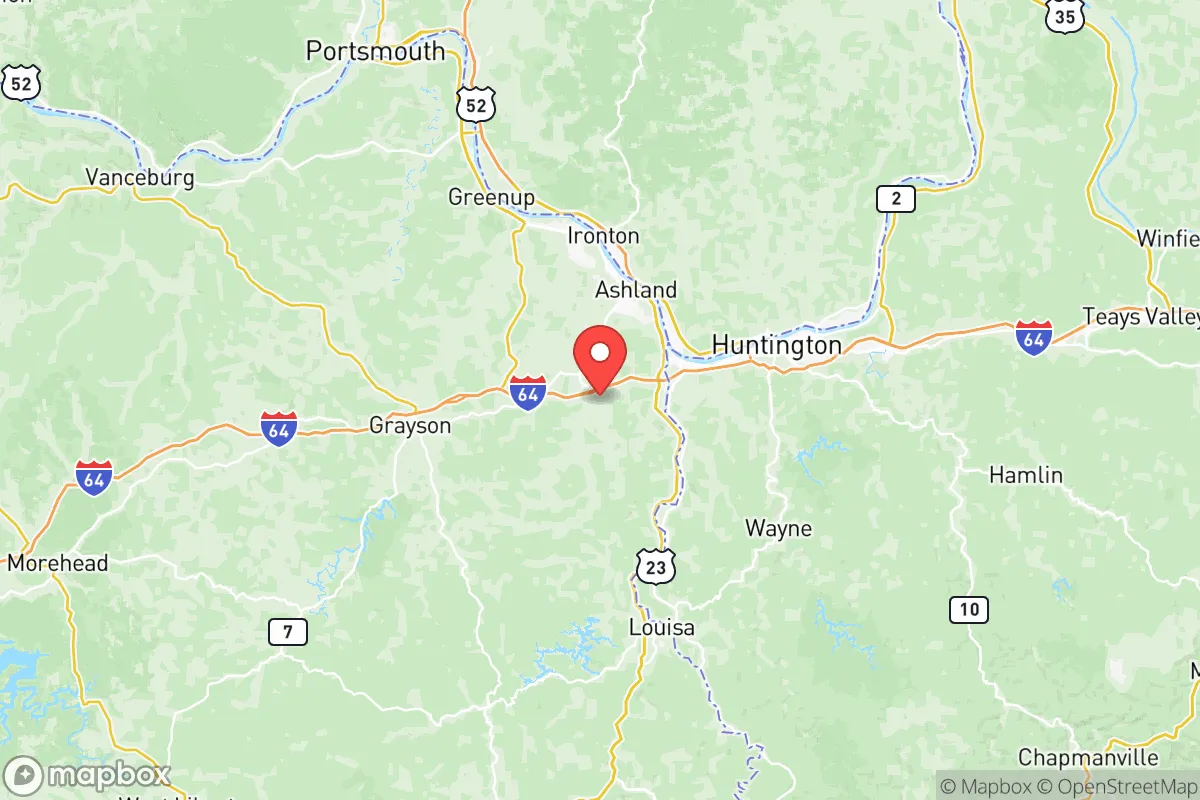
Boyd County, Kentucky, offers a notably high degree of personal sovereignty, grounded in Kentucky’s strong constitutional protections for gun rights, minimal statewide land-use regulation, and a tax structure that favors individual financial autonomy. While the county is not entirely free of regulation—state-level building codes apply in some areas, and local zoning exists in the city of Ashland—the overall environment leans heavily toward self-reliance, with few barriers to homesteading, off-grid living, or exercising personal liberties. For individuals and families who prioritize freedom from government overreach, Boyd County presents a compelling option, especially when compared to more heavily regulated urban centers in states like California or New York.
Tax burden and regulatory posture in Boyd County
Kentucky’s state-level tax burden is moderate, but Boyd County’s local structure keeps the overall load manageable for most residents. The state imposes a flat 4.5% individual income tax (as of 2026) and a 6% sales tax, with no local sales tax add-ons in Boyd County. Property taxes are low: the county’s real property tax rate is approximately $0.12 per $100 of assessed value, plus a small school tax of around $0.50 per $100, yielding an effective rate near 0.6%—well below the national average. The city of Ashland adds its own property tax of about $0.25 per $100, so residents inside city limits pay slightly more, but still less than in most suburban areas nationwide. Regulatory posture is light-touch: no county-wide zoning exists outside Ashland and the smaller city of Catlettsburg, meaning rural parcels in areas like Rush or Westwood are largely free from use restrictions. Kentucky’s right-to-work law and absence of state-level rent control further reduce regulatory friction for property owners and small businesses. The state does enforce building codes in incorporated areas, but unincorporated Boyd County—covering most of the landmass—has no mandatory county-wide building permit requirement, giving homeowners significant latitude in construction and renovation.
Self-defense and gun law specifics in Boyd County
Kentucky is a constitutional carry state, meaning no permit is required to carry a concealed firearm for anyone 21 or older who is legally allowed to possess a gun. Boyd County fully aligns with this framework: the sheriff’s office in Catlettsburg issues concealed carry permits for reciprocity purposes, but they are optional. The state also has a strong "Stand Your Ground" law, codified in KRS 503.080, which removes any duty to retreat before using deadly force in self-defense, both inside and outside the home. Castle Doctrine protections are similarly robust, covering occupied vehicles and places of work. Local gun culture is deeply ingrained; Ashland has multiple gun shops and ranges, including the Ashland Indoor Shooting Range, and firearm ownership is common across all parts of the county, from the more urbanized Ashland to rural areas like Cannonsburg and Coalton. There are no county-level firearm restrictions beyond state law, and no local ordinances banning open carry. For a relocation reader concerned with self-defense rights, Boyd County offers one of the most permissive legal environments in the eastern United States.
Self-reliance and homesteading viability in Boyd County
Homesteading and off-grid living are highly feasible in Boyd County, particularly outside its incorporated cities. Unincorporated areas—such as the communities of Princess, Kavanaugh, and Durbin—have no county-wide zoning, meaning residents can keep livestock, build sheds or barns, and install alternative energy systems without permits. Minimum lot sizes vary: in unincorporated areas, there is no county-mandated minimum, but state health department rules require at least one acre for a septic system, effectively setting a practical floor of one acre for off-grid homes. In Ashland and Catlettsburg, lot sizes are governed by city zoning, typically requiring 6,000 to 10,000 square feet for single-family homes, which still allows modest homesteading. Off-grid feasibility is strong: Kentucky has no state law prohibiting rainwater collection, and Boyd County does not restrict solar panel installation. The county’s rural electric cooperative, Big Sandy RECC, has net metering policies that allow grid-tied solar, but going fully off-grid is legal and straightforward. Water access is generally via private wells in rural areas, with no county-level water use restrictions. For a family wanting to raise chickens, grow vegetables, and generate their own power, areas like Rush or the outskirts of Westwood offer affordable land—typically $3,000–$6,000 per acre—with minimal bureaucratic hurdles.
Personal liberties in Boyd County: parental rights, medical autonomy, speech, and property
Kentucky law provides strong protections for parental rights, including a 2021 law (HB 563) that affirms parents’ "fundamental right" to direct the upbringing, education, and healthcare of their children. Boyd County public schools, including Boyd County High School in Summit, generally defer to parental authority on medical decisions and curriculum opt-outs, though specific policies vary by school. Medical autonomy is more limited: Kentucky has strict abortion laws (near-total ban with narrow exceptions), and vaccine mandates are not enforced at the county level. Freedom of speech is robust, with no local hate speech ordinances or content-based restrictions beyond state obscenity laws. Property rights are well-protected: eminent domain is rarely used for private development, and the county’s lack of zoning in unincorporated areas means landowners have broad discretion over use. The Boyd County Fiscal Court, which governs the county, has a conservative majority and has historically opposed new regulatory measures. For a reader prioritizing personal liberties, Boyd County’s environment is permissive on most fronts, though medical autonomy is constrained by state law—a factor that may matter depending on individual healthcare priorities.
Overall, Boyd County ranks among the more sovereignty-friendly areas in Kentucky, especially when compared to the more regulated urban counties like Fayette (Lexington) or Jefferson (Louisville). The combination of constitutional carry, low taxes, minimal land-use regulation, and strong parental rights creates an environment where individuals and families can exercise significant control over their lives. For those seeking a balance between rural self-reliance and access to regional amenities—Ashland provides hospitals, shopping, and employment—Boyd County offers a practical, freedom-oriented relocation option that is hard to beat in the eastern Kentucky region.

* Values derived from national, state, county, city and local statistics and may differ in a specific area. Last updated: 2026-06-15T09:35:03.000Z
Narrative content on this page is AI-generated and may contain mistakes. Verify any details that matter before acting on them.
ReloMaps may earn a commission from affiliate links at no extra cost to you.

