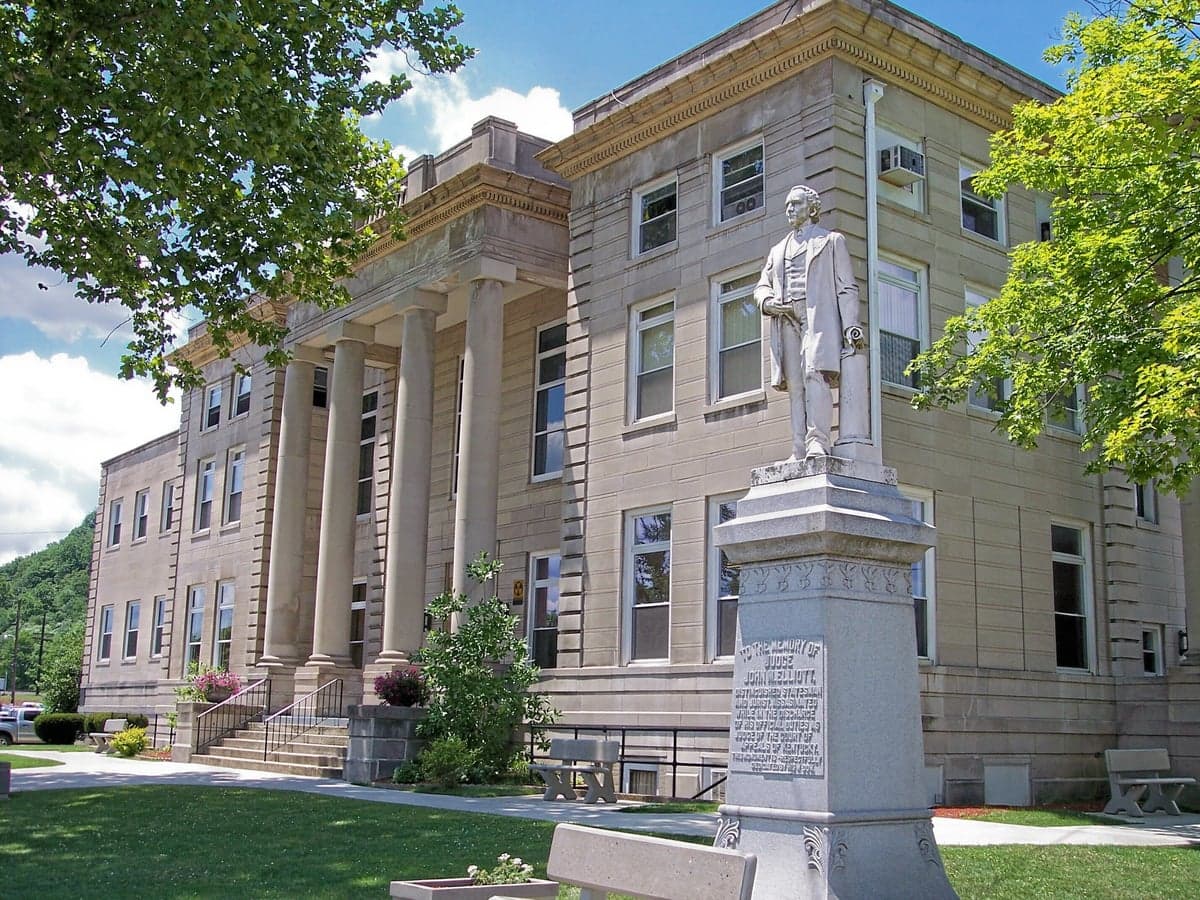
Photo: Wikipedia
Demographics of Boyd County
Affluence Level in Boyd County
A below-average socioeconomic profile. Incomes, home values, and educational attainment trail the U.S., with higher poverty and unemployment.
People of Boyd County
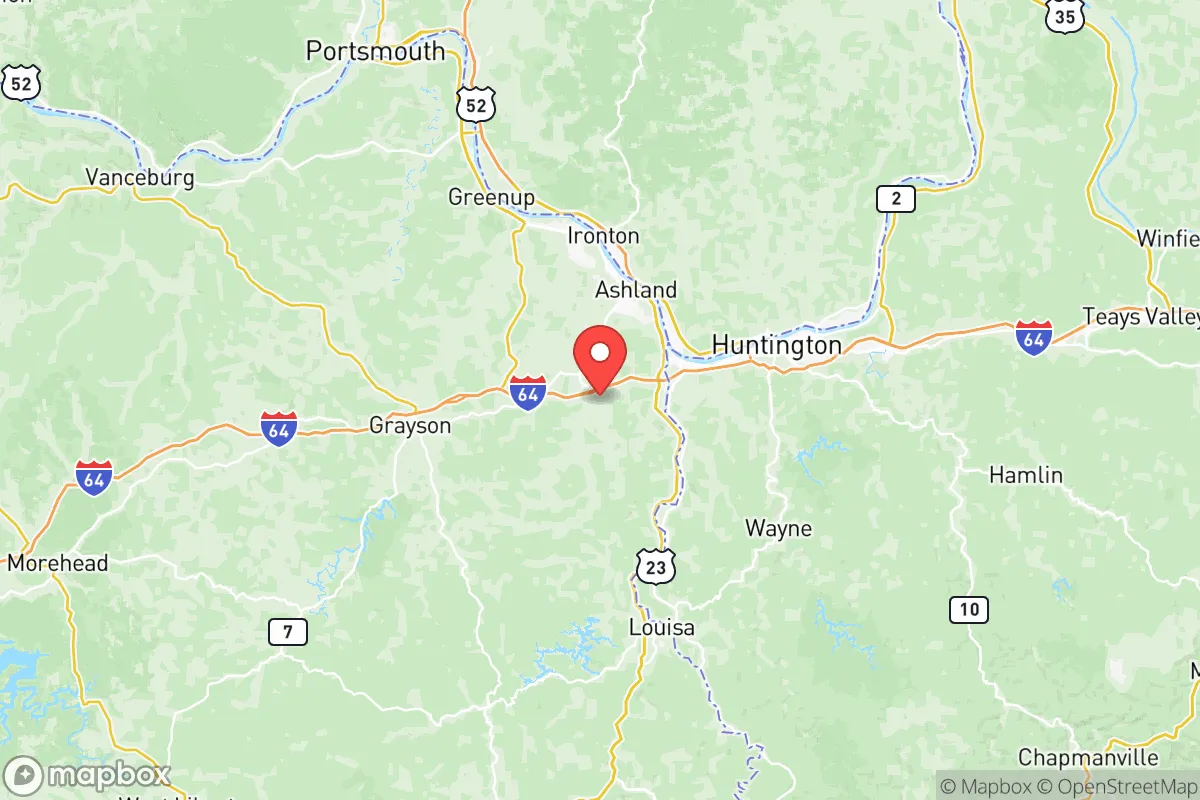
Boyd County, Kentucky, is a predominantly white, working-class community of 48,043 residents, anchored by the Ohio River city of Ashland and the smaller towns of Catlettsburg and Westwood. The county’s population is notably homogenous — 92.4% white, with a foreign-born share of just 0.6% — and its identity is deeply rooted in Appalachian industrial history, coal, and rail. With only 19.4% of adults holding a college degree, the county reflects a blue-collar, family-oriented culture that prizes self-reliance and local tradition, though it faces the demographic challenges of an aging population and limited in-migration.
Settlement & growth (pre-1960)
Long before European settlers arrived, the area that is now Boyd County was part of the hunting grounds of the Shawnee and Cherokee nations, who used the Ohio River corridor for travel and trade. The first permanent European-American settlers came in the late 18th and early 19th centuries, primarily Scots-Irish and English migrants pushing westward through the Cumberland Gap. These early families — names like Poage, Mayo, and Hood — established farms and small river landings along the Big Sandy River and the Ohio, with the first county seat at Catlettsburg (founded 1810) serving as a key river port for flatboat traffic.
The county’s population exploded after the Civil War, driven by the arrival of the Chesapeake and Ohio Railway in the 1870s and the discovery of rich iron ore and coal deposits. Ashland, incorporated in 1854, became the industrial heart of the region, drawing waves of European immigrants — primarily Germans, Irish, and Italians — who worked in the iron furnaces, steel mills, and railroad yards. By 1900, Ashland’s population had surged past 6,000, and the city’s West End and South Ashland neighborhoods became enclaves for these immigrant laborers. A smaller but notable wave of Hungarian and Polish immigrants arrived in the 1910s and 1920s, settling in the working-class districts near the Armco steel plant (later AK Steel).
African Americans also moved into Boyd County during the Great Migration (1910–1940), drawn by industrial jobs in Ashland’s mills and foundries. By 1930, Black residents made up roughly 8% of the county’s population, concentrated in Ashland’s “Bottom” neighborhood along the river and in the Fairview area near Catlettsburg. However, the post-World War II era saw a steady outmigration of Black families to Northern industrial cities, and the county’s Black share declined to 2.1% by 2020. The rural areas of Boyd County — including the unincorporated communities of Princess, Burnaugh, and Kavanaugh — remained overwhelmingly white and agricultural, with small family farms and timber operations sustaining a sparse population.
Modern era (post-1965)
The 1965 Hart-Cellar Act had minimal impact on Boyd County. Unlike metropolitan areas that saw surges of Asian, Hispanic, and Indian immigration, Boyd County’s foreign-born population remained negligible — just 0.6% today. The county’s demographic story since 1965 is instead one of domestic stagnation and selective outmigration. The decline of heavy industry — the Armco steel mill shed thousands of jobs in the 1980s and 1990s, and coal mining contracted sharply after 2000 — triggered a slow population bleed. Boyd County’s peak population of 52,376 in 1980 has since fallen by over 8%, with young adults leaving for Lexington, Louisville, or Charlotte in search of white-collar work.
The county’s Hispanic population, at 1.7%, is small but growing, driven by a modest influx of Mexican and Central American workers in construction, landscaping, and poultry processing. These families have settled primarily in Ashland’s eastern neighborhoods and in the more affordable rural areas around Rush and Cannonsburg. East/Southeast Asian residents (0.3%) are almost entirely concentrated in Ashland, many connected to the small medical and engineering sectors at King’s Daughters Medical Center and local manufacturing firms. The Indian-subcontinent population is effectively zero, reflecting the county’s lack of the tech or academic sectors that draw South Asian professionals elsewhere.
Suburbanization within Boyd County has been limited but real. Since the 1990s, middle-class families have moved from Ashland’s older city neighborhoods into newer subdivisions in Westwood, Cannonsburg, and the area around Boyd County High School. These developments are predominantly white and car-dependent, with few amenities beyond strip malls and chain restaurants. The county’s rural character remains strong: nearly 40% of residents live in unincorporated areas, and the small towns of Catlettsburg (population 1,700) and Westwood (population 4,500) retain a quiet, small-town feel.
The future
Boyd County’s population is projected to continue its slow decline, with the U.S. Census Bureau estimating a loss of 3-5% over the next decade. The county is aging — the median age is 43, well above the national average — and the outmigration of young adults shows no sign of reversing. Diversity will increase only marginally: the Hispanic share may reach 3-4% by 2035, driven by natural increase and continued labor migration, but the county will remain overwhelmingly white. The Black population is stable at around 2%, with no significant in-migration expected.
New residents are most likely to be retirees or remote workers seeking low housing costs and a slower pace of life. Ashland’s recent downtown revitalization — including the Paramount Arts Center and riverfront trails — may attract a small number of creative-class newcomers, but the county lacks the job base to draw significant domestic migration. The cultural identity of Boyd County is likely to remain conservative, churchgoing, and rooted in Appalachian traditions, with little pressure from the demographic changes reshaping much of the rest of the country.
For someone moving in now, Boyd County offers a stable, affordable, and culturally cohesive environment — but one with limited economic opportunity and little demographic change on the horizon. It is a place where the past still shapes the present, and where the population story is less about new arrivals than about the quiet persistence of the families who have been here for generations.

* Values derived from national, state, county, city and local statistics and may differ in a specific area. Last updated: 2026-06-15T09:35:03.000Z
Narrative content on this page is AI-generated and may contain mistakes. Verify any details that matter before acting on them.
ReloMaps may earn a commission from affiliate links at no extra cost to you.

