Photo: Wikipedia
Political ClimatePolitical Climate in Kennebunk, ME
District shown is the primary district for this city’s centroid. Cities may span multiple districts.
Local Political AnalysisPolitical Analysis of Kennebunk, ME
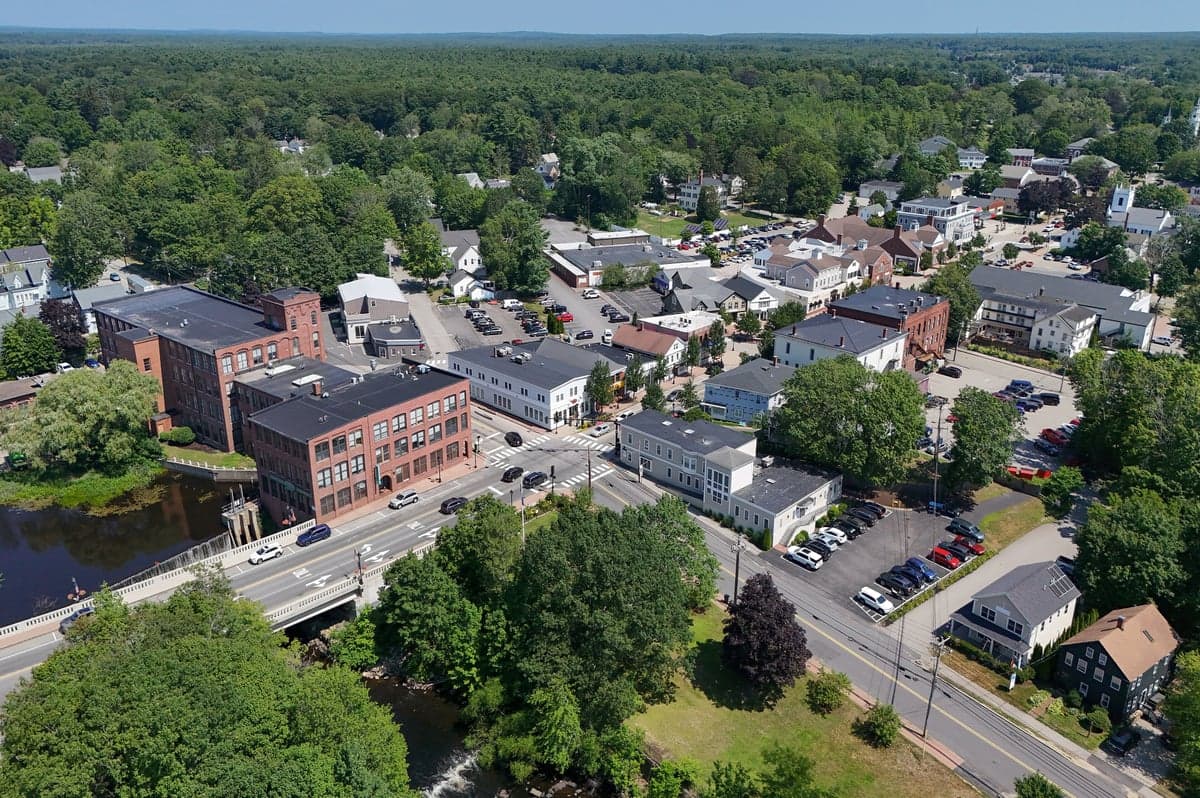
Kennebunk has shifted noticeably leftward over the past decade, now carrying a Cook PVI of D+11, meaning it votes about 11 points more Democratic than the national average. That’s a real change from the 2000s, when the town was more of a swing area—you’d see a fair number of Republican yard signs mixed in with the Democrats. Today, the local Democratic committee is more active, and the town’s presidential vote has consistently gone blue by double digits since 2016. That said, it’s not a monolith; you still get plenty of independent and conservative voices, especially in the outer parts of town and among the older fishing and farming families who’ve been here for generations.
How it compares
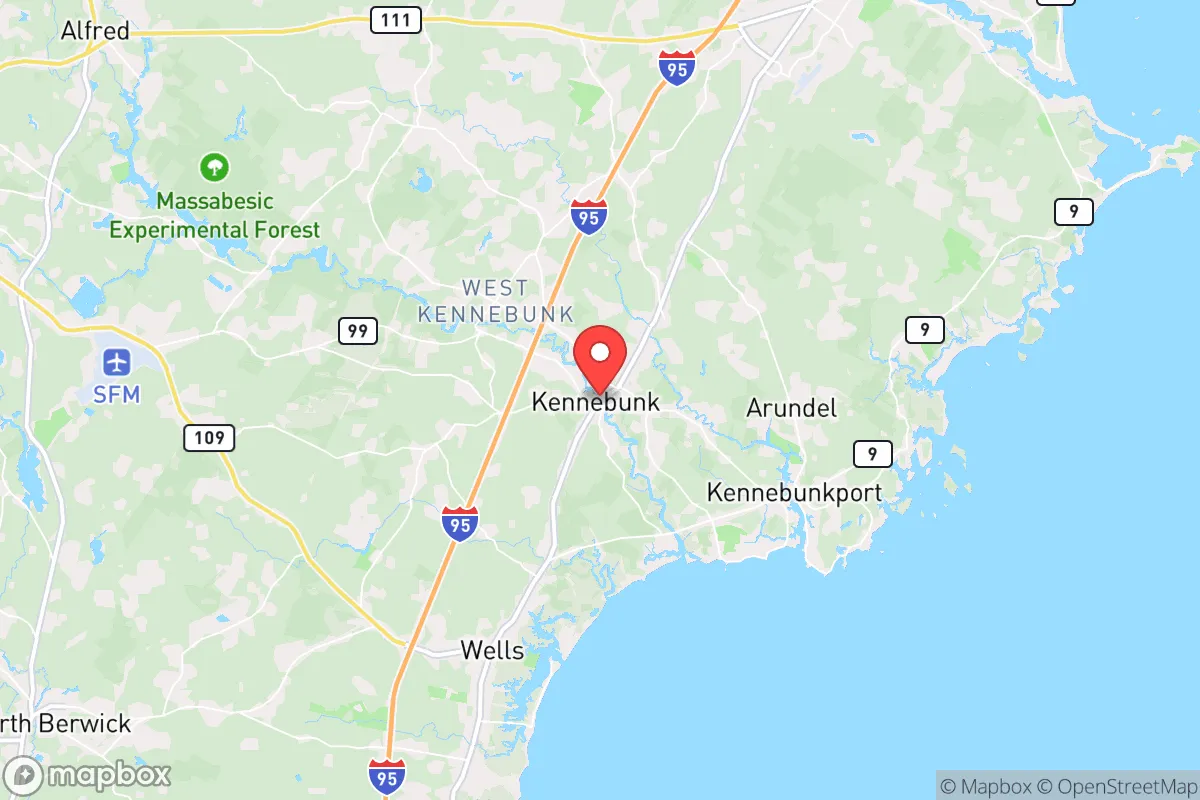
Compared to the rest of Maine, Kennebunk is notably more liberal. The state as a whole is famously independent—Maine hasn’t had a Cook PVI calculated for its statewide average, but it’s generally considered a lean-blue state with a strong libertarian streak. Kennebunk’s D+11 puts it to the left of the state’s median, more in line with Portland and South Portland than with rural York County towns like Sanford or Alfred. Drive 15 minutes inland to Lyman or Waterboro, and you’ll find a much more conservative electorate—those areas voted heavily for Trump in 2020 and 2024. Even within Kennebunk’s own borders, the coastal neighborhoods near Kennebunk Beach tend to be the most Democratic, while the more rural western side near the town line with Lyman leans redder. The contrast with nearby Kennebunkport is also worth noting: Kennebunkport, home to the Bush family compound, has a similar coastal-liberal tilt but with a slightly higher number of old-guard Republicans who still vote for moderate GOP candidates.
What this means for residents
For liberal residents, Kennebunk feels like a comfortable place to be politically active—town council meetings, school board elections, and local ballot initiatives tend to reflect progressive priorities, like climate resilience planning and affordable housing measures. Conservative residents aren’t shut out, but they often feel like a minority in local politics. They tend to focus their energy on state-level races and the occasional local budget fight, where fiscal conservatism still has some pull. The practical effect is that Kennebunk’s town government leans center-left, but it’s not radical—zoning debates and tax rates are still the main topics, not culture-war flashpoints. Both sides generally coexist without the kind of open hostility you see in more polarized suburbs. The town’s independent streak means a lot of people vote split-ticket: you’ll meet a neighbor who voted for Biden but also supports Susan Collins, or who leans left on social issues but wants lower property taxes.
Culturally, Kennebunk’s political lean shows up in its support for environmental initiatives—the town has a robust recycling program and a climate action committee—and in its willingness to fund schools and libraries. But it’s not a place where you’ll see a lot of overt political messaging. The biggest policy distinction from more conservative parts of Maine is probably the town’s approach to development: Kennebunk has stricter zoning and more public input requirements, which can frustrate builders and small-business owners who feel the process is too slow. For a long-time resident like me, the trajectory feels steady—Kennebunk isn’t going to flip red anytime soon, but it’s also not becoming Portland. The political center of gravity here is pragmatic, with a coastal-liberal flavor that still respects the old Yankee tradition of minding your own business.

State Political ClimatePolitical Climate in Maine
State Political AnalysisPolitical Environment in the State
Maine has a reputation as a swing state, but in practice it's a deeply split place with a moderate-to-liberal coast and a conservative interior. Over the last 20 years, the state has shifted leftward at the presidential level—voting for Democrats in every election since 1992 except 2000—but it remains one of the few states that splits its electoral votes by congressional district. The 2nd Congressional District, which covers the vast, rural northern and western parts of the state, has voted for Trump twice and is a genuine battleground. The 1st District, anchored by Portland and the southern coast, is reliably blue. This split means that a conservative relocating to Maine will have a very different experience depending on whether they land in Portland or Presque Isle.
Urban vs. rural divide
The political map of Maine is essentially a story of two regions. The southern coastal corridor—from Kittery up through Portland and Brunswick to Belfast—is the engine of the state's Democratic vote. These areas have seen significant in-migration from Massachusetts and New York, which has reinforced their liberal lean on social issues and environmental policy. In contrast, the vast 2nd District is a mix of old mill towns, working-class fishing communities, and deep-woods homesteaders. Counties like Aroostook, Somerset, and Franklin are reliably Republican at the local level, though they have a strong independent streak—Maine has more registered unenrolled voters than Democrats or Republicans. The city of Bangor is a bellwether: it leans Democratic but is surrounded by conservative towns, making it a microcosm of the state's split. Lewiston, the second-largest city, has a large Somali immigrant population that has shifted its politics leftward, while nearby Auburn remains more conservative. The rural-urban divide here is as sharp as anywhere in New England, and it shows up in everything from school funding debates to gun laws.
Policy environment
Maine's state-level policy is a mix of New England progressivism and Yankee fiscal conservatism. The state has no sales tax on most goods, but it has high property taxes—among the highest in the nation—which is a major pain point for homeowners. Income tax rates are moderate, with a top marginal rate of 7.15%. The regulatory environment is generally business-friendly for small operations but can be burdensome for larger developments, especially in coastal zones. Education policy is decentralized, with strong local control over school districts, but the state has moved toward universal pre-K and increased funding for special education. Healthcare is a major issue: Maine expanded Medicaid under the Affordable Care Act via a 2017 ballot initiative, and the state runs its own health insurance exchange. Election laws are among the most accessible in the country—Maine was the first state to adopt ranked-choice voting for federal elections, and it has same-day voter registration and no-excuse absentee voting. This makes voting easy, but it also means that election integrity debates are less heated here than in many other states.
Recent policy direction
Over the past five years, Maine has moved left on several fronts, but the pace has been tempered by a divided legislature and a moderate governor in Janet Mills. On gun policy, the state passed a "yellow flag" law in 2019—weaker than a red flag law but still controversial among gun owners—and in 2023, after the Lewiston mass shooting, it passed a 72-hour waiting period for firearm purchases and expanded background checks for private sales. Self-defense law remains relatively permissive; Maine is a shall-issue state for concealed carry, and permitless carry is legal for those over 21. On education, the state has expanded parental notification requirements for school health services, but it has also passed a law protecting LGBTQ+ students from discrimination, which has created tension in some rural districts. On privacy and surveillance, Maine has one of the strongest internet privacy laws in the country, requiring ISPs to get opt-in consent before selling customer data. On medical and bodily autonomy, abortion remains legal up to viability, and the state has a shield law protecting providers who treat out-of-state patients. Property rights are generally strong, but environmental regulations on shoreline development and wetlands can be restrictive. The overall direction is toward more regulation on guns and data privacy, but with a pragmatic, incremental approach that avoids the sharp swings seen in other states.
Civil unrest & political movements
Maine is not a hotbed of civil unrest, but it has its flashpoints. The 2023 Lewiston mass shooting, which left 18 dead, was a seismic event that reshaped the gun debate and led to the most significant firearm restrictions in state history. Protests were largely respectful, but the aftermath exposed a deep divide between rural gun owners and urban advocates for stricter laws. The state has a small but active secessionist movement in the northern counties—the "Second Maine" or "Northern Maine" idea—driven by frustration with Portland-centric policy. It's mostly rhetorical, but it reflects real alienation. Immigration politics are less charged than in many states, but the arrival of asylum seekers in Portland and Lewiston has strained local resources and sparked occasional tensions. There have been no major election integrity controversies; Maine's ranked-choice voting system is generally accepted, though some Republicans have called for its repeal. The most visible political movements are around environmental issues—Maine has a strong grassroots opposition to the proposed CMP corridor, a transmission line through western Maine that became a proxy fight over corporate power and land use. A new resident would notice that political activism here is less about street protests and more about town hall meetings, local referendums, and letter-writing campaigns.
Projection
Over the next decade, Maine is likely to continue its slow leftward drift, but the pace will be uneven. In-migration from southern New England will reinforce the coastal counties' Democratic lean, while the 2nd District will remain Republican but could become more competitive as younger, more liberal residents move to places like Bangor and Belfast for lower housing costs. The state's aging population—Maine has the oldest median age in the nation—means that healthcare and property tax relief will dominate the political agenda. The gun debate will remain active, but further restrictions are unlikely without another major event. The biggest wildcard is the state's energy transition: Maine has ambitious climate goals, and the push for wind power and electric vehicles will create economic winners and losers. A conservative moving to rural Maine will find a community that values self-reliance and local control, but they should expect the state government to continue leaning left on social and environmental issues. A liberal moving to Portland will find a city that feels like a smaller, more affordable version of Boston, but they should be prepared for a state legislature that is more moderate than the city's politics.
For a new resident, the bottom line is that Maine offers a genuine choice of political environments within a single state. If you want a conservative, rural lifestyle with low crime and strong property rights, the 2nd District is a good fit—but you'll be voting in a congressional district that is a national battleground, and you'll be subject to state-level policies that may not align with your views. If you want a liberal coastal community with strong public services and progressive social policies, the 1st District is welcoming—but you'll pay high property taxes and deal with strict environmental regulations. The key is to pick your town carefully, because in Maine, the zip code matters more than the state.
* Values derived from national, state, county, city and local statistics and may differ in a specific area. Last updated: 2026-10-11T02:46:04.000Z
Narrative content on this page is AI-generated and may contain mistakes. Verify any details that matter before acting on them.
ReloMaps may earn a commission from affiliate links at no extra cost to you.

