Photo: Wikipedia
Demographics of Kennebunk, ME
Affluence Level in Kennebunk, ME
A middle-class area roughly in line with national averages across income, home values, education, and employment.
People of Kennebunk, ME
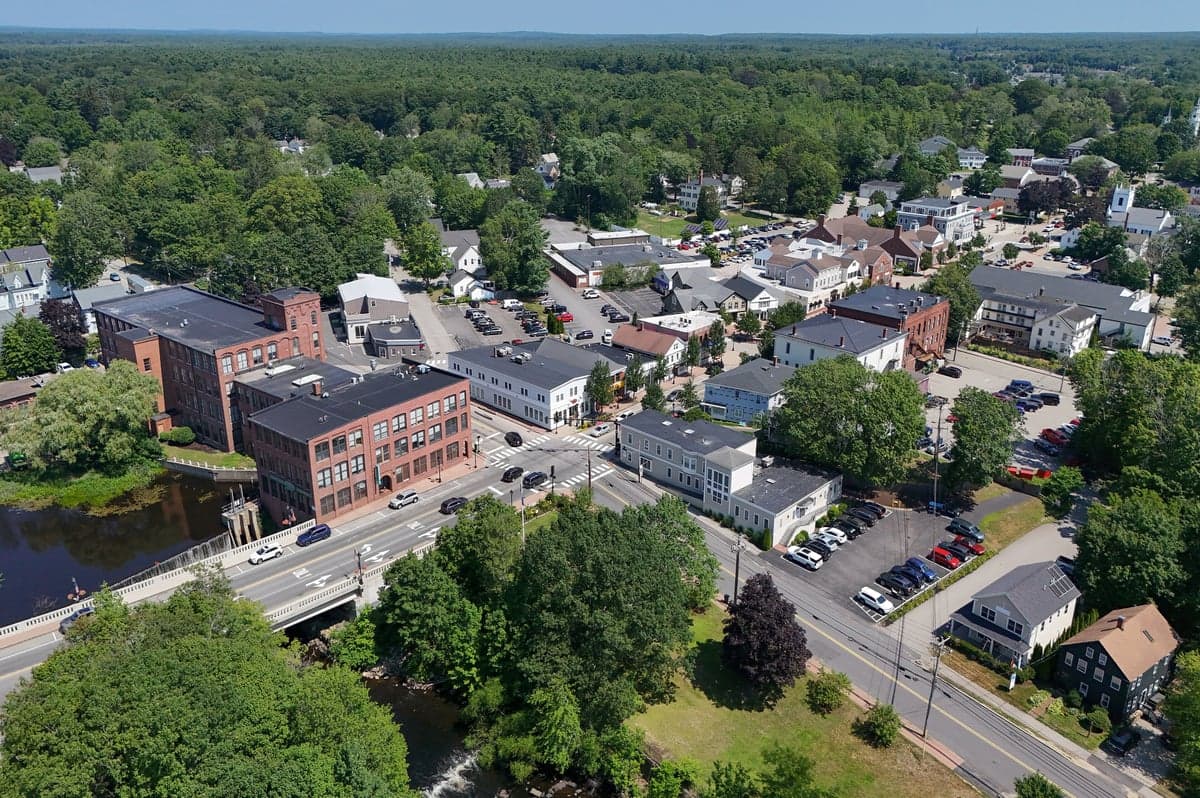
The people of Kennebunk, Maine, today form a predominantly white, well-educated community of 6,008 residents, where 92.2% of the population identifies as white and over half hold a college degree. The town carries a distinct character as a historic coastal New England settlement that has evolved from a shipbuilding and manufacturing hub into a sought-after residential and tourist destination. With a foreign-born population of just 5.3%, Kennebunk remains less diverse than the national average, though its small Hispanic (5.2%) and East/Southeast Asian (1.3%) communities add modest layers to its demographic fabric. The town’s identity is shaped by a blend of old Yankee families, seasonal second-home owners from Boston and New York, and a growing number of remote workers drawn to its coastal quality of life.
How the city was settled and grew
Kennebunk’s original European settlers arrived in the mid-17th century as part of the Massachusetts Bay Colony’s expansion into the Maine district, drawn by abundant timber and access to the Kennebunk River for shipbuilding. The town was officially incorporated in 1820, the same year Maine became a state, and its early population consisted largely of English-descended farmers, shipwrights, and mariners. The shipbuilding industry concentrated along the river in what is now the Lower Village and Dock Square areas, where wharves and shipyards employed much of the male workforce through the early 1800s. By the mid-19th century, Kennebunk’s economy shifted toward shoe manufacturing and textile mills, attracting a wave of Irish and French-Canadian laborers who settled in the West Kennebunk neighborhood, a working-class district that remains distinct from the more affluent coastal core. The arrival of the railroad in the 1870s opened the town to summer tourism, and wealthy families from Boston and New York built grand homes along Beach Avenue and in the Kennebunkport border area, establishing a seasonal population that continues to shape the local economy and housing market. Through the early 20th century, the population remained overwhelmingly white and native-born, with small pockets of Irish and French-Canadian Catholics forming the primary ethnic minorities.
Modern era (post-1965)
Following the 1965 Immigration and Nationality Act, Kennebunk did not experience the large-scale immigration waves seen in urban centers; its foreign-born population remains low at 5.3%, and the town’s racial composition has shifted only modestly. The most significant demographic change since the 1970s has been domestic in-migration from southern New England and the Mid-Atlantic, as professionals and retirees sought coastal property and a slower pace of life. This influx concentrated in the Kennebunk Beach area and along the Mousam River corridor, where new subdivisions and renovated historic homes attracted buyers from Massachusetts, Connecticut, and New York. The Hispanic population, now at 5.2%, grew primarily through service-industry workers filling roles in hospitality, landscaping, and construction, with many settling in the more affordable West Kennebunk neighborhood and rental properties near Route 1. The East/Southeast Asian community, at 1.3%, is small and dispersed, with no single ethnic enclave, though a handful of families operate restaurants and small businesses in the Dock Square area. The town’s Black population is recorded at 0.0%, reflecting the persistent lack of African American presence that characterizes much of rural and coastal Maine. Kennebunk’s college-educated share has risen sharply from roughly 30% in 1990 to 52.3% today, driven by the in-migration of professionals who can work remotely or commute to Portland, Boston, or Portsmouth.
The future
Kennebunk’s population is projected to grow slowly, with the town’s housing stock and zoning constraints limiting large-scale development. The demographic trend points toward an older, wealthier, and slightly more diverse population, though diversity gains will likely remain modest. The Hispanic share may increase gradually as service-sector workers continue to move into the area, and the East/Southeast Asian population could grow if the University of New England in nearby Biddeford attracts more international students and faculty who choose to live in Kennebunk. The West Kennebunk neighborhood is the most likely area to absorb new diversity, given its relatively lower home prices and rental stock. However, the dominant trend is the continued in-migration of white, college-educated professionals from out of state, which will reinforce the town’s high socioeconomic profile and cultural character. The next 10 to 20 years will likely see Kennebunk become more exclusive and less accessible to working-class families, as coastal property values rise and the seasonal second-home market expands.
For someone moving to Kennebunk now, the town offers a stable, safe, and scenic environment with strong schools and a vibrant downtown, but it is not a place of rapid demographic change or ethnic diversity. The community is becoming more affluent and more oriented toward remote professionals and retirees, while the working-class and service-worker populations that sustain the local economy face increasing housing pressure. New residents should expect a predominantly white, well-educated social landscape where newcomers are welcomed but the town’s historic Yankee character remains deeply embedded in its institutions and daily life.

* Values derived from national, state, county, city and local statistics and may differ in a specific area. Last updated: 2026-10-11T02:46:04.000Z
Narrative content on this page is AI-generated and may contain mistakes. Verify any details that matter before acting on them.
ReloMaps may earn a commission from affiliate links at no extra cost to you.

