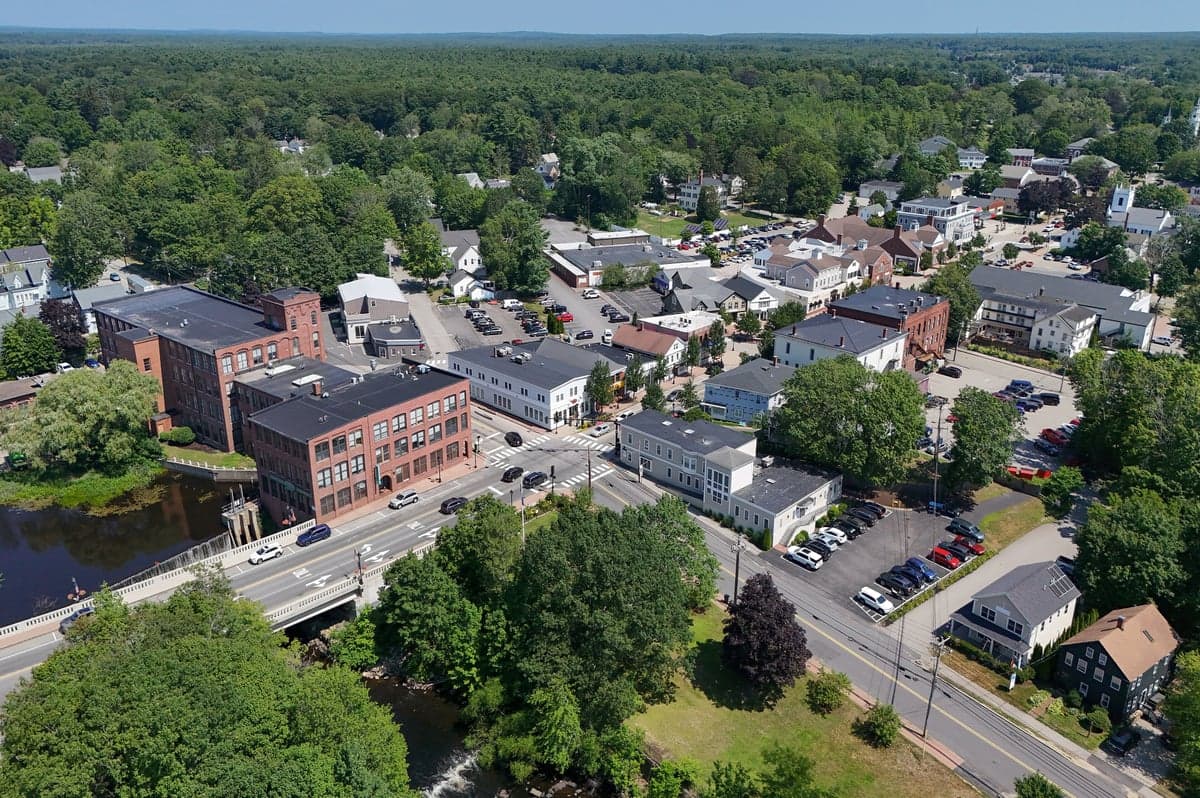
Photo: Wikipedia
Personal Sovereignty in Kennebunk, ME
Viable for self-reliance. Generally workable, though some barriers may limit total independence.
What does Personal Sovereignty tell us?
Personal Sovereignty measures your capacity for self-reliance and independence with minimal government friction. Higher scores mean fewer barriers between you and the way you want to live... but it assumes you have the space you need and good neighbors.
What does this tell us?
Personal Sovereignty measures your capacity for self-reliance and independence with minimal government friction. Higher scores mean fewer barriers between you and the way you want to live... but it assumes you have the space you need and good neighbors.
State Policy
Energy independence: Importer (30% of energy produced in-state)
Personal Liberty
Homesteading

Personal Liberty Analysis
Kennebunk, Maine, offers a personal sovereignty environment that balances traditional New England independence with the practical realities of a coastal town that values both community order and individual liberty. While Maine as a whole leans left on many social issues, Kennebunk’s local governance and the state’s legal framework provide a notably light-touch regulatory posture in several key areas that matter to freedom-oriented individuals and families. The town’s character—rooted in shipbuilding, farming, and a strong sense of self-reliance—means that residents generally enjoy a high degree of autonomy in daily life, though certain state-level mandates (particularly around taxation and land use) create a mixed picture for those seeking maximum independence.
Tax burden and regulatory posture in Kennebunk
Maine’s overall tax burden is among the highest in the nation, and Kennebunk residents feel this directly. The state’s income tax is a flat 5.8% on most income, with a top marginal rate of 7.15% for high earners. Property taxes in Kennebunk are significant—the mill rate hovers around 12.5 to 13.0 per $1,000 of assessed value, meaning a $400,000 home carries an annual tax bill of roughly $5,000 to $5,200. This is higher than the national median and reflects the town’s investment in schools, public safety, and infrastructure. However, Maine offers a property tax fairness credit and a homestead exemption (up to $25,000 of assessed value) for primary residences, which can reduce the bite for long-term residents. On the regulatory side, Kennebunk is relatively permissive for a coastal town. There is no local income tax, and the town’s zoning is generally accommodating to small businesses and home-based enterprises, though commercial activity in residential zones requires a permit. The state’s regulatory environment is moderate: Maine has strong environmental protections (especially near waterways and wetlands), which can affect development and land use, but the state also has a reputation for being business-friendly in terms of licensing and permitting speed. For a freedom-oriented resident, the key takeaway is that while the tax burden is real, the regulatory overhead for daily life—such as starting a small business, operating a home occupation, or building a shed—is not onerous compared to neighboring New England states like Massachusetts or New York.
Self-defense and gun law specifics in Kennebunk
Maine is a strong Second Amendment state, and Kennebunk reflects that culture. The state has a constitutional carry law (enacted in 2015), meaning any person 21 or older who is legally allowed to possess a firearm may carry it openly or concealed without a permit. No license is required for purchase, and there is no state-level registration of firearms. Private sales between individuals are legal without background checks, though federal law applies to licensed dealers. Maine does not have a “red flag” law, nor does it impose waiting periods or magazine capacity restrictions. The state’s self-defense laws are based on the “castle doctrine,” which provides a legal presumption that a person using deadly force against an intruder in their home or occupied vehicle acted reasonably. However, Maine does not have a “stand your ground” statute; instead, it follows a “duty to retreat” rule in public spaces if it can be done safely. In practice, this means that while you can defend yourself in your home without retreating, you are expected to avoid confrontation in public if possible. Kennebunk’s local police department is professional and generally supportive of lawful gun ownership, and there are no local ordinances that restrict firearms beyond state law. For a freedom-oriented individual, Maine’s gun laws are among the most permissive in the Northeast, and Kennebunk is a safe, law-abiding community where self-defense rights are respected.
Self-reliance and homesteading viability in Kennebunk
Kennebunk offers moderate opportunities for self-reliance and homesteading, though it is not a rural frontier. The town’s zoning allows for keeping chickens, bees, and small livestock on residential lots of one acre or more, with a permit required for larger animals like goats or pigs. Minimum lot sizes in the town’s rural districts are typically 1 to 2 acres, which is sufficient for a substantial garden, a small orchard, and a few animals. However, off-grid living is challenging: the town requires connection to public water and sewer in most developed areas, and building codes mandate modern electrical and plumbing systems. Solar panels are allowed and encouraged, but net metering is available only through Central Maine Power, the regional utility. Rainwater collection is legal but regulated to avoid groundwater depletion. For those seeking true self-sufficiency, the more rural towns north of Kennebunk—such as Lyman or Alfred—offer larger parcels (5+ acres) with fewer restrictions. In Kennebunk itself, the emphasis is on “suburban homesteading”: growing food, raising small livestock, and reducing reliance on the grid, but within a framework that assumes access to municipal services. The town’s farmers’ market and strong local food culture support this lifestyle, and the growing season (roughly May to October) is long enough for a productive garden. For a family wanting to be more self-reliant without moving to a remote area, Kennebunk provides a viable middle ground.
Personal liberties in Kennebunk: parental rights, medical autonomy, speech, and property
Maine generally respects personal liberties, though with some notable state-level constraints. Parental rights are strong in education: Maine allows homeschooling with minimal regulation (a simple notice of intent and annual assessment), and parents can choose from public schools, private schools, or religious schools. The state does not have a school voucher program, but charter schools are available. Medical autonomy is a mixed bag: Maine has legalized recreational marijuana (adults 21+ can possess up to 2.5 ounces and grow up to 6 plants), and the state has a robust medical cannabis program. However, Maine also has strict vaccine mandates for school attendance (though philosophical exemptions are allowed for some vaccines), and the state’s public health authority has broad powers during emergencies. On speech and expression, Maine is a free-speech state with no notable local restrictions beyond standard defamation and obscenity laws. Property rights are generally respected, but the state’s strong environmental regulations can limit what you can do with land near wetlands, waterways, or protected habitats. Kennebunk’s local government is responsive and transparent, with town meetings and an elected select board that allows residents direct input on ordinances. For a conservative-leaning individual, the key liberty concerns are likely to be medical mandates and property use restrictions, but the overall environment is one of reasonable freedom with a moderate regulatory touch.
Compared to other coastal New England towns, Kennebunk offers a notably high degree of personal sovereignty, particularly in the areas of gun rights, homeschooling, and small-scale homesteading. The tax burden is real but predictable, and the regulatory environment is light enough that a motivated individual can live a largely self-directed life. For a family or single person who values independence but also wants access to good schools, a strong community, and the amenities of the Maine coast, Kennebunk strikes a balance that is hard to find in more densely regulated states. It is not a libertarian paradise—the state’s tax and environmental policies ensure that—but it is a place where personal responsibility and community cooperation are still the norm, and where the government generally stays out of your way as long as you follow the rules. For those prioritizing freedom, Kennebunk is a solid choice in the Northeast.

* Values derived from national, state, county, city and local statistics and may differ in a specific area. Last updated: 2026-10-11T02:46:04.000Z
Narrative content on this page is AI-generated and may contain mistakes. Verify any details that matter before acting on them.
ReloMaps may earn a commission from affiliate links at no extra cost to you.

