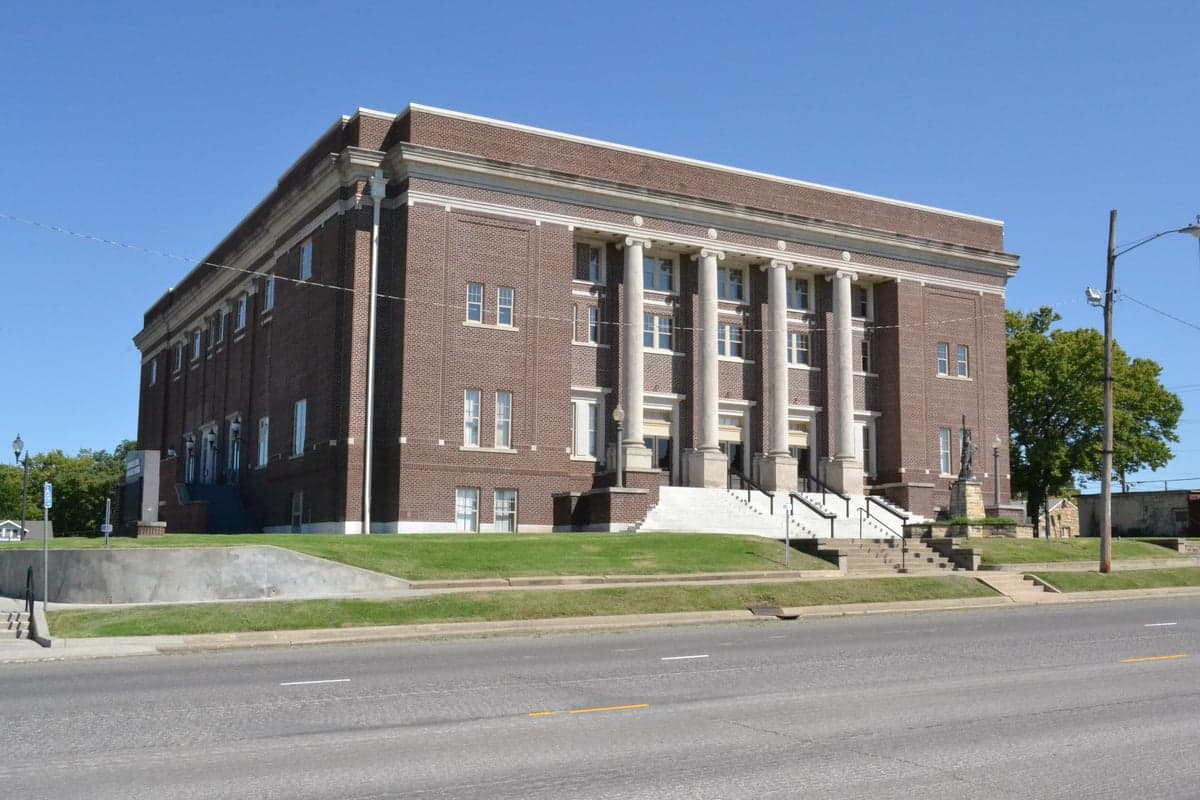
Photo: Wikipedia
Political ClimatePolitical Climate in Montgomery County
Showing district-level results — no local-only data available.
Local Political AnalysisPolitical Analysis of Montgomery County
Montgomery County, Kansas, has long been a reliably Republican stronghold, and that hasn't changed much. With a Cook Partisan Voting Index (PVI) of R+10, it's a shade more conservative than the state of Kansas as a whole, which sits at R+9. The county has been trending redder over the last decade, driven largely by the rural exodus from the Democratic-leaning coal camps and a steady influx of retirees and remote workers who prefer the area's low taxes and quiet lifestyle. If you're looking at the raw numbers, the county hasn't voted for a Democratic presidential candidate since 1964, and the margins have only widened since 2016.
How it compares
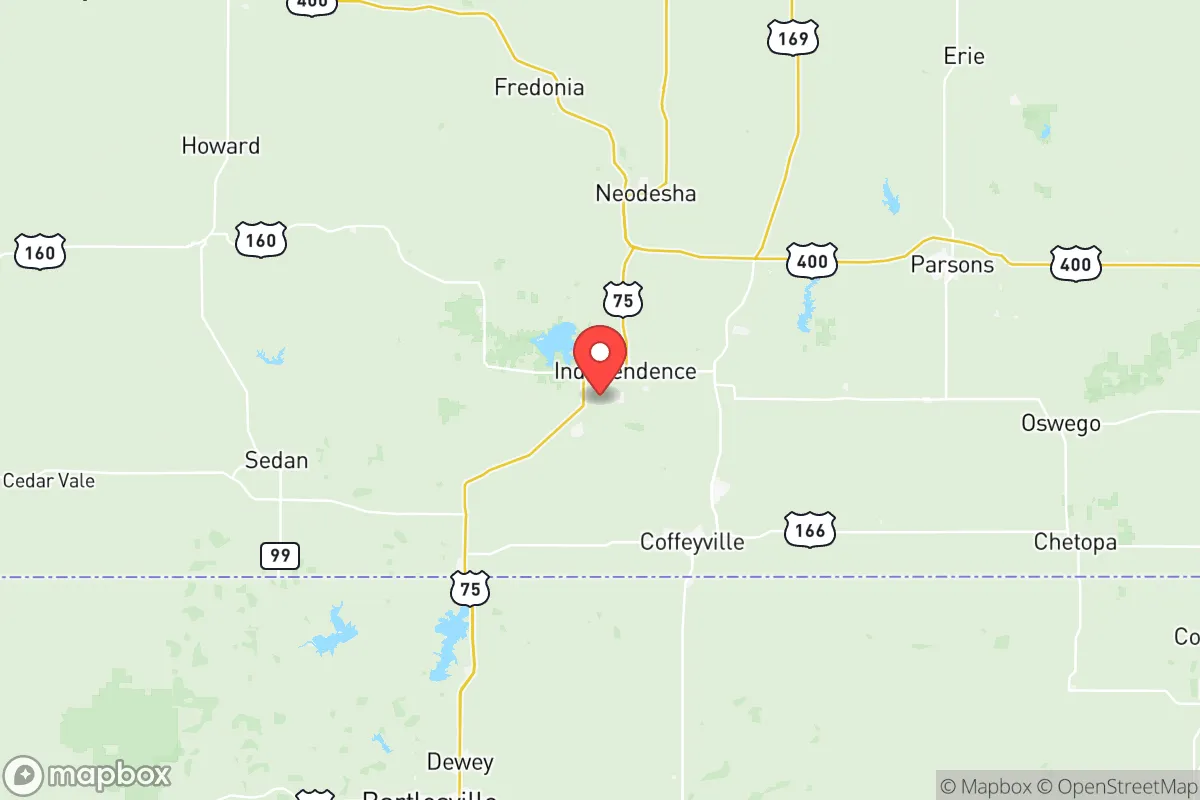
While the state of Kansas is already a solidly red state, Montgomery County is a few points deeper into that territory. The difference isn't huge on paper, but it shows up in local elections. In the 2024 presidential race, the county went about 70% for the Republican candidate, while the state overall was closer to 56%. The real story is the internal variation. Coffeyville, the largest city, is the county's blue dot. It's a working-class town with a strong union history from the oil refineries and manufacturing plants, and it consistently votes more Democratic than the rest of the county. In 2020, Coffeyville's precincts were roughly 50-50, while the surrounding rural areas and smaller towns like Independence and Cherryvale were voting 75-80% Republican. Caney and Sedan are even more conservative, often pushing 85% Republican. The swing precincts are the suburban fringe around Independence and the newer developments near the lake, where moderate Republicans and independents sometimes split tickets in local races.
What this means for residents
For conservative residents, Montgomery County is a comfortable place to live. Local government is reliably Republican, taxes are low, and gun rights are strongly supported. The county commission and school boards are dominated by conservatives, and there's little political friction in daily life. For liberal residents, it's a different experience. While no one is hostile, you'll find that most social circles, church groups, and civic organizations lean right. Political discussions at the coffee shop or the feed store tend to assume a conservative viewpoint. That said, the county is not a monolith. Coffeyville has a more diverse political conversation, and the local Democratic party chapter is small but active, focusing on labor issues and public school funding. The key is that politics here is less about culture wars and more about practical concerns: jobs, roads, and schools. Most people, regardless of party, agree on the need to attract industry and keep the local hospital open.
One cultural distinction worth noting is the county's strong independent streak. Even within the Republican majority, there's a healthy skepticism of both national parties. Many voters here are "Yellow Dog Republicans" — they'll vote for a Republican even if they don't like the candidate — but they're just as likely to grumble about the federal government as they are about the Democrats. The local paper, the Independence Daily Reporter, still covers county commission meetings in detail, and residents take local politics seriously. The biggest policy fights in recent years have been over the consolidation of rural schools and the future of the county's aging water infrastructure, not national hot-button issues. For anyone moving here, the political climate is best described as "pragmatic conservatism" — you'll find a lot of agreement on fiscal matters, but the social issues that dominate national headlines rarely come up at the local diner.

State Political ClimatePolitical Climate in Kansas
State Political AnalysisPolitical Environment in the State
Kansas has been a reliably Republican state for decades, with a Cook Partisan Voting Index of R+9, meaning it votes about nine points more Republican than the nation as a whole. The dominant political coalition is a mix of traditional fiscal conservatives, rural and agricultural interests, and a growing contingent of culturally conservative voters, but the state has also seen notable internal battles between its more moderate and hardline conservative factions. Over the last 10-20 years, the trajectory has been a slow but steady rightward shift, punctuated by a brief period of moderate backlash following the aggressive tax-cutting "Brownback experiment" in the 2010s, before the state settled back into a solidly red posture in the 2020s.
Urban vs. rural divide
The political map of Kansas is a textbook example of the urban-rural split. The two major population centers, Johnson County (suburban Kansas City) and Wyandotte County (Kansas City, KS), are the state's Democratic strongholds. Johnson County, once a bastion of moderate Republicanism, has been trending blue for years, driven by an influx of college-educated professionals and a growing diverse population; it voted for Joe Biden in 2020 and has become the key battleground for any Democrat hoping to win statewide. In contrast, Wyandotte County is heavily Democratic and reliably delivers some of the highest vote shares for the party in the state. The rest of Kansas, from the Flint Hills to the High Plains, is overwhelmingly Republican. Sedgwick County (Wichita) is a bellwether — it leans Republican but can be competitive, especially in local races. The deep red rural counties, like Sherman County in the far west or Allen County in the southeast, routinely vote 80%+ Republican, creating a stark political geography where a few urban and suburban islands are surrounded by a vast conservative sea.
Policy environment
Kansas's policy environment is shaped by a conservative majority in the legislature and a Republican governor (as of 2026). The state has a flat income tax rate of 5.7%, a result of the post-Brownback era when the legislature partially reversed the deep cuts of the 2012 tax experiment but kept a simplified structure. Property taxes are relatively high compared to the national average, funding local schools and services. The state's regulatory posture is generally business-friendly, with low barriers for occupational licensing and limited environmental regulations. On education, Kansas has seen ongoing battles over school funding, with the Kansas Supreme Court frequently ruling that the legislature's funding formulas were inadequate, leading to a series of funding increases. The state has also passed laws restricting abortion access, including a 2022 amendment to the state constitution that was rejected by voters, making Kansas a notable outlier where a Republican-controlled legislature's anti-abortion push was checked by a popular vote. Election laws have been tightened, with a voter ID requirement and restrictions on mail-in ballot drop boxes, though the state has not seen the sweeping overhauls of some other red states.
Recent policy direction
Recent legislation in Kansas points in a clear conservative direction, but with some notable exceptions. On gun and self-defense law, Kansas is a constitutional carry state (permitless carry for adults 21 and older) and has a "Stand Your Ground" law, with no state-level red flag law. Parental and education rights have been a major focus: the legislature passed a Parents' Bill of Rights in 2021, and there have been ongoing efforts to expand school choice and voucher programs, though they have faced resistance from rural districts. On speech and privacy, Kansas has not enacted the kind of broad social media content regulation seen in Texas or Florida, but there have been bills targeting "critical race theory" in schools and restrictions on transgender athletes in sports. Medical and bodily autonomy is the most complex area: while the legislature passed a near-total abortion ban in 2022, it was struck down by the state Supreme Court, which found a right to abortion in the state constitution, and voters later rejected a constitutional amendment to overturn that ruling, leaving abortion legal up to 22 weeks. Property rights are generally strong, with no state-level rent control and limited eminent domain controversies. Taxation has seen a recent trend toward further cuts, with the legislature passing a bill in 2024 to accelerate the flat tax reduction and eliminate the state tax on Social Security benefits. Voting and ballot access has been tightened: the state requires a photo ID to vote, and the 2021 election law restricted the use of mail-in ballot drop boxes and shortened the window for returning advance ballots.
Civil unrest & political movements
Kansas has not seen the kind of large-scale civil unrest seen in coastal states, but there have been notable flashpoints. The most significant was the 2022 abortion rights vote, which drew massive turnout and saw coordinated grassroots organizing from both sides, with the "No" campaign (against the amendment) winning by 18 points, a stunning result in a red state. On the right, the Kansas Republican Party has been split between the more traditional, business-oriented wing and the populist, Trump-aligned faction, leading to contentious primary battles. Immigration politics have been relatively quiet compared to border states, but there have been local controversies over sanctuary city policies, with the legislature passing a law in 2024 banning sanctuary policies and requiring local law enforcement to cooperate with federal immigration authorities. Election integrity has been a recurring theme, with some Republican activists pushing for further restrictions after the 2020 election, though no major fraud has been found. The most visible political movement in recent years has been the Kansas Parents' Bill of Rights advocacy, which has driven school board elections and curriculum debates in suburbs like Olathe and Shawnee.
Projection
Over the next 5-10 years, Kansas is likely to remain a solidly Republican state, but the internal dynamics will shift. The continued growth of Johnson County and the Kansas City suburbs will push the state slightly toward the center, as these areas become more diverse and more Democratic-leaning. However, the rural counties are not shrinking fast enough to flip the state, and the Republican legislature is likely to continue passing conservative policies on education, taxes, and social issues. The wild card is the abortion rights issue: the 2022 vote showed that a popular majority in Kansas supports abortion access, and this could create a persistent tension between the legislature and the electorate, potentially driving moderate and Democratic turnout in future elections. In-migration is modest, with most new residents coming from other Midwestern states, so the demographic shift will be gradual. A new resident moving in now should expect a state that is politically stable but internally contested, where the legislature will continue to push conservative policies but where the courts and popular votes may occasionally check those efforts.
For a new resident, the bottom line is that Kansas offers a predictably conservative policy environment on most issues — low taxes, gun rights, school choice — but with a notable exception on abortion, where the state is more moderate than its partisan lean would suggest. A conservative will find a welcoming political climate, especially outside of Johnson and Wyandotte counties, while a liberal will find a few urban strongholds and a state Democratic party that is competitive in local races but rarely wins statewide. The key practical takeaway is that your experience will depend heavily on where you live: Lawrence and Kansas City, KS feel like blue islands, while Wichita and Topeka are more purple, and the vast majority of the state is deeply red.
* Values derived from national, state, county, city and local statistics and may differ in a specific area. Last updated: 2026-07-05T00:29:31.000Z
Narrative content on this page is AI-generated and may contain mistakes. Verify any details that matter before acting on them.
ReloMaps may earn a commission from affiliate links at no extra cost to you.

