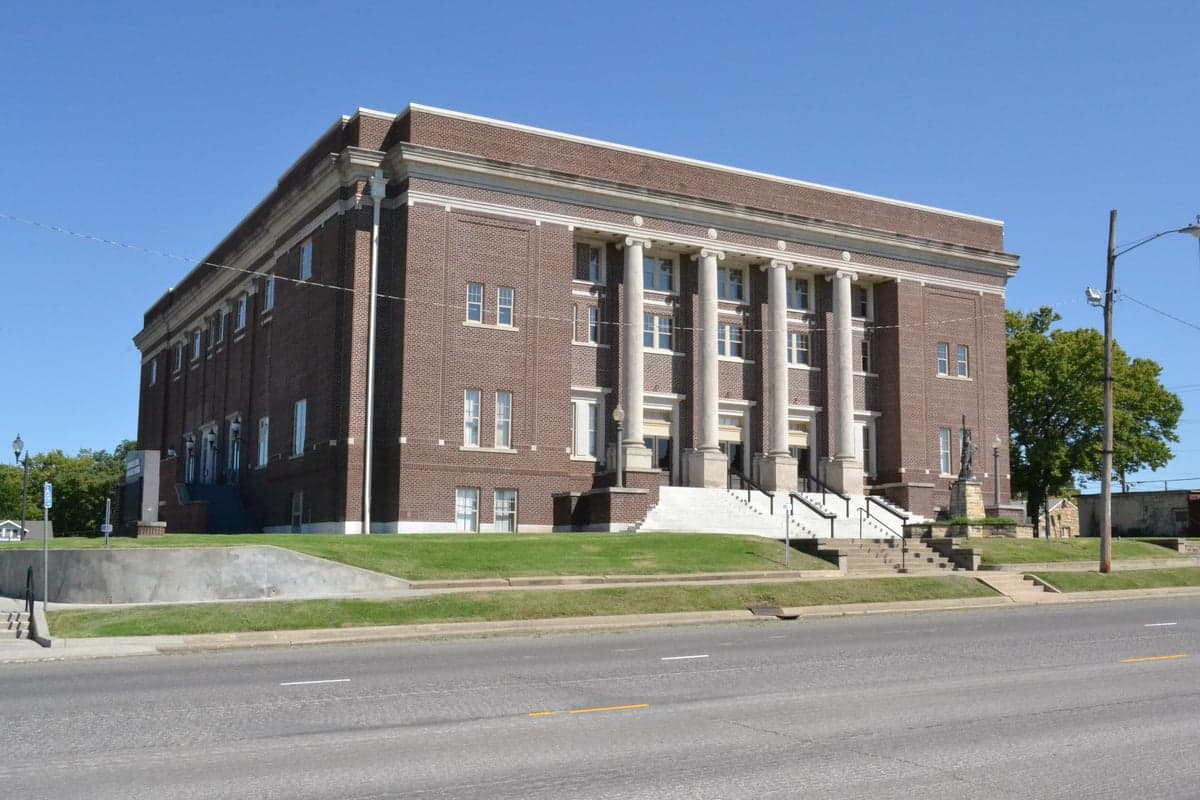
Photo: Wikipedia
Demographics of Montgomery County
Affluence Level in Montgomery County
A below-average socioeconomic profile. Incomes, home values, and educational attainment trail the U.S., with higher poverty and unemployment.
People of Montgomery County
Montgomery County, Kansas, today is a predominantly white, rural community of 31,143 residents, characterized by a strong sense of local identity rooted in its agricultural and energy-industry past. With a low foreign-born population of just 1.9% and a modest 21.3% college-educated rate, the county's population is older and more ethnically homogenous than the national average, though a notable Hispanic community of 7.8% and a Black population of 4.2% add layers to its demographic fabric. The county's people are concentrated in the historic towns of Coffeyville, Independence, and Caney, where a practical, self-reliant culture prevails, shaped by generations of families who have weathered economic booms and busts.
Settlement & growth (pre-1960)
Long before European settlement, the area that is now Montgomery County was home to the Osage Nation, who used the vast tallgrass prairies and wooded river valleys along the Verdigris River for hunting and seasonal habitation. The Osage were forcibly removed to Indian Territory (present-day Oklahoma) through a series of treaties in the 1820s and 1830s, opening the land to American settlement. The first permanent white settlers arrived in the late 1850s, primarily from the Upper South and Ohio River Valley, drawn by the promise of cheap, fertile land under the Preemption Act and later the Homestead Act of 1862.
The county's population surged after the Civil War, with the founding of Independence in 1869 and Coffeyville in 1871 as railroad towns along the Leavenworth, Lawrence & Galveston line. These early settlers were overwhelmingly of English, Scots-Irish, and German stock, with smaller numbers of Irish immigrants who worked on the railroads. The discovery of natural gas and oil in the early 1900s transformed the region, sparking a boom that drew workers from the Midwest and Appalachia to towns like Caney, Cherryvale, and Elk City. By 1910, the county's population peaked at over 49,000, fueled by the oil fields and the thriving glass and brick industries that the cheap natural gas made possible.
The Great Depression and Dust Bowl years hit Montgomery County hard, causing a significant out-migration of families to California and other western states. The population declined steadily through the 1930s and 1940s, a trend that accelerated after World War II as agricultural consolidation reduced the need for farm labor and the oil industry began to taper off. The African American population, which had grown modestly during the early 20th century as families moved from the South for railroad and oil work, remained a small but established community, concentrated primarily in Coffeyville and Independence.
Modern era (post-1965)
The post-1965 era, shaped by the Hart-Cellar Act, had a muted effect on Montgomery County compared to urban and coastal America. The county did not experience the large-scale immigration from Asia or Latin America that transformed many other regions. Instead, the dominant demographic trend since the 1970s has been steady population decline and an aging of the existing population, as younger residents left for college and careers in Wichita, Kansas City, and Tulsa, Oklahoma. The county's population fell from 36,000 in 1980 to 31,143 today.
The most notable modern demographic shift has been the growth of the Hispanic population, which now stands at 7.8%. This community began to form in the 1990s and 2000s, as Mexican and Central American immigrants arrived to work in the county's remaining industries: meatpacking and processing plants, poultry farms, and agricultural labor. These families have settled primarily in Coffeyville and Independence, where they have established small but growing enclaves with Spanish-language churches, tiendas, and community organizations. The Black population, at 4.2%, remains concentrated in the same towns, with deep roots in the local schools and civic life. The East/Southeast Asian population is negligible at 0.2%, and there is no measurable Indian-subcontinent community.
Domestic migration patterns have been largely outward, with the county losing population to larger metropolitan areas. However, a small counter-trend has emerged in recent years: a trickle of retirees and remote workers from Kansas City and Wichita, drawn by the county's low cost of living and slower pace of life, particularly in the lake communities around Elk City State Park and the small town of Liberty.
The future
Montgomery County's population is projected to continue its slow decline over the next 10 to 20 years, driven by an aging demographic profile and limited economic opportunities that fail to retain young adults. The county's median age is already above the state average, and the school-age population has been shrinking for decades. The Hispanic community is likely to grow as a share of the total population, both through continued immigration and higher birth rates, potentially reaching 10-12% by 2040. This will make the county slightly more diverse, but the overall character will remain predominantly white and rural.
New residential development is expected to remain concentrated in and around Coffeyville and Independence, the county's two largest towns, with some scattered lakefront home construction near Caney and Elk City. The county's cultural identity is likely to remain conservative and rooted in local traditions, though the growing Hispanic presence may gradually introduce new cultural influences, particularly in food, religious life, and community festivals. For someone moving in now, Montgomery County offers a quiet, affordable, and safe environment, but one with limited demographic dynamism and a population that is slowly aging in place.
Montgomery County is becoming a quieter, older, and slightly more Hispanic version of its former self—a place where the past is still very much present, and where new arrivals will find a community that values stability, self-reliance, and neighborly connection over rapid change or diversity. For families and individuals seeking a low-cost, low-stress rural lifestyle with strong local institutions, it remains a viable choice, but one that requires accepting a shrinking population base and limited economic growth.

* Values derived from national, state, county, city and local statistics and may differ in a specific area. Last updated: 2026-07-05T00:29:31.000Z
Narrative content on this page is AI-generated and may contain mistakes. Verify any details that matter before acting on them.
ReloMaps may earn a commission from affiliate links at no extra cost to you.

