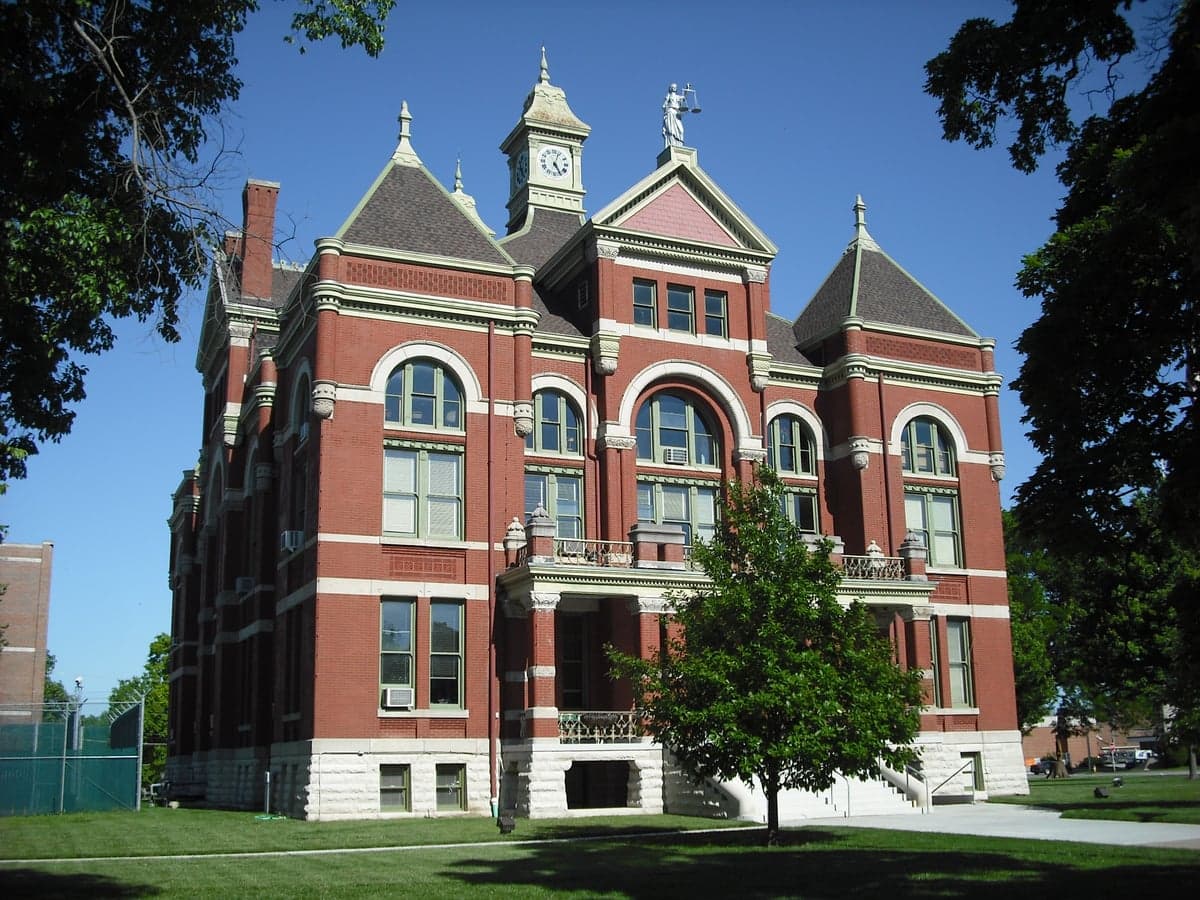
Photo: Wikipedia
Strategic Assessment of Franklin County
Strong survivability profile. Good buffer from population centers, with manageable environmental and tactical risks.
What does the Strategic Assessment tell us?
Our Strategic Assessment grades tactical survivability of an area. Major population centers, military targets, fallout zones, natural disasters, and border exposure all drive risk — lower exposure means a more defensible position in a crisis.
This is heavily inspired by Joel Skousen's Strategic Relocation book. Highly recommended you checkout the book ($)What does this tell us?
Our Strategic Assessment grades tactical survivability of an area. Major population centers, military targets, fallout zones, natural disasters, and border exposure all drive risk — lower exposure means a more defensible position in a crisis.
This is heavily inspired by Joel Skousen's Strategic Relocation book. Highly recommended you checkout the book ($)Strategic Pillars

Key Distances
Strategic Assessment Analysis
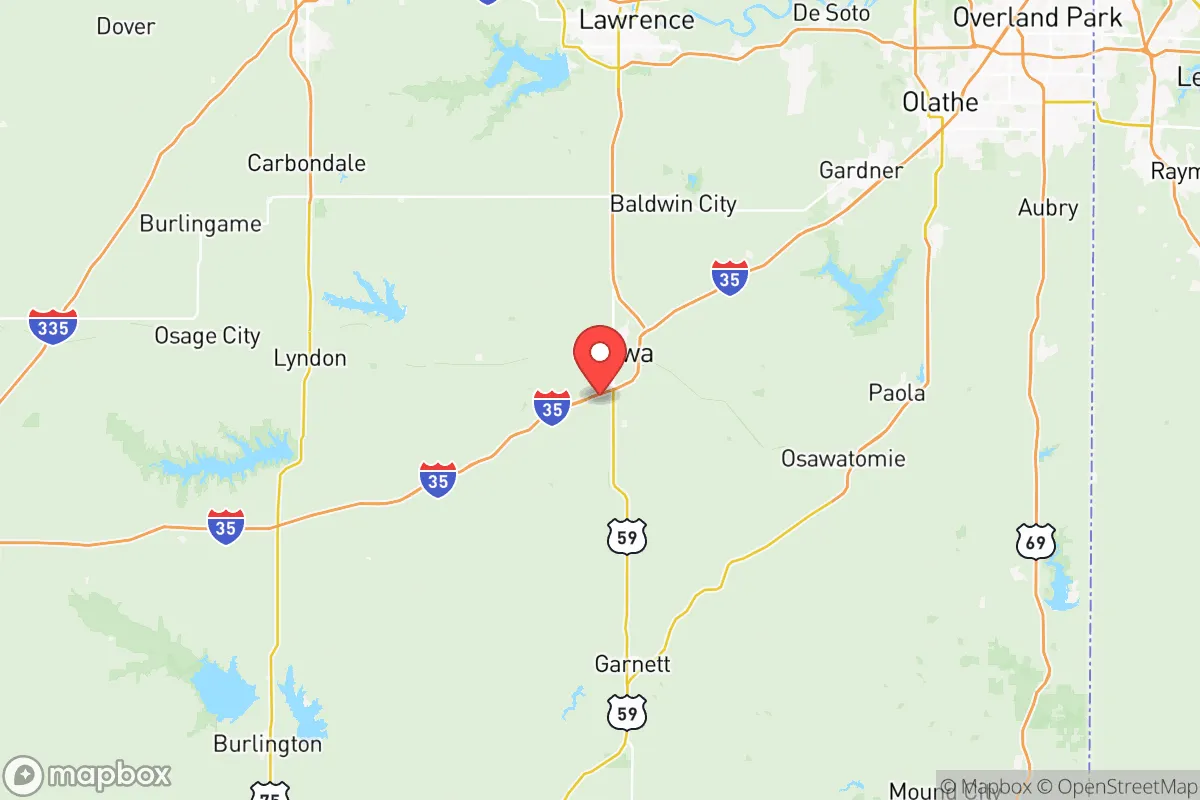
Franklin County, Kansas, anchored by the city of Ottawa, presents a compelling case for relocation-minded readers who prioritize resilience and self-sufficiency without complete isolation. Positioned roughly 50 miles southwest of the Kansas City metro area and 30 miles south of Topeka, the county offers a strategic balance: close enough to access major medical and supply hubs, yet far enough to avoid the immediate fallout risks and congestion of a dense urban core. The area’s agricultural base, low population density, and inland geography make it a quietly strong candidate for those thinking seriously about disaster readiness and long-term stability.
Geographic position and natural advantages for long-term stability
Franklin County sits in the rolling plains of eastern Kansas, a region defined by the Marais des Cygnes River valley, which provides fertile soil and reliable water access. The county’s location places it outside the direct path of most major tornado alleys, though severe weather is still a seasonal reality. More importantly, it is far removed from coastal hurricane zones, seismic fault lines, and the wildfire-prone landscapes of the western U.S. The nearest military installation of strategic significance is Forbes Field Air National Guard Base near Topeka, about 30 miles north, which is a modest facility and not a primary nuclear target. The county’s interior position also means it is not downwind of any major refinery corridor or port complex, reducing the risk of airborne industrial fallout from a distant event. The local topography—gently rolling hills interspersed with woodlands and farmland—offers natural defensibility and multiple egress routes via U.S. Highway 59 and Interstate 35, which runs along the county’s western edge.
Risks, exposures, and proximity to fallout-relevant landmarks
No location is without risk, and Franklin County’s primary exposure comes from its proximity to the Kansas City metropolitan area, a major transportation and logistics hub that includes Whiteman Air Force Base (home to B-2 stealth bombers) roughly 90 miles to the east-southeast. While 90 miles provides significant standoff distance from a potential ground-zero event, prevailing westerly winds mean that fallout from a strike on Whiteman could theoretically drift toward the county, though dispersion models suggest particulate concentration would be greatly reduced at that range. Closer to home, the Wolf Creek Generating Station—Kansas’s only nuclear power plant—is located about 70 miles to the east in Burlington, a distance that places Franklin County outside the typical 10-mile emergency planning zone but within the 50-mile ingestion pathway zone. The county also lies near the BNSF Railway mainline and several major natural gas pipelines, which are potential secondary hazards in a cascading failure scenario. Flooding along the Marais des Cygnes River is the most probable natural risk, particularly in low-lying areas around Ottawa and Pomona Lake, though the U.S. Army Corps of Engineers manages the Pomona Lake dam to mitigate this. Tornado risk is moderate; the county averages 12-15 tornado warnings per year, but direct hits are infrequent.
Practical resilience for a relocator: food, water, energy, and defensibility
For a relocator serious about self-sufficiency, Franklin County offers tangible advantages. The agricultural economy means that local food production is robust: the county is among Kansas’s top producers of corn, soybeans, and livestock, and the Ottawa Farmers’ Market operates seasonally. Residents with acreage can easily establish gardens or small-scale animal husbandry, and the soil quality in the river valley is excellent. Water availability is a strong point—the Marais des Cygnes River and Pomona Lake (which covers nearly 4,000 acres) provide surface water, and the county’s groundwater aquifers are generally reliable, though well drilling costs should be factored into any property purchase. Energy infrastructure is stable but centralized; the county is served by Evergy, which draws from a mix of coal, natural gas, and wind. For off-grid capability, solar exposure is adequate (roughly 4.5 peak sun hours per day), and wood heating is viable given the region’s timber stands. Defensibility is aided by the county’s rural character: many properties are set back from main roads, with natural tree lines and rolling terrain providing cover. The county seat, Ottawa, has a population of about 12,500, meaning that in a crisis, the urban core is small enough to avoid the chaotic resource competition seen in larger cities, yet large enough to maintain a hospital (Ransom Memorial Hospital) and a police force. The local sheriff’s office is active but not overstretched, and the county’s low crime rate—consistently below the national average for violent crime—suggests a stable social fabric.
The overall strategic picture for Franklin County is one of quiet competence. It is not a hardened bunker location, nor does it pretend to be. What it offers is a realistic, livable environment where a prepared individual or family can build redundancy into their daily life without the paranoia of living in a high-risk zone. The county’s distance from primary nuclear targets, its agricultural self-sufficiency, and its manageable population density make it a strong candidate for those who want to be ready for disruptions—whether natural, economic, or geopolitical—while still maintaining access to modern amenities. For the conservative-leaning relocator who values community, land, and a low-key preparedness ethic, Franklin County deserves a serious look.

* Values derived from national, state, county, city and local statistics and may differ in a specific area. Last updated: 2026-07-02T20:13:31.000Z
Narrative content on this page is AI-generated and may contain mistakes. Verify any details that matter before acting on them.
ReloMaps may earn a commission from affiliate links at no extra cost to you.

