Photo: Wikipedia
Political ClimatePolitical Climate in Franklin County
Showing district-level results — no local-only data available.
Local Political AnalysisPolitical Analysis of Franklin County
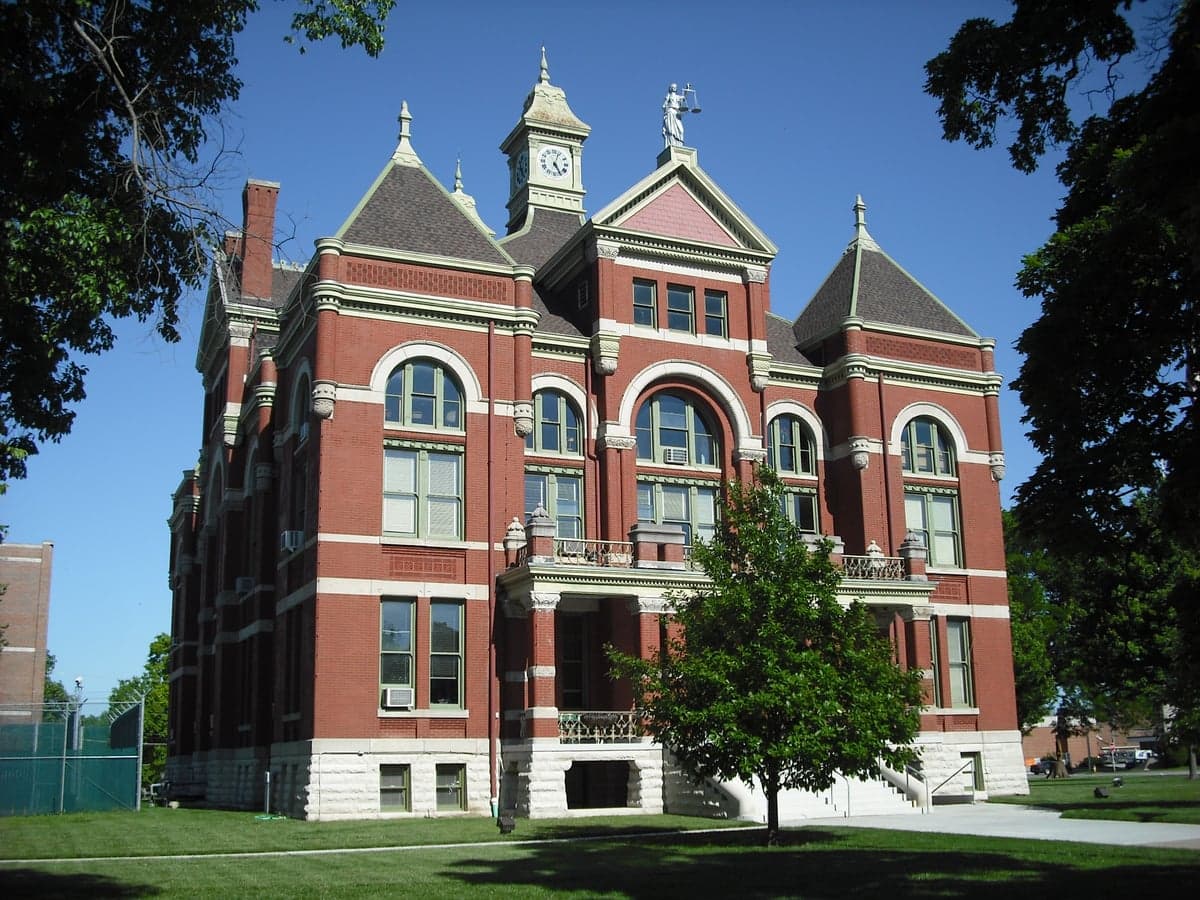
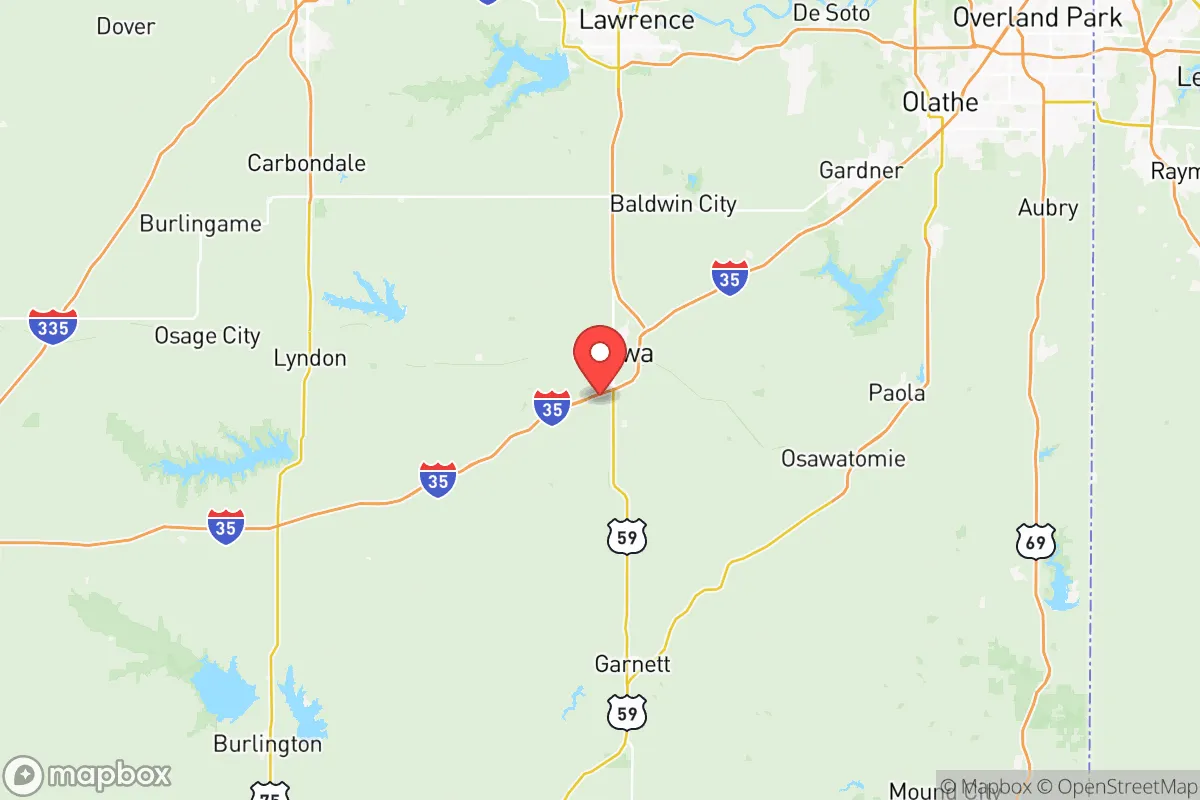
Franklin County, Kansas, sits in a political space that feels a bit like a tug-of-war. With a Cook Partisan Voting Index (PVI) of D+2, it's a genuine swing county in a state that's solidly red, where the statewide PVI is R+9. That means while Kansas as a whole leans heavily Republican, Franklin County is a competitive battleground where neither party can take victory for granted. The county has been trending slightly more Democratic in recent cycles, but it's not a blue wave — it's a slow, steady shift driven by changing demographics in its population centers, while the rural areas remain deeply conservative.
How it compares
The contrast between Franklin County and the rest of Kansas is stark. The state's R+9 PVI means Republicans have a comfortable cushion in most races, but in Franklin County, elections are often decided by just a few hundred votes. The county's D+2 rating puts it in a different category entirely — it's one of the few places in eastern Kansas where Democrats can realistically compete for local offices. The political geography within the county is also telling. Ottawa, the county seat and largest city, is the Democratic stronghold, with precincts near the downtown and the university often going blue by double digits. In contrast, rural towns like Wellsville, Princeton, and Richmond are reliably red, often voting Republican by margins of 20 points or more. The swing precincts are in the suburban fringe around Ottawa and along the Highway 59 corridor, where independent and moderate voters decide the outcome.
What this means for residents
For conservative residents, living in Franklin County means their vote carries real weight — it's not a foregone conclusion like in much of the rest of Kansas. They can't afford to stay home on election day, because a few hundred votes can flip a county commission seat or a school board race. For liberal residents, the county offers a rare opportunity in Kansas to see their candidates win local elections, but they also have to contend with a state government that is overwhelmingly Republican. In practice, this means the county often finds itself at odds with Topeka on issues like school funding, local control, and social policies. The county commission, currently split with a slight Republican majority, has to navigate between the progressive priorities of Ottawa and the conservative values of the rural towns. This tension plays out in real decisions — zoning laws, tax levies, and even library funding have become flashpoints in recent years.
Cultural and policy distinctions
Beyond the numbers, Franklin County has a distinct political culture that sets it apart from the rest of Kansas. Ottawa University, a private liberal arts college, brings a steady stream of younger, more progressive residents who often get involved in local politics and community organizing. The county also has a growing Hispanic population, particularly in Ottawa, which has shifted the political calculus in some precincts. At the same time, the rural areas remain deeply tied to agriculture and gun rights, and the county's Republican Party is more moderate than the state party — you'll find fewer hardline conservatives here than in western Kansas. The result is a county where compromise isn't a dirty word, and where local officials often have to build coalitions across party lines to get anything done. That's rare in Kansas politics, and it makes Franklin County a fascinating place to watch as the state's political landscape continues to evolve.

State Political ClimatePolitical Climate in Kansas
State Political AnalysisPolitical Environment in the State
Kansas is a solidly Republican state with a Cook PVI of R+9, meaning it typically votes about nine points more Republican than the national average in presidential elections. Over the past 10-20 years, the state has shifted rightward on cultural and economic issues, driven by a growing rural-urban divide and the dominance of conservative coalitions in the state legislature. However, the political landscape is not monolithic — the Kansas City suburbs and the state's two major university towns, Lawrence and Manhattan, provide a persistent Democratic counterweight, while the rest of the state leans heavily red.
Urban vs. rural divide
The political map of Kansas is a tale of two worlds. The eastern third of the state, anchored by the Kansas City metro area, contains the bulk of the state's population and is the only region where Democrats are competitive. Johnson County, the state's wealthiest and most populous county, has been trending leftward — it voted for Joe Biden in 2020 and has elected moderate Republicans and Democrats to local office. In contrast, the rest of the state is deeply red. Western Kansas, including cities like Garden City and Dodge City, votes Republican by margins of 70-80% in most elections. The rural counties along the Oklahoma border, such as Sumner County and Cowley County, are similarly conservative, driven by agriculture, oil and gas, and a strong gun culture. The divide is stark: the Kansas City suburbs and Lawrence (home to the University of Kansas) are the only blue dots on an otherwise red map, while Wichita, the largest city, leans Republican but has a competitive local Democratic presence.
Policy environment
Kansas has a low-tax, low-regulation posture that appeals to conservative relocators. The state income tax is a flat rate of 5.7%, and the sales tax is 6.5% at the state level, with local add-ons. Property taxes are moderate but vary significantly by county. The state has a right-to-work law and is a "shall-issue" state for concealed carry permits — no permit is needed to carry a concealed firearm for most adults. On education, Kansas has a school choice program that includes charter schools and a tax-credit scholarship program for private school tuition, though it is less expansive than in states like Florida or Arizona. Healthcare policy is mixed: the state expanded Medicaid under the Affordable Care Act in 2020 after years of legislative resistance, but abortion is heavily restricted — a 2022 state constitutional amendment affirming no right to abortion was rejected by voters, but the legislature has since passed a 22-week ban and other restrictions. Election laws are moderately restrictive: voters must show a photo ID at the polls, and the state has a voter ID law for absentee ballots, but early voting and mail-in voting are available without an excuse.
Recent policy direction
Over the past five years, Kansas has moved decisively rightward on several fronts. In 2023, the legislature passed a sweeping tax cut package that reduced the state income tax rate from 5.7% to 5.5% and accelerated the elimination of the state's food sales tax. On gun rights, Kansas became a "constitutional carry" state in 2021, allowing permitless carry of concealed firearms for adults 21 and older. On education, the state passed a law in 2022 requiring schools to post curriculum materials online and allowing parents to opt their children out of certain instruction, a move aligned with the national parental rights movement. On abortion, the legislature overrode Governor Laura Kelly's veto in 2023 to ban gender-affirming care for minors and has continued to push for further restrictions. On voting, the state passed a law in 2021 that tightened absentee ballot rules and banned the mass mailing of ballot applications. On property rights, Kansas has a strong eminent domain law that protects landowners, but there is no statewide rent control or tenant protection law. On privacy and surveillance, the state has no comprehensive data privacy law, but it does have a law restricting the use of facial recognition by law enforcement without a warrant.
Civil unrest & political movements
Kansas has seen relatively low levels of civil unrest compared to coastal states, but there have been notable flashpoints. In 2022, the state was the site of a high-profile election integrity controversy when a Republican candidate for secretary of state, who had promoted false claims of widespread voter fraud, lost to a more moderate Republican. The state's immigration politics are shaped by its status as a major meatpacking hub — cities like Garden City and Dodge City have large immigrant populations, and local law enforcement has generally avoided aggressive immigration enforcement, though the state legislature has passed laws requiring local cooperation with federal immigration authorities. There is no sanctuary city movement in Kansas. On the left, the most visible activist movements are centered in Lawrence and the Kansas City suburbs, where groups have organized around abortion rights, LGBTQ+ rights, and racial justice. On the right, the Kansas Republican Party has been split between a more traditional, business-friendly wing and a populist, Trump-aligned faction, with the latter gaining ground in recent primaries. The state has seen no serious secession or nullification rhetoric.
Projection
Over the next 5-10 years, Kansas is likely to remain solidly Republican, but the margin may narrow slightly as the Kansas City suburbs continue to grow and diversify. The state's population is aging and slowly declining in rural areas, while the urban and suburban counties are gaining residents. This demographic shift could make the state more competitive at the statewide level — Governor Laura Kelly, a Democrat, won re-election in 2022 in a state that voted for Trump by 15 points, suggesting that ticket-splitting is still possible. However, the state legislature is likely to remain firmly in Republican hands due to gerrymandering and the concentration of Democratic voters in a few counties. On policy, expect continued movement on tax cuts, school choice, and gun rights, with the possibility of further abortion restrictions if the legislature can override a gubernatorial veto. A relocator moving in now should expect a state that is culturally conservative and politically stable, but with a growing urban-suburban liberal minority that will keep the state from becoming as uniformly red as, say, Oklahoma or Nebraska.
For a new resident, the bottom line is this: Kansas offers a low-tax, business-friendly environment with strong gun rights and a conservative cultural tilt, but it is not a political monolith. If you live in the Kansas City suburbs or Lawrence, you will find a more moderate or liberal community; if you live in rural or western Kansas, you will find a deeply conservative one. The state's politics are stable and predictable, with no major flashpoints on the horizon, but the ongoing urban-rural divide means that local elections and school board races can be surprisingly competitive. For a conservative relocator, Kansas is a safe bet; for a liberal one, it is a place where you will need to seek out your own community but can still live comfortably without feeling politically isolated.
* Values derived from national, state, county, city and local statistics and may differ in a specific area. Last updated: 2026-07-02T20:13:31.000Z
Narrative content on this page is AI-generated and may contain mistakes. Verify any details that matter before acting on them.
ReloMaps may earn a commission from affiliate links at no extra cost to you.

