Photo: Wikipedia
Demographics of Franklin County
Affluence Level in Franklin County
A middle-class area roughly in line with national averages across income, home values, education, and employment.
People of Franklin County
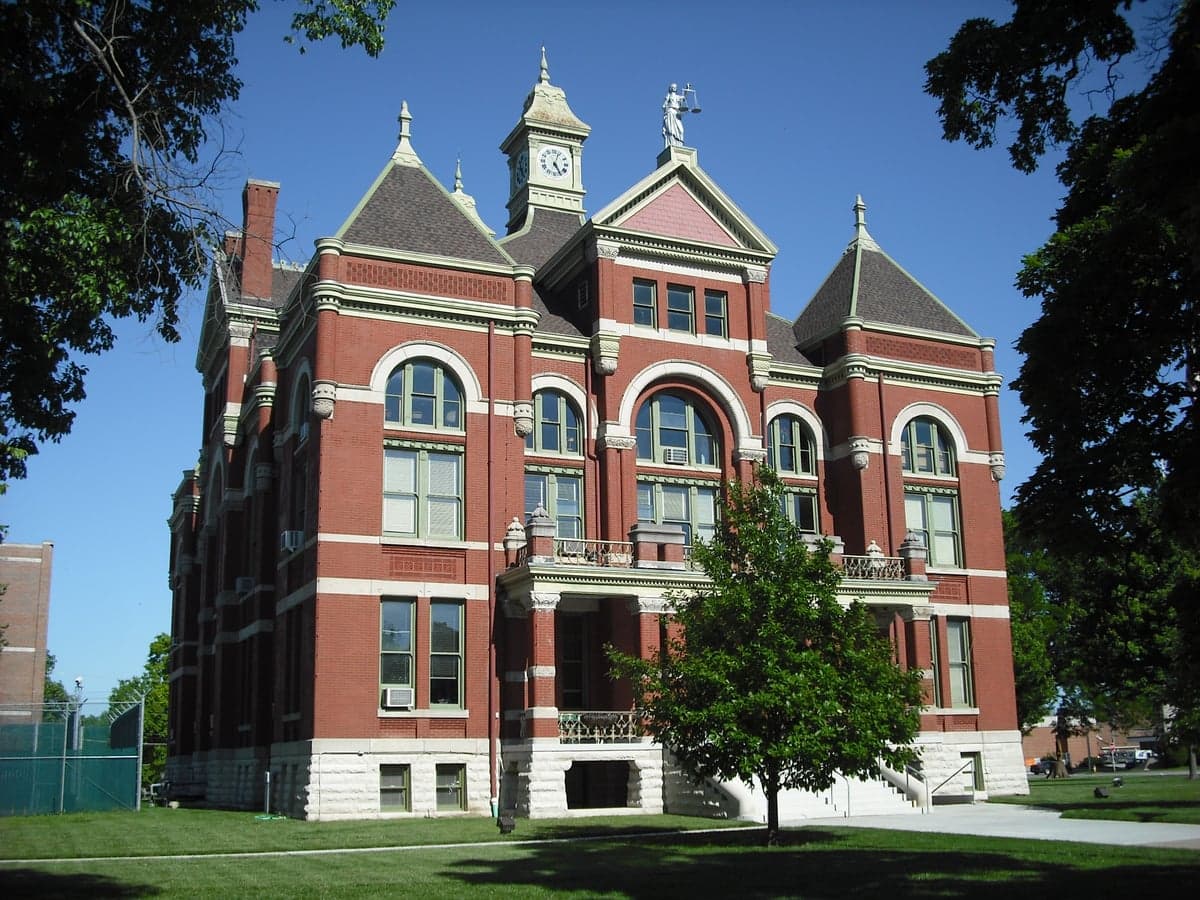
Franklin County, Kansas, today is a predominantly white, rural community of roughly 26,000 residents, anchored by the county seat of Ottawa and a handful of smaller towns like Wellsville, Princeton, and Pomona. The population is notably homogenous — 89.1% white, with a foreign-born share of just 1.0% — and the county retains a distinctly Midwestern, agricultural character that has changed only modestly since the mid-20th century. Residents describe the area as quiet, family-oriented, and politically conservative, with a strong sense of local identity rooted in the county's pioneer-era origins and its enduring role as a farming and small-manufacturing hub.
Settlement & growth (pre-1960)
Before American settlement, the land that is now Franklin County was part of the territory of the Osage Nation, who used the region for hunting grounds. The Osage were gradually displaced through a series of treaties in the early 1800s, most notably the 1825 treaty that ceded their claims to much of eastern Kansas. The area saw little permanent non-Native presence until after the Kansas Territory was organized in 1854, when the first wave of American settlers — largely from the Ohio River Valley and the Upper South — began arriving.
The county was officially organized in 1855, and the town of Ottawa was platted in 1857 along the Marais des Cygnes River. The earliest settlers were overwhelmingly of English, Scots-Irish, and German stock, drawn by the promise of cheap land under the 1862 Homestead Act and the extension of the railroad. Ottawa grew quickly as a trading center and milling town, while smaller settlements like Wellsville (founded 1856), Princeton (1857), and Richmond (1860) emerged as farming hamlets. The railroad's arrival in the 1860s cemented Ottawa's role as the county's commercial hub, and by 1880 the county's population had reached roughly 12,000.
A second wave of settlement came in the 1870s and 1880s, when German-speaking immigrants from Russia — often called Volga Germans — were recruited to farm the prairie. Many of these families settled in the northern part of the county, around the communities of Pomona and Williamsburg, where they established wheat farms and maintained distinct cultural traditions well into the 20th century. A smaller number of Czech and Swedish immigrants also arrived during this period, though Franklin County never developed the large ethnic enclaves seen in neighboring counties like Leavenworth or Wyandotte.
The county's population peaked at roughly 22,000 in the 1900 census and then plateaued, as the agricultural economy could not support rapid growth. The Dust Bowl and Great Depression of the 1930s caused some out-migration, but Franklin County was less severely affected than the western parts of Kansas. After World War II, the county saw modest suburban-style growth around Ottawa, as returning veterans took advantage of the GI Bill to buy homes and start families. By 1960, the population had reached 24,000, and the county's racial composition was nearly 99% white, with a tiny Black population concentrated in Ottawa and a handful of Hispanic families working in agriculture.
Modern era (post-1965)
The 1965 Hart-Cellar Act, which dramatically reshaped U.S. immigration patterns, had almost no effect on Franklin County. The foreign-born share of the population today is just 1.0%, compared to roughly 14% nationally, and the county has not seen the large-scale immigration from Latin America, Asia, or Africa that has transformed many other parts of Kansas and the Midwest. The county's Hispanic population, at 4.7%, is the largest minority group, but it remains small by regional standards — neighboring Johnson County, for example, is over 10% Hispanic. Most Hispanic residents in Franklin County are U.S.-born and work in agriculture, construction, or food processing, with no single concentrated enclave.
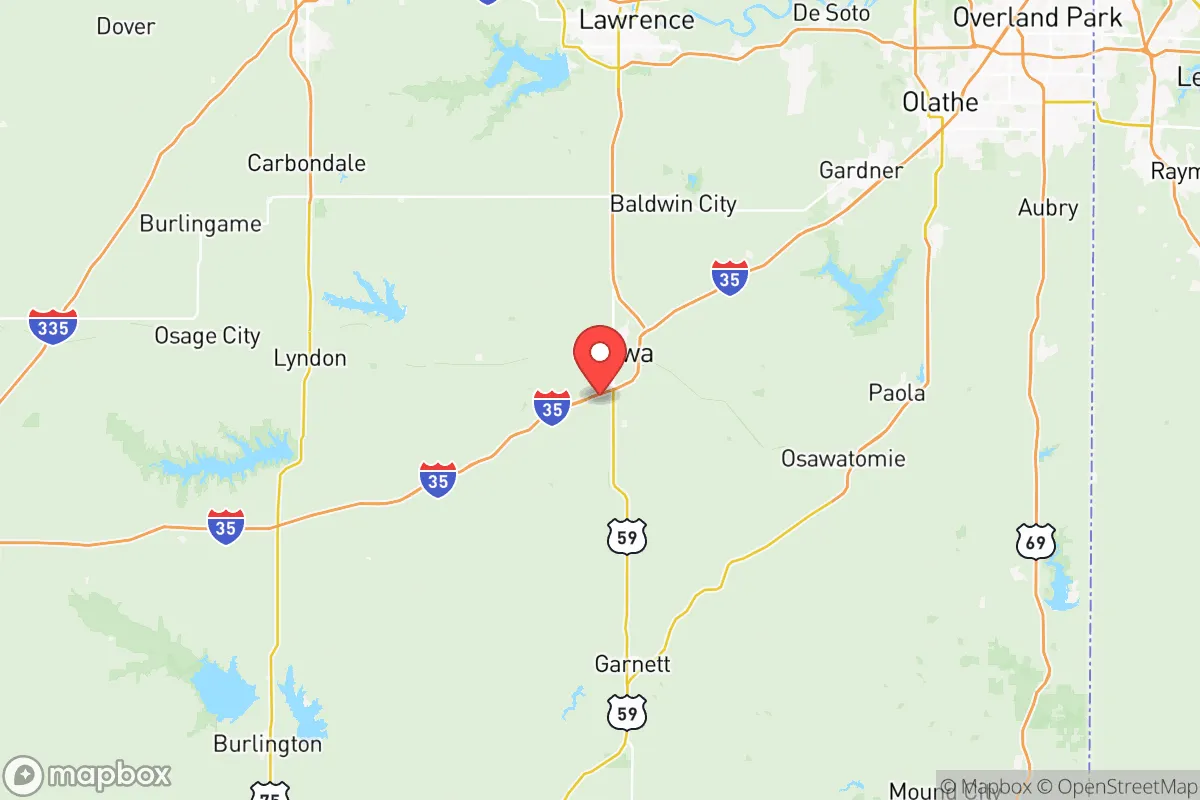
Domestic migration has also been modest. Franklin County has not experienced the rapid suburbanization seen in the Kansas City metro area, which is roughly 50 miles to the northeast. Ottawa has grown slowly, adding about 1,000 residents since 1990, while the smaller towns — Wellsville, Princeton, Pomona, Richmond, and Williamsburg — have held steady or lost population. The county's Black population remains tiny at 0.8%, and East/Southeast Asian residents make up just 0.6%, with no Indian subcontinent population recorded. The county's college-educated share, at 25.3%, is below the national average of roughly 33%, reflecting the area's reliance on blue-collar and agricultural employment.
Economically, the county has shifted from pure agriculture to a mix of farming, light manufacturing, and services. Major employers include the Ottawa school district, the county government, and a handful of factories producing everything from RV components to food products. The county has not attracted significant new industry or population growth, and many younger residents leave for college or jobs in the Kansas City area, contributing to a slowly aging population.
The future
Franklin County's population is projected to remain stable or decline slightly over the next 10-20 years, barring a major economic shift. The county's low birth rate, out-migration of young adults, and very low immigration levels mean that natural increase is minimal. The Hispanic share of the population is likely to grow slowly, as it has across rural Kansas, but the county will remain overwhelmingly white for the foreseeable future. The small towns — Wellsville, Princeton, Pomona, Richmond, and Williamsburg — will likely continue to lose residents to Ottawa and to the broader Kansas City metro, while Ottawa itself may see modest infill development but no boom.
Culturally, the county's identity is likely to remain rooted in its agricultural and pioneer heritage, with little pressure toward the diversification seen in urban and suburban Kansas. The county's politics will almost certainly stay conservative, and its schools, churches, and civic institutions will continue to reflect the values of the white, native-born population that has dominated the area since settlement. For someone moving in now, Franklin County offers a stable, predictable, and quiet environment — but one with limited demographic change, limited economic dynamism, and limited exposure to the broader diversity of modern America.

* Values derived from national, state, county, city and local statistics and may differ in a specific area. Last updated: 2026-07-02T20:13:31.000Z
Narrative content on this page is AI-generated and may contain mistakes. Verify any details that matter before acting on them.
ReloMaps may earn a commission from affiliate links at no extra cost to you.

