Photo: Wikipedia
Demographics of Ellis County
Affluence Level in Ellis County
A middle-class area roughly in line with national averages across income, home values, education, and employment.
People of Ellis County
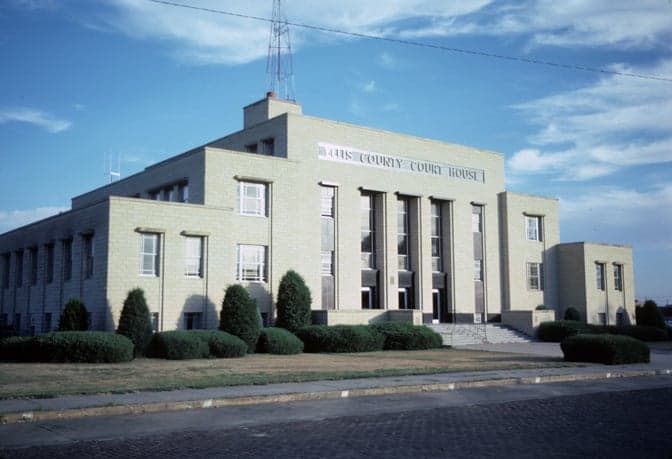
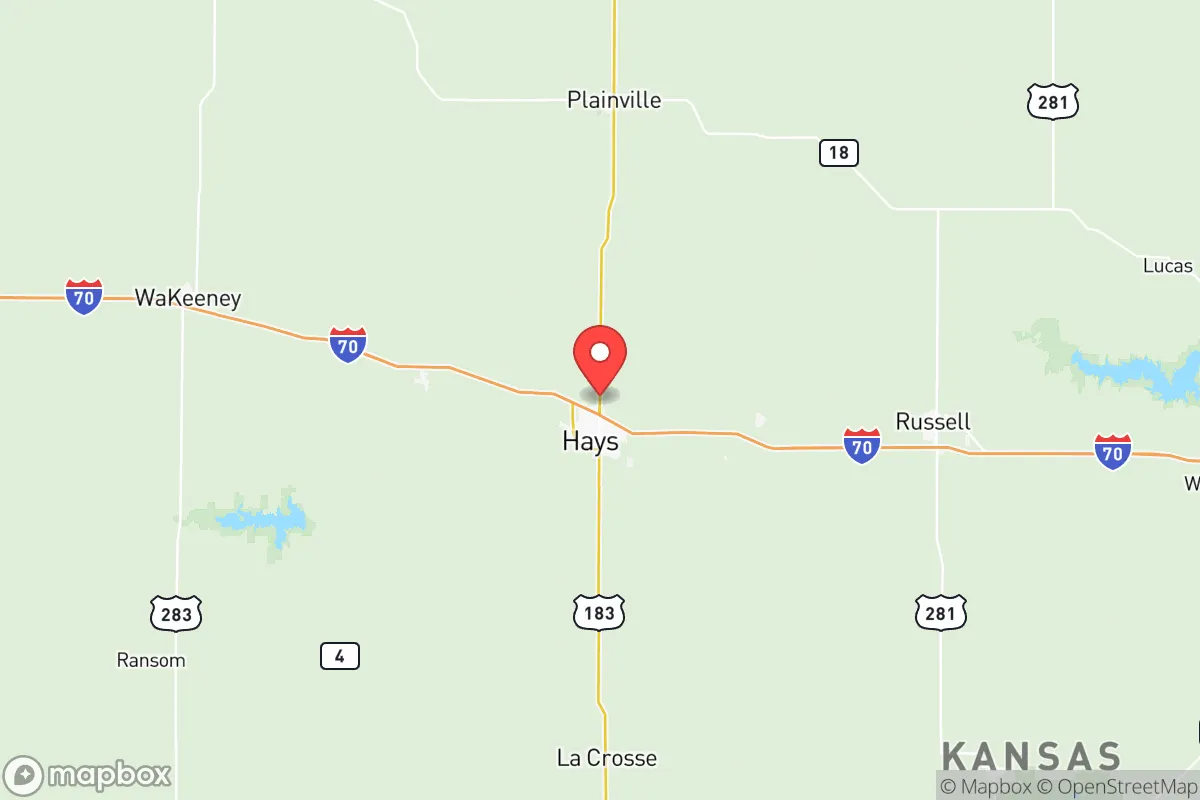
Today, Ellis County, Kansas, is a predominantly white, family-oriented community of 28,870 residents, anchored by the city of Hays and shaped by a deep German-Catholic heritage that still defines its cultural calendar, cuisine, and civic life. With a foreign-born population of just 1.8% and a white share of 87.5%, the county remains one of the least ethnically diverse in Kansas, though a growing Hispanic population of 7.1% and small but stable East/Southeast Asian (1.0%) and Black (1.2%) communities are slowly broadening its demographic profile. The county’s identity is distinctly rural and conservative, with a college-educated rate of 39.5% buoyed by Fort Hays State University, and its population is aging slightly but holding steady due to the university’s student draw and regional healthcare employment.
Settlement & growth (pre-1960)
Before European settlement, the area now known as Ellis County was part of the hunting grounds of the Cheyenne, Arapaho, and Kiowa peoples, who followed bison herds along the Smoky Hill River. The U.S. government forcibly removed these tribes through treaties and military campaigns in the 1860s, clearing the way for homesteaders after the Kansas Pacific Railroad pushed through in 1867. The railroad’s arrival at what became Hays — named after Fort Hays, a U.S. Army post established in 1865 to protect railroad workers and settlers — triggered the county’s first major population wave.
The earliest white settlers were a mix of Anglo-American homesteaders from the Midwest and East Coast, but the defining migration came in the 1870s and 1880s: German-speaking Catholics from the Volga River region of Russia. These Volga Germans, recruited by railroad agents and Catholic church leaders, sought religious freedom and affordable farmland. They settled heavily in Hays, Victoria, Munjor, and Catherine, establishing tight-knit farming communities centered on Catholic parishes. By 1900, German was still widely spoken in homes and churches, and the county’s population had surged to over 8,000. The Volga German influence remains visible today in local surnames, the annual Hays Oktoberfest, and the region’s distinctive cuisine (e.g., bierocks and kuchen).
Smaller groups of Irish and Czech immigrants also arrived in the late 19th century, settling in Ellis and Schoenchen, but they were numerically overshadowed by the German majority. The county’s economy during this period was almost entirely agricultural — wheat, cattle, and dairy — supplemented by railroad maintenance and small-town commerce. The Dust Bowl of the 1930s hit Ellis County hard, causing a population decline from a 1930 peak of 12,000 to under 10,000 by 1940, as many farm families left for California or urban Kansas City. Recovery came slowly after World War II, aided by the expansion of Fort Hays State University (then Fort Hays Kansas State College) and the construction of Interstate 70 in the 1960s, which made Hays a regional service hub.
Modern era (post-1965)
The 1965 Hart-Cellar Act had minimal direct impact on Ellis County, as the region lacked the industrial or agricultural labor demand that drew immigrants to larger cities. The foreign-born share remained below 2% through the 1970s and 1980s, and the county’s population actually dipped from 19,000 in 1960 to 17,000 by 1970 as young adults left for urban jobs. However, two domestic trends reshaped the county from the 1970s onward: the growth of Fort Hays State University and the expansion of regional healthcare.
Fort Hays State University, now enrolling over 15,000 students (many online), became the county’s largest employer and a magnet for faculty, staff, and students from across Kansas and the Midwest. The university also brought a modest influx of international students, particularly from East/Southeast Asia (1.0% of the county’s population today) and India (0.4%), though most return home or move to larger cities after graduation. The Hays Medical Center, a regional referral hospital, grew to employ over 2,000 people, attracting healthcare professionals from across the state and a small number of foreign-trained doctors.
The Hispanic population, now 7.1%, grew primarily through domestic migration from Texas and the Southwest, drawn by jobs in meatpacking (the nearest major plant is in Garden City, about 90 miles southwest) and construction during the 2000s housing boom. These families settled mostly in Hays and Ellis, where they have formed small but active Catholic congregations and Spanish-language services. The Black population (1.2%) is largely composed of military-affiliated families stationed at Fort Riley (about 60 miles east) and university employees, with no concentrated enclave. The county’s overall racial composition has remained remarkably stable: white share declined only from 95% in 1990 to 87.5% in 2024, with the Hispanic share accounting for most of the shift.
The future
Ellis County’s population is projected to remain flat or grow slowly (0–5% over the next decade), driven by natural increase and continued university enrollment rather than immigration. The county’s median age of 35 is slightly younger than the Kansas average, thanks to the student population, but the non-student population is aging, with a growing share of retirees staying in place. The Hispanic share is expected to rise gradually to 10–12% by 2035, primarily through higher birth rates and continued domestic migration, while the East/Southeast Asian and Indian populations will likely remain small (1–2% combined) unless Fort Hays State University significantly expands its international recruitment.
New residential development is concentrated in Hays, particularly on the south and west sides near the university and hospital, with some suburban-style subdivisions appearing in Victoria and Munjor. The county’s cultural identity remains strongly German-Catholic, but younger residents — especially those who attend the university — are more secular and politically moderate, creating a subtle generational divide. The county voted +36 points Republican in the 2024 presidential election, reflecting its conservative lean, though local politics are dominated by pragmatic issues like water rights, school funding, and economic diversification.
For someone moving in now, Ellis County offers a stable, safe, and affordable community with strong schools, a vibrant university town atmosphere in Hays, and a deeply rooted cultural identity that values self-reliance and neighborliness. The trade-off is limited diversity, a slow pace of life, and a job market heavily dependent on education and healthcare. The county is not becoming more diverse in any dramatic sense, but it is gradually becoming more connected to the wider world through the university, making it a place where tradition and change coexist quietly.

* Values derived from national, state, county, city and local statistics and may differ in a specific area. Last updated: 2026-07-08T01:56:41.000Z
Narrative content on this page is AI-generated and may contain mistakes. Verify any details that matter before acting on them.
ReloMaps may earn a commission from affiliate links at no extra cost to you.

