Photo: Wikipedia
Political ClimatePolitical Climate in Justin, TX
District shown is the primary district for this city’s centroid. Cities may span multiple districts.
Political rankings in Texas
- Most Conservative Cities in Texas
- Most Liberal Cities in Texas
- Best Liberal-Leaning Towns in the South
- Safest Liberal-Leaning Towns in the South
- Safest Conservative-Leaning Towns in the South
- Affordable Small Towns for Conservatives
- Most Affordable Liberal-Leaning Small Towns in the U.S.
- Safest Conservative-Leaning Cities in the U.S.
- Most Conservative Counties in Texas
- Most Liberal Counties in Texas
Local Political AnalysisPolitical Analysis of Justin, TX
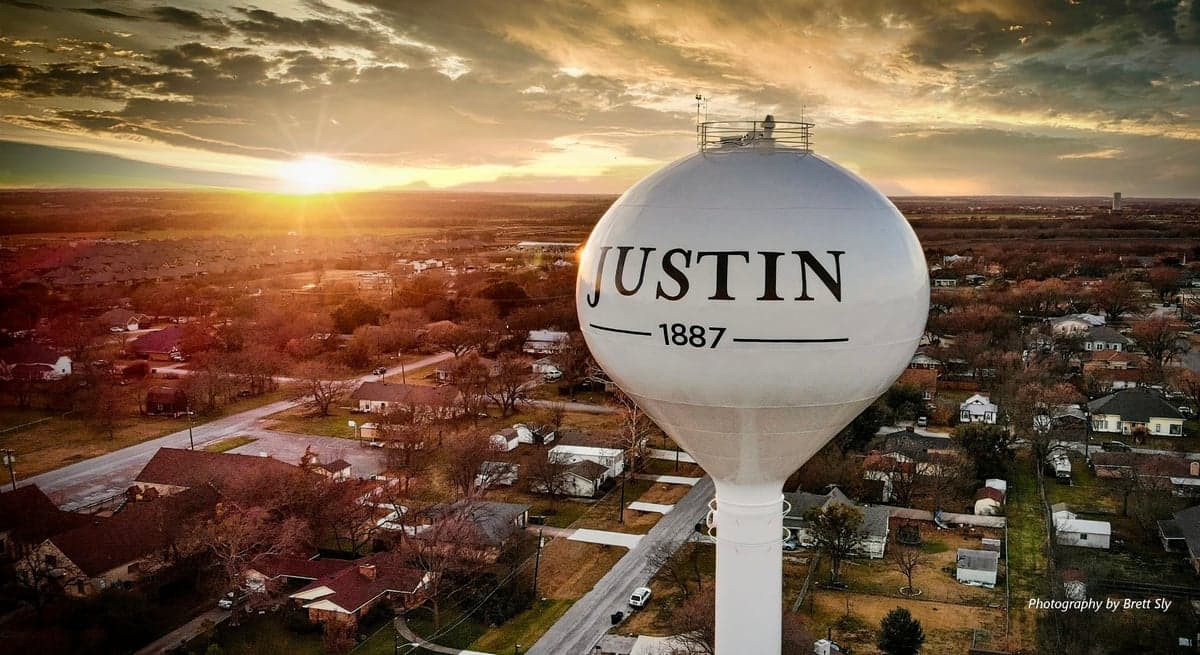
Justin, Texas, is a reliably conservative community that has only deepened its Republican roots as it grows. The area carries a Cook Partisan Voting Index (PVI) of R+11, meaning it votes about 11 points more Republican than the national average. That’s a solid red lean, and it’s not a recent fluke—local elections, from county commissioner to school board, consistently reflect that tilt. If you’re moving here, you’re stepping into a place where conservative values aren’t just a talking point; they’re the baseline for most civic conversations.
How it compares
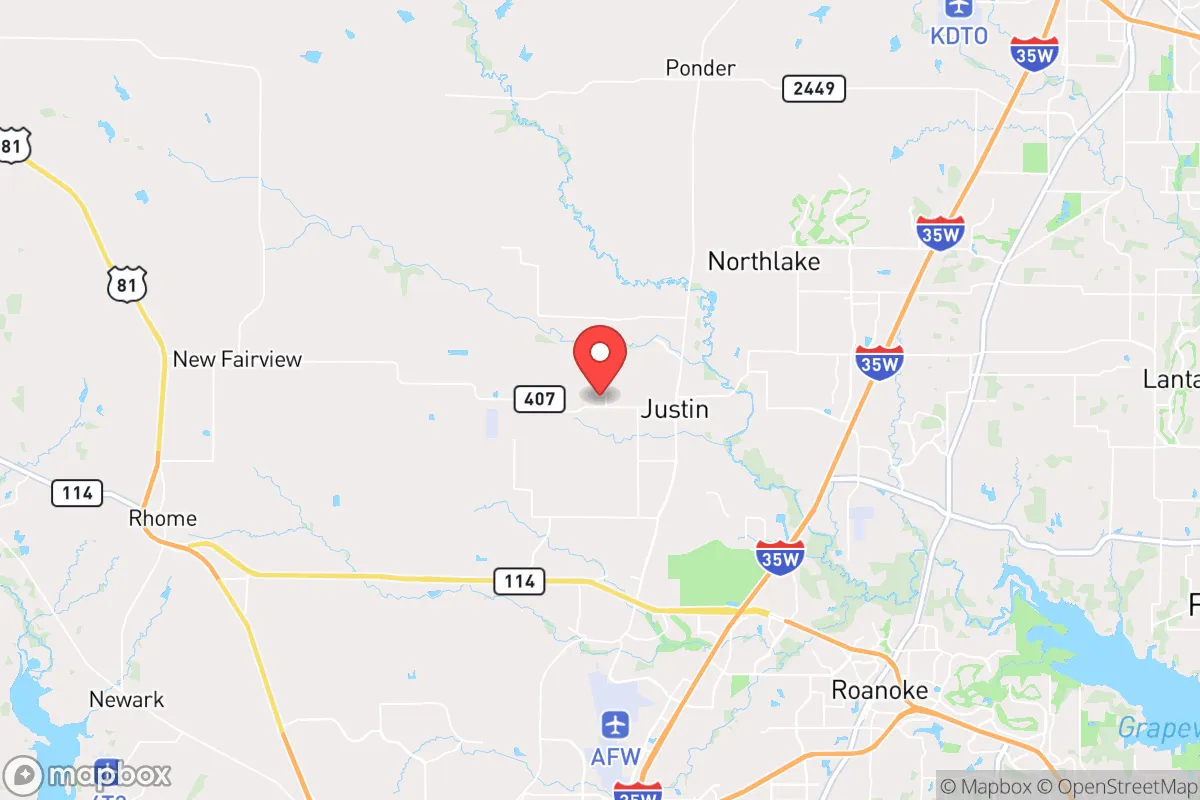
Comparing Justin to the broader state of Texas is tricky because Texas itself doesn’t have a single Cook PVI—it’s a massive, diverse state with wildly different pockets. But for context, statewide Texas leans roughly R+5 to R+6 in presidential races, so Justin’s R+11 is noticeably more conservative than the state average. That gap becomes obvious when you look at nearby cities. Head south to Fort Worth (Tarrant County), which has been trending purple—Biden lost it by only about 2 points in 2020—and you’ll find a more mixed political landscape. Drive east to Dallas (Dallas County), a solid blue stronghold, and the contrast is stark. Justin sits in Denton County, which itself is R+12, but the town feels even more conservative than the county’s average because it’s still semi-rural and family-oriented, not yet suburbanized like Flower Mound or Highland Village. The trajectory here is interesting: as Justin grows, it’s attracting families from both red and blue areas, but the newcomers tend to be drawn by the low taxes and good schools—factors that reinforce the conservative tilt rather than dilute it.
What this means for residents
For conservative residents, Justin’s political climate means their values are reflected in local policy. You’ll see lower property tax rates compared to nearby blue-leaning cities, a strong emphasis on Second Amendment rights, and school board decisions that prioritize parental input and traditional curricula. The city council and county commissioners are reliably Republican, so zoning, development, and infrastructure projects tend to favor growth with minimal regulation. For liberal residents, the reality is more about adaptation. You won’t find many progressive advocacy groups or Democratic party events in town; the nearest active Democratic hubs are in Denton (about 20 minutes east) or Fort Worth. Socially, it’s a place where political discussions at the grocery store or PTA meeting lean right, but it’s not hostile—most folks are neighborly and respect differences, as long as you’re not trying to change the local culture. The practical trade-off is that liberal residents often drive to Denton or Fort Worth for cultural events or political community, while enjoying Justin’s lower cost of living and quieter streets.
Culturally, Justin stands apart from the more liberal urban centers by maintaining a strong “small-town” identity even as it grows. You’ll see more church parking lots than coffee shops, and the annual Justin Community Picnic feels like a scene from 20 years ago. Policy-wise, the town has resisted some of the progressive zoning and housing mandates seen in Dallas or Austin, keeping development more traditional—single-family homes, large lots, and a slower pace. For anyone moving here, the key takeaway is that Justin offers a predictable, conservative environment where your vote and your voice align with the majority, but it’s not an echo chamber—it’s a place where you can live your life without the political noise of a big city, whether you agree with the majority or not.

State Political ClimatePolitical Climate in Texas
State Political AnalysisPolitical Environment in the State
Texas has been a reliably Republican state for over three decades, but the margin has been tightening with each election cycle. In 2024, Donald Trump carried the state by roughly 9 points, down from 11 points in 2020 and 16 points in 2012. The dominant coalition remains a mix of rural conservatives, suburban moderates, and a growing number of Hispanic voters who have shifted rightward, while Democrats have consolidated power in the state’s largest urban centers. The long-term trajectory points toward a competitive two-party state by the early 2030s, driven by explosive growth in the suburbs of Dallas-Fort Worth, Houston, and San Antonio, where new arrivals from blue states are reshaping the electorate.
Urban vs. rural divide
The political map of Texas is a study in contrasts. The big four metros — Houston, Dallas-Fort Worth, San Antonio, and Austin — are the engine of Democratic votes, with Harris County (Houston) and Dallas County routinely delivering margins of 15-20 points for Democrats. Austin’s Travis County is the bluest in the state, often going +40 points Democratic. Meanwhile, rural West Texas and the Panhandle are deeply Republican: Lubbock County votes +35 R, and the Permian Basin counties like Midland and Ector are even redder. The real battleground is the suburban ring around these cities. Collin County (north of Dallas) was +20 R in 2012 but only +10 R in 2024, while Fort Bend County (southwest of Houston) flipped from red to blue in 2018 and has stayed there. The Rio Grande Valley, once reliably Democratic, has seen a dramatic shift: Hidalgo County went from +40 D in 2012 to just +5 D in 2024, driven by conservative Hispanic voters and a strong local GOP ground game.
Policy environment
Texas operates under a low-tax, low-regulation model that defines its political identity. There is no state income tax, and property taxes are high (roughly 1.6-2.5% of assessed value) to compensate. The regulatory posture is business-friendly, with minimal zoning in many cities and a right-to-work law that limits union power. Education policy is a flashpoint: the state funds schools primarily through local property taxes, leading to wide disparities between wealthy and poor districts, and the 2023 school voucher bill (SB 1) passed after years of failed attempts, allowing families to use public funds for private school tuition. Healthcare remains a gap — Texas has the highest uninsured rate in the nation at roughly 17%, having refused Medicaid expansion under the Affordable Care Act. Election laws were tightened in 2021 with SB 1, which added ID requirements for mail-in ballots, banned drive-through voting, and restricted early voting hours. Abortion is effectively banned after six weeks under the 2021 Heartbeat Act (SB 8), with no exceptions for rape or incest, and a near-total ban (trigger law) took effect in 2022.
Recent policy direction
The last three legislative sessions have pushed Texas sharply right on a broad set of issues. On gun rights, the state became permitless carry in 2021 (HB 1927), allowing anyone 21 or older to carry a handgun without a license. Parental rights in education were strengthened with the 2023 "Parental Bill of Rights" (HB 900), which requires schools to post curriculum materials online and restricts instruction on sexual orientation and gender identity in elementary grades. Speech on campus has been a focus: the 2019 "Campus Free Speech" law (SB 18) requires public universities to adopt policies protecting expressive activity, though critics say it has been used to limit pro-Palestinian protests. Privacy and surveillance saw a major shift with the 2023 ban on TikTok on government devices (SB 1893) and a new data privacy law (HB 4) that gives residents the right to opt out of data collection by businesses. Medical and bodily autonomy is heavily restricted: abortion is banned, and gender-affirming care for minors was outlawed in 2023 (SB 14). Property rights remain strong, with no statewide zoning and a homestead exemption that protects primary residences from forced sale. Voting access has been tightened, but early voting remains generous — Texas allows two weeks of early voting, and turnout in 2024 hit record highs despite the new restrictions.
Civil unrest & political movements
Texas has seen its share of political flashpoints. The 2020 protests in Austin over George Floyd’s death were among the largest in the country, with the city council later cutting the police budget by $150 million, only to restore most of it after a crime spike. Immigration politics are a constant presence: Governor Abbott’s Operation Lone Star, launched in 2021, has deployed thousands of National Guard troops to the border and bused over 100,000 migrants to sanctuary cities like New York and Chicago. The state has also sued the Biden administration over border policies more than 30 times. Secession rhetoric flares up periodically — the Texas Nationalist Movement pushes for independence, but it remains a fringe idea with no serious legislative support. Election integrity remains a live issue: the 2020 election saw Trump’s legal challenges fail in state courts, but the 2021 SB 1 law was passed in direct response to Democratic innovations like drive-through voting in Harris County. A new resident would notice the "Don't Mess with Texas" attitude on bumper stickers and yard signs, but also the visible presence of border patrol checkpoints within 100 miles of the Rio Grande.
Projection
Over the next 5-10 years, Texas is likely to become a true battleground state. The population is growing by roughly 1,000 people per day, and the newcomers are split — many are conservatives from California and the Northeast, but a significant share are younger, more diverse voters who lean Democratic. The suburbs of Dallas-Fort Worth and Houston are the key: places like Frisco, McKinney, and Katy are growing fast and trending purple. The Hispanic shift rightward could slow or reverse if national politics change, but for now it gives Republicans a cushion. The state legislature will remain Republican-controlled through at least 2030 due to gerrymandering, but the statewide races for Senate and President will be competitive. A relocator moving in now should expect a state that remains culturally conservative but is increasingly polarized along geographic lines — Austin and El Paso will feel like blue islands, while the rest of the state stays red. The policy environment will likely stay the same on taxes and guns, but abortion and education battles will intensify as the legislature becomes more divided.
For a new resident, the bottom line is that Texas offers a low-tax, high-freedom environment for conservatives, with strong gun rights, school choice, and minimal regulation. Liberals will find a vibrant cultural scene in the big cities but will face a state government that is actively hostile to their policy preferences on abortion, voting, and LGBTQ rights. The practical takeaway: if you lean right, you’ll feel at home almost anywhere outside of Austin and El Paso. If you lean left, you’ll want to stick to the urban cores and accept that your vote will have limited impact on state-level policy for the foreseeable future. Either way, the state’s trajectory is toward more competition, not less, and the next decade will be the most politically interesting in Texas since the 1990s.
* Values derived from national, state, county, city and local statistics and may differ in a specific area. Last updated: 2026-11-23T19:49:14.000Z
Narrative content on this page is AI-generated and may contain mistakes. Verify any details that matter before acting on them.
ReloMaps may earn a commission from affiliate links at no extra cost to you.

